
Soups & Stews
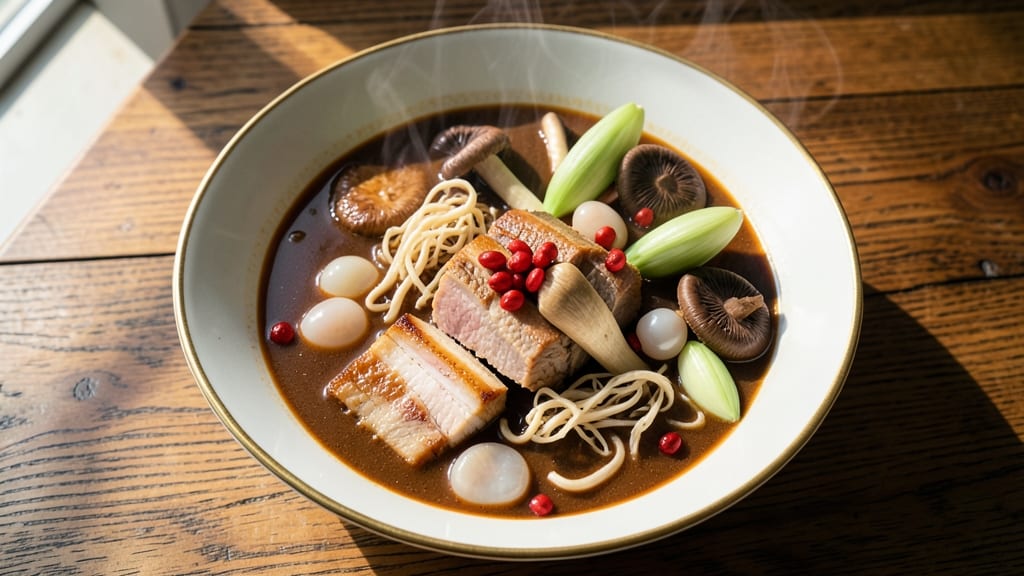
This 8 treasure soup recipe transforms humble ingredients into a symphony of textures and flavors, where each component plays its part in perfect harmony. 🌟 The secret lies in balancing silky broth with eight distinct ingredients—pork, shiitake mushrooms, dried scallops, wood ear, goji berries, lily buds, lotus seeds, and a celery crown that adds a satisfying crunch.
What makes this dish special is its ability to nourish both body and spirit, rooted in traditional Chinese medicine principles.
The foundation begins with a rich, aromatic broth infused with ginger, garlic, and star anise, which simmers for hours to develop deep umami layers. Each ingredient is carefully selected for its unique texture and nutritional benefits—whether it's the chewy wood ear, the tender lotus seeds, or the delicate lily buds.
The key to success is patience: letting the soup simmer gently allows flavors to meld without overpowering one another.
By the time you serve this soup, you'll have a dish that's as visually stunning as it is delicious—steaming bowls of golden broth topped with vibrant ingredients and crowned with crisp celery.
The contrast between the velvety velouté and the crunchy celery creates an experience that's both comforting and sophisticated, perfect for family gatherings or special occasions.
This recipe also offers flexibility—vegetarian adaptations are possible by substituting meat with additional mushrooms or tofu. Whether you're making it for health, tradition, or pure enjoyment, the result is a nourishing bowl of goodness that feels like a warm embrace in every spoonful.
Ingredients for 8 treasure soup
Eight distinct ingredients transform simple broth into a nourishing symphony of textures and flavors.
| Ingredient | Amount | Notes |
|---|---|---|
| Pork Shoulder 🥩 | 1 lb | Bone-in for flavor, cut into 1-inch cubes |
| Dried Shiitake Mushrooms 🍄 | ¼ cup | Rehydrated in hot water for 20 minutes |
| Dried Scallops 🦪 | ¼ cup | Rehydrated in warm water for 15 minutes |
| Wood Ear Mushrooms 🍄 | ¼ cup | Rehydrated in hot water for 30 minutes |
| Goji Berries 🍇 | ¼ cup | Rinsed to remove dust |
| Lily Buds 🌸 | ¼ cup | Rehydrated in warm water for 10 minutes |
| Lotus Seeds 🌼 | ¼ cup | Rinsed and soaked 2 hours |
| Celery Crown 🧅 | 1 whole | Fresh, cut into 1-inch pieces |
| Fresh Ginger 🧄 | 1 inch | Sliced, peeled |
| Garlic Cloves 🧄 | 4 cloves | Minced |
| Star Anise 🌟 | 2 whole | Lightly crushed |
| Dried Tangerine Peel 🍊 | 1 tbsp | Sliced thin, dried |
| Light Soy Sauce 🍶 | 2 tbsp | For seasoning |
| Sesame Oil 🫒 | 1 tbsp | For finishing |
| Green Onions 🧅 | 3 whole | Sliced, for garnish |
The foundation starts with pork shoulder—bone-in for maximum flavor. Look for well-marbled cuts at Whole Foods or your local butcher shop. Dried ingredients like shiitake mushrooms and wood ear should be sourced from Asian markets for authenticity, though the bulk section at Walmart works in a pinch. Goji berries and lotus seeds should be rinsed thoroughly to remove dust or debris. Fresh ginger and garlic should be vibrant—no shriveled or moldy spots. Star anise and dried tangerine peel add depth, so buy them in small quantities to preserve freshness.
No dried scallops? Rehydrated dried shrimp works as a substitute, though the texture differs slightly. Short on wood ear? Dried oyster mushrooms can mimic its chewy quality. The celery crown is non-negotiable for that signature crunch—organic celery from the grocery store's produce section keeps best. For vegetarian adaptations, swap pork for shiitake mushrooms or firm tofu (extra-firm holds shape better). Fresh herbs like cilantro or basil can brighten the broth if you prefer a different aromatic profile. The key is balance—each ingredient should be visible in the final bowl.
Dried ingredients like mushrooms and seeds keep for 6-12 months in airtight containers, while fresh ginger and garlic last 2 weeks in the fridge. Rehydrate dried components in advance and store in the broth for up to 5 days. The celery crown should be added fresh just before serving for maximum crunch. This soup tastes even better the next day as flavors meld—double the batch if you're hosting. Freeze portions in airtight containers for 3 months without compromising texture.
Why You'll Love This Recipe
- Same recipe, different vibes: serve it steaming in mugs for a lazy Sunday or ladle it over rice for a fancy-ish family dinner. (Yes, even on a Tuesday night.) The dried ingredients keep it shelf-stable, so I make a big batch and freeze portions—no last-minute stress.
- Dried Goods Magic: I swear by the pantry shortcuts here—just soak the shiitake, scallops, and wood ear mushrooms overnight, and boom, you’ve got restaurant-quality texture without the chopping marathon. The goji berries? Toss them in dry at the end—they plump up faster than you can say “second bowl.”
- Umami Bomb: That pork shoulder melts into the broth while the dried mushrooms and scallops infuse it with layers of savory depth. Honestly, the first sip hits like a warm hug—rich, slightly sweet, and packed with that je ne sais quoi that makes you want to lick the bowl.
- Weeknight to Dinner Party: Same recipe, different vibes: serve it steaming in mugs for a lazy Sunday or ladle it over rice for a fancy-ish family dinner. (Yes, even on a Tuesday night.) The dried ingredients keep it shelf-stable, so I make a big batch and freeze portions—no last-minute stress.
Step-by-step instructions for 8 treasure soup
Transform simple ingredients into a harmonious blend of textures and flavors through precise technique.
👨🍳 Step 1: Rehydrate and Prepare All Ingredients
Begin by rehydrating the dried ingredients separately. Place the 0.25 cup dried shiitake mushrooms and 0.25 cup wood ear mushrooms in separate bowls with hot water and let them soak for 20-30 minutes until they expand and become pliable. The 0.25 cup dried scallops and 0.25 cup lily buds need only 15 minutes in warm water, while the 0.25 cup lotus seeds require a longer 2-hour soak to soften completely.
Rinse the 0.25 cup goji berries thoroughly to remove any dust or debris. Chop the 1 whole celery crown into 1-inch pieces and slice the 1-inch fresh ginger into thin coins. Mince the 4 cloves garlic and lightly crush the 2 whole star anise. Slice the 1 tbsp dried tangerine peel into thin strips. This preparation ensures all ingredients are ready when needed, maintaining the soup's delicate balance of textures.
🍳 Step 2: Sear the Pork Shoulder
Heat a large pot or Dutch oven over medium-high heat until hot. Add the 1 lb pork shoulder cut into 1-inch cubes and sear for 3-4 minutes per side until the exterior develops a rich golden-brown crust. This step is crucial—it locks in flavors and prevents the pork from becoming dry during simmering.
Once browned, remove the pork and set it aside. In the same pot, add the 1-inch sliced ginger, 4 minced garlic cloves, and 2 crushed star anise, cooking for 1 minute until fragrant. This aromatic base will infuse the soup with depth. Add the 1 tbsp sliced dried tangerine peel and stir for 30 seconds to release its citrusy notes.
🥘 Step 3: Simmer the Soup Base
Pour in 8 cups water (or enough to cover the pork) and add the 2 tbsp light soy sauce. Return the pork to the pot, bring to a boil, then reduce heat to low and let it simmer for 1 hour. Skim off any foam that rises to the surface—this ensures a clear, clean broth. The pork should become fork-tender, falling apart easily when tested.
Add the drained rehydrated mushrooms, scallops, lily buds, and lotus seeds to the pot. Simmer for another 20-30 minutes until all ingredients are heated through and the flavors meld together. The soup should have a silky texture with the celery crown adding a subtle crunch. Taste and adjust seasoning with additional soy sauce if needed.
🍽️ Step 4: Finish and Serve
Strain the soup through a fine-mesh sieve to remove the pork bones and any unwanted fibers, reserving the broth. Shred the pork using two forks and return it to the broth. Stir in the 0.25 cup goji berries and 1-inch celery pieces, letting them warm through for 5 minutes. The goji berries should plump slightly, adding a chewy contrast to the soup.
Just before serving, drizzle in the 1 tbsp sesame oil and toss gently to coat. Ladle the soup into bowls and garnish with the 3 sliced green onions. Each spoonful should deliver a symphony of textures—silky broth, tender pork, chewy scallops, and the satisfying crunch of celery and goji berries. Serve immediately to enjoy the full depth of flavors.
Pro Tips For Making 8 Treasure Soup
- SOAK DRY INGREDIENTS SEPARATELY: Dried shiitake and wood ear mushrooms need a good 20-minute soak in warm water before adding to the pot—otherwise, they’ll turn to mush and ruin the texture. Dried scallops, though? Just a quick rinse and they’re ready—over-soaking makes them rubbery, and nobody wants that in a soup meant to feel luxurious.
- SIMMER LOW AFTER BOILING: Once everything’s in the pot and you’ve brought it to a rolling boil, drop the heat to the lowest setting that keeps tiny bubbles breaking the surface. I’ve burned down broths before by keeping it too hot, and you’ll end up with a bitter, concentrated flavor instead of that clean, rich base the soup deserves.
- REHYDRATE GOJI BERRIES IN HOT TEA: Skip the cold water soak for goji berries—toss them in a cup of freshly brewed hot tea (green or oolong) for 10 minutes instead. The tannins in the tea soften them faster and give them a brighter, less bitter flavor when they hit the soup. (Yes, even if you’re impatient like me.)
- SKIN PORK SHOULDER BEFORE CUTTING: Use a sharp knife to slice off as much of the thick, fatty skin as possible before cubing the pork shoulder—it doesn’t render as cleanly and can make the broth greasy. If you’re lazy, at least score the fat in a crosshatch pattern so it crisps up nicely instead of turning into a slick mess in the soup.
Pro cooking tips for this dish
Broth Perfection
Start with a clear, aromatic broth—the soul of your 8 treasure soup. Use 8 cups water and add 2 tbsp light soy sauce early to infuse flavor evenly. Skim foam aggressively for the first 15 minutes to prevent cloudiness.
I swear by a fine-mesh sieve for straining—it removes impurities while keeping the broth silky. For extra depth, toast 1 tsp black peppercorns with the star anise before adding to the pot. 🌟
Pork Mastery
Never rush the pork—1 hour of simmering at low heat ensures tender, flavorful cubes. Test doneness by piercing with a fork; it should shred easily. For richer flavor, sear the pork in a hot Dutch oven until deeply browned.
I use a meat thermometer to confirm 195°F internal temp before shredding. If your pork is tough, extend simmering to 90 minutes—patience pays off. 🥩
Texture Balance
Each ingredient must retain its unique texture. Wood ear mushrooms should be chewy, lotus seeds creamy, and celery crunchy. Add celery crown last (5 minutes before serving) to preserve its snap.
For goji berries, rinse thoroughly to remove dust, then soak in warm water for 10 minutes before adding. Overcooking turns lotus seeds mushy—simmer them just until tender. 🧅
Flavor Layering
Build flavor in stages: first the aromatics (ginger, garlic, star anise), then the protein, followed by vegetables. Add dried scallops and mushrooms together—they share similar cooking times. For a vegetarian version, replace pork with extra-firm tofu (seared first) or shiitake mushrooms.
Taste as you go; adjust with light soy sauce or a pinch of white pepper. 💡
Equipment Essentials
Invest in these tools for foolproof results: a large Dutch oven (holds all ingredients), a fine-mesh sieve (for clear broth), and a meat thermometer (for perfect pork). A wooden spoon prevents scratching your pot.
For rehydrating, use separate bowls—wood ear mushrooms need 30 minutes, while scallops only 15. I keep a small colander handy for rinsing goji berries. ⚡
Timing Tricks
Prep all dried ingredients first—rehydration takes the longest. While the pork simmers, chop celery and mince garlic. For make-ahead meals, strain the broth and store it separately.
Reheat gently with the ingredients added fresh. The soup tastes even better day-old as flavors meld. Double the batch—leftovers keep 4 days refrigerated or 3 months frozen. 📅
Nutrition facts
Frequently asked questions
What makes this soup different from other Chinese soups?
This soup stands out because it incorporates eight distinct ingredients, each chosen for its unique texture and nutritional benefits. Unlike simpler soups, it balances silky broth with chewy wood ear mushrooms, tender lotus seeds, and crisp celery crown—creating a symphony of flavors in every spoonful. The combination of pork, dried scallops, and aromatic spices like star anise and dried tangerine peel gives it a depth that's both comforting and sophisticated.
Can I substitute any of the dried ingredients?
For dried scallops, use rehydrated dried shrimp (texture differs slightly). Wood ear mushrooms can be swapped for dried oyster mushrooms. If you're vegetarian, replace pork with extra-firm tofu (seared first) or shiitake mushrooms. Just ensure you maintain the same cooking times for similar textures. The key is keeping the balance of chewy, creamy, and crunchy elements.
Why does the recipe call for rehydrating ingredients separately?
Each dried ingredient has different rehydration times—wood ear mushrooms need 30 minutes, while scallops only require 15 minutes. Rehydrating separately ensures they absorb water properly without overcooking. Lotus seeds need the longest soak (2 hours) to soften completely. This step prevents mushy textures and maintains the perfect balance of textures in your soup.
How do I know when the pork is fully cooked?
Use a meat thermometer to check for 195°F internal temperature—this ensures tender, fork-shreddable pork. If you don't have one, pierce with a fork: the meat should separate easily. For extra flavor, sear the pork until deeply browned before simmering. If it's still tough after 1 hour, extend simmering to 90 minutes—patience is key for perfect texture.
Can I make this soup ahead of time?
Yes! This soup actually tastes better the next day as flavors meld. Strain the broth and store it separately in the fridge for 4 days or freeze for 3 months. When ready to serve, reheat gently and add fresh ingredients. For make-ahead convenience, prep all dried ingredients first—they take the longest to rehydrate. Double the batch if you're hosting!