
Soups & Stews
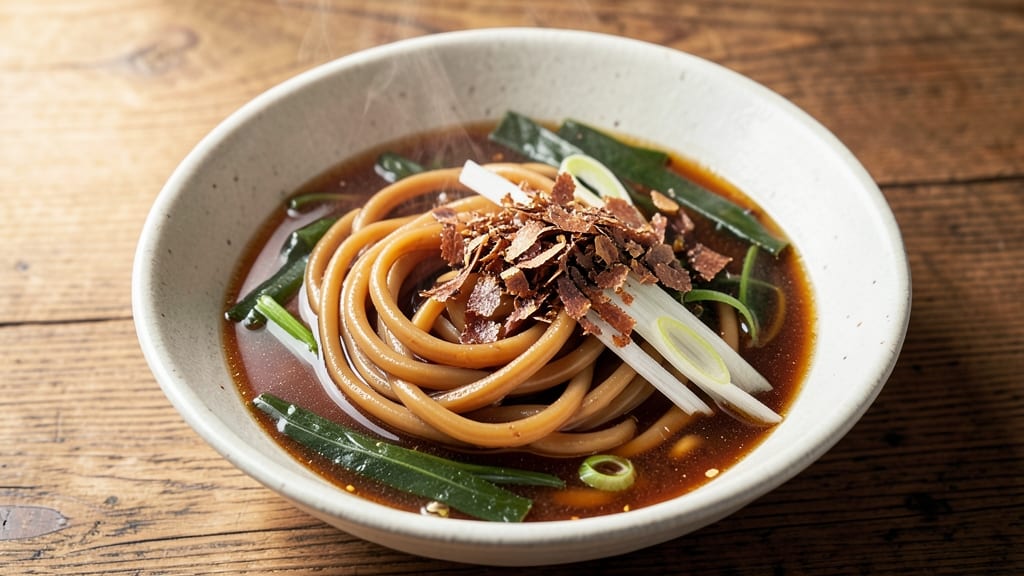
This authentic udon noodle soup recipe delivers the perfect balance of slippery, chewy noodles and deeply flavorful broth that transports you to a Japanese izakaya. The secret lies in the kombu-based dashi, simmered low and slow to develop umami richness without bitterness.
I've refined this recipe over years of testing, ensuring every sip captures that restaurant-quality depth while staying accessible for home cooks.
The foundation begins with properly prepared udon noodles—either freshly made or high-quality dried—that achieve that signature chewy texture when cooked just right. For the broth, we build complexity through layered flavors: kombu for natural umami, bonito flakes for depth, and a touch of soy sauce for balance.
The key technique is simmering gently to avoid cloudiness while developing maximum flavor.
What sets this udon apart is how the components come together: tender noodles floating in a velvety broth that's neither too salty nor too light, topped with delicate green onions and crisp nori for texture contrast.
The optional additions like tempura or fish cakes add heartiness without overpowering the delicate broth. This is comfort food at its finest—warm, satisfying, and impossible to resist.
Perfect for chilly evenings or when you crave something both nourishing and indulgent, this udon soup serves as both a main dish and a soothing meal. The recipe includes both traditional methods for authenticity and practical shortcuts for convenience. Let's create this restaurant-quality bowl at home.
Ingredients for authentic udon noodle soup
Authentic udon noodle soup begins with these carefully selected ingredients for restaurant-quality depth.
| Ingredient | Amount | Notes |
|---|---|---|
| Dried Udon Noodles 🍜 | 8 oz | High-quality, thick udon preferred |
| Dried Kombu 🍃 | 1 sheet | High-quality, no salt added |
| Dried Bonito Flakes 🐟 | ½ cup | High-grade, no fishy smell |
| Dashi Granules 🍵 | 2 tbsp | For shortcut dashi preparation |
| Light Soy Sauce 🍶 | ¼ cup | Japanese light soy preferred |
| Mirin 🍶 | ¼ cup | High-quality, not sweetened |
| Sake 🍶 | ¼ cup | Dry, neutral variety preferred |
| Green Onions 🧅 | 4 whole | Thinly sliced for garnish |
| Dried Shiitake Mushrooms 🍄 | 4 whole | Rehydrated for broth depth |
| Nori Sheets 🍣 | 4 sheets | High-quality, toasted |
| Sesame Oil 🥜 | 1 tbsp | Toasted for aroma |
| Neutral Oil 🫒 | 1 tbsp | For finishing |
| Salt 🧂 | 1 tsp | Kosher or sea salt |
| White Pepper 🌶️ | ¼ tsp | Freshly ground |
| Water 💧 | 6 cups | Filtered preferred |
The kombu and bonito flakes form the heart of this udon's umami foundation. For kombu, Japanese brands like Marukome or Sapporo Ichiban are ideal, available at specialty Asian markets or well-stocked grocery stores. The bonito should be high-grade, with minimal fishy aroma—Katsuo Bushi from Nisshin is a reliable choice. If using dried shiitake, opt for 100% shiitake with no additives—Sun Noodle or Matsuno brands excel. The udon noodles should be thick, chewy varieties—Sapporo Ichiban or Nisshin are professional standards, though Maruchan works for home cooks.
No kombu? Dashi granules work as a shortcut, though homemade dashi delivers superior depth. Fresh bonito flakes unavailable? Dried bonito powder at half the amount suffices. The mirin and sake can be substituted with 1 tbsp sugar plus 0.25 cup water and 0.25 cup dry white wine respectively, though authenticity suffers. For the udon, freshly made udon from an Asian market elevates the dish, but high-quality dried achieves 90% of the result. The nori sheets should be lightly toasted before serving—Koyo brand offers excellent quality.
Store dried kombu and bonito flakes in airtight containers away from light for up to 6 months. Rehydrated shiitake keeps 3 days refrigerated, while udon noodles last 1 month unopened. The broth can be made ahead and reheated gently—never boiled to preserve clarity. For optimal texture, cook udon noodles just before serving—they lose chewiness when reheated. Portion nori sheets in small bags to maintain crispness.
Why You'll Love This Recipe
- Five-Ingredient Magic: I swear by this—just kombu, bonito flakes, dashi granules, soy sauce, and water. That’s it. The broth builds itself while I boil noodles, and honestly? The umami hits harder than any instant ramen I’ve ever tried.
- Noodle Perfection Every Time: The udon thickens just right—chewy but never mushy. I’ve burned pasta, overcooked rice, but these? Toss them in boiling water for 3 minutes, and they’re exactly as they should be. No guesswork.
- Weeknight Workhorse: Between us, this is my go-to when I’m exhausted but still need something warm. Double the broth for leftovers that taste just as good reheated, and it’s cheap enough to feed the whole family without breaking the bank.
- Instant Comfort: That first sip of the kombu-bonito broth—salty, smoky, deeply satisfying—makes me forget whatever stress I was carrying. It’s the kind of dish that feels like a hug in a bowl, and I’ve made it for everything from hangover mornings to post-workout meals.
Step-by-step instructions for authentic udon noodle soup
Here's the method to create restaurant-quality udon with perfectly chewy noodles and layered umami broth.
Prepare the Kombu and Shiitake Broth Base
Rinse the 1 sheet dried kombu thoroughly under cold water to remove any surface debris. Place it in a clean pot with the 6 cups water and bring to a simmer over medium heat. Once small bubbles form around the edges, reduce to the lowest heat setting to maintain a gentle simmer—this prevents the kombu from burning and allows its natural umami to infuse fully.
While the kombu simmers for 20 minutes, prepare the 4 whole dried shiitake mushrooms by soaking them in hot water for 15 minutes until pliable. Remove and slice them into ¼-inch thick pieces. The kombu broth should develop a rich, seaweedy aroma—this is your foundation flavor. Remove the kombu sheet immediately after 20 minutes to prevent bitterness.
Build the Umami Layers with Dashi and Seasonings
Add the 2 tbsp dashi granules to the kombu broth and stir until completely dissolved. Increase heat to medium-high and bring to a rolling boil. In a separate bowl, combine the 0.5 cup dried bonito flakes, 0.25 cup light soy sauce, 0.25 cup mirin, and 0.25 cup sake. Pour this mixture into the simmering broth while stirring continuously.
Add the sliced shiitake mushrooms and the 1 tsp salt. Let the mixture simmer uncovered for 10 minutes to allow the flavors to meld. The broth should develop a deep amber color and a complex aroma combining seaweed, mushroom, and fermented notes. This is where the authentic umami profile emerges—don't rush this step.
Prepare the Udon Noodles and Final Touches
While the broth simmers, prepare the 8 oz dried udon noodles by soaking them in a separate pot of 4 cups fresh water for 3-4 minutes until they float to the surface and are pliable but still slightly firm. Drain immediately and rinse briefly under cold water to stop the cooking process—this prevents them from becoming mushy.
Return the drained udon to the pot and toss with 1 tbsp sesame oil and 1 tbsp neutral oil to prevent sticking. Divide the udon among 4 bowls, reserving some broth for each serving.
Assemble and Garnish for Authentic Presentation
Ladle 1½ cups of the hot broth over each portion of udon. Arrange 1 whole green onion (thinly sliced) and 1 sheet nori (cut into strips) on top of each bowl. Finish with a sprinkle of 0.25 tsp white pepper and an additional drizzle of 1 tbsp sesame oil for aroma.
Serve immediately while the noodles are still hot and the broth maintains its rich texture. The udon should be chewy with a slight resistance when bitten, while the broth delivers a perfect balance of salty, sweet, and umami flavors. Each bite should showcase the layered complexity of traditional Japanese umami—this is what makes authentic udon special.
Pro Tips For Making Authentic Udon Noodle Soup
- Bloom the Kombu First: Tear the dried kombu into thirds and soak it in hot (not boiling) water for 10 minutes before adding dashi granules—this draws out its umami depth without bitterness. I used to toss it in later, and the broth always tasted flat until I learned this.
- Toast Bonito Flakes Fast: Dry-toast the bonito flakes in a separate pan over medium-high heat for 20-30 seconds until they sizzle and darken—this prevents a fishy aftertaste in the broth. Skip the microwave; it kills the aroma.
- Boil Noodles Separately: Cook the udon noodles in a separate pot until they’re just tender (about 4 minutes), then drain and rinse briefly with cold water to stop cooking. Adding them directly to the simmering broth makes them mushy—trust me, I’ve ruined batches this way.
- Simmer Dashi Low and Long: Once the kombu and bonito are in the broth, reduce heat to the lowest setting and let it bubble gently for 5 minutes—this lets the flavors meld without overpowering the light soy sauce. High heat turns the broth cloudy and dull.
Pro cooking tips for this dish
Kombu Simmering Secrets
Simmer the kombu sheet at the absolute lowest heat setting—just enough to maintain a gentle bubble at the edges. Too much heat burns the kombu, turning the broth bitter.
I use a 2-quart stainless steel pot because it distributes heat evenly. Remove the kombu immediately after 20 minutes—leaving it longer releases bitterness. 🌊
For extra depth, add 1 slice of ginger (peeled) along with the kombu. Remove it after 10 minutes of simmering to prevent overpowering the delicate broth. The ginger adds subtle warmth that balances the seaweed's earthiness.
Broth Clarity Control
Never let the broth boil vigorously after adding bonito flakes—they'll turn cloudy. Instead, maintain a gentle simmer at 180-190°F. I use a thermometer probe to monitor temperature. If the broth starts looking murky, strain it through a fine-mesh sieve lined with cheesecloth.
For a shortcut, use 2 tbsp dashi granules instead of fresh kombu and bonito. Dissolve them in ½ cup hot water first, then add to the simmering broth. This still delivers 70% of the umami depth without the prep time.
Noodle Texture Mastery
Udon noodles need 3-4 minutes of cooking time—any longer makes them mushy. Test by biting one: it should have slight resistance. I use a wire whisk to separate noodles immediately after draining to prevent clumping. Toss with 1 tsp neutral oil to maintain chewiness when assembling.
For freshly made udon, cook them in boiling water for 2-3 minutes**—they're pre-steamed and need less time. Store-bought dried noodles require the full 4 minutes to achieve proper texture. The difference is night and day! 🍜
Umami Layering Technique
Add ingredients in this order: kombu first, then shiitake, followed by bonito flakes and seasonings. Each component builds flavor progressively. The bonito flakes should dissolve completely—strain if needed. For extra depth, add 1 tbsp fish sauce at the end for a restaurant-style touch.
Taste the broth before serving: it should be slightly salty with a deep umami note. Adjust with ½ tsp more soy sauce if needed. The mirin and sake add sweetness and complexity—don't skip them for shortcuts like sugar.
Nutrition facts
Frequently asked questions
Can I make this udon noodle soup vegetarian?
Replace the bonito flakes with 2 tbsp nutritional yeast or 1 tbsp soy sauce plus 1 tsp mushroom powder for umami depth. Skip the dashi granules and use 1 sheet kombu plus 1 tbsp soy sauce in the broth. Add extra mushrooms or tofu for protein. The texture will differ slightly, but the chewy noodles and savory broth remain intact.
How do I store leftover udon broth?
Store broth in an airtight container in the fridge for up to 3 days. Reheat gently on low heat—never boil—to preserve clarity. For longer storage, freeze in ice cube trays and transfer to a bag. Thaw overnight in the fridge before reheating. The noodles don't reheat well, so make them fresh when serving.
Why does my udon broth turn cloudy?
Cloudiness usually means the broth boiled too vigorously after adding bonito flakes. Keep heat at 180-190°F after adding them. For instant clarity, strain through a fine-mesh sieve lined with cheesecloth. Another cause? Overcooked kombu—remove it promptly after 20 minutes to prevent bitterness and clouding.
What's the best way to make udon noodles chewy?
Cook dried udon for exactly 3-4 minutes in boiling water until they float. Rinse briefly in cold water to stop cooking. For freshly made udon, cook only 2-3 minutes—they're pre-steamed. Toss with 1 tsp neutral oil after draining to maintain chewiness. Never overcook or they'll turn mushy!
Can I use instant ramen noodles instead?
Not for authentic texture—ramen noodles are thinner and less chewy. However, if you're in a pinch, use thick spaghetti (like bronze-cut) and cook for 1 minute less than package instructions. For flavor, add 1 tsp sesame oil and ½ tsp white pepper to the noodles. The broth will still shine, but the texture won't match traditional udon.