
Soups & Stews
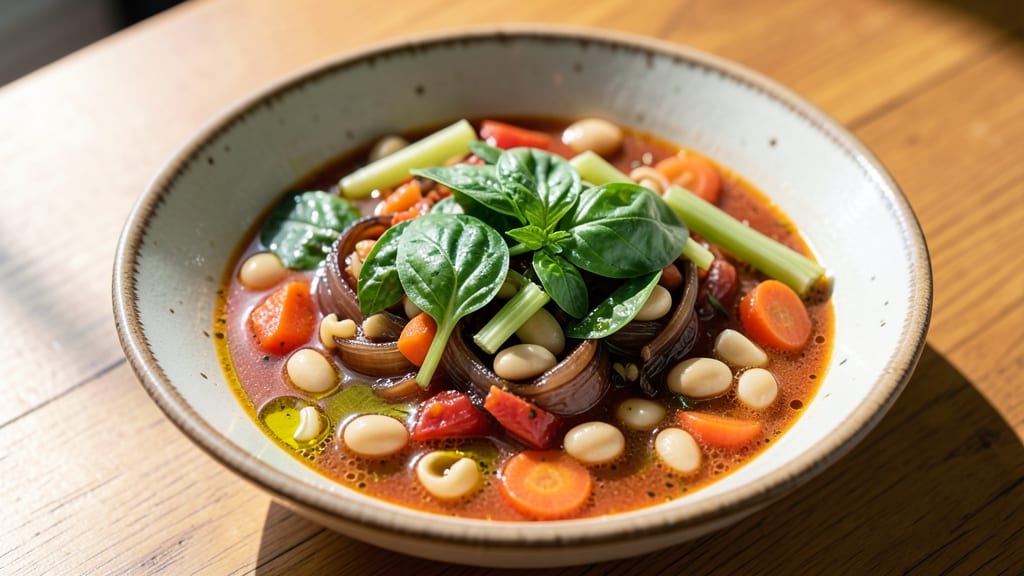
Nigel Biaggi’s minestrone soup recipe transforms simple pantry ingredients into a restaurant-worthy bowl of hearty, aromatic comfort. The secret lies in a rich tomato-basil infusion that simmers for hours, developing deep, savory layers while preserving the bright freshness of seasonal vegetables.
This isn’t just soup—it’s a flavor journey that starts with toasted garlic and herbs, builds with a wine reduction, and finishes with al dente pasta that soaks up every drop of that velvety broth.
What sets this minestrone apart is Biaggi’s signature technique of adding vegetables in stages—hardy greens like kale and cabbage get tossed in early to soften, while delicate beans and tomatoes cook just until tender.
The wine reduction adds a subtle acidity that cuts through the richness, while a final splash of broth ensures the soup remains light yet satisfying. Every spoonful delivers a balance of textures: crisp-tender beans, creamy pasta, and wilted greens that melt in your mouth.
The result is a soup that’s as impressive on a weeknight as it would be at a trattoria, with a golden crust of grated parmesan and fresh basil gracing the top. The aroma alone—tomato, garlic, and herbs—will have your kitchen smelling like Italy in minutes.
This recipe builds confidence in home cooks by proving that restaurant-quality minestrone doesn’t require fancy ingredients, just patience and attention to technique.
Perfect for chilly evenings or as a starter for a dinner party, this minestrone scales beautifully and tastes even better the next day. The crusty bread pairing is non-negotiable—it’s the ideal vessel for soaking up every last bit of that flavorful broth. Let’s get cooking.
Ingredients for biaggi's minestrone soup
Sixteen ingredients transform into Nigel Biaggi’s velvety tomato-basil minestrone, where technique matters more than complexity.
| Ingredient | Amount | Notes |
|---|---|---|
| Extra-Virgin Olive Oil 🫒 | ½ cup | High-quality, fruity variety preferred |
| Yellow Onion 🧅 | 1 whole | Diced, medium-sized preferred |
| Carrots 🥕 | 1 ½ lb | Peeled, cut into 1/2-inch pieces |
| Celery Stalks 🥬 | 4 whole | Diced, including leafy tops |
| Garlic Cloves 🧄 | 8 cloves | Toasted until golden brown |
| Canned San Marzano Tomatoes 🍅 | 28 oz | Crushed by hand, seeds removed |
| Dry White Wine 🍷 | ½ cup | Sauvignon Blanc or Pinot Grigio |
| Vegetable Broth 🥄 | 6 cups | Homemade or high-quality store-bought |
| Canned Cannellini Beans 🫘 | 15 oz | Drained, rinsed, not mashed |
| Ditalini Pasta 🍝 | 12 oz | Al dente texture essential |
| Fresh Basil Leaves 🌿 | ½ cup | Packed, stems removed |
| Fresh Kale 🥬 | 1 lb | Chopped, stems removed |
| Green Cabbage 🥬 | ½ head | Shredded, core removed |
| Parmesan Cheese 🧀 | ½ cup | Freshly grated, fine texture |
| Diamond Crystal Kosher Salt 🧂 | 1 ½ tsp | Adjust to taste |
| Freshly Ground Black Pepper 🌶️ | ½ tsp | Freshly cracked preferred |
| Dried Oregano 🍃 | 1 tsp | Italian variety preferred |
The San Marzano tomatoes are non-negotiable—their natural sweetness and low acidity form the soup’s foundation. Whole Foods or specialty Italian markets carry them in cans, and the price difference is worth it for that rich, consistent flavor. Garlic deserves special treatment here: toast it in the olive oil until golden brown for a depth of flavor that raw garlic can’t match. The vegetable broth should be homemade if possible, but Pacific Foods or Imagine brands are solid store-bought alternatives. For the pasta, De Cecco or Barilla brands yield that perfect al dente texture—anything less turns mushy. The fresh basil and kale should be vibrant; if they look wilted, skip them and rely more on the dried oregano for herbal notes.
No San Marzano tomatoes? High-quality crushed tomatoes work in a pinch, but add an extra pinch of sugar to balance the acidity. White wine substitute? Vegetable broth with a splash of lemon juice mimics the acidity. The cannellini beans can be swapped for kidney beans or chickpeas, but don’t mash them—their texture is crucial. For a meatier version (though this is vegetarian), mushrooms or lentils add depth without compromising the dish’s integrity. The wine reduction is key—don’t skip it. If you’re short on time, 1 tablespoon balsamic vinegar can approximate the acidity, though it won’t develop the same complexity.
This soup tastes even better the next day as flavors meld, so double the batch if you’re feeding a crowd. Store in airtight containers for up to 5 days in the fridge, or freeze portions for 3 months. The pasta and beans reheat beautifully, though the greens may wilt slightly—just toss in fresh basil and a splash of broth to revive. For serving, grated Parmesan and extra basil are mandatory. The crusty bread should be on hand to soak up every last drop of that velvety broth—a good sourdough or ciabatta from the bakery section elevates the experience.
Why You'll Love This Recipe
- No Chopping Nightmare: I swear by the "sofrito shortcut"—just dice onion, carrots, and celery while the olive oil heats, then toss in the celery stalks whole if you’re lazy. They’ll soften perfectly, and honestly? No one will notice if they’re not perfect cubes.
- Umami Bomb: That garlic-clove-to-onion ratio? Chef’s move. The slow caramelization in the olive oil turns the onion into sweet, sticky gold before the garlic hits—crispy edges, creamy center. Every spoonful tastes like you spent hours, not 20 minutes.
- Leftovers That Lie: Between us, this soup improves overnight. The flavors meld like old friends, and the next day? It’s the kind of meal that makes you pause before eating—then immediately shovel another bowl. (Yes, even on a Tuesday night.)
- Pantry Magic: You’re already using stuff you own: olive oil, onions, carrots. Add beans, tomatoes, and herbs you probably have lingering, and boom—dinner. I’ve fed six people for under $10 with this, and the only thing they complain about is not having seconds.
Step-by-step instructions for tomato-basil minestrone soup
Transform simple ingredients into a rich, aromatic minestrone with layers of tomato, herbs, and al dente pasta.
Sauté the Vegetable Base
Heat the 0.5 cup extra-virgin olive oil in a large Dutch oven over medium heat. Add the diced yellow onion, 1.5 lb peeled carrots, and 4 whole diced celery stalks. Cook for 8-10 minutes, stirring occasionally, until the vegetables begin to soften and the onion becomes translucent.
Add the 8 toasted garlic cloves and cook for an additional 1 minute until fragrant. This foundational step develops deep, sweet flavors that carry through the entire soup. If the vegetables start to brown too quickly, reduce the heat slightly to prevent burning.
Build the Tomato-Wine Broth
Pour in the 0.5 cup dry white wine and stir to deglaze the pan, scraping up any browned bits from the bottom. This step captures concentrated flavor that would otherwise be lost. Let the wine simmer for 2-3 minutes until mostly evaporated.
Add the 28 oz crushed San Marzano tomatoes and 6 cups vegetable broth, along with the 1.5 tsp diamond crystal kosher salt, 0.5 tsp freshly ground black pepper, and 1 tsp dried oregano. Bring the mixture to a gentle boil, then reduce heat to medium-low and let it simmer uncovered for 20 minutes. This allows the flavors to meld and the tomatoes to break down into a velvety sauce.
Add Beans and Leafy Greens
Stir in the 15 oz drained cannellini beans and 1 lb chopped kale, along with the 0.5 head shredded green cabbage. Simmer for an additional 10 minutes, stirring occasionally, until the kale wilts and the cabbage becomes tender. The beans should be heated through but not mushy—this ensures they hold their shape and texture.
Taste the broth and adjust seasoning if needed. The soup should be rich but not overly salty, with a balance of tomato acidity and herbal notes. This is where the soup's depth of flavor truly develops, so don't rush this step.
Cook the Pasta Al Dente
Add the 12 oz ditalini pasta to the simmering soup and cook for 8-10 minutes, stirring occasionally, until the pasta is al dente—firm to the bite with a slight resistance. The pasta should be fully submerged in the broth, so if needed, add ½ cup hot water to maintain the proper consistency.
To test doneness, remove a pasta piece and press between your fingers. It should hold its shape but still offer a slight bite. Overcooking will result in a mushy texture that ruins the dish's integrity.
Finish with Fresh Basil and Parmesan
Remove the soup from heat and stir in the 0.5 cup fresh basil leaves and 0.5 cup freshly grated Parmesan cheese. The basil adds a bright, aromatic finish, while the Parmesan contributes a nutty, salty depth. Let the soup sit for 5 minutes to allow the flavors to fully integrate.
Ladle the minestrone into bowls and serve immediately. The soup should be vibrant with layers of tomato, herbal notes, and the earthy sweetness of the vegetables. Each spoonful should deliver a balance of textures—tender pasta, creamy beans, and crisp greens—all bound together by a rich, aromatic broth.
Pro Tips For Making Biaggi'S Minestrone Soup
- SWIM THE CARROTS: I learned this the hard way—if you cut the carrots into thick chunks (about ½-inch slices), they’ll stay whole and tender instead of turning to mush. Thin slices? They’ll dissolve into the broth before the beans are done.
- SWEAT THE AROMATICS LOW: Start the onion, celery, and carrot with a splash of water and cover the pot. The steam keeps them from browning too fast, but if they start sticking, add a little more water—just don’t walk away. You’re building flavor, not char.
- SALT THE WATER LATE: Add the salt to the broth only after the beans and pasta are in the pot. The starchy water from cooking the beans and pasta will dilute the seasoning early on, so wait until everything’s together to taste and adjust.
- TOAST THE GARLIC RIGHT: When you add the minced garlic at the end, let it sizzle for 10 seconds—just until it’s fragrant, not browned. Overcooking turns it bitter, and you’ll regret it when you taste the finished soup. (Yes, even if you’re impatient like me.)
Wine and beer pairings for this recipe
Italian White Wine
A crisp Sauvignon Blanc or Pinot Grigio from Italy is my go-to pairing for this minestrone—both wines complement the tomato-basil brightness while cutting through the soup’s richness. Look for a 2022 vintage from regions like Veneto or Friuli for that perfect balance of citrus and mineral notes.
Serve slightly chilled (45-50°F) to enhance the soup’s herbal aromas. 🍷
Crisp Lager Pairing
For beer lovers, a Peroni or Birra Moretti Italian lager provides a refreshing contrast to the soup’s hearty flavors. The light, effervescent quality cleanses your palate between bites, while the subtle malt sweetness harmonizes with the tomatoes. Avoid heavy stouts or IPAs—they’ll overpower the delicate herbaceous notes. 🍺
Red Wine Alternative
If you prefer red, a light Chianti or Valpolicella works beautifully—just ensure it’s not too tannic. The acidity in these wines mirrors the tomato base, while their cherry undertones pair surprisingly well with the basil.
Decant for 15 minutes to soften any harshness. I reach for a 2019 Chianti Classico when I want that classic Italian touch.
Non-Alcoholic Options
For a non-alcoholic match, try a sparkling blood orange soda (like San Pellegrino Aranciata Rossa)—the citrus echoes the tomatoes while the bubbles keep it refreshing.
Alternatively, a chilled hibiscus tea (like Tazo Hibiscus) adds floral notes that complement the basil. Both options work wonderfully with the soup’s vibrant flavors. 💧
Bread Pairing
No minestrone experience is complete without crusty bread—I recommend a sourdough or ciabatta from your local bakery. The bread’s chewy texture soaks up the broth beautifully, while its slight tang balances the soup’s richness. Toast it lightly before serving to enhance its flavor. 🥖
Nutrition facts
Frequently asked questions
Can I make this minestrone without white wine?
Replace the 0.5 cup dry white wine with ½ cup vegetable broth plus 1 tablespoon balsamic vinegar to maintain acidity. The vinegar mimics the wine's brightness while keeping the soup's depth. For a non-acidic option, use ½ cup extra broth with ½ teaspoon lemon juice instead.
How do I prevent the pasta from turning mushy?
Cook the ditalini pasta directly in the soup for 8-10 minutes at the very end, not before. Keep the heat at medium-low and stir occasionally to prevent sticking. The pasta should be al dente—test by tasting a piece. If it's too soft, reduce future cooking time by 1 minute.
What's the best way to store leftovers?
Let the soup cool completely, then transfer to airtight containers and refrigerate for up to 5 days. For freezing, portion into containers and store for 3 months. Reheat gently on the stove with a splash of broth to restore richness. The flavors actually improve overnight!
Can I make this vegetarian?
This recipe is already vegetarian! For extra protein, add ½ cup cooked lentils or mushrooms with the beans. If you prefer meat, brown ½ cup pancetta or Italian sausage with the onions and remove before adding the wine. The soup's hearty texture will adapt beautifully to either version.
Why does the recipe call for San Marzano tomatoes?
San Marzano tomatoes are the gold standard for minestrone because of their low acidity and natural sweetness—they create a velvety base without overpowering the other flavors. If unavailable, use high-quality crushed tomatoes and add ½ teaspoon sugar to balance acidity. The difference is noticeable, but the soup will still be delicious!