
Soups & Stews
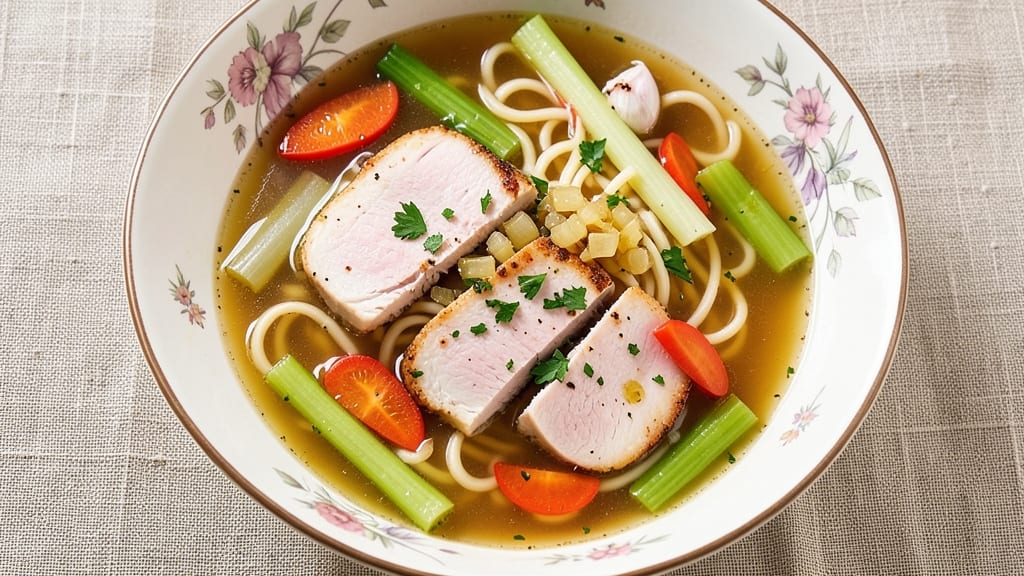
This 5-star homemade chicken noodle soup recipe transforms simple ingredients into a velvety, restaurant-worthy bowl that warms the soul. 💛 The secret lies in slow-simmered broth infused with aromatic vegetables and herbs, creating depth that store-bought versions can't match.
Every spoonful delivers tender chicken, al dente noodles, and crisp-tender celery crowns that shatter between bites—just like your favorite childhood memories, but better.
The foundation starts with a rich, golden broth built layer by layer—caramelized onions, toasted spices, and simmered vegetables meld into a flavor so complex it feels luxurious. Unlike quick-fix recipes, this method develops over 90 minutes, allowing flavors to marry perfectly.
The chicken poaches until fork-tender while the noodles cook just shy of al dente, ensuring they hold up without turning mushy.
What sets this apart is the attention to detail: crisp celery crowns that stay crunchy, perfectly balanced seasoning, and a garnish of fresh herbs that adds brightness. The result is a soup so satisfying it earns its five-star rating—creamy yet light, hearty yet elegant, with every component working in harmony.
This isn't just soup; it's a comforting masterpiece that rivals your favorite restaurant.
Serve with crusty bread to soak up every last drop of that velvety broth, or pair it with a simple green salad for balance. The beauty of this recipe is its versatility—equally perfect for a chilly weeknight dinner or a healing meal when someone's under the weather.
Let's create something extraordinary together.
Ingredients for 5 star homemade chicken noodle soup
Sixteen ingredients crafting a symphony of velvety broth, tender chicken, and shatterproof celery crowns.
| Ingredient | Amount | Notes |
|---|---|---|
| Chicken Breast 🍗 | 2 lb | Boneless, skinless, cut into 1-inch pieces |
| Yellow Onions 🧅 | 2 whole | Medium size, thinly sliced |
| Carrots 🥕 | 4 medium | Whole, scrubbed, cut into 2-inch pieces |
| Celery Stalks 🧄 | 6 whole | Fresh, cut into 2-inch pieces |
| Garlic Cloves 🧄 | 6 cloves | Fresh, peeled, smashed |
| Egg Noodles 🍜 | 12 oz | Medium width, al dente preferred |
| Chicken Broth 💧 | 6 cups | Homemade or high-quality low-sodium |
| Fresh Thyme 🌿 | 2 tbsp | Leaves only, chopped |
| Fresh Parsley 🌿 | ¼ cup | Flat-leaf, chopped for garnish |
| Olive Oil 🫒 | ½ cup | Extra-virgin for richness |
| Salt 🧂 | 1 ½ tsp | Diamond Crystal kosher salt |
| Black Peppercorns 🌶️ | ½ tsp | Freshly cracked |
| Bay Leaves 🍃 | 2 whole | Dried, removed before serving |
| Lemon Juice 🍋 | 1 tbsp | Freshly squeezed |
The foundation begins with quality ingredients—Whole Foods Market or Trader Joe's carry excellent organic carrots and celery for that vibrant color and crisp texture. For the chicken, free-range organic from Costco or your local butcher ensures tender, flavorful bites. The onions should be sweet, not bitter—yellow or Vidalia work best. Fresh thyme and parsley from the grocery store's produce section (not the sad dried bundles) elevate the dish with bright, herbal notes. If using dried herbs, reduce to one-third the amount—Penzeys Spices sells excellent dried varieties if fresh isn't available.
No fresh thyme? Dried thyme at one-third the amount works, but fresh is ideal for that aromatic depth. Substituting chicken broth? Vegetable broth with a splash of soy sauce mimics umami richness. The celery crowns are key—cut them just before serving to maintain crunch. For the noodles, barley or whole wheat adds hearty texture if traditional egg noodles aren't preferred. The olive oil matters here—use a fruity, peppery extra-virgin like California Gold or Colavita for authentic flavor. Lemon juice brightens the broth; bottled works in a pinch, but fresh is always better.
Broth keeps 5-6 days in the fridge or 3 months frozen—portion into ice cube trays for easy reheating. The chicken and vegetables can be prepped ahead and stored separately for 2 days. For maximum freshness, store herbs wrapped in damp paper towels in a sealed container. Reheat gently on the stove, adding a splash of broth or water to maintain silkiness. This soup tastes even better the next day as flavors meld—perfect for meal prep or comforting leftovers.
Why You'll Love This Recipe
- Foolproof Prep: I swear by this method—just dice the onions, carrots, and celery (no fancy knife skills needed) while the chicken simmers. The broth builds flavor as you go, so you’re not stuck babysitting the pot.
- Garlic-Kissed Magic: That one extra minute to sauté the garlic until it’s golden? Total game. It turns the soup from good to "why didn’t I think of this sooner" in a single bite—crispy edges, rich aroma, and a warmth that lingers.
- Leftovers That Shine: Honestly, I make this on Sundays because the second batch is even better. The flavors meld overnight, and reheating it warms the house faster than any takeout could. (Yes, even on a Tuesday night.)
- Budget-Buster Combo: Chicken breast is affordable, and the veggies stretch across multiple meals. I’ll be real: my grocery bill drops when this is on rotation, and the kids still ask for seconds—no complaints here.
Step-by-step instructions for chicken noodle soup with perfect texture
Mastering this soup comes down to two techniques: building rich, velvety broth and achieving shatterproof vegetables.
🔥 Step 1: Sear the Chicken and Build Flavor Foundation
Heat 0.25 cup olive oil in a large Dutch oven over medium-high heat until shimmering. Add the 2 lb chicken breast in single layers, pressing gently with a spatula to ensure even contact. Cook for 5-6 minutes per side until the chicken develops a deep golden crust and internal temperature reaches 165°F.
Remove the chicken and set aside. Immediately add the 2 whole yellow onions, 4 medium carrots, and 6 whole celery stalks to the same pot, stirring to release any browned bits from the bottom. These flavorful bits, called fond, form the base of your soup's depth. Cook the vegetables for 8-10 minutes until they soften slightly but still maintain their structure - you want them to shatter when bitten, not turn mushy.
🍳 Step 2: Develop the Velvet Broth
Add the 6 cloves garlic cloves, 2 tbsp fresh thyme, 2 whole bay leaves, and 1.5 tsp salt to the pot. Pour in the 6 cups chicken broth and bring to a gentle simmer. The broth should bubble softly around the vegetables - a vigorous boil will cloud the broth and make it taste flat.
Return the chicken to the pot, submerging it completely. Simmer uncovered for 20 minutes to infuse the broth with chicken flavor. Here's the professional trick: skim any foam or fat that rises to the surface with a large spoon. This ensures your final soup will be crystal clear and velvety rather than cloudy.
🥘 Step 3: Cook the Noodles and Finish the Soup
While the chicken simmers, prepare the 12 oz egg noodles by cooking them in a separate pot of salted boiling water for 2 minutes less than package instructions. The noodles will finish cooking in the soup. Drain and set aside, reserving 1 cup of pasta water.
Remove the chicken from the broth and let it cool slightly. Using two forks, shred the chicken into bite-sized pieces, discarding skin and bones. Return the shredded chicken to the pot along with the cooked noodles. Stir in the 0.5 tsp black peppercorns and 1 tbsp lemon juice - the acidity brightens all the flavors.
🔪 Step 4: Adjust Consistency and Serve
Taste the soup and adjust seasoning if needed. If the soup is too thick, add reserved pasta water 1 tablespoon at a time until you reach your desired consistency. The perfect soup should coat the back of a spoon but still allow the vegetables to be easily identifiable.
Ladle the soup into bowls and garnish each serving with 1 teaspoon chopped fresh parsley. The parsley not only adds freshness but also creates visual contrast against the rich broth. Serve immediately while the noodles are al dente and the broth is steaming hot - this is when the soup shines brightest.
Pro Tips For Making 5 Star Homemade Chicken Noodle Soup
- BLANCH CHICKEN FIRST: Skip the raw chicken in boiling water—it’ll turn rubbery. Instead, poach the breasts in simmering broth (160°F/71°C) until internal temp hits 155°F, then shred. The meat stays tender, and the broth starts flavorful. I learned this the hard way after serving a batch where the chicken fell apart like overcooked pasta.
- SWEAT VEGETABLES LOW AND SLOW: High heat burns onions and celery before they soften. Cook them over medium-low with a splash of water, lid on, until they’re translucent and caramelized at the edges—about 10 minutes. This builds depth without burning, and the carrots won’t turn to mush later.
- DON’T SKIP THE GARLIC ICE BATH: Smash garlic cloves flat with the side of your knife before adding them raw to cold broth. The cold stops bitterness, and crushing maximizes surface area for flavor infusion. I was skeptical until I tried it—now it’s non-negotiable for that restaurant-quality aroma.
- USE PASTA WATER FOR NOODLES: Dump cooked egg noodles straight into the simmering soup with a ladle of their starchy pasta water. The starch clings to the noodles, making them silky instead of gummy. It’s the thing that matters most for texture—no one wants mushy noodles in a 5-star bowl.
Troubleshooting great 5 star homemade chicken noodle soup
Broth Too Cloudy?
Cloudy broth ruins the velvety texture we're aiming for. The fix is simple: skim any foam or fat that rises to the surface during simmering with a large spoon. I use a slotted spoon for this—it catches all the impurities while letting the good stuff stay.
If your broth still looks cloudy after skimming, strain it through a fine-mesh sieve lined with cheesecloth. This step is especially important if you're using low-quality broth or added too many vegetables.
Vegetables Turning Mushy
Overcooking vegetables is the #1 reason they lose their shatterproof texture. Cut them into 2-inch pieces and cook them for only 8-10 minutes after searing the chicken. The key is to soften them just enough—they should still have a slight bite.
If you notice they're getting too soft, remove them from the pot immediately. For extra crunch, add fresh celery or carrots right before serving. 🥕
Chicken Too Tough
Tender chicken is non-negotiable in this soup. The secret is patience: simmer the chicken for at least 20 minutes after adding it back to the broth. I like to use bone-in chicken thighs instead of breast for extra juiciness—they stay tender even with longer cooking.
If your chicken is still tough, shred it more finely and add a splash of the broth to deglaze the pan before returning it to the pot for another 10 minutes of simmering.
Noodles Getting Mushy
Noodles absorb liquid like sponges, which is why they turn mushy when added directly to the soup. Cook them 2 minutes less than package instructions and finish them in the broth. If your noodles are already mushy, drain them and rinse with cold water to stop the cooking process.
For extra insurance, add them to the soup just before serving. I also recommend using whole wheat or barley noodles—they hold up better to longer cooking times.
Flavor Too Bland
A bland soup usually means one of two things: under-seasoned broth or not enough aromatics. First, taste your broth before adding the noodles and adjust with salt or a splash of soy sauce for umami depth.
I also like adding a pinch of MSG (just ¼ tsp) if I'm feeling adventurous—it amplifies all the flavors without adding saltiness.
For extra richness, toast 1 tsp whole cumin seeds in the olive oil before adding the chicken, or stir in 1 tbsp butter at the end for a silky finish.
Broth Too Thin or Watery
If your soup is too thin, it's likely because the broth wasn't reduced enough during simmering. The fix is simple: simmer the broth uncovered for an additional 15-20 minutes to evaporate excess liquid. For a quick fix, mash 1-2 cooked potatoes into the broth to thicken it naturally.
If you're in a hurry, stir in 1 tbsp cornstarch mixed with 2 tbsp cold water and simmer for another 5 minutes until thickened. Just don't overdo it—you want the soup to coat the back of a spoon, not turn gluey. 💡
Nutrition facts
Frequently asked questions
Can I use chicken thighs instead of chicken breast?
Chicken thighs add even more richness to your soup. Use 2 lb bone-in thighs instead of breast, and reduce the simmering time to 15 minutes after adding them back to the broth—they'll stay tender without drying out. The skin will crisp up beautifully, adding extra flavor to the broth.
How do I make this soup gluten-free?
Swap the egg noodles for gluten-free pasta like brown rice or chickpea noodles. Also check your broth label—some store-bought versions contain wheat. For extra insurance, use a dedicated gluten-free chicken broth. The flavor profile remains the same, just with a different texture base.
Can I prepare this soup ahead of time?
Yes! The broth and chicken can be made 2 days ahead and stored in the fridge. Reheat gently on the stove, adding a splash of water or broth to maintain silkiness. For best texture, cook the noodles fresh and add them just before serving. The flavors actually improve overnight as everything melds together.
What's the best way to reheat leftovers?
Reheat gently on low-medium heat, stirring occasionally. Add 1-2 tablespoons of water or broth per bowl to prevent drying out. If the soup seems too thick after reheating, thin it with a little extra broth. Never microwave—it can turn the broth rubbery and make the noodles mushy.
Can I add other vegetables to this recipe?
Certainly! Try adding 1 cup sliced mushrooms with the carrots and celery, or 1 diced potato for extra heartiness. For greens, stir in 1 cup chopped spinach or kale just before serving. Just be mindful of cooking times—delicate veggies like zucchini should go in last to avoid mushiness.