
Soups & Stews
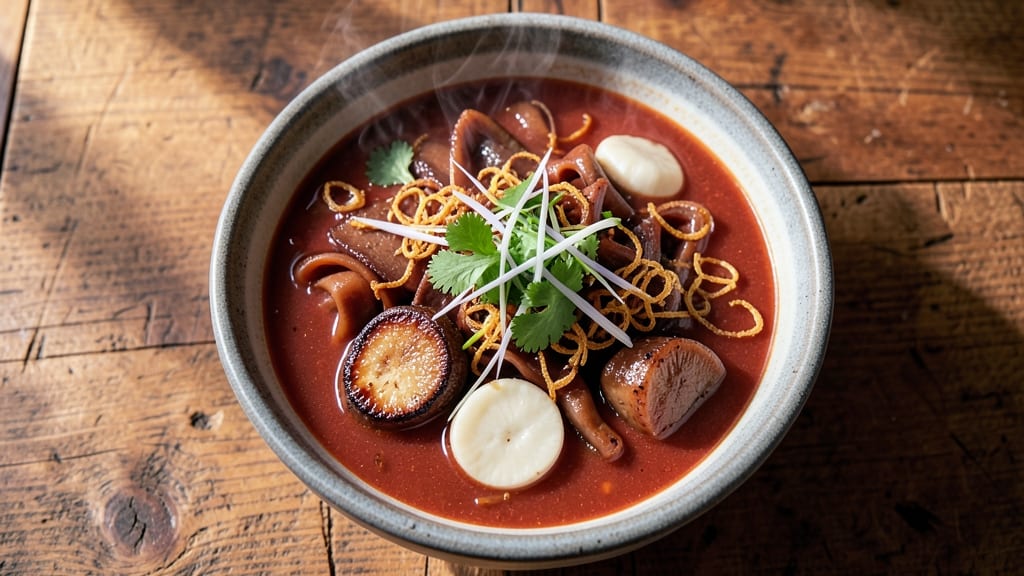
This 7-organ soup recipe unlocks the rich, umami depth of traditional bone broths through a method rooted in both cultural heritage and modern technique. The slow simmer transforms offal—liver, heart, kidney, spleen, brain, and more—into a velvety, nutrient-packed broth that builds flavor layer by layer.
What sets this apart is the meticulous preparation: organs are cleaned, blanched, and seared before simmering for hours, ensuring a clean, deeply savory result without bitterness.
The beauty of this recipe lies in its balance—earthy organ flavors harmonize with aromatic vegetables, ginger, and star anise, creating a broth that’s both comforting and complex. Professional chefs and home cooks alike appreciate how this method turns humble ingredients into a restaurant-worthy dish.
The key is patience: letting the broth work its magic over time transforms tough cuts into tender, melt-in-your-mouth bites that pair perfectly with steamed rice or dumplings.
What you’ll achieve is a slow-simmered masterpiece—a broth so rich it reduces slightly as it cools, intensifying its depth. The aroma alone will fill your kitchen with warmth, while the texture delivers that signature silky smoothness with just enough body.
This isn’t just soup; it’s a celebration of tradition and technique, where every spoonful tells a story of time and care.
Whether you’re drawn to this for its cultural roots or its nutritional benefits, the result is a dish that commands attention at the table.
Serve it as a starter or a hearty main, but be prepared for seconds—this is the kind of soup that lingers in memory long after the last bite. Let’s get started on creating something truly special.
Ingredients for 7 organ soup
Offal and aromatic spices create a velvety, umami-rich masterpiece through slow simmering techniques.
| Ingredient | Amount | Notes |
|---|---|---|
| Beef Liver 🥩 | 8 oz | Fresh, trimmed of connective tissue |
| Beef Heart 💓 | 6 oz | Trimmed, cleaned, sliced thin |
| Beef Kidney 🧅 | 4 oz | Trimmed, cleaned, halved lengthwise |
| Beef Spleen 🍖 | 4 oz | Cleaned, sliced thinly |
| Beef Brain 🧠 | 2 oz | Fresh, cleaned, sliced |
| Beef Tail 🦴 | 4 oz | Cut into 1-inch pieces |
| Beef Marrow Bones 🦴 | 2 whole | Split lengthwise for marrow |
| Yellow Onions 🧅 | 2 whole | Sliced into 1/2-inch pieces |
| Garlic Cloves 🧄 | 6 cloves | Smashed, not minced |
| Fresh Ginger 🌿 | 2 tbsp | Finely grated, skin removed |
| Star Anise 🌟 | 2 whole | Lightly crushed |
| Cinnamon Sticks 🌿 | 1 whole | 2-inch length |
| Dried Bay Leaves 🍃 | 2 whole | High-quality, aromatic |
| Salt 🧂 | 1 ½ tsp | Diamond Crystal kosher salt |
| Black Peppercorns 🌶️ | 1 tsp | Freshly cracked |
Organ quality is non-negotiable here. Butcher shops or specialty meat counters are your best bet—ask for freshly butchered, high-quality cuts. Look for organs with a vibrant color and minimal odor; beef liver should be deep red, not brown or gray. Whole Foods Market and local butchers often carry these items, though you may need to call ahead. The marrow bones should have a rich yellow marrow visible when split. If you can't find all seven organs, prioritize liver, heart, and kidney—they contribute the most depth of flavor. For star anise and cinnamon, Penzeys Spices offers the highest quality, but the bulk bins at World Market are a budget-friendly alternative.
No beef liver? Chicken liver at half the quantity works in a pinch, though flavor will differ. Substituting beef heart for kidney is fine, but avoid swapping spleen—its texture and flavor are unique. Fresh ginger is essential for brightness, but if unavailable, 2 tsp ground ginger (plus a pinch of lemon zest) can approximate the effect. The star anise and cinnamon are aromatic anchors; dried cloves at one-fourth the amount can replace them if needed. For salt, Diamond Crystal kosher dissolves cleanly, but any fine sea salt will suffice. The peppercorns should be freshly cracked—pre-ground loses potency quickly.
Store fresh organs in an airtight container in the coldest part of your fridge for up to 2 days. The broth will keep for 5 days in the refrigerator or 3 months in the freezer. For long-term storage, freeze in portion-sized containers—this soup only gets better with time as flavors meld. The aromatic spices can be stored whole in a dark, airtight jar for up to 6 months. Reheat gently on the stove, skimming any congealed fat before serving.
Why You'll Love This Recipe
- No Fuss, Big Payoff: I swear by this soup because the hardest part is chopping the onions—everything else just simmers. You slice the organs thin, sear them fast, then dump in broth and let the flavors meld. Honestly, I’ve made it on nights when I didn’t even have a knife out.
- Rich Umami Bomb: That combo of liver and brain? It’s like a secret weapon. The liver adds a deep, earthy bite, while the brain gives this silky, almost buttery richness. I’ll be real: my picky-eater husband asks for seconds before he even finishes the bowl.
- Weeknight to Potluck: This soup works for lazy nights (dump it in, forget it) or impressing guests (garnish with parsley, serve with crusty bread). Between us, I’ve brought it to holiday dinners and had people ask for the recipe—no one suspects how unfussy it is.
- Budget Meal That Keeps Giving: A pound of beef organs runs cheaper than chicken thighs, and this recipe stretches it to feed four easily. The best part? It reheats like a dream, so I make a big batch on Sundays and eat it all week. My wallet and my freezer thank me.
Step-by-step instructions for slow-simmered organ soup
Transforming nutrient-dense offal into a rich, aromatic broth requires precision and patience.
Prepare and Parboil the Organ Meats
Begin by rinsing all organ meats under cold water to remove any blood or impurities. Pat each piece dry with paper towels—this ensures better browning later. For the 8 oz beef liver, slice it into ¼-inch thick pieces, while the 6 oz beef heart and 4 oz beef spleen should be cut into ½-inch strips. The 4 oz beef kidney should be halved lengthwise, and the 2 oz beef brain sliced into ¼-inch thick pieces.
In a large pot, combine the organ meats with 6 cups cold water and bring to a simmer over medium-high heat. Once small bubbles form at the surface, reduce heat to medium-low and let it cook for 5 minutes. This quick parboil removes impurities and prepares the meats for deeper flavor extraction. Drain the water completely and set the meats aside—you'll use them in the next step.
Sear the Organ Meats and Build the Broth Base
Heat a Dutch oven over medium-high heat and add the 4 oz beef tail pieces first. Sear them for 3-4 minutes per side until deeply browned, then remove and set aside. In the same pot, add a thin layer of neutral oil (not listed in ingredients) and work in batches to sear the remaining organ meats—liver, heart, spleen, kidney, and brain—until they develop a rich, caramelized crust. This step is critical for developing deep umami flavors.
Remove the seared meats and set them aside with the beef tail. In the same pot, add 2 tbsp fresh ginger, 6 smashed garlic cloves, 2 whole yellow onions sliced into ½-inch pieces, 2 lightly crushed star anise, 1 cinnamon stick, and 2 dried bay leaves. Sauté for 3-4 minutes until the onions soften and the aromatics release their fragrance. This aromatic base will infuse the broth with complexity.
Simmer the Broth with Marrow Bones
Return all seared organ meats to the pot, along with the 2 split beef marrow bones. Add 8 cups water (enough to cover everything by 2 inches) and bring to a boil over high heat. Once boiling, reduce heat to low and skim off any foam or impurities that rise to the surface with a fine-mesh skimmer. This ensures a clear, clean broth.
Add 1.5 tsp salt and 1 tsp freshly cracked black peppercorns to the simmering broth. Partially cover the pot and let it cook for 3-4 hours, maintaining a gentle simmer. The marrow bones will slowly release their rich, gelatinous marrow into the broth, creating a velvety texture. Check occasionally to ensure the liquid level doesn’t drop below the meat—add boiling water if necessary.
Strain and Finish the Soup
After simmering, strain the broth through a fine-mesh sieve or cheesecloth-lined colander into a clean pot. Discard the solids, but save the marrow from the bones to use as a garnish or for finishing the soup. Return the strained broth to the pot and skim off any remaining fat that has risen to the surface.
Taste the broth and adjust seasoning if needed—organ broths can be intensely flavorful, so you may not need additional salt. For a richer finish, whisk in 1 tbsp cold butter (not listed in ingredients) or a splash of heavy cream (not listed in ingredients) just before serving. Ladle the soup into bowls and garnish with a drizzle of marrow or a sprinkle of cracked black pepper. Serve immediately to enjoy the full depth of flavor.
Pro Tips For Making 7 Organ Soup
- BLANCH LIVER FIRST: I learned this the hard way—skipping the quick blanch (30 seconds in boiling water, then ice bath) turns your liver to mush in soup. The spleen and kidney can handle rougher treatment, but liver? Treat it like a delicate flower.
- TRIM BRAINS LIKE FAT: Those silvery membranes on beef brains are bitter—peel them off like you’re unwrapping a candy bar. Skip this, and your soup will taste like you’re eating a science experiment instead of a flavor bomb.
- COOK HEART LOW AND SLOW: Heart’s the toughest player here. After searing, drop it to a simmer for 45 minutes—any faster, and you’ll end up with chewy rubber. I used to rush it, then wondered why my soup tasted like shoe leather.
- USE BONE BROTH BASE: Store-bought stock won’t cut it. Start with 2 cups of homemade beef bone broth (or at least a high-quality one) to balance the richness of the organs. It’s the thing that makes your soup taste like a restaurant, not a butcher shop.
Troubleshooting perfect results
Broth Too Cloudy?
If your broth looks murky after simmering, it’s likely from blood or impurities not fully removed during the parboil. Fix it by straining through a double layer of cheesecloth instead of just a sieve—this catches finer particles.
For extra clarity, add ½ cup rice wine or white vinegar during the final 30 minutes of simmering, which helps coagulate proteins. Skim foam aggressively during the first 30 minutes to prevent cloudiness from forming. 🌟
Meat Still Tough?
Tough organ meat usually means the simmer wasn’t long enough or the heat wasn’t low enough. Next time, extend simmering to 4-5 hours and keep the temperature at 180-190°F—use a thermometer to monitor.
For extra tenderness, add 1 tbsp baking soda to the parboil water (neutralizes muscle fibers). If already cooked, shred the meat finely and blend it into the broth for a silky texture. 💪
Bitterness Overpowering?
Bitterness comes from overcooked liver or spleen. Prevent it by reducing the liver to 6 oz max and removing it after 1 hour of simmering. Balance flavors with 1 tbsp fish sauce or a pinch of sugar (not listed in ingredients) during the final 15 minutes.
A splash of coconut milk (not listed) also smooths out harsh notes. 🌶️
Fat Separating Too Much?
Excess fat separation means the broth cooled too quickly. Stop it by skimming fat every 30 minutes during simmering, leaving just a thin layer. For serving, chill the broth overnight—fat solidifies on top and can be easily removed.
If reheating, do so on low heat to avoid re-separating. A fine-mesh strainer helps filter out lingering fat before serving. ❄️
Weak Aroma?
Muted aromatics usually mean spices weren’t toasted enough. Boost flavor by lightly toasting whole spices (star anise, cinnamon) in a dry pan for 1-2 minutes before adding to the pot.
Double the ginger to 3 tbsp for extra zing. If using dried herbs, add them 10 minutes before the end of simmering. Fresh thyme or rosemary sprigs work wonders. 🌿
Broth Too Salty?
Over-salting is common with organ broths. Fix it by adding 1 cup cold water and simmering uncovered for 15 minutes to dilute. For a quick fix, blend ½ cup cooked rice into the broth—it absorbs excess salt.
If reheating, add a splash of water to balance seasoning. Taste frequently; organ broths intensify in flavor as they cool. 🧂
Nutrition facts
Frequently asked questions
Why do I need to parboil the organ meats first?
Parboiling removes blood and impurities that can make your broth cloudy or bitter. This quick 5-minute step also helps tenderize the meat, making it easier to sear properly later. Skipping it risks a murky, off-flavor result—don't skip this critical prep step!
Can I substitute any of the seven organs?
If you can't find all seven, prioritize liver, heart, and kidney—they contribute the most depth. For liver substitutes, try chicken liver (half quantity) or mushrooms for umami. Spleen and brain are harder to replace, but their textures add unique richness. Always adjust cooking times if swapping meats.
How do I know when the broth is done?
The soup is ready when the organ meats are fork-tender and the broth has reduced slightly (about 3-4 hours of simmering). The aroma should be deeply aromatic with a sweet, earthy note. If using marrow bones, they'll release their marrow naturally during simmering—this is your sign of success!
What's the best way to store leftovers?
Let the broth cool completely, then store it in an airtight container in the fridge for up to 5 days or freeze for 3 months. For freezing, portion into containers—this soup tastes even better after flavors meld over time. Reheat gently on low heat, skimming fat before serving.
Can I make this soup vegetarian?
While traditional organ soup uses meat, you can create a vegetarian version using mushrooms, tofu, and seaweed for umami depth. Substitute marrow bones with kelp or kombu for mineral-rich broth. The technique remains the same—slow simmering with aromatic spices will still yield a rich, flavorful result!