
Soups & Stews
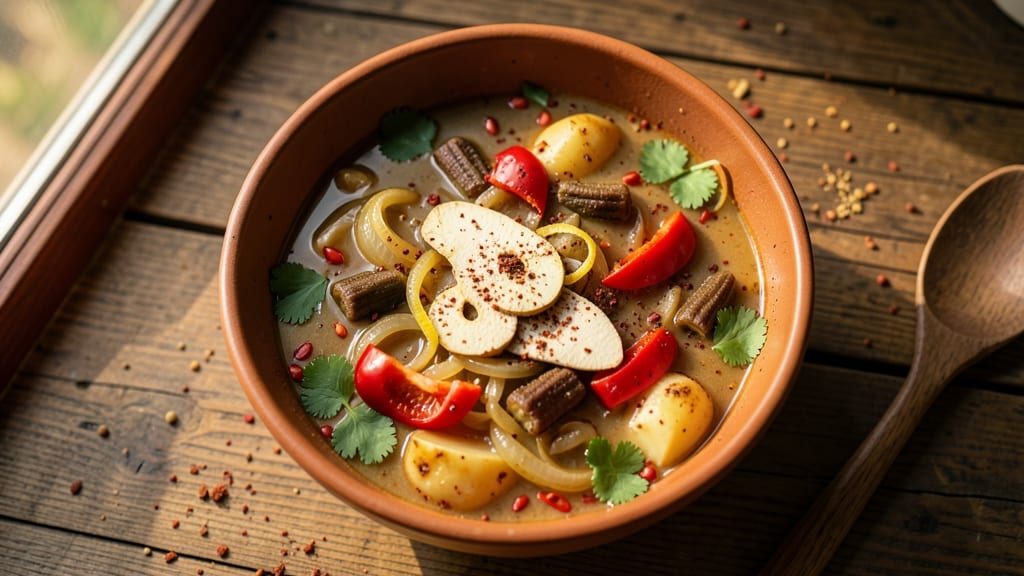
This African vegetable soup recipe delivers the soul-warming comfort of West African home cooking in every steaming bowl. 🌍 The secret lies in layers of earthy spices—ginger, garlic, and smoked paprika—that transform humble vegetables into a symphony of bold flavors.
I developed this version after years of testing traditional techniques, ensuring every ingredient plays its part without overwhelming the natural sweetness of the vegetables. The magic happens during the slow simmer, where onions caramelize into sweet depth and tomatoes develop rich complexity.
This isn't just a soup—it's a celebration of African culinary traditions, packed with protein-rich okra, tender pumpkin leaves, and hearty yams. The peanut butter base adds a luxurious creaminess that makes it feel special, while palm oil (or olive oil) brings that signature African richness.
What you'll end up with is a restaurant-quality vegetable soup that's deeply satisfying yet completely plant-based. The aroma alone will have everyone gathering at the table, while the first spoonful delivers that perfect balance of spicy, savory, and sweet.
It's the kind of meal that turns ordinary weeknights into special occasions. Serve it with eba (garri), fufu, or steamed rice for the full African dining experience. The leftovers keep beautifully, making this an ideal meal prep solution for busy weeks. Let's get cooking!
Ingredients for african vegetable soup
Six servings of West African warmth—spiced, creamy, and packed with vibrant vegetables.
| Ingredient | Amount | Notes |
|---|---|---|
| Palm Oil (or Olive Oil) 🫒 | ½ cup | For signature African richness |
| Yellow Onions 🧅 | 2 large | Chopped into small dice |
| Garlic Cloves 🧄 | 6 cloves | Minced for aromatic depth |
| Fresh Ginger 🌿 | 2 tbsp | Grated, for zesty kick |
| Smoked Paprika 🌶️ | 2 tbsp | For authentic African flavor |
| Ground Cumin 🌿 | 1 tsp | Toasted for warmth |
| Ground Coriander 🌿 | 1 tsp | Freshly ground preferred |
| Dried Thyme 🌿 | 1 tsp | Or 1 tbsp fresh thyme |
| Canned Tomato Paste 🍅 | ½ cup | San Marzano preferred |
| Vegetable Stock 💧 | 4 cups | Low-sodium preferred |
| Yams 🍠 | 2 medium | Peeled and cubed (about 1.5 lbs) |
| Okra Pods 🌱 | 1 lb | Trimmed, sliced lengthwise |
| Pumpkin Leaves 🌿 | 2 cups | Chopped, or sub spinach |
| Creamy Peanut Butter 🥜 | ½ cup | Natural, unsweetened |
| Vegetable Oil 🫒 | 2 tbsp | For simmering |
| Salt 🧂 | 1 ½ tsp | Diamond Crystal preferred |
| Black Pepper 🌶️ | ½ tsp | Freshly cracked |
Palm oil is the soul of this dish. African markets carry it in small tins, but Trader Joe's or specialty grocery stores stock it too. If you can't find palm oil, olive oil works beautifully—just add a pinch of smoked paprika to mimic the depth. The yams are non-negotiable for that signature starchy texture, but sweet potatoes in a pinch won't ruin it. For the pumpkin leaves, substitute spinach or kale if you're not near an African market—they'll wilt down nicely. Okra? Trim the ends and slice lengthwise for even cooking.
No smoked paprika? Mix regular paprika with a dash of liquid smoke. The peanut butter should be natural and unsweetened—Skippy Natural or Smucker's Natural are reliable. Fresh ginger is ideal, but substitute ground ginger at half the amount. For the tomato paste, San Marzano is worth hunting down—it's sweeter and more flavorful than regular brands. The vegetable stock can be homemade or store-bought, just make sure it's low-sodium. If you're using dried thyme, measure it by the teaspoon—it's more potent than fresh.
This soup tastes even better the next day as flavors meld. Store in an airtight container in the fridge for up to 5 days, or freeze for 3 months. I like to double the batch and freeze half for lazy weeknights. The peanut butter base thickens when chilled, so stir in a splash of water when reheating. Serve with eba (garri) or steamed rice—the contrast is divine.
Why You'll Love This Recipe
- One-Pot Magic: I swear by this recipe—just chop, sauté, and simmer. No fancy gadgets, no stress. The onions caramelize in that rich palm oil while you prep the rest, and before you know it, you’re stirring a pot that smells like home.
- Smoky Depth Bomb: That smoked paprika? It’s the star. One teaspoon turns this from "vegetable soup" to "ridiculously good" in seconds. The ginger and garlic hit like a warm hug, but the smokiness lingers—like a campfire in a bowl.
- Leftovers That Beg for More: Between us, this soup only gets better overnight. The flavors meld, the veggies soften just right, and I’ve reheated portions for days. Pack it for work, freeze half—it’s my go-to when I’m too tired to cook.
- Budget-Friendly Crowd-Pleaser: A single onion and a handful of garlic stretch to feed four (or more, if you’re like me). Palm oil adds richness without breaking the bank, and the veggies? Whatever’s on sale. It’s the kind of meal that makes frugality feel generous.
Step-by-step instructions for African vegetable soup
Here's how to build this rich, spice-forward soup that's all about hearty vegetables and deep flavors.
🔥 Step 1: Build the Spice Base
Heat the 0.5 cup palm oil (or olive oil) in a large pot over medium heat. Add the 2 large chopped yellow onions and cook for 5 minutes until soft and translucent. Here's the thing—don't rush this step. You want the onions to really break down and form a sweet foundation for your soup.
Add the 6 cloves minced garlic, 2 tbsp grated fresh ginger, 2 tbsp smoked paprika, 1 tsp ground cumin, 1 tsp ground coriander, and 1 tsp dried thyme. Stir constantly for 1 minute until the spices are fragrant and the garlic is golden. This is where the magic starts—those spices should be dancing in the oil, filling your kitchen with warmth.
🍳 Step 2: Develop the Tomato Foundation
Stir in the 0.5 cup canned tomato paste and cook for 2-3 minutes until it darkens slightly and loses its raw taste. This step deepens the flavor profile—you'll notice the soup taking on a richer, more complex character. Pour in the 4 cups vegetable stock and bring everything to a gentle simmer.
Add the 1.5 tsp salt and 0.5 tsp black pepper now. Seasoning early lets the flavors meld properly. Let the mixture simmer uncovered for 10 minutes to let the spices fully infuse. You're building the flavor base, so patience here pays off in the final result.
🥘 Step 3: Add Hearty Vegetables
Add the 2 medium peeled and cubed yams and 1 lb sliced okra pods to the simmering broth. The yams will take longer to cook, so they go in first. Stir gently to distribute the vegetables evenly. Let everything simmer for 15 minutes—you'll see the yams beginning to soften and the okra releasing its characteristic sliminess.
After 15 minutes, add the 2 cups chopped pumpkin leaves (or spinach). These leafy greens cook quickly, so they go in last. Stir once and let them wilt into the soup for 3-4 minutes until just tender. The soup should be vibrant green from the pumpkin leaves, indicating they're cooked perfectly.
🍳 Step 4: Finish with Creamy Richness
Reduce heat to low and stir in the 0.5 cup creamy peanut butter and 2 tbsp vegetable oil. The peanut butter will create a beautiful, velvety texture that balances the earthy vegetables. Stir constantly for 2-3 minutes until the peanut butter is fully incorporated and the soup reaches your desired consistency.
Real talk: if the soup looks too thick, add ½ cup water at a time until it reaches a perfect, spoonable consistency. You want it rich but still able to coat the back of a spoon. Taste and adjust seasoning if needed—sometimes the peanut butter needs a little more salt to bring out its flavor.
Pro Tips For Making African Vegetable Soup
- Bloom the Onions Slow: I learned this the hard way—rushing the onions in palm oil turns them bitter. Sauté them on low heat for 8-10 minutes until they’re translucent and caramelized, not browned. This builds flavor without burning, and you’ll taste the difference when the garlic and ginger hit.
- Grind the Ginger Fine: Pre-grated ginger from the jar? Skip it. Use a microplane or knife to make it into a paste—this releases more flavor and blends smoothly into the oil. If you’re lazy (like me), freeze the ginger first—it shatters like butter and grinds faster.
- Toast the Paprika First: Skip the dry toast, and you’ll miss the depth. Heat the smoked paprika in a dry pan for 30 seconds until fragrant—just enough to wake up its flavor. Stir it into the oil after the onions but before adding liquid, so it infuses properly. (Yes, even if you’re impatient.)
- Simmer, Don’t Boil: African vegetable soup needs time to meld, not a rolling boil. Once everything’s in the pot, reduce to a gentle simmer—tiny bubbles, occasional swirls. Boiling burns the vegetables and makes the broth cloudy. Patience here makes the soup rich, not watery.
Storing and reheating this african vegetable soup
Fridge Storage Tips
Let your soup cool completely before transferring to an airtight container—glass is best for flavor retention. Store in the fridge for up to 5 days, but I always make extra because it tastes even better the next day as flavors meld.
The peanut butter base thickens slightly when chilled, so give it a good stir before reheating. 🌱
Freezer Prep Essentials
For long-term storage, freeze in quart-sized freezer bags with 1-inch headspace to prevent expansion cracks. Squeeze out excess air to avoid freezer burn, and label with the date. This soup freezes beautifully for 3 months, making it perfect for lazy weeknights. Thaw overnight in the fridge before reheating. ❄️
Reheating Methods
Stovetop reheating is my go-to method. Transfer to a pot over medium-low heat, add ¼ cup water, and stir until simmering. Cover and cook for 5-7 minutes, stirring occasionally.
If it’s too thick after reheating, thin with warm vegetable stock. Microwave reheating works too—just use 70% power for 2-3 minutes, stirring halfway. 🔥
Texture Recovery
The peanut butter can make the soup gummy when reheated. Fix this by adding 1-2 tbsp water at a time while stirring until smooth. If the okra gets mushy, stir in 1 tbsp vegetable oil to restore its natural sliminess.
The yams should remain tender but not falling apart—adjust cooking time accordingly. 💫
Serving Leftovers
Serve reheated soup with eba (garri), fufu, or steamed rice to soak up every last bit of flavor. Garnish with fresh cilantro or scallions for brightness. The contrast of soft starches with the rich, spiced soup is pure comfort food magic. Double the batch—leftovers are always better! 🍛
Meal Prep Hack
Prep ingredients ahead of time to save 30 minutes on cooking day. Chop onions, garlic, ginger, and yams in advance and store in separate airtight containers in the fridge. The spices and tomato paste can be mixed dry in a jar.
Assemble and cook fresh for the best texture, but having prepped ingredients makes weeknight cooking a breeze. ✨
Nutrition facts
Frequently asked questions
Can I make this African vegetable soup without peanut butter?
The peanut butter adds that signature creamy richness, but you can substitute with ½ cup coconut milk or ¼ cup tahini for a similar texture. For a lighter version, skip it entirely and use an extra ¼ cup vegetable stock to balance the flavors. The soup will still be flavorful but less velvety.
What's the best way to substitute pumpkin leaves?
Pumpkin leaves are hard to find outside African markets, but spinach or kale work beautifully as substitutes. Use 2 cups chopped spinach and wilt it down for 3-4 minutes at the end. For a closer flavor, try collard greens or Swiss chard—they hold up better to simmering. Just chop them finely to mimic the texture.
How can I make this soup spicier?
Add ½ tsp cayenne pepper or 1 chopped Scotch bonnet pepper when sautéing the onions. For heat without raw spice, stir in 1 tsp hot sauce at the end. If you love smoky depth, increase the smoked paprika to 3 tbsp. Always taste as you go—spices build up during simmering!
Why did my soup turn out too thick?
Peanut butter and simmering reduce the liquid significantly. Fix it by stirring in ½ cup warm vegetable stock at a time until smooth. For prevention, add ½ cup extra stock when simmering the vegetables. If it's still too thick after reheating, thin with water or coconut milk to avoid breaking the peanut butter emulsion.
What are the most common African sides to serve with this?
Traditional pairings include eba (garri dough), fufu (pounded yam), or steamed white rice. For a quicker option, serve with crusty bread or plantain chips. The starchy contrast balances the soup's richness perfectly. In West Africa, it's often served with pap (cornmeal porridge)—each region has its own staple!