
Soups & Stews
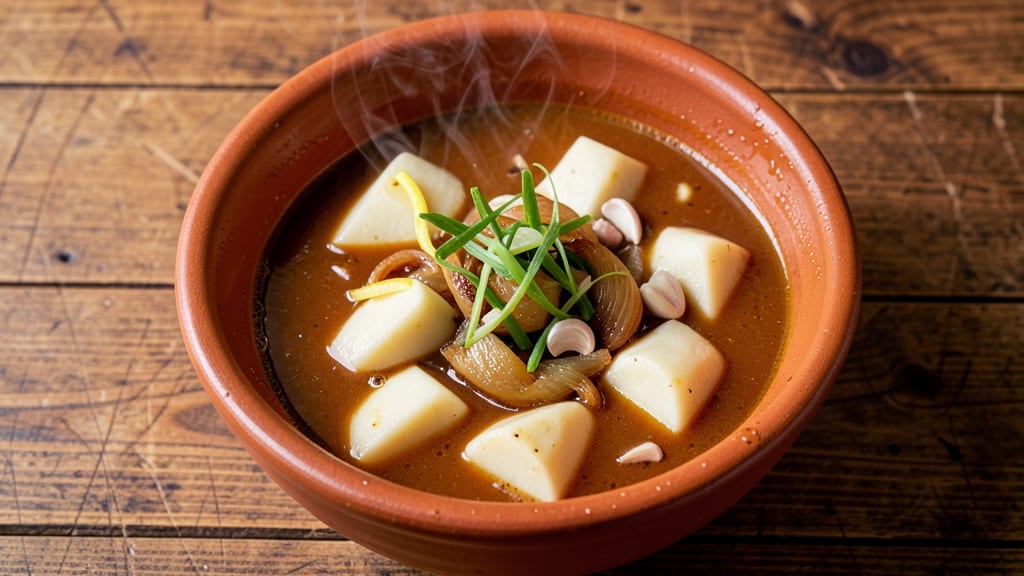
This African yam soup recipe delivers the rich, smoky depth of West African cuisine with every spoonful. 🔥 The harmony of palm oil, ginger, and slow-simmered yams creates a dish that's both comforting and sophisticated—perfect for vegetarian meals or as a base for pescatarian variations.
What makes this recipe special is its balance of earthy flavors and traditional techniques that transform simple ingredients into something extraordinary.
The foundation of this soup lies in its slow simmer, which allows the yams to soften while absorbing the aromatic blend of ginger, garlic, and palm oil. This method ensures a velvety texture that's impossible to achieve with rushed cooking.
The palm oil adds a distinctive smoky richness that's essential to authentic African flavors, while the ginger provides a warm, zesty contrast that brightens the dish.
By the time you're done, you'll have a deeply flavorful soup with tender yams, fragrant spices, and a smooth, satisfying broth. The result is a dish that pairs beautifully with traditional accompaniments like pounded yam or fufu, but also stands well on its own.
This recipe serves as both a comforting meal and a celebration of West African culinary traditions.
The beauty of this recipe is its versatility—you can keep it strictly vegetarian or add fish for a pescatarian twist. The instructions guide you through every step, from blending the spices to achieving that perfect slow simmer.
Whether you're cooking for a family gathering or simply craving a taste of Africa, this soup delivers restaurant-quality results at home.
Ingredients for african yam soup
Six aromatic spices and three key ingredients create this West African staple.
| Ingredient | Amount | Notes |
|---|---|---|
| Yams 🍠 | 2 lb | Medium-sized, peeled and cubed |
| Red Palm Oil 🫒 | ½ cup | For authentic smoky flavor |
| Fresh Ginger 🌿 | ½ cup | Grated, skin removed |
| Garlic Cloves 🧄 | 6 cloves | Minced for aromatic base |
| Onion 🧅 | 1 whole | Medium, diced |
| Vegetable Stock 💧 | 4 cups | Low-sodium preferred |
| Tomato Paste 🍅 | 2 tbsp | For depth of flavor |
| Ground Black Pepper 🌶️ | 1 tsp | Freshly cracked |
| Salt 🧂 | 1 ½ tsp | Kosher or sea salt |
| Dried Thyme 🌿 | 1 tsp | Or 1 tbsp fresh |
| Coconut Milk 🥥 | 1 can | 13.5 oz can, full-fat |
| Scotch Bonnet Pepper 🌶️ | 1 whole | Seeded for mild heat |
| Fresh Cilantro 🌿 | ¼ cup | Chopped for garnish |
| Olive Oil 🫒 | 2 tbsp | For sautéing |
The palm oil is non-negotiable for authentic flavor—African & Caribbean markets carry it, or check the international aisle at Whole Foods. If you can't find red palm oil, lightly toasted coconut oil works in a pinch, though it lacks that signature smoky depth. The yams should be firm and free of soft spots—medium-sized ones (about 1.5 lbs each) cook evenly. For ginger, look for knobby, firm rhizomes with smooth skin; the thicker the better. The scotch bonnet is optional but adds that signature West African heat—substitute habanero if unavailable.
No palm oil? Smoked paprika at half the amount adds some depth, though it won't match the richness. Fresh ginger is ideal, but dried ginger at one-third the amount works if you're in a hurry. The coconut milk can be swapped for coconut cream for a thicker texture, or cashew cream for a nutty twist. For the tomato paste, Trader Joe's squeeze tubes are perfect—they're shelf-stable and portion-controlled. If you're making this ahead, the yams absorb more flavor overnight, so double the stock if prepping in advance.
Store the soup in airtight containers for up to 5 days in the fridge, though it tastes even better the next day as flavors meld. Freezes beautifully for 3 months—portion into individual containers for easy reheating. The palm oil solidifies when chilled, so reheat gently on low to restore its velvety texture. Garnish with fresh cilantro just before serving, as it wilts quickly when added to hot soup. For extra richness, stir in a splash of coconut milk when reheating.
Why You'll Love This Recipe
- Here’s what sold me: the soup actually improves the next day. The flavors meld like old friends, and reheating it? Just add a splash of water and a pinch of salt. Not the prettiest, but the taste makes up for it—and it’s my go-to for lazy mornings.
- One-Pot Magic: I swear by this recipe—just chop, simmer, and forget about it. No fancy techniques, no multiple pans, and the yams practically melt into that rich red palm oil on their own. The ginger and garlic do all the heavy lifting while you sip tea.
- Rich Without Guilt: That deep, earthy red palm oil isn’t just flavor—it’s a velvety hug in a bowl. Honestly, the first time I tasted it, I thought, "Why haven’t I been doing this all along?" It’s hearty enough to fill you up but light enough to leave you satisfied, not stuffed.
- Crowd-Pleaser Always: Between us, this soup works for everyone—weeknight dinners, Sunday brunches, or even as a side for a big meal. My in-laws (the toughest critics) asked for seconds, and my picky 10-year-old devoured hers without complaint. (Yes, even with the ginger.)
Step-by-step instructions for African yam soup
Here's how to create a rich, aromatic yam soup with bold West African flavors.
🍳 Step 1: Sauté Aromatics in Olive Oil
Heat the 2 tablespoons olive oil in a large pot over medium heat until shimmering. Add the diced onion and cook for 5 minutes until softened and translucent. The onions should release their sweetness and become nearly colorless before moving to the next step.
Add the 6 minced garlic cloves and 0.5 cup grated fresh ginger to the pot. Cook for another 2 minutes until the raw garlic smell disappears and the mixture becomes fragrant. This aromatic base forms the flavor foundation of your soup, so don't rush this step.
🔥 Step 2: Build the Flavor Base with Palm Oil and Spices
Reduce the heat to medium-low and stir in the 0.5 cup red palm oil. Watch carefully as it melts and infuses with the aromatics—this oil carries the authentic smoky flavor that defines African yam soup. Add the 2 tablespoons tomato paste and cook for 3 minutes until it darkens slightly and becomes fully integrated.
Stir in the 1.5 teaspoons salt, 1 teaspoon dried thyme, and 1 teaspoon ground black pepper. Cook for another 1 minute to toast the spices and deepen their flavors. The mixture should smell rich and complex, with notes of earthy thyme, peppery heat, and the distinctive aroma of palm oil.
🥘 Step 3: Simmer Yams and Stock
Add the 2 pounds cubed yams to the pot and stir to coat them in the flavorful oil mixture. Pour in the 4 cups vegetable stock and bring the soup to a gentle boil. Once boiling, reduce heat to low and let it simmer uncovered for 20-25 minutes until the yams are tender when pierced with a fork.
Here's the thing—don't stir constantly. Occasional gentle stirring prevents the yams from sticking to the bottom while allowing the flavors to meld. The soup should develop a rich, golden color as it simmers, with the yams absorbing all that delicious flavor from the palm oil and spices.
🥘 Step 4: Finish with Coconut Milk and Scotch Bonnet
Carefully open the can coconut milk and stir in half of it (about ¾ cup) to create a velvety texture. Add the seeded Scotch bonnet pepper (remove seeds for milder heat) and simmer for another 5 minutes. The heat from the pepper should be subtle but noticeable, adding a gentle spice that complements the richness.
Taste the soup and adjust seasoning if needed. The yams should be fork-tender with just a slight bite, and the soup should have a creamy yet balanced consistency. If it's too thick, add a splash of water or more vegetable stock to reach your desired texture.
🍽️ Step 5: Garnish and Serve Warm
Remove the pot from heat and let the soup rest for 5 minutes to allow flavors to settle. Stir in the remaining ¾ cup coconut milk and gently fold in the 0.25 cup chopped fresh cilantro. The cilantro adds a bright, fresh finish that cuts through the richness of the palm oil and coconut milk.
Ladle the soup into bowls and serve immediately. The perfect bowl of African yam soup should have tender yams swimming in a creamy, spiced broth with visible flecks of palm oil and a hint of heat from the Scotch bonnet. The aroma alone should make your kitchen smell like a West African market!
Pro Tips For Making African Yam Soup
- Peel Yams Last: I learned this the hard way—peeling yams before boiling turns them mushy and waterlogged. Toss them whole into the pot, peel after cooking, and you’ll keep the texture firm and satisfying. (Yes, even if you’re impatient like me.)
- Bloom the Oil: Red palm oil burns faster than you think. Heat it low—just until it shimmers—and add onions first. Let them sweat for 5 minutes before adding ginger or garlic, or you’ll end up with bitter, acrid flavors. (Your nose will thank you.)
- Grate Ginger Fine: Skip the food processor—fresh ginger needs to dissolve, not float. Use the smallest holes on a box grater, then pound it with a mortar or rolling pin to break down the fibers. This guarantees the soup’s signature warmth, not just flecks of spice.
- Simmer, Don’t Boil: African yam soup needs time to develop depth, not a rapid boil that turns it into glue. Keep it at a gentle simmer—tiny bubbles, occasional swirls—and let it cook uncovered for at least 45 minutes. (Your future self will notice the difference.)
Flavor customization for these flavors
Smoky Heat Level
Adjust the Scotch bonnet pepper to control heat—remove seeds for mild heat or keep them for fiery intensity. For a smoky kick without heat, swap with 1 tbsp smoked paprika mixed into the palm oil during sautéing.
I love adding ½ tsp ground nutmeg to the simmering broth for warm, earthy depth that complements the ginger beautifully. 🌶️
Creamy Texture Variations
Need a richer texture? Stir in ¼ cup cashew cream instead of coconut milk for nutty complexity. For a lighter version, replace half the coconut milk with vegetable broth and finish with a swirl of light coconut cream.
The key is balancing richness—too much coconut milk can overwhelm the yams' natural sweetness.
Spice Blend Boost
Elevate the flavor profile by adding ½ tsp ground cinnamon and ¼ tsp allspice when sautéing the aromatics. These spices add warmth that pairs perfectly with the ginger and palm oil.
For a fresh twist, blend 2 tbsp fresh basil into the final soup—it brightens the dish without overpowering the traditional flavors.
Protein Additions
Make it pescatarian by adding 1 lb smoked fish (like mackerel) during the final 5 minutes of simmering. For a meat option, brown ½ lb ground beef with the onions and spices, then proceed with the recipe.
The protein soaks up the soup's flavors beautifully, turning it into a hearty one-pot meal.
Vegetable Enhancements
Boost nutrition by adding 1 cup chopped spinach or kale during the last 5 minutes of cooking—they wilt quickly while retaining vibrant color. For extra heartiness, include ½ cup diced sweet potato with the yams. These additions thicken the soup naturally while adding sweetness that balances the palm oil's richness.
Garnish Finishes
Transform the presentation with toasted coconut flakes sprinkled on top for crunch. A drizzle of chili oil adds visual contrast and extra heat. For a fresh finish, serve with lime wedges on the side—squeezing a little over the soup brightens all the flavors.
These garnishes turn a simple bowl into a restaurant-worthy dish. ✨
Nutrition facts
Frequently asked questions
Can I substitute regular yams for African yams?
Yes, but with a few adjustments. African yams (like white yams) have a smoother texture, while regular yams (like sweet potatoes) are sweeter and starchier. For best results, use orange-fleshed yams or dasheen yams if available. If using sweet potatoes, reduce simmering time by 5-7 minutes since they soften faster.
What if I can't find red palm oil?
No worries! Use lightly toasted coconut oil (heat 1 tbsp in a dry pan for 1 minute until golden) or ½ tsp smoked paprika mixed into the olive oil. For deeper flavor, add ¼ tsp liquid smoke to the simmering broth. The smoky richness will still shine through, though palm oil remains the authentic choice.
How do I make this soup spicier?
For extra heat, add 1 extra Scotch bonnet pepper (seeds in) or ½ tsp cayenne pepper when simmering the broth. For a gradual burn, blend 1 tbsp hot sauce into the finished soup. Remember: African yam soup balances heat with coconut milk's creaminess, so build spice gradually.
Can I make this soup ahead of time?
This soup tastes even better the next day as flavors meld. Store in airtight containers for up to 5 days in the fridge. For reheating, warm on low heat with a splash of water or coconut milk to restore creaminess. The yams will soften further—perfect for leftovers!
What's the best way to serve African yam soup?
Pair it with traditional West African staples like pounded yam, fufu, or jollof rice for a complete meal. For a lighter option, serve with crusty bread or a side salad. The creamy soup also works beautifully as a standalone dish with a squeeze of lime and fresh cilantro.