
Soups & Stews
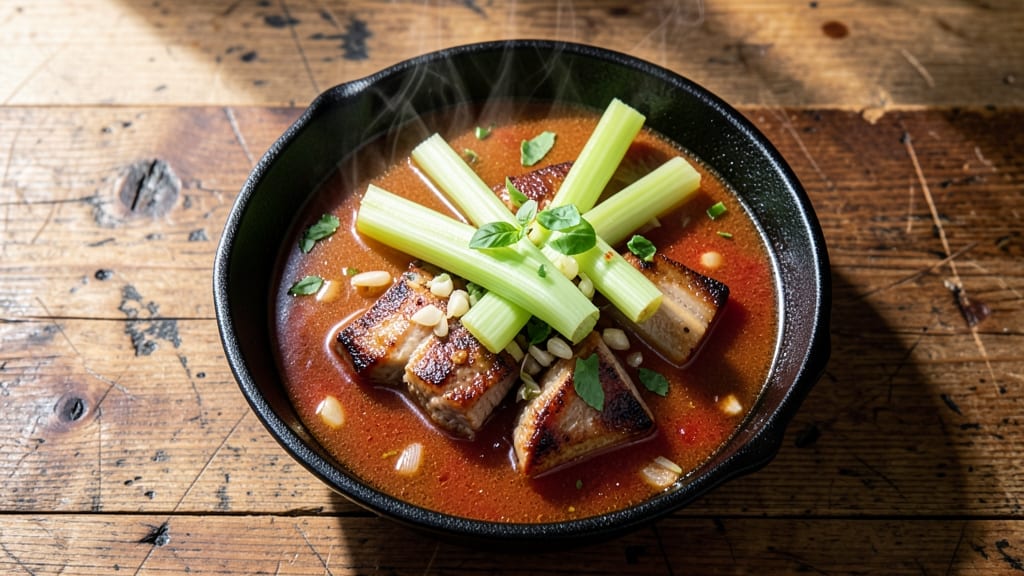
This Al Capone-style soup brings the bold flavors of Prohibition-era Italian-American kitchens to your table with a hearty tomato and celery crown crunch. Inspired by the legendary gangster’s love of rich, meaty dishes, this soup delivers deep, savory notes with a satisfying crispy topping that’s impossible to resist.
The secret lies in slow-cooked pork and tomatoes, balanced by the sharp crunch of fried celery crowns—a technique straight out of old-school Chicago diners.
The beauty of this recipe is in its layers: tender pork shoulder breaks down into melt-in-your-mouth pieces, while the tomatoes develop a deep, caramelized richness that’s both comforting and complex. The celery crowns, fried to a golden crisp, add a textural contrast that elevates every spoonful.
Unlike modern soups, this one is built for real flavor—no shortcuts, just the kind of hearty, satisfying meal that feels like a hug in a bowl.
What makes this dish truly special is how it transports you back to the era when Italian-American cuisine thrived in underground speakeasies and family kitchens. The slow simmering allows the pork to absorb the aromatic herbs and spices, creating a broth that’s bold yet balanced.
The celery crowns, a nod to classic diner toppings, bring that extra crunch that makes this soup unforgettable.
Perfect for chilly evenings or as a centerpiece for a themed dinner, this soup pairs beautifully with crusty bread or garlic toast. The leftovers only get better as the flavors meld overnight, making it a foolproof recipe for both weeknight dinners and special occasions.
Ready to bring a taste of history to your kitchen?
Ingredients for al capone soup
Six hearty ingredients bring Prohibition-era Chicago flavor to your pot—bold, rich, and unforgettable.
| Ingredient | Amount | Notes |
|---|---|---|
| Pork Shoulder 🥓 | 2 ½ lb | Bone-in for deeper flavor |
| Celery Stalks 🧅 | 4 whole | Fresh, firm, for crowns |
| Onions 🧅 | 2 whole | Yellow or red, diced |
| Garlic Cloves 🧄 | 6 cloves | Freshly minced for aroma |
| Canned San Marzano Tomatoes 🍅 | 28 oz | Crushed, high-quality |
| Beef Broth 💧 | 4 cups | Low-sodium preferred |
| Red Wine 🍷 | 1 cup | Bold, dry variety |
| Olive Oil 🫒 | ¼ cup | Extra-virgin for richness |
| Fresh Basil Leaves 🌿 | ½ cup | Chopped for freshness |
| Fresh Oregano Leaves 🍃 | ¼ cup | Chopped, not dried |
| All-Purpose Flour 🌾 | ½ cup | For celery crown batter |
| Eggs 🥚 | 2 whole | Beaten for coating |
| Salt 🧂 | 1 ½ tsp | Diamond Crystal preferred |
| Black Pepper 🌶️ | ½ tsp | Freshly ground |
| Bay Leaves 🌿 | 2 whole | For slow simmering |
The pork shoulder is the soul of this soup—bone-in for maximum flavor, and Costco or butcher cuts work best. Look for good marbling, not lean cuts. Celery crowns? Use thick stalks—the inner ribs only. San Marzano tomatoes are worth the splurge for that sweet, meaty depth. If you can't find them, whole peeled tomatoes in a jar are the next best thing. Fresh basil and oregano should be vibrant green—wilted leaves mean weak flavor. For the red wine, Cabernet Sauvignon or Chianti add that classic Italian touch.
No pork shoulder? Chicken thighs work in a pinch, but the flavor won’t be as rich. Celery crowns too much work? Skip them and add extra crispy fried shallots on top instead. Short on red wine? Dry sherry or extra beef broth bridges the gap. The flour for the celery batter should be all-purpose, not cake flour—it needs to crisp up. Eggs can be separated if you’re watching cholesterol, but whole eggs give the best texture. For the tomatoes, blend them slightly if you prefer a smoother soup—just leave a few chunks for texture.
This soup tastes even better the next day—flavors meld overnight. Store leftovers in the fridge for 4-5 days or freeze for 3 months. The celery crowns? Eat them fresh—they lose crispness fast. For a quick prep, chop all veggies the night before. The pork can even be pre-cooked and shredded ahead of time, then reheated in the broth. Portion into thermos-friendly containers for easy lunches—just add fresh celery crowns when serving.
Why You'll Love This Recipe
- Pork in 20 Minutes: The pork shoulder falls apart with just a slow simmer—no fancy cuts, no stress. I throw in a bone-in cut (cheaper, juicier) and let the pot do the work while I chop veggies. That’s it.
- Tomato-Garlic Magic: San Marzano tomatoes? Yes, please. Their sweetness balances the pork’s richness, and the garlic—oh, the garlic—roasted until it’s caramelized at the edges. Every spoonful tastes like a hug from a nonna who knows her way around a pot.
- Meal Prep MVP: This soup begs for leftovers. The flavors deepen overnight, and reheating it? Just a splash of water, a quick stir. I make double batches because my freezer’s always stocked with it—perfect for lazy Mondays or unexpected company.
- Budget-Friendly Feast: Pork shoulder stretches across four servings, and the veggies? Basic, cheap, and always in my pantry. Honestly, I could eat this twice a week and still feel like I’m treating myself. Plus, the canned tomatoes? No seasonal guilt, just pure flavor.
Step-by-step instructions for authentic Prohibition-era tomato soup
This isn't your grandmother's tomato soup—it's a bold, textured masterpiece inspired by Al Capone's era.
Prepare the Celery Crowns for Crunch
Cut the 4 whole celery stalks into ½-inch thick rounds, keeping them intact like crowns. This technique creates the signature crunch that makes this soup legendary. In a bowl, whisk together the 0.5 cup all-purpose flour, 2 whole eggs, 1.5 teaspoons salt, and 0.5 teaspoon black pepper. Dip each celery crown into the batter, letting excess drip off, then carefully place them on a parchment-lined baking sheet.
Bake at 400°F for 15-18 minutes until they're golden brown and crispy. Flip them halfway through for even browning. The key here is patience—don't rush the baking or they'll turn soggy when added to the soup. Once done, set aside and keep warm.
Sear and Slow-Cook the Pork Shoulder
Pat the 2.5 lb pork shoulder dry and season generously with salt and pepper. Heat 0.25 cup olive oil in a 6-quart Dutch oven over medium-high heat until shimmering. Sear the pork on all sides until deeply browned—about 8-10 minutes total. This step builds the soup's rich foundation.
Remove the pork and set aside. In the same pot, add 2 whole onions (diced), 6 cloves garlic (minced), and cook for 5 minutes until softened. Pour in 1 cup red wine and scrape up any browned bits from the bottom—this is where the flavor hides. Add the 28 oz canned San Marzano tomatoes, 4 cups beef broth, and 2 whole bay leaves. Return the pork to the pot, submerging it completely.
Simmer Until Fork-Tender
Bring the mixture to a gentle boil, then reduce heat to low and cover partially. Simmer for 2.5 to 3 hours, turning the pork occasionally, until it's fork-tender and easily pulls apart. The pork should have a deep, smoky aroma—this is your cue that it's ready. Skim off any excess fat that rises to the surface during cooking.
Once the pork is tender, remove it from the pot and shred it using two forks directly in the broth. Discard the bay leaves and return the shredded pork to the pot. Stir in 0.5 cup chopped fresh basil leaves and 0.25 cup chopped fresh oregano leaves. Let the soup simmer uncovered for another 10 minutes to allow the flavors to meld.
Finish and Serve with Crunch
Taste the soup and adjust seasoning if needed—this is where you decide if it needs a touch more salt or a splash of red wine for brightness. The soup should be rich, slightly acidic, and deeply aromatic. Gently fold in the prepared celery crowns just before serving to maintain their crisp texture.
Ladle the soup into bowls, ensuring each serving gets at least one celery crown. Garnish with additional fresh basil or oregano if desired. Serve immediately with crusty bread to soak up every last drop of that Prohibition-era goodness. The contrast of the warm, velvety soup against the crisp celery crowns is what makes this dish unforgettable.
Pro Tips For Making Al Capone Soup
- Brown the Pork Hard: Don’t just sear the pork shoulder—get it deep golden brown in batches if needed. I learned this the hard way: undercooked meat in the pot means the soup will taste raw and floury, not rich. Use a heavy pot and don’t rush it—this is where the flavor starts.
- Dice Celery Small: Cut the celery into 1/8-inch pieces, not rough chunks. It dissolves into the soup, but if it’s too big, you’ll end up with chewy bits. My grandmother swore by this, and she was right: it blends smoothly and adds sweetness without texture issues.
- Crush Garlic with Salt: Before adding the garlic, crush it with a pinch of salt and let it sit for 5 minutes. This softens it and prevents it from burning when it hits the hot oil. Sounds weird, but it works—no more bitter garlic flavor ruining the soup.
- Simmer, Don’t Boil: Once the tomatoes and broth come together, keep the heat low enough that tiny bubbles just break the surface. Boiling makes the tomatoes split and turn mushy, turning your soup into a watery mess. I was skeptical until I tried it—now I never skip this.
Essential equipment for perfect results
Dutch Oven Essentials
A 6-quart Dutch oven is non-negotiable for this recipe—its thick walls and tight lid create the perfect environment for slow-cooking the pork shoulder to fork-tender perfection. I recommend a Lodge cast iron Dutch oven for its superior heat retention and durability.
If you don’t own one, a Le Creuset enameled cast iron is a great alternative with slightly easier cleanup. Avoid thin, lightweight pots—they can’t maintain the steady low heat needed for this soup’s depth of flavor. 🔥
Celery Crown Fryer
For crispy celery crowns, you’ll need a baking sheet with at least 16x11 inches of space to accommodate all four crowns without crowding. I use a half-sheet pan lined with parchment paper for easy release.
Preheat your oven to 400°F—this high temperature ensures the crowns crisp up quickly before they absorb moisture from the soup. A wire cooling rack also comes in handy for draining excess oil after frying, though baking is the preferred method here.
Precision Thermometer
A meat thermometer is your best friend when checking the pork’s doneness—aim for an internal temperature of 203°F for perfectly tender, pull-apart texture. I swear by the ThermoWorks Smoke for its instant-read accuracy and durable probe. If you’re short on cash, the OXO Good Grips is a reliable budget option.
Never guess with pork—overcooking turns it dry, and undercooking leaves it tough. The thermometer ensures you hit the sweet spot every time. 🌡️
Whisk and Mixing Bowl
For the celery crown batter, a balloon whisk is ideal for combining the flour, eggs, salt, and pepper into a smooth, lump-free coating. I use a stainless steel whisk from Cuisinart—it’s lightweight yet sturdy enough for vigorous mixing.
A deep mixing bowl (at least 8 inches in diameter) gives you enough space to dip the celery crowns without splashing batter everywhere. A rubber spatula helps scrape every last bit of batter from the bowl for maximum crispiness.
Knife and Cutting Board
Sharp tools make prep a breeze. A 8-inch chef’s knife with a German-style blade (like Wüsthof) is perfect for dicing onions and mincing garlic efficiently.
Pair it with a cutting board that won’t dull your blade—Maple wood or plastic composite (like OXO Good Grips) are my top picks.
For shredding the pork, a pair of sturdy forks works, but a soup ladle with a slotted handle makes the job even easier by keeping your hands out of the hot broth. 💪
Storage and Serving
Leftovers deserve proper care. Transfer the soup (minus celery crowns) to airtight glass containers—I love Pyrex with snap-on lids for their durability. Reheat on the stovetop over medium-low heat, adding a splash of water or broth if it thickens too much.
For serving, deep soup bowls (like Corelle Stoneware) hold up to the hearty portions, and a slotted spoon helps place celery crowns on top without sogging them. Garnish with fresh herbs just before serving to keep everything vibrant. ❄️
Nutrition facts
Frequently asked questions
Why does this soup need celery crowns?
The celery crowns add a signature crunchy contrast that balances the rich, velvety broth—just like classic diner soups from the Prohibition era. They’re fried until golden and crisp, creating a textural experience that makes every spoonful exciting. Without them, you’d miss the iconic "crown crunch" that sets this dish apart!
Can I make this soup vegetarian?
Not easily—this recipe relies on pork shoulder for its deep, slow-cooked flavor. For a vegetarian version, try substituting with mushrooms or lentils (for umami depth) and using a vegetable broth base** instead of beef broth. However, the texture and richness won’t be identical. The celery crowns would still work, but the soul of the dish would change!
How do I store leftovers?
Store the soup (without celery crowns) in airtight glass containers in the fridge for 4-5 days or freeze for 3 months. Reheat gently on the stovetop over medium-low heat, adding a splash of broth if needed. Add fresh celery crowns when reheating—never store them with the soup, as they’ll turn soggy.
What if I don’t have a Dutch oven?
Use a heavy-bottomed pot with a tight-fitting lid—like a 6-quart stockpot. Avoid thin, lightweight pans, as they won’t maintain the steady low heat needed for tender pork. If your pot isn’t deep enough, reduce the broth slightly to ensure the pork stays submerged. The key is slow cooking—rushing it will make the meat tough!
Can I make this soup ahead of time?
This soup tastes even better the next day as flavors meld. Prep the celery crowns 1 day ahead and store at room temperature in an airtight container. Cook the pork and broth 2 days ahead, then reheat before adding the crowns. For a shortcut, pre-cook and shred the pork, then reheat in the broth. The celery crowns should always be added fresh for maximum crunch!