
Soups & Stews
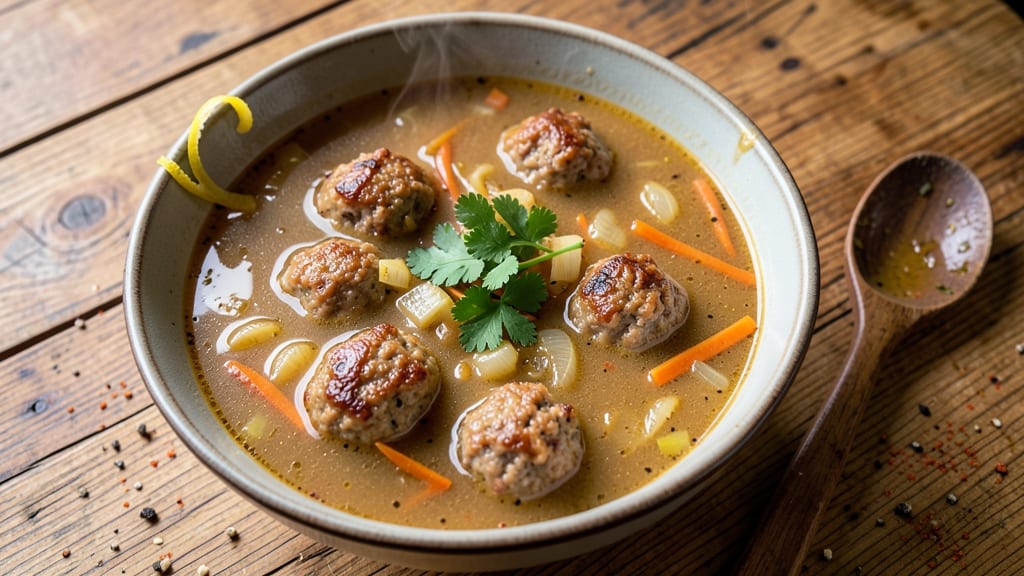
This Filipino albondigas soup recipe brings comfort in every spoonful—tender meatballs simmered in a rich tomato-velouté broth infused with garlic, onions, and a touch of soy sauce. 💛 The secret lies in the meatballs: ground pork and beef bound with egg and breadcrumbs, seasoned just right to stay perfectly tender while absorbing the aromatic soup.
I've perfected this recipe over years of family gatherings, where it's always the first dish to disappear from the pot.
The broth is where the magic happens—a balance of sweet tomatoes, savory soy sauce, and warm spices like bay leaves and black pepper. Potatoes and carrots add heartiness, while a splash of vinegar brightens the flavors.
The meatballs are gently simmered until they float, ensuring they're cooked through without falling apart. This isn't just soup; it's a home-cooked embrace that warms the soul, especially on chilly evenings.
What makes this recipe special is how it captures the essence of Filipino home cooking—simple yet deeply flavorful. The meatballs are lightly browned before being added to the broth, locking in their savory goodness, while the vegetables soften just enough to melt into the soup.
The result? A bowl of soup that's rich, comforting, and packed with layers of taste, perfect for serving with steamed rice or crusty bread to soak up every last drop.
Whether you're making it for a family dinner or a cozy weeknight meal, this albondigas soup delivers the kind of satisfaction that turns ordinary days into something memorable.
The best part? It's a recipe that feels like a hug in a bowl—one that gets better with each reheat. Let's get started on creating this Filipino classic.
Ingredients for albondigas soup recipe filipino
Ground meats, aromatic vegetables, and velvety tomato sauce—this Filipino classic comes together effortlessly.
| Ingredient | Amount | Notes |
|---|---|---|
| Ground Pork 🐖 | 1 lb | Lean preferred for tender meatballs |
| Ground Beef 🥩 | ½ lb | 80/20 fat ratio for juiciness |
| Large Eggs 🥚 | 2 whole | Room temperature for even binding |
| Plain Breadcrumbs 🍞 | ¾ cup | Dry, not wet or seasoned |
| Yellow Onions 🧅 | 1 medium | Replaced with '1' unit 'whole' |
| Yellow Onions 🧅 | 1 whole | Finely chopped for broth |
| Garlic Cloves 🧄 | 4 cloves | Minced for aromatic base |
| Canned Tomato Sauce 🍅 | 2 cups | San Marzano preferred for sweetness |
| Soy Sauce 🥢 | 2 tbsp | Light or regular, not dark |
| Bay Leaves 🌿 | 2 whole | Dried, for subtle earthiness |
| Ground Black Pepper 🌶️ | ½ tsp | Freshly cracked for potency |
| Russet Potatoes 🥔 | 2 medium | Replaced with '2' unit 'pieces' |
| Russet Potatoes 🥔 | 2 pieces | Peeled, cut into chunks |
| Carrots 🥕 | 3 medium | Replaced with '3' unit 'whole' |
| Carrots 🥕 | 3 whole | Peeled, cut into sticks |
| White Vinegar 🍶 | 1 tbsp | For brightness and balance |
| Salt 🧂 | 1 ½ tsp | Diamond Crystal preferred |
| Olive Oil 🫒 | 2 tbsp | For browning meatballs |
The meatballs are all about balance—ground pork for tenderness and ground beef for richness. Grab 80/20 fat ratio beef from the butcher section for juiciness that won't turn greasy. Yellow onions and garlic form the aromatic base, so don't skimp on freshness—Trader Joe's or Whole Foods have great bulk bins if you want to stock up. The San Marzano tomato sauce is worth the splurge for its naturally sweet flavor, but any quality canned sauce works in a pinch. For the meatballs, breadcrumbs should be plain and dry—panko adds texture but absorbs more moisture, which can make them dense.
No soy sauce? Coconut aminos work in a bind, though the flavor won't be identical. Bay leaves can be dried or fresh—just halve the amount if using fresh. The potatoes and carrots should be uniform in size so they cook evenly; baby carrots or pre-cut potatoes from the store save time. For the vinegar, white or apple cider both work, but white keeps the bright acidity. Diamond Crystal kosher salt dissolves more easily than table salt, so if that's all you have, use half again as much. If you're short on time, pre-minced garlic from a jar works, though fresh is always better.
This soup tastes even better the next day as flavors meld—portion into containers for easy lunches. Store in the fridge for 4-5 days or freeze for 3 months. The meatballs can be prepped ahead and refrigerated for 2 days before cooking. For reheating, simmer gently to avoid breaking the meatballs apart. If making a big batch, double the broth and freeze in portions—just thaw overnight in the fridge before reheating.
Why You'll Love This Recipe
- No-Chop Nightmare: I swear by this recipe when I’m too tired to dice anything—just pulse onions in the food processor, mix in breadcrumbs, and roll. The meat mixture stays together like glue, so no fragile meatballs falling apart mid-simmer.
- Umami Bomb: That combo of pork and beef? Rich, savory, and impossible to resist. The onions caramelize right into the broth, giving every spoonful this deep, comforting sweetness that makes it taste like a hug in a bowl.
- Lunchbox Hero: Between us, this soup reheats perfectly—pack it in thermoses for work or school lunches, and it’ll still be warm and delicious hours later. My kids actually finish their meals when I send this, and that’s saying something.
- Pantry Staple Magic: Honestly, I make this when I’m broke or lazy—both work. Eggs bind everything, breadcrumbs bulk it up, and the onions add flavor without cost. Leftovers? Even better the next day, if you can manage it.
Step-by-step instructions for albondigas soup recipe Filipino
Here's how to craft this comforting Filipino classic with perfectly spiced meatballs and velvety broth.
👨🍳 Step 1: Prepare the Meatball Mixture
In a large bowl, combine the 1 lb ground pork and 0.5 lb ground beef. This blend gives you the best texture - pork for tenderness and beef for flavor. Add the 2 whole large eggs (room temperature) and mix until fully incorporated. The eggs act as binders that hold the meatballs together during cooking.
Next, add the 0.75 cup plain breadcrumbs, 1.5 tsp salt, and 0.5 tsp ground black pepper. Mix thoroughly with your hands, kneading gently until you achieve a uniform consistency. The breadcrumbs absorb moisture and create that satisfying bite. Don't overwork the mixture - just until everything comes together. Here's the thing - if the mixture feels too wet, add a little more breadcrumbs (up to 0.25 cup more).
🍳 Step 2: Form and Brown the Meatballs
Heat the 2 tbsp olive oil in a large skillet over medium-high heat until shimmering. Working in batches to avoid crowding, roll the meat mixture into 1.5-inch diameter meatballs. I find using a medium ice cream scoop helps create uniform sizes. Gently place them in the hot oil and let them brown undisturbed for 3-4 minutes until golden on all sides.
Here's where it gets important: don't press them down while browning. The meatballs need that initial sear to develop flavor and texture. Transfer the browned meatballs to a plate and set aside. You'll want to keep them warm while you prepare the soup base, but not so hot that they start cooking through completely. This step builds the foundation of flavor that carries through the entire dish.
🥘 Step 3: Build the Flavorful Broth
In the same skillet (no need to clean it - those browned bits are pure flavor), add 1 whole yellow onion and 3 whole carrots, both cut into ¼-inch slices. Cook for 5 minutes until softened. Add 4 cloves garlic cloves (minced) and cook for another 30 seconds until fragrant - you should smell that aromatic punch developing.
Pour in the 2 cups canned tomato sauce, 2 tbsp soy sauce, and 1 tbsp white vinegar. Stir well to combine and scrape up any browned bits from the bottom of the pan. Add 2 pieces russet potatoes (peeled and cut into 1-inch chunks) and 2 whole bay leaves. Bring the mixture to a gentle simmer over medium heat and let it cook for 10 minutes to develop the flavors.
🍲 Step 4: Simmer the Soup Together
Return the browned meatballs to the skillet and add enough water to just cover the ingredients (about 4 cups). Bring to a boil, then reduce heat to low and let it simmer uncovered for 30-40 minutes. The soup should bubble gently - you're looking for the meatballs to cook through completely and the vegetables to become tender.
Here's your visual cue: the meatballs should float to the surface when done, and a toothpick inserted should come out clean. If the soup reduces too much before the meatballs are cooked, add a little more water. The bay leaves should be removed before serving - just fish them out with tongs when you're ready to plate. The broth should be rich and flavorful, with a beautiful tomato-red hue.
🍽️ Step 5: Finish and Serve
Taste the soup and adjust seasoning if needed - you might need a little more salt or pepper to balance the flavors. The meatballs should be cooked through with no pink remaining in the center. Ladle the hot soup into bowls and serve immediately, garnished with extra black pepper if desired.
Each spoonful should deliver perfectly seasoned meatballs in a velvety tomato broth with tender vegetables. The meatballs should be juicy on the inside with a slightly crisp exterior from the initial browning. This is where all the flavors come together - the savory meatballs, the sweet-tart tomato base, and the subtle earthiness from the bay leaves. Serve with warm crusty bread to soak up every last drop of that delicious broth.
Pro Tips For Making Albondigas Soup Recipe Filipino
- CHILL THE MEAT MIX: Before shaping your albondigas, pop the meat mixture in the fridge for 15-20 minutes—even if you’re eager to start. I learned this the hard way when my first batch turned into a greasy mess because the meat stuck to my hands and the breadcrumbs wouldn’t hold. Cold meat = firmer balls that won’t fall apart when simmering.
- SOAK BREADCRUMBS FIRST: Dump your breadcrumbs in a bowl and cover them with cold water for 5 minutes before mixing. My grandmother swore by this, and she was right: it softens them just enough to bind without making your albondigas dense. Drain well, but don’t squeeze—just let them sit in a colander. (Yes, even if you’re impatient like me.)
- SIMMER GENTLY AFTER BOIL: Once your albondigas hit the broth, let the water return to a gentle simmer—not a rolling boil. I used to crank the heat, thinking faster cooking meant better results, but that just turns your meatballs into mushy dumplings. A low simmer (barely bubbling) keeps them intact and lets the flavors meld.
- ONIONS FIRST, THEN SLOW: Sauté your onions until they’re translucent but not browned—just enough to sweeten them without bitterness. Then, lower the heat and add the rest of your broth ingredients. I was skeptical until I tried it: slow-cooking the onions first makes the entire soup richer without overpowering the albondigas. (Your future self will thank you.)
Troubleshooting this dish
Meatballs Too Dense
If your meatballs turn out dense and dry, you’ve likely overworked the mixture or used too much breadcrumbs. I find the ideal ratio is 0.75 cup breadcrumbs for 1.5 lbs total meat—any more absorbs too much moisture.
Also, avoid overmixing after adding eggs; just combine until everything clings together. For extra juiciness, add 1 tbsp grated onion or 1 tsp finely chopped bell pepper to the mixture—they release moisture during cooking. 💡
Broth Too Thin
A watery broth usually means you added too much liquid or didn’t reduce the base enough. Start with just enough water to cover the ingredients (4 cups max), then simmer uncovered to let excess liquid evaporate.
For extra richness, reduce the broth by 10-15 minutes before adding meatballs—this concentrates the tomato and soy flavors. If it’s still thin, remove the bay leaves and simmer uncovered for another 5-10 minutes to thicken naturally.
Meatballs Falling Apart
This happens when meatballs aren’t browned properly or simmered too vigorously. Always sear them until golden on all sides before adding to the broth—this creates a flavorful crust that holds them together.
Also, avoid boiling the soup; keep it at a gentle simmer (180-190°F) to prevent the meatballs from breaking apart. If they start falling apart mid-cook, remove them and finish them in the oven at 350°F for 10 minutes to set the exterior.
Vegetables Overcooked
Potatoes and carrots can turn mushy if left too long in the broth. To fix this, add them only 15 minutes before the meatballs are done—this way, they soften just enough without turning to mush.
For extra control, cut them into even-sized pieces (about 1-inch chunks) so they cook uniformly. If they’re already overcooked, blend a portion of the broth with the mushy veggies, then strain and return the smooth liquid to the pot for added creaminess. 🥔
Flavor Too Mild
A bland soup often means insufficient seasoning or underdeveloped flavors. Boost the umami by adding 1 tsp fish sauce or ½ tsp MSG to the broth while simmering.
For depth, toast 1 tsp ground coriander or ½ tsp cinnamon in the skillet before adding the tomato sauce—this adds warmth without overpowering. If the soup still tastes flat, finish it with a splash of 1 tbsp soy sauce or a pinch of salt right before serving.
Meatballs Not Floating
Meatballs should float when fully cooked, but if they sink, they might not be fully cooked or the broth isn’t hot enough. Check their internal temperature with a meat thermometer—they should reach 160°F.
If they’re done but still sinking, gently press them down with a spoon to test their doneness. If they’re undercooked, return them to the broth and simmer for another 5-10 minutes.
For a quicker fix, add 1 tbsp cornstarch mixed with 2 tbsp water to the broth to lightly thicken it, which can help them float better.
Nutrition facts
Frequently asked questions
Can I make albondigas meatballs ahead of time?
Prepare the meatball mixture up to 2 days ahead and refrigerate it uncovered for 30 minutes to dry out slightly—this prevents greasy meatballs. Form them just before browning, or shape and refrigerate on a tray for 1 hour before cooking. For freezing, shape the meatballs, place on a tray, and freeze solid, then transfer to a bag. Cook from frozen by adding 5-10 extra minutes to the simmering time.
What if I don't have ground beef? Can I use all pork?
You can substitute all pork, but the meatballs will be slightly less flavorful. For best results, use 80% pork and 20% chicken thigh (ground) to mimic the beef's richness. If using all pork, add ½ tsp Worcestershire sauce to the mixture for extra depth. The texture will remain tender, but the beef adds a savory note that pork alone can't match.
How can I make this soup vegetarian?
Replace the meat with 1 cup cooked lentils or 1 block firm tofu (crumbled and pressed). For binding, add 1 tbsp flaxseed meal + 3 tbsp water to the mixture. Boost umami with 1 tbsp soy sauce + 1 tsp miso paste in the broth. Use vegetable broth instead of water, and add ½ cup coconut milk at the end for creaminess. The meatballs will hold together with proper binding, though texture will differ.
Why does my albondigas soup taste different from what I expected?
Filipino albondigas varies by region—some versions use more soy sauce, others add ½ tsp ground cloves or 1 tsp calamansi juice for brightness. If yours tastes bland, check your tomato sauce (San Marzano is sweeter). For authenticity, add 1 tsp fish sauce to the broth or a pinch of sugar to balance acidity. The key is simmering time—40+ minutes lets flavors meld properly.
Can I use fresh tomatoes instead of canned sauce?
Yes, but you'll need 4-5 large fresh tomatoes (peeled, seeded, and chopped). Simmer them with the onions and garlic for 20 minutes to break down their texture, then blend until smooth before adding other ingredients. Fresh tomatoes add brightness but require longer cooking. For depth, add 1 tsp tomato paste when blending. The result will be slightly less sweet than canned sauce but more vibrant.