
Soups & Stews
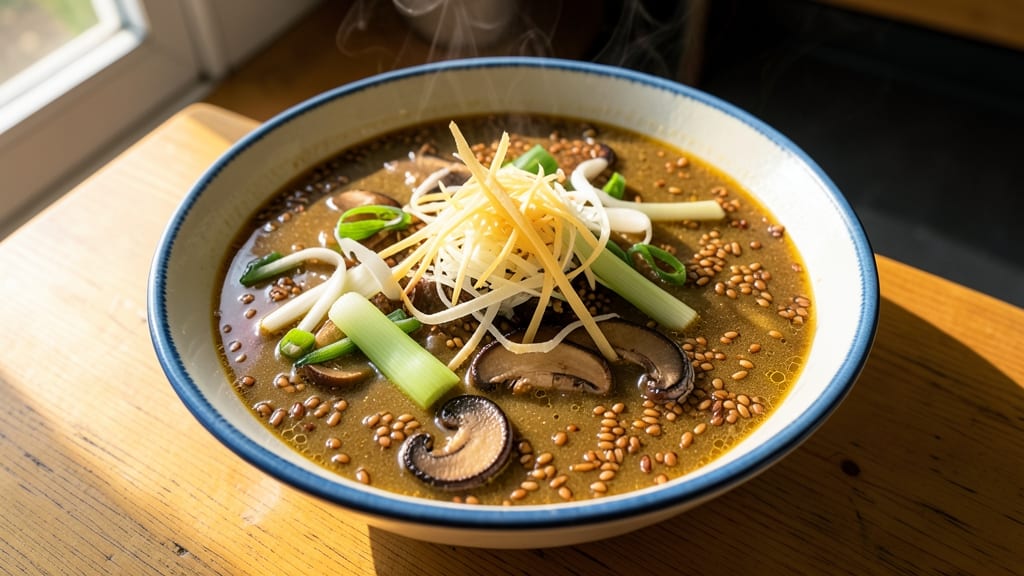
This Chinese amaranth soup delivers earthy, nutty depth with silky celery crowns that transform simple ingredients into a restaurant-worthy bowl. The secret lies in toasting the amaranth grains until they release their natural nuttiness, then simmering them with mushrooms, ginger, and scallions until the flavors meld into a velvety broth.
What makes this recipe special is the balance—it's hearty enough to satisfy but light enough for any meal.
Unlike traditional Chinese soups that rely on meat or seafood, this vegetarian version proves plant-based cooking can be equally rich and complex. The amaranth grains absorb the aromatic broth, creating a texture that's both comforting and intriguing.
For those who prefer a deeper flavor, simply swap the vegetable broth for bone broth—no other adjustments needed. The celery crowns add a delicate crunch that contrasts beautifully with the creamy soup base.
What you'll end up with is a soup that's deeply flavorful yet surprisingly light, with each spoonful offering layers of umami from the mushrooms, warmth from the ginger, and a subtle nuttiness from the amaranth.
The silky celery crowns melt slightly as they cook, releasing their natural sweetness into the broth. This isn't just a soup—it's a complete meal that feels both comforting and sophisticated.
Perfect for chilly evenings or as a light lunch, this amaranth soup adapts effortlessly to your preferences. Garnish with sesame oil and chili flakes for a touch of heat, or keep it simple with a sprinkle of fresh cilantro.
The recipe scales beautifully, making it ideal for small gatherings or meal prep. Let's create this nourishing bowl of flavor.
Ingredients for amaranth soup recipe chinese
Earthy amaranth meets delicate celery crowns in this vegetarian Chinese-inspired bowl.
| Ingredient | Amount | Notes |
|---|---|---|
| Amaranth Grains 🌾 | ½ cup | Rinsed thoroughly before toasting |
| Celery Crowns 🧅 | 2 whole | Organic preferred, thick stems removed |
| Shiitake Mushrooms 🍄 | 8 oz | Fresh or rehydrated dried |
| Fresh Ginger 🧄 | 1 ½ tbsp | Finely grated, peeled |
| Green Onions 🧅 | 4 whole | White and green parts separated |
| Vegetable Broth 💧 | 4 cups | Low-sodium preferred |
| Sesame Oil 🫒 | 1 tbsp | Toasted sesame oil preferred |
| Red Chili Flakes 🌶️ | ½ tsp | Adjust for spice preference |
| Fresh Cilantro 🌿 | ¼ cup | Chopped for garnish |
| Garlic Cloves 🧄 | 3 cloves | Minced finely |
| White Miso Paste 🍜 | 1 tbsp | For umami depth |
| Sesame Seeds 🥜 | 1 tsp | Toasted for garnish |
| Vegetable Oil 🫒 | 1 tbsp | For toasting amaranth |
| Sea Salt 🧂 | 1 tsp | Adjust to taste |
The amaranth is the soul of this soup—look for organic grains at specialty stores like Whole Foods or Trader Joe's. Toasting them in vegetable oil until nutty is non-negotiable; it unlocks their full flavor. For mushrooms, shiitake delivers the deepest umami, but cremini or oyster work too. Celery crowns should be vibrant and crisp—skip the rubbery ones. The ginger needs to be fresh; dried just won't cut it here. If you're using dried shiitake, soak them for 20 minutes to restore texture.
No sesame oil? Avocado oil with a pinch of toasted sesame seeds works in a pinch. Swap vegetable broth for bone broth if you want richer depth, but keep the miso paste—it's the umami anchor. Fresh cilantro is ideal, but dried oregano at half the amount works if needed. For extra heat, add Sichuan peppercorns while toasting the amaranth. The celery crowns should be blanched just until tender—overcooking turns them mushy. If your miso paste is thick, thin it slightly with warm water before adding.
Toasted sesame oil and seeds keep for 3 months in a cool, dark place. Store cooked amaranth in an airtight container for 5 days in the fridge, or freeze for 3 months—it reheats beautifully. For meal prep, cook the amaranth and broth separately, then combine when reheating. Garnish with chili flakes and cilantro right before serving—flavors peak fresh. This soup doubles easily; just scale the broth and celery crowns proportionally.
Why You'll Love This Recipe
- No-Fuss Prep: This soup comes together while you sip your tea. Just toast the amaranth until nutty, toss in chopped celery crowns and shiitakes (no fancy dicing—rough chunks work), and let the ginger and green onions do their magic. Honestly, I’ve made it with pre-sliced mushrooms and still felt like a pro.
- Earthy Umami Bomb: That first spoonful of shiitake-infused broth with toasted amaranth? It’s like a warm hug for your taste buds. The ginger cuts through the richness, and the green onions add a bright finish—simple, but ridiculously satisfying. (Yes, even on a Tuesday night.)
- Meal Prep MVP: Make a big batch on Sunday, and you’ve got lunch sorted for the week. The amaranth holds up beautifully, and the flavors deepen overnight—perfect for reheating or packing in jars. My daughter picks out the mushrooms first, but she’s back for seconds anyway.
- Budget-Friendly Powerhouse: Amaranth and shiitakes stretch this soup into a full meal without breaking the bank. Celery crowns add freshness for pennies, and ginger lasts forever in the freezer. Between us, this is the kind of recipe that makes grocery day feel like a win.
Step-by-step instructions for amaranth soup with Chinese flavors
This method transforms humble amaranth into a velvety, umami-rich soup where nutty grains meet silky celery and earthy mushrooms.
Toast the Amaranth for Nutty Depth
Heat a dry skillet over medium heat and add the 0.5 cup amaranth grains. Toast for 3-4 minutes, stirring constantly with a wooden spoon, until the grains turn a rich golden brown and release an aromatic, nutty fragrance. This step is crucial—it develops the amaranth's natural earthiness and prevents a raw, chalky texture in your soup.
Transfer the toasted amaranth to a bowl and set aside. The grains should look dry and slightly puffed. If you notice any grains that haven't browned evenly, return them to the skillet for another 30 seconds of toasting. This ensures every bite delivers that satisfying nutty crunch that distinguishes this soup from ordinary grain-based dishes.
Build the Aromatic Base
In the same skillet, add 1 tablespoon vegetable oil and set over medium heat. Add the 2 whole celery crowns (cut into ½-inch slices) and 8 oz shiitake mushrooms (sliced) and cook for 5-6 minutes, stirring occasionally, until the mushrooms release their moisture and begin to soften. You're looking for a deep golden color and a slightly caramelized aroma.
Add the 3 cloves minced garlic and 1.5 tablespoons finely grated fresh ginger and cook for another 30 seconds until fragrant. Here's where the foundation of your soup's complexity begins—these aromatics will form the flavor backbone. If you notice the garlic starting to brown too quickly, reduce the heat slightly to prevent bitterness.
Develop the Umami with Miso and Broth
Stir in the 1 tablespoon white miso paste and cook for 1 minute, allowing it to melt into the vegetables and create a glossy, savory coating. This is your umami anchor—the miso will deepen the soup's complexity and balance the earthy amaranth. Pour in the 4 cups vegetable broth and bring to a gentle simmer.
Add the toasted amaranth grains and simmer for 20-25 minutes, stirring occasionally, until the grains are tender but still hold their shape. The soup should have a creamy, velvety consistency with the amaranth grains visibly plump. If the soup reduces too quickly, add ½ cup water to maintain the proper texture. This simmering time is critical—undercooking leaves raw grains, while overcooking turns them mushy.
Finish with Celery and Seasoning
Remove the soup from heat and stir in the 0.5 teaspoon red chili flakes and 1 teaspoon sea salt, adjusting to taste. The chili flakes add a subtle heat that cuts through the richness, while the salt enhances all the flavors. Here's where you can taste and adjust—this is your opportunity to balance the soup's complexity before serving.
Garnish each serving with 2 tablespoons chopped fresh cilantro and ½ teaspoon toasted sesame seeds, along with the white and green parts of 1 whole green onion (sliced separately). The cilantro adds freshness, while the sesame seeds contribute a nutty crunch that complements the amaranth. Serve immediately while the soup is hot and the amaranth maintains its satisfying texture.
Optional Sesame Oil Finish (For Depth)
Just before serving, drizzle each bowl with ½ teaspoon sesame oil. This final touch adds a toasty aroma and rich flavor that elevates the soup from good to exceptional. The oil should float on the surface, creating a delicate sheen that signals the dish's sophisticated character. This step is optional but highly recommended—it's the signature touch that makes this amaranth soup uniquely Chinese-inspired.
Let the soup sit for 2-3 minutes after adding the sesame oil to allow the flavors to meld. The contrast between the warm soup and the cool oil creates a textural and temperature balance that's truly satisfying. Serve with steamed rice or crusty bread to soak up every last drop of this nutritious, flavorful soup.
Pro Tips For Making Amaranth Soup Recipe Chinese
- Toast the Amaranth: Dump raw amaranth into a dry pot and toast it over medium-high heat for 3-4 minutes until it smells nutty and fragrant. I learned this the hard way—skipping it makes the soup taste flat and grainy, like you’re eating oatmeal instead of a proper Chinese-style broth.
- Slice Celery Thin: Use a sharp knife and cut celery crowns into ⅛-inch-thick half-moons, not thick chunks. Thinner slices soften faster and blend into the soup without leaving chewy bits—my grandmother swore by this, and she was right.
- Soak Shiitake First: Toss dried shiitake mushrooms in hot water for 15 minutes before cooking, then slice the rehydrated caps. This guarantees they’ll cook evenly and release their umami punch without turning to mush—yes, even if you’re impatient like me.
- Finish with Ginger Zest: After simmering the soup, grate a teaspoon of fresh ginger zest into the pot right at the end. It brightens the flavor without overpowering, and it’s the thing that makes this soup taste authentically Chinese—skip it, and you’re missing the soul of the dish.
Common mistakes when making your amaranth soup recipe chinese
Skipping the Toast
I can't stress enough how critical toasting the amaranth is—skipping this step results in a raw, chalky texture that ruins the soup's velvety quality. The grains need that 3-4 minute dry toast at medium heat to develop their nutty depth.
If you're in a hurry, try toasting them in the oven at 350°F for 10 minutes instead, but don't skip it entirely. The aroma alone will tell you when they're ready—it should smell rich and toasty, not grassy. 🌾
Overcooking the Celery
Celery crowns are delicate and can turn mushy if overcooked. They should be blanched for just 2-3 minutes in boiling water before adding to the soup, then removed immediately. If you leave them in too long, they'll lose their crisp texture and turn into a watery, flavorless mess.
For extra safety, I like to reserve the blanching water and add it to the broth later—it adds subtle sweetness without overpowering the dish. 🧅
Ignoring the Miso
The miso paste is the umami secret weapon in this soup, and omitting it leaves the flavor profile flat. Always use white miso for this recipe—it's milder and blends seamlessly. If you accidentally grab red miso, you'll end up with a much stronger, almost fermented taste.
Stir it in just before adding the broth to let it melt completely, and never boil it—high heat destroys its delicate flavors. 🍜
Using the Wrong Broth
Vegetable broth is essential here because it complements the earthy amaranth without overpowering it. Using chicken or beef broth adds a meaty depth that clashes with the vegetarian focus.
If you prefer a richer base, I recommend low-sodium vegetable broth (like Pacific Foods) and adding a pinch of kelp flakes for extra umami. Never use bouillon cubes—they're too salty and lack complexity. 💧
Over-Salting Early
Taste your soup before adding the final 1 teaspoon sea salt—it's easy to oversalt when building layers of flavor. The miso and broth already contain salt, so add it gradually.
If you're unsure, remember: you can always add more salt, but you can't remove it. I like to taste the broth before adding the amaranth to get an accurate baseline. 🧂
Stirring Too Aggressively
While simmering, gentle stirring is key—aggressive stirring can break down the amaranth grains prematurely. Use a wooden spoon and stir just enough to prevent sticking. If you notice the grains clumping, add a splash of water and let them simmer for another 5 minutes before stirring again.
The goal is to maintain those plump, individual grains that give the soup its satisfying texture. 🥄
Nutrition facts
Frequently asked questions
Can I substitute amaranth grains with another grain?
While amaranth is ideal for its nutty flavor and texture, you can use buckwheat groats or quinoa in a pinch. Toast them first for 3-4 minutes to develop depth, then simmer for 15-20 minutes until tender. The flavor will be slightly different but still delicious. For a closer match, blend cooked quinoa into a fine powder and stir it into the soup at the end.
How do I make this soup spicier?
For extra heat, add 1 teaspoon Sichuan peppercorns while toasting the amaranth or increase the chili flakes to 1-2 teaspoons. You can also stir in 1 tablespoon chili crisp at the end for a smoky, spicy kick. For a balanced heat, add a splash of rice vinegar to cut through the spiciness.
Can I make this soup ahead of time?
Yes! Cook the amaranth and broth separately, then store them in airtight containers for up to 5 days in the fridge. When ready to serve, reheat the broth and stir in the amaranth until warmed through. Garnish with fresh cilantro and sesame oil just before serving to keep the flavors vibrant. For longer storage, freeze the broth and amaranth separately for up to 3 months.
What if I don't have celery crowns?
Use 2 large celery stalks instead—simply cut them into ½-inch slices and blanch for 2 minutes before adding to the soup. For extra flavor, add 1 teaspoon celery seed while building the aromatic base. If you're avoiding celery entirely, swap it for 2 cups baby spinach or 1 cup chopped bok choy, adding them in the last 5 minutes of cooking.
Is this soup gluten-free?
Yes, this recipe is naturally gluten-free as long as you use gluten-free vegetable broth and check that your miso paste is certified gluten-free. Most white miso pastes are gluten-free, but always verify the label. The amaranth, mushrooms, and other ingredients are all gluten-free, making this a safe option for those avoiding gluten.