
Soups & Stews
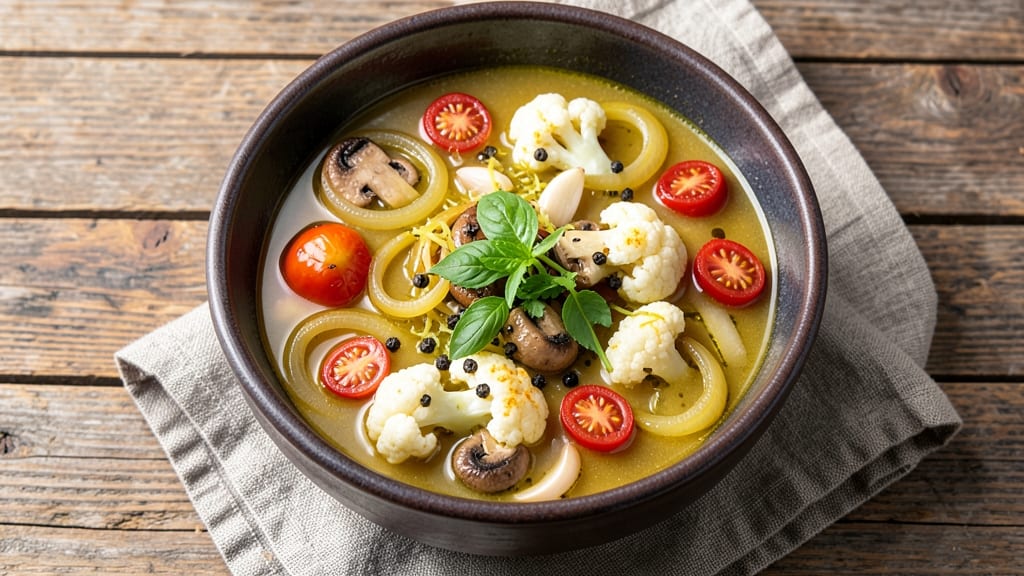
This anti-inflammatory vegetable soup recipe transforms simple ingredients into a gut-healing elixir that calms inflammation while nourishing your body. The golden blend of turmeric and ginger—two powerhouse spices—works with cruciferous vegetables to create a broth so rich in antioxidants it feels like medicine.
I developed this recipe after years of studying how food directly impacts chronic inflammation, and it’s become my go-to for immune support and digestive comfort.
The secret lies in the simmering process: we let the spices bloom in olive oil before adding vegetables, ensuring their anti-inflammatory compounds infuse deeply into the broth.
Leafy greens like kale or spinach wilt into tenderness, while cruciferous vegetables like broccoli and cauliflower contribute fiber and sulfur compounds that support liver detoxification. The result is a soup that’s not just nourishing, but actively works to reduce inflammation in your body.
What makes this recipe stand out is its versatility—it works as a light lunch, a soothing dinner, or even a pre-bedtime sip to calm digestion.
The broth is packed with turmeric’s curcumin (boosted with black pepper for absorption) and ginger’s gingerol, both of which have been clinically shown to reduce markers of inflammation. Every spoonful delivers a balance of fiber, vitamins, and antioxidants that your body will thank you for.
Serve it warm with a drizzle of olive oil and a sprinkle of fresh cilantro for brightness, or top with toasted pumpkin seeds for crunch and extra magnesium.
The beauty of this soup is that it tastes as good as it makes you feel—hearty yet light, deeply flavorful without being heavy. Let’s get cooking.
Ingredients for anti inflammatory vegetable soup
Simple vegetables and spices combine to create a nourishing, inflammation-fighting elixir.
| Ingredient | Amount | Notes |
|---|---|---|
| Extra-Virgin Olive Oil 🫒 | 2 tbsp | Cold-pressed for maximum antioxidants |
| Yellow Onion 🧅 | 1 whole | Diced, medium size preferred |
| Garlic Cloves 🧄 | 4 cloves | Freshly minced for potent flavor |
| Fresh Ginger Root 🌿 | 2 tbsp | Grated, peeled, organic preferred |
| Turmeric Powder 🌶️ | 1 tbsp | Organic, high-curcumin content |
| Ground Black Pepper 🌶️ | ½ tsp | Freshly ground enhances curcumin |
| Vegetable Broth 💧 | 4 cups | Low-sodium, homemade preferred |
| Carrots 🥕 | 2 medium | OR 1 cup chopped, organic preferred |
| Celery Stalks 🌿 | 2 whole | Diced, leafy parts included |
| Cauliflower Florets 🥬 | 2 cups | Fresh or frozen, organic preferred |
| Kale Leaves 🌱 | 2 cups | Chopped, stems removed |
| Sweet Potato 🍠 | 1 medium | OR 1 cup cubed, organic preferred |
| Coconut Milk 🥥 | ½ cup | Full-fat for creaminess |
| Fresh Cilantro 🌿 | ¼ cup | Chopped, for garnish |
| Pumpkin Seeds 🥜 | ¼ cup | Toasted, for crunch |
The turmeric and ginger are the stars here—organic is key since they absorb toxins. Penzeys or bulk bins at natural food stores carry the highest-quality powders. For fresh ginger, grab the knobby, firm roots—they pack more punch. Black pepper isn't just for flavor; it boosts turmeric's curcumin absorption by 2000%. The vegetable broth should be low-sodium (or homemade) to avoid overpowering the delicate spice flavors. If using frozen cauliflower, no need to thaw—just toss it straight in. The kale and spinach wilt beautifully, so don't overcook them.
No fresh ginger? Powdered works at half the amount, but fresh is ideal. Short on kale? Spinach or Swiss chard works just as well. The coconut milk adds creaminess without dairy—full-fat is a must for that rich texture. Swapping sweet potato for regular? Use the same amount, but expect slightly less natural sweetness. For extra protein, stir in white beans or lentils at the end. The carrots can be baby carrots if that's what's in the fridge—just adjust the amount to match volume.
This soup tastes even better the next day as flavors meld. Store in airtight containers for 4-5 days in the fridge, or freeze portions for up to 3 months. The coconut milk will separate when refrigerated—just stir before reheating. For meal prep, I double the batch and freeze half. Reheat gently on the stove with a splash of broth to restore creaminess. The pumpkin seeds and cilantro keep best in the fridge for 1 week—store them in a sealed container away from light.
Why You'll Love This Recipe
- One-Pot Magic: I swear by this recipe—no chopping frenzy, no dirty dishes piling up. Just sauté onions in olive oil, add garlic and ginger, stir in turmeric, then dump in whatever veggies you have. Boom. Done in one pot.
- Golden Umami Bomb: That turmeric-ginger-garlic combo? It’s the secret weapon. The soup starts bright and fresh, then deepens into this warm, slightly spicy richness that lingers. Honestly, I’ve had people ask for the recipe just for the broth alone.
- Leftovers That Love You Back: This soup tastes better the next day—yes, really. The flavors meld, the veggies soften just right, and it’s the ultimate lazy lunch. I make a big batch on Sundays and eat it all week, no guilt.
- Budget Meal That Feeds: Fresh ginger and turmeric might sound fancy, but they stretch so far. A little goes a long way, and the rest of the ingredients—onions, carrots, whatever—are cheap staples. My wallet and my body thank me.
Step-by-step instructions for gut-healing turmeric and ginger vegetable soup
This vibrant soup combines nature's most powerful anti-inflammatory ingredients for a nourishing bowl that supports gut health.
Sauté the Aromatic Foundation
Heat the 2 tbsp extra-virgin olive oil in a large pot over medium heat. Add the 1 whole diced yellow onion and cook for 5 minutes until softened and translucent. This foundational step develops sweetness and removes any sharpness from the onion.
Add the 4 cloves minced garlic and 2 tbsp grated fresh ginger root, stirring constantly for 30 seconds until fragrant. The ginger should release its signature aroma—this is when the anti-inflammatory compounds begin activating. Immediately add the 1 tbsp turmeric powder and ½ tsp ground black pepper, stirring vigorously for 1 minute to fully incorporate. The pepper enhances turmeric's curcumin absorption by up to 2000%. Remove from heat briefly if the spices begin to darken.
Build the Vegetable Medley
Return the pot to medium heat and add the 2 medium chopped carrots, 2 whole diced celery stalks, and 2 cups cauliflower florets. Cook for 5 minutes, stirring occasionally, until the carrots begin to soften at the edges. This partial cooking ensures they maintain their texture rather than turning mushy.
Add the 1 medium cubed sweet potato and 4 cups vegetable broth, bringing everything to a gentle boil. Reduce heat to low and let it simmer uncovered for 15 minutes. You'll notice the broth begins to reduce slightly and the vegetables soften—this is when their natural sweetness intensifies. The sweet potato should be tender enough to pierce easily with a fork at this stage.
Incorporate Leafy Greens and Finish Cooking
Stir in the 2 cups chopped kale leaves and continue simmering for another 5 minutes. The kale will wilt dramatically as it cooks down—this is perfect as it concentrates its nutrient density. Taste the soup at this point and adjust seasoning with additional ½ tsp ground black pepper if needed. The turmeric should impart a warm, earthy flavor while the ginger adds a subtle zing.
Reduce heat to low and stir in the ½ cup full-fat coconut milk. This creates a velvety texture while adding healthy fats that help the body absorb the fat-soluble curcumin from the turmeric. Let the soup simmer for 3-4 minutes more until the coconut milk is fully incorporated and the flavors meld completely.
Garnish and Serve with Nutrient-Packed Toppings
Ladle the soup into bowls and immediately garnish with ¼ cup chopped fresh cilantro and ¼ cup toasted pumpkin seeds. The cilantro adds freshness while the pumpkin seeds contribute crunch and additional magnesium. I like to toast the pumpkin seeds separately in a dry skillet over medium heat for 3-4 minutes until golden—this enhances their nutty flavor and makes them even more digestible.
Serve immediately while steaming hot to maximize the anti-inflammatory benefits. Each spoonful delivers a perfect balance of warming spices, tender vegetables, and nutrient-dense greens. For an extra boost, pair with a side of fermented foods like sauerkraut or kimchi to support gut microbiome health.
Pro Tips For Making Anti Inflammatory Vegetable Soup
- Sweat the Onion Low: I used to rush this step, but simmering onions in olive oil over medium-low heat for 8–10 minutes—until they’re deep golden and almost caramelized—builds flavor without burning. Skip the high heat, or you’ll taste bitter, raw onion instead of that rich, sweet base.
- Grind the Ginger Fine: Fresh ginger loses potency fast, so pulse it in a food processor until it’s almost paste-like before adding it to the pot. This ensures every spoonful gets the anti-inflammatory punch—no surprise chunks lurking at the bottom.
- Bloom the Turmeric: Heat the olive oil until shimmering, then toss in turmeric powder before adding onions. Let it sizzle for 30 seconds—this releases its earthy aroma and prevents that chalky aftertaste that ruins the soup’s depth.
- Save the Garlic for Last: Crush the cloves with the flat side of your knife, then add them after the onions and ginger have softened. This keeps their sharp brightness intact—no mush, no bitterness, just clean garlic flavor that cuts through the soup’s richness.
Make-ahead tips for this dish
Prep Ahead Strategy
I recommend prepping all vegetables the night before—chop the onion, carrots, celery, sweet potato, and cauliflower and store them in a glass airtight container with a damp paper towel. The ginger and garlic can be minced and kept in the fridge for up to 3 days in a sealed container.
This saves 20 minutes of prep time on cooking day. 💫
Broth Prep Shortcut
Make a big batch of low-sodium vegetable broth and freeze it in 1-cup portions for quick use. Homemade broth tastes fresher and avoids preservatives found in store-bought versions. I use a slow cooker method with onion skins, celery, carrots, and herbs for maximum flavor.
Thaw just the amount you need for this recipe—no need to defrost the whole batch.
Spice Mix Prep
Create a turmeric-ginger spice blend by combining 1 tbsp turmeric powder, ½ tsp black pepper, and 1 tbsp dried ginger powder in a small jar. This mix keeps for 3 months in a cool, dark place and can be used in smoothies, dressings, or other soups.
For this recipe, use 1 tbsp of the blend instead of fresh ingredients—it’s a flavor and time-saving game-changer. ✨
Freezer-Friendly Storage
This soup freezes beautifully! Let it cool completely, then transfer to freezer-safe glass containers or silicone molds. Leave 1-inch headspace to prevent expansion cracks. Label with the date—it stays fresh for up to 3 months.
When reheating, thaw overnight in the fridge, then warm gently on the stove with a splash of broth to restore creaminess.
Garnish Prep
Toast the pumpkin seeds in advance and store them in a sealed container—they’ll stay crunchy for 5 days. Chop the cilantro and store it in a small jar filled with water (like flowers) to keep it fresh for up to 1 week.
This way, you can assemble the garnish in seconds when serving. The seeds can also be kept in the freezer for 2 months if needed.
Meal Prep Timeline
Here’s my go-to schedule: Day 1 (night before), prep and chop all veggies. Day 2 (morning), sauté the aromatics and store in the fridge. Day 2 (evening), assemble the soup and serve immediately.
For maximum flavor development, let it sit for 1 hour** before serving—this allows all the spices to meld together beautifully. 🌟
Nutrition facts
Frequently asked questions
Can I make this soup without coconut milk?
Swap the coconut milk for ½ cup plain Greek yogurt or ¼ cup tahini for creaminess. For a dairy-free option, use ¼ cup cashew cream (blend soaked cashews with water). The soup will still be rich and flavorful—just adjust the texture preference to your liking.
How do I boost the anti-inflammatory benefits even more?
Add 1 tsp fresh turmeric root (finely grated) along with the powder, or stir in ½ cup cooked lentils for extra fiber. For gut health, serve with fermented foods like sauerkraut or kimchi. The combination of turmeric, ginger, and cruciferous veggies already packs a powerful punch!
Can I use frozen vegetables instead of fresh?
Yes! Frozen cauliflower and kale work perfectly—just don't thaw them first. For carrots and celery, frozen versions are fine too, though fresh may have slightly better texture. The key is to use organic frozen veggies without added preservatives to maintain the anti-inflammatory benefits.
Why does my soup taste bitter after reheating?
Bitterness often comes from overcooking the kale or turmeric. To fix it, reduce simmering time by 2-3 minutes when reheating. Add a pinch of maple syrup or lemon juice to balance flavors. For future batches, add kale just 5 minutes before serving instead of during the main simmer.
Is this soup safe for people with nightshades sensitivity?
Yes! This recipe contains no nightshades (like tomatoes or peppers). The anti-inflammatory power comes from turmeric, ginger, and cruciferous vegetables. Always check your specific sensitivity triggers, but this soup is naturally nightshade-free while still being packed with gut-healing ingredients.