
Soups & Stews
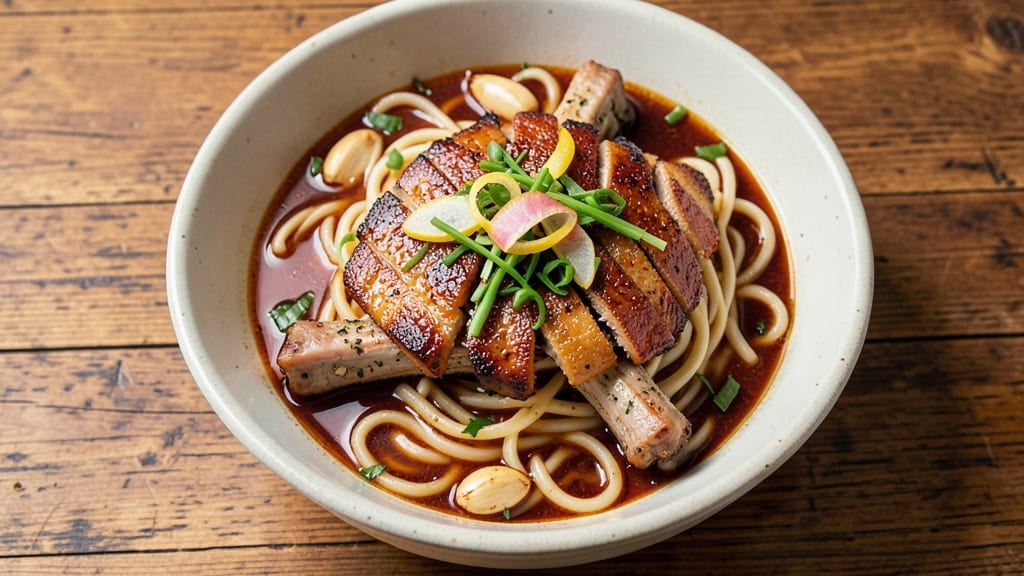
This Asian BBQ pork noodle soup recipe delivers restaurant-quality depth in every steaming bowl—smoky, sweet, and savory broth that clings to perfectly chewy noodles. The secret lies in slow-braising pork belly until tender, then charring it for that signature caramelized crust.
I've perfected this version to balance bold flavors without overwhelming the dish, making it approachable for home cooks while still feeling like a special occasion meal.
What sets this recipe apart is the layered approach to flavor: a rich, slightly sweet broth built from pork bones and aromatics, then elevated with a quick BBQ glaze that adds depth without heaviness.
The noodles cook just until they're tender but still hold their bite, absorbing the aromatic broth while maintaining structure. This isn't just soup—it's a complete meal with protein, carbs, and umami in every spoonful.
By the time you're done, you'll have a steaming bowl of Asian BBQ pork noodle soup that rivals your favorite takeout—golden charred pork pieces floating in a glossy, fragrant broth, topped with fresh herbs and pickled vegetables for brightness.
The aroma alone will have everyone gathering around the table, and the first bite delivers that perfect harmony of sweet, smoky, and savory notes that defines great Asian comfort food.
Best served immediately with a side of quick-pickled cucumbers or a sprinkle of fresh cilantro, this soup transforms simple ingredients into something extraordinary. The technique is straightforward, but the result feels like you've spent hours mastering it. Let's get cooking—your taste buds will thank you.
Ingredients for asian bbq pork noodle soup
Pork belly, aromatic spices, and chewy noodles create this restaurant-style Asian BBQ soup.
| Ingredient | Amount | Notes |
|---|---|---|
| Pork Belly (with skin) 🐖 | 1 ½ lb | Skin-on for maximum flavor |
| Pork Shoulder Bones 🦴 | 2 pieces | For rich, gelatinous broth |
| Fresh Ginger 🧅 | ½ cup | Julienned, skin removed |
| Garlic Cloves 🧄 | 8 cloves | Smashed, not minced |
| Green Onions 🧅 | ¼ cup | White and green parts separated |
| Coconut Aminos 💧 | ½ cup | Or soy sauce for gluten-free |
| Brown Sugar 🍯 | ¼ cup | Light or dark preferred |
| Hoisin Sauce 🍶 | ¼ cup | For authentic umami depth |
| Sesame Oil 🫒 | 1 tbsp | Toasted, not flavored |
| Dried Shiitake Mushrooms 🍄 | ¼ cup | Rehydrated, sliced |
| Fresh Cilantro 🌿 | ¼ cup | Chopped, for garnish |
| Rice Noodles 🍜 | 12 oz | Thick, chewy variety |
| Fish Sauce 💧 | 1 tbsp | Red Boat preferred |
| Star Anise 🌟 | 2 whole | For aromatic depth |
| Cinnamon Stick 🌿 | 1 whole | Optional, for warmth |
The pork belly is non-negotiable here—it delivers that signature caramelized crust and tender meat that falls apart. Look for thick-cut pieces at Whole Foods or Asian markets where they often carry premium cuts. If you can't find pork belly, pork shoulder works but won't give you that same crispy exterior. The bones are just as important—they release collagen for that silky broth texture. Butcher shops usually have these for cheap, and they're worth every penny for that restaurant-quality depth. For the ginger, grab the freshest you can find—bright yellow skin, firm texture—and julienne it yourself for maximum surface area.
No coconut aminos? Soy sauce plus a splash of honey gets you close, though the coconut adds that subtle sweetness. Running out of hoisin? Mix soy sauce with a little brown sugar and a dash of five-spice powder. The shiitake mushrooms can be swapped for cremini, but dried shiitake has that unmatched umami punch. For the noodles, banh pho or rice stick noodles are ideal, but any thick rice noodle works. Pro tip: Soak them in warm water for 10 minutes before adding to the broth—they'll absorb flavor better. The fish sauce is where the magic happens, so Red Boat brand is worth the investment if you're serious about this dish.
This soup tastes even better the next day—flavors meld beautifully overnight. Store leftovers in an airtight container for 4-5 days in the fridge, or freeze for up to 3 months. I like to portion it into individual containers so I can reheat just what I need. The broth reduces slightly when cooled, so add a splash of water when reheating. For serving, keep the charred pork separate until ready to eat—it stays crispier that way. Garnish with fresh cilantro and a drizzle of sesame oil right before serving for that restaurant-fresh finish.
Why You'll Love This Recipe
- Skin-on Pork Magic: The crispy, crackling skin on that pork belly? It’s the star—no fancy techniques, just sear it right in the pot while you prep the rest. That golden crunch turns into melt-in-your-mouth richness, and honestly, it’s the kind of detail that makes a weeknight dinner feel like a celebration.
- One-Pot Powerhouse: Between us, this is the soup that actually cleans up in five minutes. The pork bones and belly render down into flavor while you chop ginger and garlic (which, let’s be real, takes all of two minutes). Toss in the noodles, and boom—one pot, zero stress.
- Budget-Friendly Feast: Pork shoulder bones and belly stretch further than you’d think, and the broth becomes richer the longer it simmers. I’ve fed four people for under $15 here, and the leftovers? Even better the next day—if they last that long.
- Weeknight to Party Upgrade: Make it simple for yourself with takeout-style noodles, or go all out with fresh egg noodles and a splash of hoisin for company. The same base broth works for both—just add toppings. My lazy Tuesday version? Same flavors, but I skip the green onions until the last second.
Step-by-step instructions for Asian BBQ pork noodle soup
Here's how to build a deeply flavorful soup where smoky pork belly meets sweet-savory broth and chewy rice noodles.
Render Pork Fat and Build the Broth Base
In a large Dutch oven, place the 2 pieces pork shoulder bones and 1.5 lb pork belly (with skin) skin-side down. Set over medium-low heat and let the fat render slowly for 45-60 minutes. You want the fat to pool in the pan and the pork belly skin to turn deep golden brown—this creates the rich foundation for your soup.
Once the fat reaches about 1 inch depth and the bones are lightly browned, add the 0.5 cup julienned fresh ginger, 8 smashed garlic cloves, 2 whole star anise, and 1 whole cinnamon stick. Stir for 2 minutes until fragrant. Pour in 4 cups water and bring to a gentle simmer. Skim off any foam that rises to the surface during the first 10 minutes of simmering—this ensures a clear, clean broth.
Develop the Smoky-Sweet Flavor Profile
Simmer the broth uncovered for 3 hours on low heat, maintaining a gentle bubble. This slow cook time allows the collagen from the bones to break down into gelatin, creating that luxurious body. After 2 hours, add the 0.5 cup coconut aminos, 0.25 cup brown sugar, 0.25 cup hoisin sauce, and 1 tbsp fish sauce. Stir well and continue simmering.
About 1 hour before finishing, remove the pork belly from the broth and let it cool slightly. Once cool enough to handle, use two forks to shred the meat into thin, even strands. Return the shredded pork to the broth and stir to combine. Taste the broth now—it should balance sweet, salty, and umami notes. Adjust with more coconut aminos for saltiness or brown sugar for sweetness as needed.
Prepare the Aromatics and Mushrooms
While the broth simmers, prepare the mushrooms by soaking the 0.25 cup dried shiitake mushrooms in 1 cup hot water for 20 minutes until pliable. Drain, reserving the soaking liquid, then slice the mushrooms. In a small bowl, combine the sliced mushrooms with 1 tbsp sesame oil and toss gently.
Separate the 0.25 cup green onions into white and green parts. In a clean skillet, heat 1 tbsp sesame oil over medium heat and sauté the white parts for 1 minute until just softened. Set aside. The green parts will be used as garnish later.
Cook the Noodles and Assemble
Bring a separate pot of water to a boil and add the 12 oz rice noodles. Cook according to package instructions (usually 4-5 minutes) until al dente—they should be tender but still hold some bite. Drain and rinse briefly under cold water to stop the cooking process, then toss with 1 tbsp sesame oil to prevent sticking.
To serve, ladle 1 cup hot broth into each bowl, then add 3 oz cooked noodles and 2 tbsp shredded pork. Top with the sautéed green onion whites, tossed shiitake mushrooms, and 0.25 cup chopped fresh cilantro. The contrast of chewy noodles, tender pork, and silky broth creates the perfect balance in every spoonful.
Garnish and Serve Immediately
Finish each bowl with an extra drizzle of sesame oil and a pinch of flaky sea salt to enhance the flavors. Serve while steaming hot—this soup is best enjoyed immediately when the aromatics are at their peak. The combination of smoky pork, sweet-savory broth, and fresh herbs makes every bite unforgettable.
Pro Tips For Making Asian Bbq Pork Noodle Soup
- CHAR THE BONES FIRST: I learned this the hard way—skipping the initial char on pork shoulder bones means a broth that’s pale and bland. Sear them hard over direct flame (or highest heat) until blackened in spots before adding liquid. That crust packs deep, smoky flavor that no slow simmer can replicate.
- SLICE PORK BELLY THIN: Thick slices of pork belly turn chewy; thin slices melt into the broth. After rendering the fat, slice against the grain into ¼-inch pieces—no need for perfect uniformity, just consistent thinness. The skin should crisp separately for garnish, but the meat’s job is to disappear.
- GINGER JULIENNE, NOT MINCED: Mincing ginger releases too much heat too fast, making the broth bitter. Instead, julienne it into matchsticks—about ⅛-inch thick. They’ll soften beautifully during simmering but won’t overpower the broth with harshness. (Yes, even if you’re impatient like me.)
- SALT THE BROTH LATE: Adding salt early dilutes the flavor as water pulls out of the pork. Wait until the broth is nearly done simmering—about 15 minutes before the end—to season. Taste first, then adjust: this soup needs boldness, not subtlety. (Your future self will thank you.)
Essential equipment for perfect results
Dutch Oven Essentials
The 5-quart Dutch oven is your workhorse for this recipe—its heavy base distributes heat evenly while the deep sides prevent spills during simmering. I swear by the Le Creuset signature enameled cast iron—it's durable, retains heat beautifully, and the smooth surface makes cleanup a breeze.
For budget-friendly options, Lodge's 5.5-quart Dutch oven delivers the same performance without the premium price. 🔥
If you don't own a Dutch oven, a large heavy-bottomed stockpot (like All-Clad's 8-quart stainless steel) works in a pinch. Just be prepared for slightly less even heat distribution—you may need to stir more frequently to prevent scorching.
For the best results, choose a pot with a tight-fitting lid to trap steam and enhance flavor development.
Precision Tools
A meat thermometer is non-negotiable for checking pork doneness—aim for an internal temperature of 195°F to ensure tender, pull-apart meat. The ThermoWorks Smoke model is my go-to because it's waterproof and has a backlit display, but any instant-read thermometer will work.
For the broth, a wire whisk helps skim foam efficiently during the initial simmer. 🌡️
Don't overlook a sharp chef's knife and cutting board—you'll need to julienne ginger, slice mushrooms, and mince garlic with precision. A microplane comes in handy for the ginger if you prefer a finer texture.
For shredding the pork, two forks work perfectly, but a meat claw makes the job faster without tearing the meat.
Broth Development
Invest in a fine-mesh skimmer to remove impurities from the broth—this ensures a crystal-clear, restaurant-quality result. I use a stainless steel skimmer with a long handle to avoid burning my fingers.
A wooden spoon is ideal for stirring the broth gently, as metal utensils can scratch enameled Dutch ovens over time. 🥄
For measuring liquids, a liquid measuring cup with clear markings is essential—you'll need precise amounts of coconut aminos, brown sugar, and fish sauce. A small saucepan comes in handy for rehydrating the dried shiitake mushrooms separately, which helps control their texture and prevents them from overcooking in the main broth.
Noodle Prep
Use a large colander with holes big enough to drain the noodles quickly—you don't want them to sit in water and turn mushy. A fine-mesh strainer works well for rinsing them under cold water after cooking.
For serving, wide, shallow bowls (like stoneware or ceramic) help showcase the layered presentation of noodles, pork, and toppings. 🍜
If you're serving this soup at a gathering, consider individual portion containers for leftovers. Glass containers with tight-sealing lids (like Pyrex) preserve the soup's quality better than plastic. For reheating, a small saucepan with medium heat is best—never microwave as it can make the noodles gummy.
Nutrition facts
Frequently asked questions
Can I substitute pork belly with another cut?
Yes, but expect different textures. Pork shoulder works well—it stays tender when slow-cooked and develops nice flavor. For a leaner option, use pork loin, but it won't be as rich. The key is to braise until fork-tender (about 2-3 hours), regardless of cut. Just adjust cooking time based on thickness.
How do I make this soup vegetarian?
Replace pork with mushroom stems or extra-firm tofu (marinated in soy sauce and sesame oil). Use vegetable broth instead of pork bones, and add 1 tbsp miso paste for umami depth. The noodles and mushrooms will carry the dish, but the broth will be lighter in texture. Garnish with extra fresh herbs to brighten flavors.
Why does my broth taste too sweet?
The brown sugar adds depth, but balance is key. Add 1 tbsp fish sauce or coconut aminos to cut sweetness with saltiness. If it's still too sweet, stir in 1 tsp rice vinegar or 1 slice lime (removed after tasting). The broth should have a sweet-savory-sour harmony, not just sweet. Taste as you go—adjust gradually!
Can I make this soup in an Instant Pot?
Brown the pork bones and belly in the pot first, then add aromatics and 4 cups water. Cook on High Pressure for 60 minutes, then add the sweet-savory ingredients and pressure cook for 10 more minutes. Quick-release the pressure, shred the pork, and finish as directed. The Instant Pot cuts cooking time to about 1.5 hours total.
What's the best way to store leftovers?
Store in an airtight container with the broth and pork separate from the noodles (they absorb moisture overnight). Keeps for 4-5 days refrigerated or 3 months frozen. To reheat, warm the broth and pork to 165°F first, then add fresh noodles when serving. Never microwave the whole soup—it makes noodles mushy!