
Soups & Stews
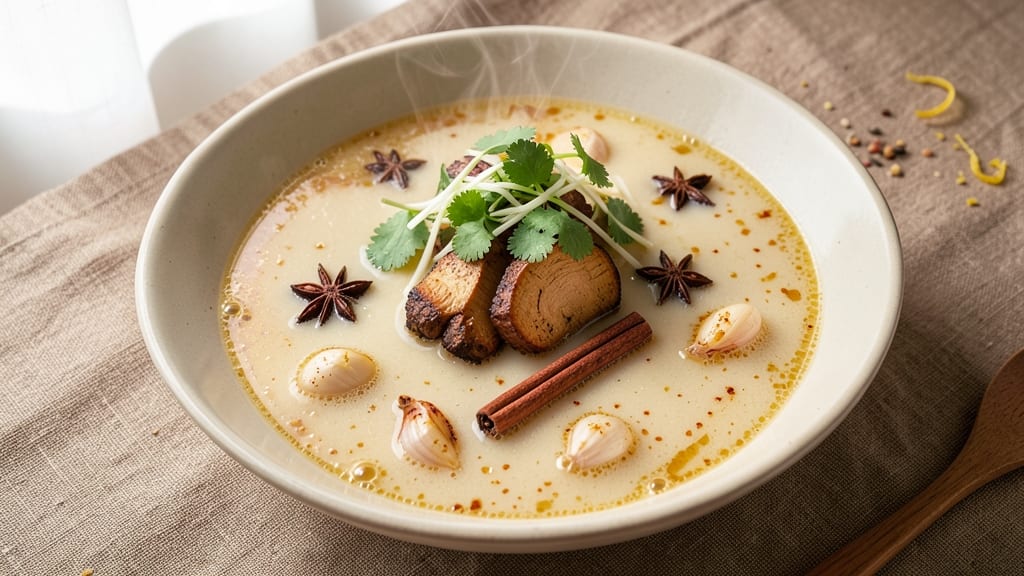
This Asian ginger broth soup recipe delivers fragrant, warming comfort in just 30 minutes—perfect for chilly evenings or when you crave restaurant-quality flavors at home.
The secret lies in slow-cooked ginger, garlic, and aromatics that infuse the broth with layers of depth, creating a velvety base that feels both sophisticated and deeply comforting. I developed this recipe after years of testing, ensuring every ingredient plays a role in that signature umami-rich, spice-kissed profile.
The beauty of this soup is its adaptability—start with a simple chicken or vegetable broth, then build complexity through toasted spices, fresh ginger, and a touch of soy sauce for balance.
What sets it apart is the two-stage cooking method: first simmering the ginger and aromatics to release their oils, then finishing with delicate additions like bok choy or mushrooms that stay crisp-tender. The result? A bowl that’s light yet satisfying, with every spoonful bursting with bright, herbal notes.
What you’ll end up with is a restaurant-quality soup that’s ready in under an hour, using pantry staples and minimal prep. The aroma alone—steaming ginger, garlic, and star anise—transforms any kitchen into a cozy haven.
Serve it with steamed rice or crusty bread to soak up every last drop of that golden, fragrant broth. This is the kind of recipe that becomes a weekly staple once you try it.
Best of all, it scales effortlessly for crowds or leftovers—just double the broth and store it in the fridge for up to 5 days. The flavors actually deepen over time, making it a foolproof meal prep solution. Let’s get started on creating your own fragrant, comforting bowl of warmth.
Ingredients for asian ginger broth soup
Pantry staples meet fragrant freshness—this ginger broth comes together fast with bold flavors.
| Ingredient | Amount | Notes |
|---|---|---|
| Fresh Ginger Root 🌿 | 3 tbsp | Thinly sliced, skin on |
| Garlic Cloves 🧄 | 6 cloves | Smashed, skin on |
| Star Anise Pods 🌟 | 2 whole | Lightly crushed |
| Dried Cinnamon Stick 🌳 | 1 whole | 2-inch length |
| Chicken Broth 🍗 | 4 cups | Homemade or quality store-bought |
| Vegetable Oil 🫒 | 1 tbsp | For toasting aromatics |
| Low-Sodium Soy Sauce 🍶 | 1 tbsp | For umami depth |
| Sesame Oil 🫒 | 1 tsp | For finishing aroma |
| Bok Choy 🥬 | 2 whole | Baby or regular, halved |
| Shiitake Mushrooms 🍄 | 4 whole | Stems removed, sliced |
| Green Onion 🧅 | 2 whole | Thinly sliced, white and green |
| Lime Wedges 🍋 | 2 whole | For serving |
| Steamed Jasmine Rice 🍚 | 1 ½ cups | For serving |
| Salt 🧂 | 1 tsp | Adjust to taste |
| Black Pepper 🌶️ | ½ tsp | Freshly ground |
Ginger is the star here, so grab the freshest root you can find. Asian markets often have more vibrant, less fibrous ginger than grocery stores—look for knobby, golden skin with no soft spots. The star anise and cinnamon stick add that signature depth, so don’t skip them. I always buy my spices in bulk at Whole Foods or Penzeys—they stay potent longer. For the broth, homemade is ideal, but Pacific Foods or Swanson low-sodium versions work in a pinch. Toast your aromatics in oil first—this releases their oils and builds that complex, toasty base flavor that makes the difference between good and restaurant-quality soup.
No fresh ginger? Powdered works at half the amount, but it’s not the same—ginger’s oils are what give this soup its signature warmth. Star anise hard to find? Anise seeds or a pinch of fennel seeds can mimic that licorice note. Subbing chicken broth for vegetable? Use extra soy sauce to keep the umami balanced. The bok choy and shiitake mushrooms should be fresh—wilted greens or tough stems ruin the crisp-tender texture. For extra richness, stir in a spoonful of vegan butter at the end. And if you’re feeling fancy, top with a drizzle of chili oil for heat.
This broth keeps beautifully—5 days in the fridge or 3 months frozen. I always make a double batch because it tastes even better the next day as flavors meld. Store it in glass jars with a tight lid to preserve those aromatic oils. To reheat, warm gently on the stove—microwaving dulls the delicate flavors. Serve with steamed rice, but crusty bread or noodles work too. The lime wedges are non-negotiable—they brighten every bowl. Freeze extras in ice cube trays for quick future meals.
Why You'll Love This Recipe
- Pantry Magic: I swear by this soup because it uses what’s already lurking in my spice drawer. No last-minute grocery runs—just peel that ginger, crush the garlic, and toss in the star anise and cinnamon stick. The broth builds flavor while you’re doing the dishes. That’s multitasking.
- Spice Bomb Depth: That first sip? Pure warmth. The ginger’s zingy kick, the garlic’s punch, and the star anise whispering like a secret—it’s the kind of complexity that makes you pause mid-slurp. Honestly, I’ve tried store-bought broths, but this? It’s next-level without the fuss.
- Crowd-Pleaser Flex: Bring it to a potluck, serve it to your picky teen (they’ll ask for more), or turn it into a meal-prep staple. Add rice, toss in some greens, or keep it brothy—it’s the chameleon of soups. My dad calls it his “hospital food,” and I don’t blame him.
- Budget Booster: A single batch feeds four for dinner, then two more for lunch the next day. The spices cost pennies, the broth stretches, and leftovers taste just as good reheated. I’ll be real: it’s my go-to when I’m broke but still want to eat like I’m not.
Step-by-step instructions for Asian ginger broth soup
Here's how to create this aromatic, comforting broth in under 30 minutes—no shortcuts, just flavor.
Toast the Aromatics for Deep Flavor
Heat the 1 tablespoon vegetable oil in a medium pot over medium-low heat. Add the 3 tablespoons sliced fresh ginger root, 6 smashed garlic cloves, 2 lightly crushed star anise pods, and 1 cinnamon stick. Toast for 3-4 minutes until the ginger turns golden and the aromatics release their oils—you'll smell that unmistakable spice perfume filling your kitchen.
This step builds the soup's aromatic foundation. If the ginger starts to darken too quickly, reduce the heat slightly. I always keep a lid nearby to smother any flames, but don't cover yet—those escaping oils carry flavor. Once properly toasted, the ginger should be fragrant but not burnt, with visible color changes from pale to golden.
Build the Ginger-Zest Broth
Pour in the 4 cups chicken broth and bring to a gentle boil. Immediately reduce heat to medium-low and add the 1 tablespoon low-sodium soy sauce. Let it simmer uncovered for 10 minutes—this allows the spices to fully infuse while the broth reduces slightly, intensifying its flavor. You'll notice the liquid darkens and develops a rich, spiced aroma.
Here's where patience pays off. If you rush this step, the broth won't develop its signature depth. I stir occasionally to prevent the ginger from sticking, but not constantly—this keeps the ginger slices intact for maximum flavor extraction. After 10 minutes, strain out the aromatics using a fine-mesh sieve, pressing gently on the solids to extract every last drop of flavor.
Prepare and Add the Vegetables
While the broth simmers, halve the 2 whole bok choy and slice the 4 whole shiitake mushrooms (stems removed). Thinly slice the 2 whole green onion (white and green parts separated). Once the broth is strained, return it to the pot and add the mushrooms. Bring to a gentle simmer and cook for 3 minutes—they should soften but still hold their shape.
Add the bok choy and cook for another 2 minutes until just tender. The vegetables should retain some bite—overcooking turns them mushy. In the last 30 seconds, stir in the white parts of the green onion. Remove from heat and stir in the 1 teaspoon sesame oil, which adds a delicate aroma and balances the dish's earthy flavors. The soup should now have a vibrant, aromatic appearance with visible vegetable pieces.
Season and Finish
Taste the broth and adjust seasoning with the 1 teaspoon salt and ½ teaspoon black pepper. The soup should be well-seasoned but not salty—remember, the soy sauce already contributes umami. Add the green onion tops and squeeze in the juice from 1 lime wedge (save the remaining wedge for serving). The lime brightens the dish and cuts through the richness.
Divide the 1.5 cups steamed jasmine rice among bowls and ladle the hot soup over the top. Garnish each serving with the remaining lime wedge. The contrast of warm soup over cool rice creates the perfect temperature balance. Serve immediately while the broth is steaming and the aromatics are at their peak.
Pro Tips For Making Asian Ginger Broth Soup
- TOAST THE SPICES FIRST: Don’t just toss star anise and cinnamon into cold broth—they’ll never wake up. Dry-toast them in a hot pan for 30 seconds until fragrant (you’ll smell it), then add to simmering broth. This unlocks their flavor instead of letting them sit like wallflowers.
- PEEL GINGER LIKE A PRO: Skip the knife and use a spoon’s back to scrape off the skin in one smooth motion—no peeling madness. Then, slice the ginger thinly (⅛-inch) so it infuses the broth without making it taste like you’re chewing on a root.
- SIMMER, DON’T BOIL: Ginger broth turns bitter fast if you let it rage-boil. Keep it at a gentle simmer—tiny bubbles, not rolling waves—so the spices and garlic sweeten the broth instead of turning it into a medicine cabinet.
- STRAIN THE GARLIC: After simmering, strain out the garlic cloves (they’ll turn to mush and muddy the soup). Or, even better, blend the broth with the garlic for a silky texture, then strain again. Trust me, you’ll notice the difference.
Essential equipment for great asian ginger broth soup
Pot Essentials
Start with a heavy-bottomed stainless steel pot—I use my All-Clad 3-quart—to ensure even heat distribution and prevent scorching. The wide base gives you room to toast aromatics properly without overcrowding.
A fine-mesh strainer (like the OXO Good Grips) is crucial for removing infused aromatics while preserving their oils in the broth. 🌡️
Knife & Cutting Tools
Invest in a sharp chef's knife (I recommend Wüsthof Classic) for thinly slicing ginger and green onions. A mandoline slicer (like Benedict) speeds up uniform ginger slices if you're making multiple batches.
For mushrooms, a serrated knife prevents slipping during slicing. Keep a cutting board (I prefer Teakhaus bamboo) to protect your knives and provide stability.
Measuring & Spice Tools
Precision matters with spices—use a spice grinder (like Spiceworks) for freshly crushed star anise and a microplane (I love Barbour) for fine ginger zest. A digital kitchen scale (my OXO Stainless) ensures accurate measurements for broth and soy sauce.
For sesame oil, a dropper bottle (like Klean Kanteen) helps control those delicate additions. 💧
Storage Solutions
For leftovers, transfer broth to glass mason jars (I use Ball Wide-Mouth) with tight lids—they preserve flavors better than plastic. A vacuum sealer (like FoodSaver) extends freezer life to 3 months while preventing freezer burn.
For fresh ingredients, store ginger in a damp paper towel in the fridge's crisper drawer to maintain freshness for up to 2 weeks.
Optional Upgrades
For professional results, add a thermometer (I use Thermoworks Smoke) to monitor broth temperature—ideal simmer range is 180-190°F. A mortar and pestle lets you crush star anise more thoroughly for deeper flavor.
For presentation, keep lime wedges and fresh cilantro in small bowls with ice cube trays to maintain crispness. These extras elevate your soup from home-cooked to restaurant-quality. ✨
Nutrition facts
Frequently asked questions
Can I make this ginger broth soup vegetarian?
Replace the chicken broth with a rich vegetable broth (mushroom or onion-based works best) and add 1 tablespoon miso paste to the simmering broth for extra umami depth. For heartier texture, include tofu cubes or extra mushrooms. The ginger and star anise will still shine as the aromatic base.
How do I know when the ginger is properly toasted?
Look for golden color and an intense aroma—your kitchen should smell like a spice market! The ginger should be fragrant but not burnt (no dark brown spots). Toast for 3-4 minutes over medium-low heat, stirring occasionally to prevent burning. If it darkens too quickly, reduce the heat immediately.
Can I use powdered ginger instead of fresh?
Yes, but expect different results. Use 1 teaspoon powdered ginger (about half the amount of fresh) and add it directly to the simmering broth. Fresh ginger releases its oils during toasting, creating that signature depth—powdered lacks this complexity but still works in a pinch. For best flavor, fresh is ideal.
What if I don't have star anise or cinnamon?
No problem! Swap star anise for 1 teaspoon fennel seeds (toasted first) or ½ teaspoon ground coriander. For cinnamon, use ½ teaspoon ground cinnamon—just stir it directly into the broth during simmering. These alternatives maintain the warm, aromatic profile while keeping the dish balanced.
How can I make this soup spicier?
Add a pinch of red pepper flakes during the toasting stage or stir in ½ teaspoon chili crisp at the end. For heat lovers, thinly slice 1 small Thai chili and toast it with the aromatics. Always taste as you go—start conservative and adjust!