
Sauces & Condiments
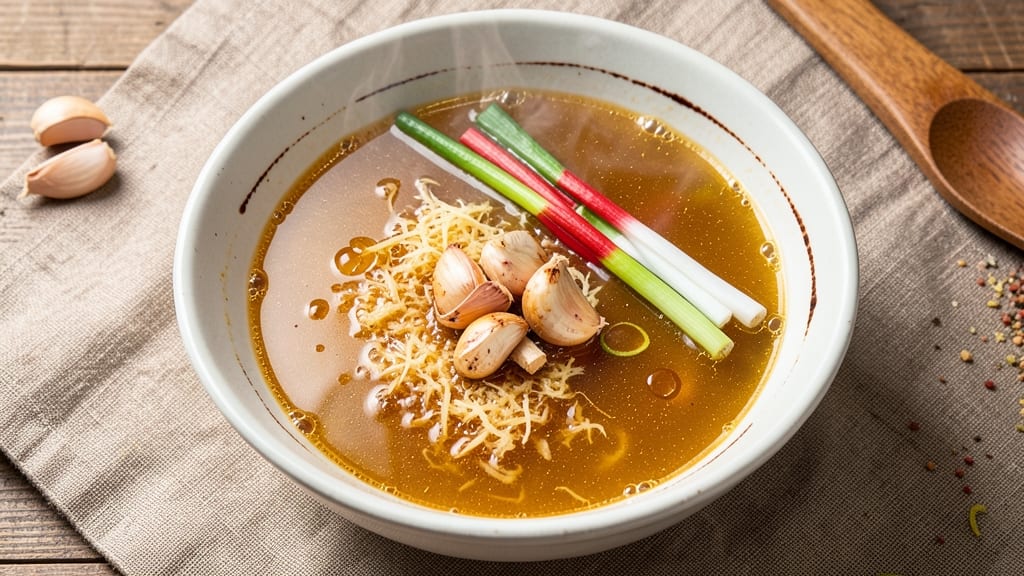
This Asian noodle soup base recipe unlocks the secret to restaurant-quality broth with just six simple ingredients and 20 minutes of active time. The foundation starts with a rich combination of aromatics—fresh ginger, garlic, and scallions—that infuse the broth with bright, zesty depth.
What sets this apart is the umami punch from soy sauce and fish sauce, which transforms ordinary water into a flavorful, aromatic liquid that forms the heart of any Asian noodle dish.
Unlike store-bought versions, this base builds flavor from scratch by simmering the aromatics until their oils release, creating a fragrant, golden broth that’s far more complex. The key technique? A low-and-slow simmer that extracts maximum flavor without overpowering the delicate balance of sweet, salty, and tangy notes.
This method ensures every spoonful delivers that signature Asian noodle soup taste—savory, aromatic, and impossible to resist.
The result is a versatile, freezer-friendly broth that elevates any noodle dish, from pho to ramen. Whether you’re prepping for a week of meals or craving an instant upgrade to canned broth, this base delivers restaurant-quality depth with minimal effort.
Store it in the fridge for up to 5 days or freeze for 3 months, ready to transform into a full meal at a moment’s notice.
Perfect for meal prep, batch cooking, or last-minute dinners, this soup base is the foundation of countless dishes. The best part? It’s customizable—add a splash of sesame oil for extra richness or a pinch of chili flakes for heat. Let’s build this flavor bomb.
Ingredients for asian noodle soup base
Six ingredients transform water into aromatic, umami-rich Asian noodle soup base.
| Ingredient | Amount | Notes |
|---|---|---|
| Fresh Ginger Root 🧄 | 2 tbsp | Finely grated, aromatic quality |
| Garlic Cloves 🧄 | 6 cloves | Peeled, roughly chopped |
| Scallions 🧅 | 4 whole | White and green parts, sliced |
| Light Soy Sauce 🍶 | 2 tbsp | Kikkoman preferred for balance |
| Asian Fish Sauce 🐟 | 1 tbsp | Red Boat brand for authenticity |
| Water 💧 | 4 cups | Filtered preferred for clarity |
| Sesame Oil 🫒 | ½ tbsp | Toasted, for finishing (optional) |
The ginger and garlic are non-negotiable for authentic depth. Look for plump, firm ginger root at the produce section—avoid any with soft spots or sprouting. Whole Foods or Asian markets carry the freshest garlic and scallions, which make all the difference in flavor extraction. For fish sauce, Red Boat is the gold standard, delivering that signature umami without overpowering. Light soy sauce should be Kikkoman or similar—avoid dark soy, which adds color but not the same delicate sweetness. Sesame oil, while optional, adds a nutty richness that elevates the broth to restaurant-quality levels.
No fresh ginger? Powdered works at half the amount, though it lacks the same bright zing. Substitute garlic powder for the cloves, but reduce to 1 tsp—it’s less potent. Scallions can be swapped for regular onions (1 small, finely chopped), though they’ll add a slightly different profile. Running out of fish sauce? Worcestershire sauce at half the amount provides umami, though it’s not identical. For a vegetarian version, replace fish sauce with 1 tbsp more soy sauce plus 1 tsp mushroom powder. The water should be filtered if possible—tap water with strong chlorine can mute the broth’s delicate aromatics.
This broth develops better with time, so simmer uncovered for 15 minutes after initial boiling to let flavors meld. For maximum freshness, store in the fridge for up to 5 days, covered with a lid pressed directly on the surface to prevent skin formation. Freeze in ice cube trays for single-serving portions that keep for 3 months. Reheat gently on the stove—never microwave, as it can dull the delicate aromatics. For extra depth, reserve 2 tbsp of the strained broth to deglaze the pot before adding water.
Why You'll Love This Recipe
- Five-Ingredient Magic: I swear by this combo—ginger and garlic sizzling in the pan, then just a splash of soy and fish sauce. That’s it. No fancy techniques, just raw, punchy flavor that takes seconds to build.
- Umami Bomb: Between us, fish sauce is the secret weapon here. A single teaspoon turns bland into ridiculously good—deep, salty, with that unmistakable savory kick that lingers. (Yes, even my picky husband dips his second bowl.)
- Weeknight Superhero: This base is my go-to when I’m exhausted but still need dinner. Toss in store-bought noodles, a handful of greens, or whatever’s in the fridge—it’s the ultimate blank canvas. No stress, no last-minute grocery runs.
- Budget-Friendly Staple: Fresh ginger and scallions might sound fancy, but they stretch this base forever. A single batch feeds four, and leftovers? Even better cold the next day in a lunchbox. (My college-student son’s favorite, honestly.)
Step-by-step instructions for Asian noodle soup base
This aromatic foundation builds the perfect balance of umami, brightness, and depth.
Prepare the Aromatics
In a medium saucepan, combine the 4 cups water and bring to a rolling boil over medium-high heat. While the water heats, peel and roughly chop the 6 cloves garlic cloves and slice the 4 whole scallions into ½-inch rings, separating the white and green parts. Finely grate the 2 tbsp fresh ginger root using a microplane or fine grater—you want a paste-like consistency that will infuse quickly into the broth.
Here's the thing—don't skip the grating. Pre-minced ginger loses its potency and can make the broth taste bitter. The fresh ginger should smell vibrant and citrusy when grated, with a sharp, peppery aroma that signals it's ready for cooking. Keep these aromatics separate until the water reaches a full boil to preserve their freshness.
Build the Umami Foundation
Once the water reaches a full boil, reduce heat to medium and add the grated ginger first. Let it simmer for 3 minutes, stirring occasionally, until the water becomes fragrant and slightly cloudy. This step extracts the maximum ginger flavor before adding the more delicate aromatics.
Add the 6 cloves chopped garlic and white parts of the scallions (about 2 tablespoons worth). Simmer for another 4 minutes, stirring frequently. You'll notice the water develop a golden hue and an intense aroma—this is where the umami magic begins. The garlic should soften but not brown, and the scallions should become translucent. If you see any browned bits forming, reduce the heat slightly to prevent bitterness.
Season with Precision
After the aromatics have infused, add the 2 tbsp light soy sauce and 1 tbsp Asian fish sauce. Stir well to combine, then return the heat to medium-high and bring the broth to a full boil again. This is where the flavors meld—let it boil vigorously for 2 minutes to ensure the soy and fish sauces are fully incorporated and the broth is well-seasoned.
Taste the broth at this stage. You should detect layers of flavor: the bright, citrusy ginger, the savory depth of the fish sauce, the salty balance from the soy sauce, and the subtle sweetness of the garlic and scallions. If it tastes flat, add a pinch more fish sauce (it's more concentrated than soy). If it needs more salt, add a bit more soy sauce. The broth should be deeply flavorful but not overpowering—this is your flavor baseline.
Simmer and Clarify
Once the broth reaches a full boil again, reduce the heat to low and let it simmer gently for 10 minutes. This slow simmer allows the flavors to fully develop and the broth to clarify slightly. Skim off any foam or impurities that rise to the surface with a fine-mesh spoon—this ensures a clean, smooth base for your noodle soup.
During this time, the broth will reduce slightly, intensifying its flavor. You're aiming for a clear, golden liquid with a rich aroma that makes your mouth water. The green parts of the scallions can now be added if you'd like a touch of freshness, but I prefer to reserve them for garnishing finished bowls. If you choose to add them now, simmer for an additional 2 minutes to soften slightly without losing their bright color.
Finish and Store
Remove the pan from heat and let the broth cool slightly for 5 minutes. This resting period allows the flavors to settle and the broth to reach a stable temperature. If you're using the 0.5 tbsp sesame oil, drizzle it in now and stir gently—sesame oil adds a nutty aroma and depth, but it's delicate and should be incorporated at the very end to preserve its freshness.
For the best results, strain the broth through a fine-mesh sieve to remove any remaining solids, then transfer it to a clean container. The broth will keep in the refrigerator for up to 5 days or can be frozen for up to 3 months. When ready to use, simply reheat the broth gently over low heat until warmed through—never boil vigorously to avoid breaking down the delicate flavors you've built.
Pro Tips For Making Asian Noodle Soup Base
- STIR-FRY GINGER FIRST: I learned this the hard way—don’t toss the ginger in raw. Heat your oil until it shimmers, then fry the ginger slices for 30 seconds until fragrant and just starting to turn golden. That aroma is the soul of your broth, and skipping this step means you’re missing half the flavor.
- SMASH GARLIC LIKE IT’S 1999: Peel those cloves, then lay them flat on the cutting board and smash them with the side of your knife—no chopping needed. This releases more oils and blends faster into the oil. (Yes, even if you’re impatient like me, resist the urge to mince it.)
- SAVE THE SCALLION GREENS: Don’t toss those bright green tops! Reserve them for garnish—they add freshness and color. If you’re really short on time, finely chop the whites and greens together, but at least keep a few strands whole for that restaurant-style finish.
- SALT THE BROTH IN STAGES: Add the light soy sauce and fish sauce together, but taste the broth before pouring it all in. Start with half the fish sauce—it’s salty stuff—and adjust. I’ve ruined batches by dumping it all in and thinking, “Eh, it’ll balance out,” but it won’t. Better to fix it early.
Perfect pairings for asian noodle soup base
Broth-Based Bowls
This aromatic base transforms into pho with just a few additions. Simmer 2 lbs beef chuck roast in the broth for 2 hours until tender, then shred. Serve with rice noodles, fresh herbs like cilantro and Thai basil, and bean sprouts.
For ramen, add 1 lb pork shoulder and simmer until fork-tender, then top with soft-boiled eggs and nori strips. 🥢
Noodle Pairings
Pair your broth with rice noodles for a light texture or udon for heartier bowls. For ramen-style, use thick wheat noodles like Sapporo Ichiban (available at Asian markets).
I love adding chicken or shrimp to the simmering broth for 15 minutes before serving. Fresh ingredients like lime wedges and chili oil brighten every spoonful.
Protein Additions
Boost umami by simmering proteins directly in the broth. Try tofu cubes for 10 minutes, shrimp for 3 minutes, or chicken thighs for 25 minutes.
For extra richness, add 1 tbsp miso paste during the final 5 minutes of simmering. The broth's natural depth complements all proteins beautifully.
Vegetable Enhancements
Stir in fresh vegetables at the end for a vibrant touch. Thinly sliced bok choy or shitake mushrooms add texture, while baby spinach wilts in 1 minute. For a smoky twist, add 1 tsp chili crisp or ½ tsp smoked paprika during the last 2 minutes of simmering.
These veggies balance the broth's savory notes perfectly.
Garnish Ideas
Elevate your bowl with fresh garnishes. Top with crushed peanuts for crunch, lime wedges for acidity, or fried shallots for aroma. A drizzle of chili oil or hoisin sauce adds depth. I always keep a bowl of bean sprouts and Thai basil on hand for that restaurant-quality finish. 🌿
Beverage Pairings
Complement your noodle soup with jasmine tea to cleanse the palate between bites. For a refreshing contrast, try a light lager like Asahi Super Dry. If you prefer wine, a dry Riesling** enhances the broth's umami without overpowering it. Avoid heavy reds—they compete with the dish's delicate flavors.
Nutrition facts
Frequently asked questions
Can I make this broth without fresh ginger?
Yes, but expect a different flavor profile. Use 1 tbsp powdered ginger instead, though it won't provide the same bright, citrusy zing. For the closest substitute, try ½ tsp ground ginger combined with ½ tsp lemon zest to mimic fresh ginger's aroma. The broth will still be flavorful but less complex.
How do I adjust the spice level?
This base is naturally mild, but you can add heat by simmering ½ tsp chili flakes or 1 tsp gochujang during the final 5 minutes. For a smoky kick, stir in ½ tsp smoked paprika at the end. Always taste first—you can't remove added spices, only dilute them with extra broth.
Will this broth work for vegetarian noodle soups?
Replace the fish sauce with 1 tbsp more soy sauce plus 1 tsp mushroom powder or vegetarian fish sauce substitute. For extra umami, add 1 tbsp soy sauce + ½ tsp kelp powder. The broth's aromatic base remains perfect for vegetarian dishes like veggie pho or miso ramen.
Can I make this broth in an Instant Pot?
Yes, but with adjustments. Sauté the ginger, garlic, and scallions on sauté mode for 2 minutes**, then add water and cook on high pressure for 3 minutes. Quick-release the pressure, then add soy and fish sauces. The Instant Pot version is faster but may be slightly less aromatic than stovetop. For best results, strain and simmer on the stove for 5 minutes afterward.
Why does my broth taste bitter?
Bitterness usually comes from overcooked garlic or ginger. Remove the pan from heat immediately if you see browned bits, then strain the broth through a fine-mesh sieve. To fix mild bitterness, add ½ tsp sugar or 1 tsp honey to balance the flavors. For future batches, keep heat at medium-low when simmering aromatics.