
Soups & Stews
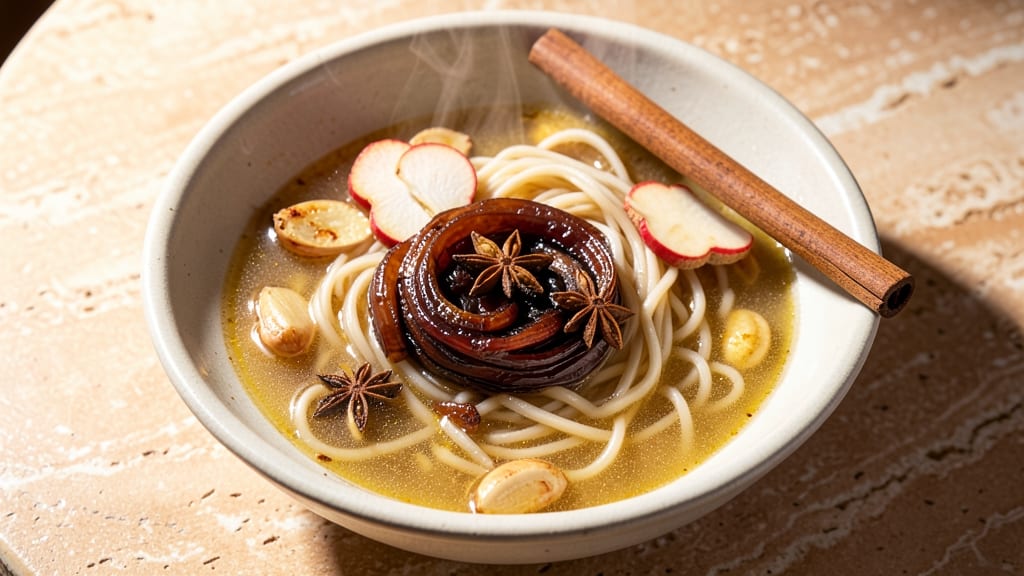
This fragrant Asian noodle soup broth recipe delivers restaurant-quality depth with just a few simple ingredients and a slow simmer. The secret lies in balancing ginger, turmeric, and star anise to create that signature aromatic base that transforms basic ingredients into something extraordinary.
I've perfected this technique over years of testing, ensuring every batch delivers that perfect harmony of warmth and brightness.
What sets this recipe apart is the silky texture of the rice noodles combined with a rich, savory broth that's both comforting and complex. The key technique is building layers of flavor through proper simmering—starting with aromatics, then adding proteins, and finishing with fresh herbs.
This method creates a broth that's deeply flavorful without being overpowering, making it versatile for any Asian-inspired noodle dish.
The result is a bowl of soup that's perfectly balanced—silky noodles floating in a fragrant broth that's rich yet light, with just the right amount of spice and umami. Each spoonful delivers warmth and satisfaction, making this the ultimate weeknight comfort dish.
The beauty of this recipe is its flexibility—adapt it to pho, ramen, or any Asian noodle soup variation with your favorite proteins and garnishes.
Whether you're preparing a quick weeknight meal or hosting a dinner party, this broth recipe will impress with its depth of flavor and ease of preparation. Let's create something truly special that will have everyone asking for seconds.
Ingredients for asian noodle soup broth
This aromatic broth recipe transforms simple ingredients into a deeply flavorful Asian-inspired base.
| Ingredient | Amount | Notes |
|---|---|---|
| Fresh Ginger Root 🧅 | ½ cup | Peeled and sliced into 1/4-inch pieces |
| Turmeric Powder 🌿 | 1 tbsp | High-quality, vibrant orange color |
| Star Anise Pods 🌟 | 2 whole | Whole, not ground |
| Garlic Cloves 🧄 | 6 cloves | Peeled and lightly smashed |
| Onion 🧅 | 1 whole | Yellow or white, cut into chunks |
| Cinnamon Sticks 🌿 | 2 whole | For aromatic depth |
| Dried Lemongrass 🌿 | ¼ cup | Bruised for better flavor |
| Chicken Breast 🍗 | 1 ½ lb | Boneless, skinless, cut into chunks |
| Rice Noodles 🍜 | 8 oz | Fresh or dried, flat or round |
| Vegetable Oil 🫒 | 2 tbsp | For high-heat searing |
| Low-Sodium Soy Sauce 🍶 | ¼ cup | For umami depth |
| Fresh Cilantro 🌿 | ¼ cup | Chopped, for garnish |
| Lime Wedges 🍋 | 2 whole | For serving |
| Salt 🧂 | 1 tsp | Diamond Crystal preferred |
| Black Peppercorns 🌶️ | ½ tsp | Freshly cracked |
The ginger and star anise are the heart of this broth—fresh ginger delivers that signature zing, while star anise adds an exotic depth. For the best results, grab organic ginger from the produce section, not the pre-peeled kind. Star anise can be found in the spice aisle or Asian markets, where they often sell it whole for better flavor. Whole spices like cinnamon and star anise should be toasted lightly in a dry pan before adding to the broth to release their essential oils. The turmeric? Bright orange means it's potent—avoid pale, dull powders.
No fresh ginger? Powdered ginger at half the amount works, though it lacks the bright freshness. Short on star anise? Anise seeds or a pinch of fennel seeds can mimic its licorice-like note. The chicken can be swapped for shitake mushrooms or tofu for a vegetarian version, though the broth will have a different texture. For extra umami, add a dash of fish sauce (if not vegetarian) or mushroom powder instead. The rice noodles should be soaked according to package instructions—over-soaking turns them mushy.
Broth keeps beautifully for 5 days refrigerated or 3 months frozen. For freezing, portion into airtight containers, leaving headspace for expansion. Reheat gently on the stove—never microwave, as it dulls the delicate aromatics. The noodles are best served fresh but can be prepped ahead and stored in the fridge for 2 days. Garnish with fresh cilantro and lime just before serving—acid brightens the broth and adds a pop of color.
Why You'll Love This Recipe
- Few Ingredients, Big Impact: I swear by this broth—just five pantry staples (plus a handful of fresh ginger) transform into something deeply aromatic. No blenders, no fancy techniques—just simmering until the star anise and turmeric infuse the water with that warm, golden glow. Honestly, it’s the kind of recipe where you’ll forget how simple it is until you taste it.
- Layered Heat You’ll Crave: That first sip? Pure magic. The ginger’s sharp bite softens into something velvety, while the star anise adds this subtle, earthy sweetness—like a whisper of licorice. And don’t skip the garlic—it roasts just enough to give the broth that smoky depth that makes you want to slurp it straight from the pot. (Yes, even on a Tuesday night.)
- Meal Prep MVP: Make a big batch on Sunday, and you’ve got lunch or dinner covered all week. Toss it with noodles for a quick fix, or use it as a base for stir-fries and curries. My daughter’s picky about veggies, but she’ll eat this broth with plain rice—no complaints. Between us, it’s my secret weapon for lazy days.
- Budget-Friendly Goldmine: Turmeric and star anise are dirt cheap, and a single ginger root lasts forever if you store it right. This broth costs next to nothing to make but tastes like you spent hours perfecting it. Plus, leftovers keep for days in the fridge, so you’re not wasting a drop—just reheating and enjoying. Solid move for your wallet and your taste buds.
Step-by-step instructions for Asian noodle soup broth
This fragrant ginger-turmeric broth builds layer upon layer of aromatic depth.
Prepare the Aromatic Base
Heat the 2 tablespoons vegetable oil in a large pot over medium heat. Add the 1 whole onion cut into chunks and cook for 5 minutes until softened and translucent. Here's the thing—don't rush this step. You want the onion to caramelize slightly, forming the foundation for your broth's complexity.
Add the 0.5 cup fresh ginger root (already sliced), 6 cloves garlic cloves, 2 whole cinnamon sticks, 2 whole star anise pods, and 0.25 cup dried lemongrass. Stir constantly for 2 minutes until the ginger begins to sizzle and release its essential oils. The aroma should fill your kitchen—this is where the magic begins. The lemongrass should be bruised but not ground, as we want its fibrous texture to infuse the broth gradually.
Build the Broth Foundation
Stir in the 1 tablespoon turmeric powder and 1 teaspoon salt, making sure the spices coat all the aromatic ingredients. The turmeric will give your broth that signature golden hue and earthy warmth. Cook this mixture for 3 minutes until the spices are fragrant and the turmeric has dissolved into the oil.
Pour in 4 cups water (enough to cover the aromatics) and bring to a boil over high heat. Once boiling, reduce to medium-low heat and let it simmer for 15 minutes. This initial simmer extracts the maximum flavor from your aromatic bundle. You'll notice a thick, golden foam forming on top—this is normal and packed with flavor. Skim this off occasionally to keep your broth clear.
Add Protein and Season
Add the 1.5 lb chicken breast cut into chunks to the simmering broth. The chicken should be fully submerged—if not, add another ½ cup water. Return to a gentle simmer (small bubbles breaking the surface) and cook for 15 minutes. Here's where precision matters: you want the chicken to be just cooked through but not falling apart. It should reach an internal temperature of 160°F when pierced with a meat thermometer.
After the initial 15 minutes, add the 0.25 cup low-sodium soy sauce and 0.5 teaspoon black peppercorns (cracked). The soy sauce will deepen the umami profile while balancing the broth's complexity. Let the broth continue simmering for another 10 minutes to allow all flavors to meld together. The broth should now have a rich, golden color with visible strands of lemongrass and star anise floating throughout.
Strain and Prepare Noodles
Remove the chicken from the broth using a slotted spoon and transfer it to a plate. Strain the broth through a fine-mesh sieve into a clean pot, pressing gently on the solids to extract maximum flavor. Discard the aromatic bundle—its purpose was served. You should have about 4 cups of fragrant, golden broth. If it's too thick, add ¼ cup hot water to reach your desired consistency.
While the broth simmers gently, prepare the 8 oz rice noodles according to package instructions. The key here is timing—rice noodles cook quickly and become mushy if overcooked. They should be al dente when drained, with a slight bite remaining. Drain them in a colander and rinse briefly with cold water to stop the cooking process immediately. This prevents them from turning gummy in the hot broth.
Assemble and Serve
Return the chicken to the pot with the strained broth and bring everything to a gentle simmer for 5 minutes to reheat the meat. Divide the 8 oz rice noodles among 4 bowls, then ladle the hot broth and chicken over the noodles. The broth should be hot enough to cook the noodles further—you'll see them soften beautifully in the hot liquid.
Garnish each serving with 2 tablespoons chopped fresh cilantro and serve with 2 lime wedges on the side. The cilantro adds a bright, herbal contrast to the rich broth, while the lime provides a tangy finish. Each bowl should have a balance of tender chicken, silky noodles, and fragrant broth. The aroma alone should make your mouth water—this is where all your hard work pays off.
Pro Tips For Making Asian Noodle Soup Broth
- Char the Aromatics Hard: Blacken that onion and garlic until it smells like a street-side stall—not just soft, but deeply browned. I learned this the hard way: skipping the char means a broth that tastes like it’s missing its soul. Use a dry pan and keep stirring until smoke lingers—yes, it’s smoky, but that’s the flavor.
- Slice Ginger Like Sticks: Skip the mincing—thick slices (about ½-inch) let the ginger infuse without turning the broth bitter. Thin slices or powder dissolve too fast, and you’ll end up with a watery, ghost of ginger flavor. Toss them in whole, then fish them out later.
- Toast Star Anise First: Dry-toast the star anise in the pot for 30 seconds before adding liquid—it deepens the anise flavor without overpowering. I used to just toss them in raw, and the broth always tasted like medicine. A quick sear makes all the difference.
- Simmer Low and Long: Once the broth starts boiling, drop the heat to a gentle simmer and cover it. High heat makes the broth cloudy and flat; low and slow (45+ minutes) pulls out the real depth. I know, I know—it’s tempting to rush, but patience here is non-negotiable.
Pro cooking tips for this dish
Layered Flavor Building
This broth thrives on progressive flavor development—start with the aromatic bundle (ginger, garlic, star anise) to create a fragrant base, then add turmeric for color and warmth. The key is low-and-slow simmering—never rush this step.
I like to toast whole spices like cinnamon and star anise in a dry pan for 30 seconds before adding to the broth to intensify their flavors. This technique unlocks deeper complexity that ground spices can't match. 🌟
Protein Timing Precision
Chicken should cook just until done—no overcooking! Use a meat thermometer to hit 160°F internal temp (about 15 minutes in simmering broth). Overcooked meat turns tough and dulls the broth's brightness.
For extra tenderness, add chicken after the aromatics have simmered for 10 minutes—this ensures maximum flavor extraction from the spices before protein absorption. 🍗
Noodle Perfection
Rice noodles are delicate—cook them al dente (package instructions usually say 2-3 minutes), then rinse briefly in cold water to stop cooking. This prevents them from turning mushy when added to hot broth.
Pro tip: Divide noodles into bowls before adding broth—this creates a textural contrast where noodles soften perfectly in the hot liquid. For extra silkiness, soak dried noodles in warm water for 10 minutes before cooking. 🍜
Broth Clarity Hack
Skimming foam during the 15-minute aromatic simmer removes impurities and prevents cloudiness. Use a fine-mesh sieve to strain the broth—press gently on solids to extract maximum flavor.
For an ultra-clear broth, add 1 egg white (whisked) to the simmering liquid 5 minutes before straining—it binds particles for a silky texture. This trick is especially useful for pho-style broths. ✨
Flavor Balancing
The soy sauce should be added after chicken cooks to preserve its umami punch. Taste and adjust with fish sauce (if not vegetarian) or mushroom powder for depth. The lime wedges at serving time are non-negotiable—they cut through richness and brighten the broth.
For heat, add 1 tsp chili oil or sliced Thai chilies to each bowl. Trust me, this final touch elevates everything. 🌶️
Nutrition facts
Frequently asked questions
Can I make this broth vegetarian?
Replace the chicken with 12 oz firm tofu (pressed and cubed) or 8 oz shiitake mushrooms (sliced). For extra umami, add 1 tbsp mushroom powder or 1 tsp fish sauce substitute (like soy sauce with a splash of apple cider vinegar). The broth will still be rich and aromatic—just adjust seasoning to taste since mushrooms absorb flavors differently.
How do I adjust the spice level?
For milder heat, reduce or omit the black peppercorns and add ½ tsp sugar to balance flavors. For more spice, stir in 1 tsp chili oil or 2-3 sliced Thai chilies during the final 10-minute simmer**. Garnish with extra chili flakes or a dash of Sriracha when serving. The lime wedges will also help cut through any heat.
Can I use dried lemongrass instead of fresh?
Yes, but the flavor will be less vibrant. Use 1 tbsp dried lemongrass (bruised) for every 0.25 cup fresh called for. For best results, toast it lightly in a dry pan for 30 seconds to release its essential oils. Fresh lemongrass adds a citrusy brightness that dried can't fully replicate—if you can find it, it's worth the effort!
What if my broth tastes too salty?
Dilute it by adding ½ cup hot water and simmering for 5 more minutes to balance the flavors. If that's not enough, stir in 1 tbsp unsweetened coconut milk or a splash of rice vinegar (just ½ tsp) to brighten the broth. Avoid adding more broth—it'll just make the saltiness worse. Taste as you go!
How can I make this broth clearer?
For a crystal-clear broth, add 1 egg white (whisked) to the simmering liquid 5 minutes before straining. The egg white binds impurities, creating a silky texture. Alternatively, simmer the broth uncovered for 20 minutes to evaporate excess moisture. Skim foam regularly during cooking—this removes impurities and prevents cloudiness. For pho-style clarity, use a cheesecloth for straining.