
Sauces & Condiments
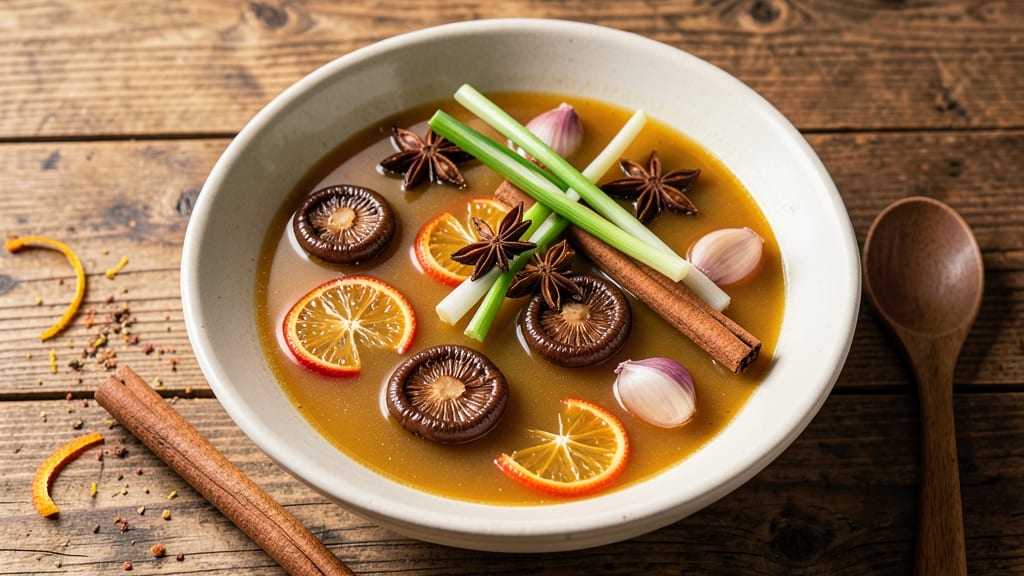
This Asian soup stock recipe transforms basic broth into a fragrant umami base that elevates everything from instant ramen to elaborate pho. The secret lies in properly toasting aromatic ingredients—ginger, garlic, and scallions—before simmering them with protein and vegetables for deep, complex flavor.
Unlike store-bought versions, this homemade stock builds layers of savory richness through slow extraction and careful seasoning.
Professional techniques like blooming spices in oil and skimming impurities create a crystal-clear, intensely flavorful broth. The recipe balances simplicity with restaurant-quality results, using just 10 ingredients that work together to develop umami depth.
Whether you're upgrading instant noodles or preparing traditional soups, this stock serves as the aromatic foundation that makes every bowl memorable.
The simmering process transforms tough cuts of meat and fibrous vegetables into tender, flavorful components while extracting their essence into the broth. Proper storage in the fridge for up to 5 days or freezer for 3 months preserves its vibrant taste, making it a pantry essential for quick meals.
Each batch delivers consistent, restaurant-inspired quality that transforms ordinary cooking into something extraordinary.
Perfect for both weeknight meals and special occasions, this versatile stock adapts to any Asian-inspired dish. The clear, golden broth enhances the natural flavors of noodles, vegetables, and proteins while adding its own complex umami character.
With minimal effort and maximum flavor impact, this recipe proves that homemade stock can be both practical and impressive.
Ingredients for asian soup stock
Ten key ingredients transform simple water into a fragrant umami foundation for any Asian dish.
| Ingredient | Amount | Notes |
|---|---|---|
| Dried Shiitake Mushrooms 🍄 | 8 whole | Rehydrated for umami depth |
| Fresh Ginger Root 🌿 | 3 tbsp | Thinly sliced, skin removed |
| Garlic Cloves 🧄 | 6 cloves | Smashed for aromatic release |
| Scallions 🧅 | 2 whole | White and green parts separated |
| Star Anise Pods 🌟 | 2 whole | Lightly crushed for aroma |
| Cinnamon Sticks 🌿 | 1 whole | 2-inch length preferred |
| Dried Coriander Seeds 🌶️ | 1 tbsp | Toasted for nutty depth |
| Chicken Breast 🍗 | 1 ½ lb | Bone-in, skin-on preferred |
| Vegetable Oil 🫒 | ¼ cup | High smoke point preferred |
| Water 💧 | 8 cups | Filtered preferred for clarity |
The shiitake mushrooms are non-negotiable for authentic umami—look for dried at Asian markets or specialty stores, not the fresh variety. Fresh ginger should be firm with no soft spots; Penzeys Spices carries excellent quality. Garlic cloves should be plump and free of sprouts. For star anise and cinnamon, Whole Foods or bulk spice sections offer the freshest options. Chicken breast should be bone-in and skin-on for maximum flavor extraction—Costco or butcher counters provide the best quality.
No dried shiitake? Dried porcini mushrooms work equally well. Fresh ginger can be substituted at double the amount, but toasted coriander seeds are harder to replace—ground coriander at half the amount is the closest alternative. Star anise and cinnamon can be omitted if unavailable, but the broth will lack complexity. For a vegetarian version, replace chicken with 1 lb kombu seaweed or 1 cup dried daikon radish. Always bloom spices in oil for 30 seconds to release their aromatics—this step is critical for depth.
Simmered stock should be stored in airtight glass containers in the fridge for up to 5 days or frozen for 3 months. Skim any foam or impurities during simmering for crystal-clear results. For best flavor, use within 1 week of making. Freeze in ice cube trays for portion control—each cube equals roughly 1 oz of stock, perfect for single servings.
Why You'll Love This Recipe
- Pantry Magic: I swear by this stock—no fancy ingredients, just what’s already lurking in my cupboard. Toss in dried shiitakes (soaked overnight, but even 30 minutes works in a pinch) and a few star anise pods, and you’ve got depth without the grocery run.
- Umami Bomb: That first sip? The shiitakes and ginger team up for a flavor so rich, it’s like a warm hug for your taste buds. Honestly, I’ve made stock before, but this one actually makes me pause mid-slurp—no joke.
- Weeknight Swiss Army: Soup base? Check. Stir-fry sauce? Check. Even a quick ramen upgrade? You bet. I keep a jar in the fridge because it’s the one ingredient that turns my lazy meals into something special—no overcomplicating required.
- Budget Hero: A single batch costs me pennies but lasts for weeks. Freeze extras in ice cube trays for instant flavor boosts later, and you’ve just saved money and time. My wallet and I both approve.
Step-by-step instructions for Asian soup stock
Transform simple ingredients into a deeply flavorful aromatic base using precise technique.
Rehydrate and Prepare Aromatics
Place the 8 whole dried shiitake mushrooms in a heatproof bowl and pour 4 cups of the 8 cups water over them. Let soak for 30 minutes until they've absorbed the water and expanded significantly. This rehydration process unlocks their umami depth - you'll notice the water takes on a rich, earthy tea-like color.
While the mushrooms soak, prepare the remaining aromatics. Thinly slice the 3 tbsp fresh ginger root, removing the skin first. Smash the 6 cloves garlic with the flat side of a knife to release their oils without mincing. Separate the 2 whole scallions into white and green parts, discarding the green tops for this stock. Lightly crush the 2 whole star anise pods and snap the 1 whole cinnamon stick into 2-inch pieces. Toast the 1 tbsp dried coriander seeds in a dry skillet over medium heat for 2 minutes until fragrant - this nutty depth will elevate your stock.
Build the Flavor Foundation
Heat the 0.25 cup vegetable oil in a large stockpot over medium heat. Add the toasted coriander seeds and cook for 30 seconds until they begin to sizzle. Immediately add the smashed garlic and sliced ginger, cooking for 1 minute until fragrant but not browned. This quick cooking preserves their delicate flavors rather than burning them.
Add the crushed star anise and cinnamon stick, stirring for 30 seconds to allow the spices to bloom. Pour in the rehydrated mushrooms with their soaking liquid, scraping any sediment from the bowl. Bring the mixture to a gentle simmer, then add the remaining 4 cups water. The liquid should reach just below a full boil - you're looking for a steady, quiet bubbling that doesn't foam excessively.
Simmer the Chicken and Aromatics
Add the 1.5 lb chicken breast, bone-in and skin-on if possible, to the pot. The skin will render fat that carries flavor into the stock. Skim any foam that rises to the surface during the first 5 minutes of simmering - this removes impurities for a clearer stock. Reduce heat to maintain a gentle simmer and cook for 45 minutes, partially covered.
After 45 minutes, remove the chicken and let it cool slightly before shredding or deboning for other uses. Return the chicken pieces to the pot and continue simmering for another 30 minutes. You'll notice the stock gradually deepens in color and aroma. The white scallion parts should infuse subtle sweetness while the mushrooms contribute their signature umami richness.
Strain and Finish
Strain the stock through a fine-mesh sieve into a clean pot, pressing gently on the solids to extract maximum flavor. Discard the solids or compost them. The stock should yield about 8 cups of rich, golden liquid with visible particles - this is normal and indicates good extraction. Skim any remaining fat that rises to the surface.
Taste and adjust seasoning if needed, though properly prepared stock should be naturally balanced. For immediate use, the stock is ready. For longer storage, let it cool completely before refrigerating for up to 5 days or freezing for up to 3 months. This aromatic base will transform simple ramen into a restaurant-quality bowl.
Pro Tips For Making Asian Soup Stock
- SOAK SHIITAKES LONGER: Dried shiitakes need at least 20 minutes in hot water to plump properly—don’t skimp. I learned this the hard way when my stock turned out thin and flavorless because I rushed the soaking. If you’re short on time, use boiling water and cover the pot for 15 minutes first.
- TOAST WHOLE SPICES FIRST: Lightly toast the star anise pods in a dry pan for 30 seconds until fragrant—this deepens their aroma without burning. I used to toss them in raw, and while the stock still worked, the flavor was subtle. Toasting them first makes a real difference, especially if you’re using them for depth rather than just flavor.
- PEEL GINGER THINLY: Use a spoon to scrape off just the outer skin—don’t peel it like an orange. The thin layer under the skin has more flavor, and you’ll end up with less waste. I used to peel it aggressively, thinking it was dirt, but now I leave the papery skin on for extra depth.
- STRAIN TWICE: After simmering, strain the stock through a fine-mesh sieve first, then a cheesecloth or coffee filter for a crystal-clear result. The second straining catches the tiny bits that slip through, which can make your stock look cloudy. It’s extra effort, but the difference in texture is noticeable.
Storing and reheating this dish
Fridge Storage Essentials
Store your freshly made stock in airtight glass containers—I prefer Le Parfait jars with snap-on lids for their seal. Keep it refrigerated at 40°F or below for up to 5 days, though I find the flavor peaks at 3-4 days.
The golden hue will darken slightly over time, but that just means the umami is intensifying. Always cool the stock completely before storing to prevent condensation buildup, which can dilute the flavor. 💧
Freezer Preservation
For longer storage, freeze your stock in quart-sized freezer bags or silicone ice cube trays—each cube equals about 1 oz, perfect for single servings. Leave 1-inch headspace to account for expansion, and squeeze out excess air to prevent freezer burn.
Label with the date, as properly frozen stock maintains peak quality for 3 months. Thaw overnight in the fridge before using, or add frozen cubes directly to hot soups—they’ll melt instantly without compromising texture. ❄️
Reheating for Maximum Flavor
Reheat stock gently over medium-low heat—never boil—to preserve its delicate aromatics. Add ¼ cup water or a splash of rice vinegar if it appears too thick after freezing. For microwave reheating, use 50% power in 1-minute intervals, stirring between each, until reaching 165°F.
I like adding a pinch of salt after reheating to restore balance, as freezing can mute flavors slightly. 🔥
Reviving Stale Stock
If your stock tastes flat after refrigeration, don’t toss it! Simmer it with 1 tbsp soy sauce and ½ tsp fish sauce for 5 minutes to restore umami depth. For freezer-retrieved stock that’s lost clarity, strain it through a cheesecloth-lined sieve to remove any cloudiness.
A squeeze of fresh lemon juice can also brighten flavors if the stock has oxidized. These tricks save perfectly good stock from the trash. 💡
Portion Control Hacks
Freeze stock in pint-sized mason jars for easy single-serving portions—just pop one into your pot and add water as needed. For pho or ramen, I freeze 2-cup portions in silicone molds so I can grab exactly what I need without thawing the whole batch.
Label each portion with the date and intended use (e.g., "ramen" or "pho") to streamline meal prep. This method cuts waste and keeps your stock organized. ✨
Long-Term Flavor Boost
To extend shelf life and enhance flavor, reduce your stock by 25% after reheating using a saucepan with a lid. This concentrates the umami and removes excess water. Store the reduced stock in small jars for up to 2 weeks in the fridge.
It’s ideal for quick soups or as a flavorful base for sauces—just dilute with water or broth as needed. This technique transforms ordinary stock into a pantry powerhouse. 💪
Nutrition facts
Frequently asked questions
Can I make this stock vegetarian?
Yes! Replace the chicken with 1 lb kombu seaweed or 1 cup dried daikon radish for umami depth. Add 1 tbsp soy sauce and 1 tsp fish sauce substitute (like vegan fish sauce) to compensate for the missing meaty flavor. The mushrooms and aromatics will still create a rich, aromatic base perfect for noodle dishes.
How do I know when the stock is done?
The stock is ready when it develops a deep golden color and rich aroma after 75 minutes of simmering. It should smell intensely fragrant with notes of ginger, garlic, and mushrooms. Taste it before straining—properly made stock will be naturally savory without needing extra salt. The texture should be smooth with no visible impurities after straining.
What can I do with leftover stock solids?
Don't waste them! Compost the mushroom stems and scallion ends, but save the chicken bones and skin for another batch of stock. The aromatics (ginger, garlic, spices) can be dried and stored in a jar for future use in soups or marinades. Even the strained solids make excellent flavorful additions to stir-fries or fried rice.
Can I use fresh shiitake mushrooms instead of dried?
Fresh shiitake work, but dried provide more intense umami flavor. If using fresh, add 1 cup sliced mushrooms directly to the simmering pot after the initial 30 minutes of cooking. Remove them before straining to keep your stock clear. For best results, combine 4 fresh mushrooms with 4 dried to balance flavor and texture.
Why does my stock look cloudy?
Cloudiness usually means protein particles or starches weren't fully strained. Use a fine-mesh sieve lined with cheesecloth for clearer results. If the cloudiness is mild, it won't affect flavor—just strain again through a coffee filter for a crystal-clear broth. Skim foam during simmering and avoid boiling vigorously to prevent excess clouding.