
Soups & Stews
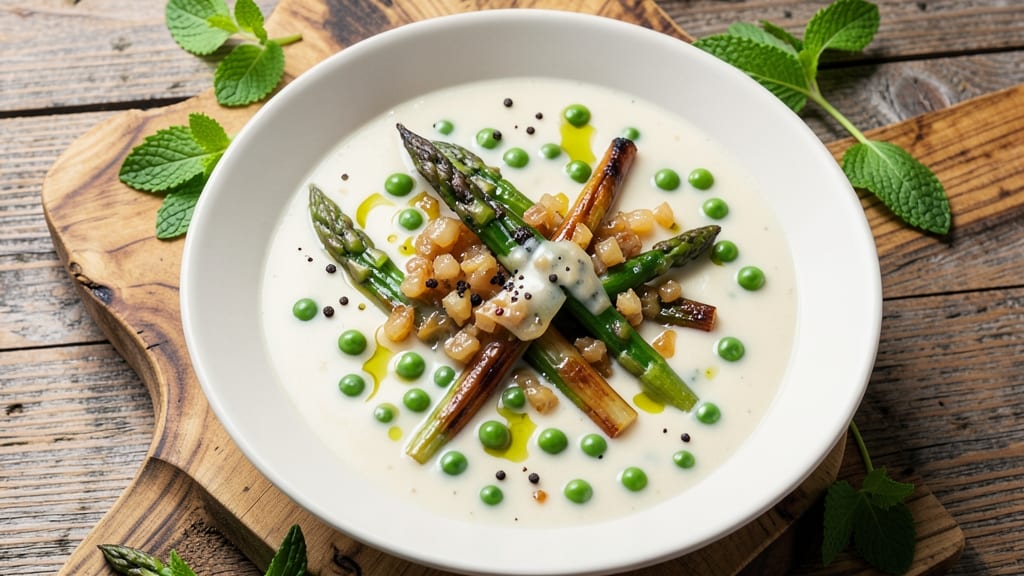
This asparagus and pea soup recipe captures spring's essence in every velvety spoonful, blending tender asparagus and sweet peas into a vibrant, comforting bowl. The secret lies in blanching the asparagus first—preserving its bright green color and crisp texture before blending into a silky base.
I developed this recipe after years of experimenting with seasonal vegetables, and it never fails to deliver restaurant-quality results at home.
The beauty of this soup is its versatility—whether you prefer a smooth, blended texture or a rustic, chunky version, both methods work beautifully. A touch of lemon zest brightens the natural sweetness of the peas, while fresh mint adds a refreshing herbal note that elevates the dish.
The recipe comes together in under 45 minutes, making it perfect for a quick yet impressive meal.
What you'll end up with is a soup that's rich in flavor yet light enough for spring dining, with a perfect balance of earthy asparagus and sweet peas.
The aroma alone—warm, fresh, and herbaceous—will have everyone gathered around the table. Serve it with crusty bread or a sprinkle of grated parmesan for the ultimate comfort dish.
This recipe also works beautifully as a starter for larger meals or as a standalone vegetarian dish that feels hearty and satisfying. The techniques are simple, but the results are anything but basic—each spoonful is a celebration of spring's bounty. Let's get cooking!
Ingredients for asparagus and pea soup
Spring's bright green stars meet velvety comfort in this vibrant soup's essential ingredients.
| Ingredient | Amount | Notes |
|---|---|---|
| Fresh Asparagus 🌿 | 1 ½ lb | Trimmed, woody ends removed |
| Fresh Peas 🌱 | 1 ½ cups | Shelling peas preferred |
| Yellow Onion 🧅 | 1 whole | Medium size, diced |
| Garlic Cloves 🧄 | 4 cloves | Peeled, roughly chopped |
| Vegetable Broth 💧 | 4 cups | Low-sodium preferred |
| Extra-Virgin Olive Oil 🫒 | ¼ cup | For sautéing |
| Fresh Lemon 🍋 | 1 whole | Zest only, seeds removed |
| Fresh Mint Leaves 🌿 | ¼ cup | Chopped, stems removed |
| Sea Salt 🧂 | 1 ½ tsp | Adjust to taste |
| Black Pepper 🌶️ | ½ tsp | Freshly ground |
| Crusty Bread 🍞 | 4 slices | For serving |
| Parmesan Cheese 🧀 | ¼ cup | Freshly grated |
The asparagus is non-negotiable—look for bright green, firm stalks with tight tips. Whole Foods or local farmers markets have the freshest, but any grocery store works if you snap off the woody ends. Peas? Frozen work perfectly if fresh aren't in season, but nothing beats the sweetness of fresh shelling peas. The onion and garlic are your flavor base—don't skip toasting them in olive oil. That's where the soup's depth comes from. For the broth, Pacific Foods low-sodium is my go-to, but any vegetable broth will do.
No fresh mint? Dried mint at half the amount works in a pinch, but fresh is ideal. Lemon zest is key—organic lemons have more vibrant flavor. Want extra richness? Stir in 2 tbsp cream cheese at the end (trust me, it's amazing). The Parmesan can be swapped for nutritional yeast if you prefer a vegan option. For the bread, baguettes from Trader Joe's toast beautifully—just slice before serving so it's ready when the soup is done.
This soup tastes even better the next day—3-4 days in the fridge, no problem. Freeze portions for up to 3 months by pouring into ice cube trays with broth, then transferring to a bag. The bread? Toast it fresh when serving—crusty is crucial. I always double the recipe because it disappears fast. Leftovers make perfect lunches with a sprinkle of extra Parmesan.
Why You'll Love This Recipe
- No Chopping Drama: This soup only needs one onion and two garlic cloves—no fancy dicing, no tears, just rough chop and go. I swear by the food processor for the peas and asparagus (toss them in whole, pulse until tiny), and suddenly you’re done in minutes.
- Spring in a Bowl: That first sip of sweet peas and bright asparagus? It’s like spring in your mouth. The onion caramelizes just enough to add depth, while the garlic lingers—warm, earthy, and just sharp enough to make your taste buds stand up and cheer.
- Lunchbox Hero: Between us, this soup reheats like a dream and tastes even better the next day. Pack it in a thermos for work, or freeze half for when you’re too tired to cook. (Yes, even on a Tuesday night.)
- Budget Brightener: Fresh peas and asparagus might sound fancy, but they’re way cheaper than takeout—and this recipe stretches them into a full meal. Swap frozen peas for fresh if you’re pinching pennies, and boom: still ridiculous good.
Step-by-step instructions for asparagus and pea soup
Here's how to transform spring's freshest produce into a velvety, herb-infused soup that's pure comfort in a bowl.
Prepare the Vegetable Base
Start by trimming the 1.5 lb fresh asparagus—cut off the woody bottoms and chop the tender tops into 1-inch pieces, reserving the tough stems for the broth. In a large pot, heat 0.25 cup extra-virgin olive oil over medium heat until shimmering. Add the diced yellow onion and cook for 5 minutes until softened and translucent.
Add the reserved asparagus stems and the 1.5 cups fresh peas (shell them if using in pods). Stir for 2 minutes until the peas begin to soften slightly. This step develops the soup's foundational flavors while preventing the peas from turning mushy later. The onions should smell sweet and caramelized—this is your cue to move forward.
Build Flavor with Aromatics
Push the vegetables to one side of the pot and add the 4 cloves garlic cloves to the empty space. Sauté for 30 seconds until fragrant—don't let it brown, or it'll turn bitter. Stir everything together and pour in the 4 cups vegetable broth. Bring to a gentle boil, then reduce heat to medium-low and let it simmer for 10 minutes to meld the flavors.
While the soup simmers, zest the whole fresh lemon (no seeds) and finely chop the 0.25 cup fresh mint leaves. The lemon zest will brighten the soup's natural sweetness, while the mint adds a refreshing herbal note. Keep these ingredients nearby—they'll be added just before serving to preserve their vibrant flavors.
Blend to Silky Perfection
Using an immersion blender, carefully blend the soup directly in the pot until completely smooth. For a smoother texture, strain it through a fine-mesh sieve if desired. Taste and adjust seasoning with 1.5 tsp sea salt and 0.5 tsp black pepper. The soup should be well-seasoned but not overly salty—remember, the broth may already contain some salt.
Return the soup to medium-low heat and let it warm through for 2-3 minutes. This step ensures the soup is piping hot and ready to serve. The color should be a beautiful, vibrant green—proof that your spring vegetables are shining through.
Finish and Serve
Ladle the soup into bowls and top each serving with a sprinkle of 0.25 cup freshly grated Parmesan cheese, a few drops of lemon juice, and a garnish of chopped mint leaves. The Parmesan adds a creamy richness, while the lemon and mint cut through the soup's natural sweetness, balancing the flavors perfectly.
Serve immediately with the 4 slices crusty bread on the side for dipping. The bread's crunch contrasts beautifully with the soup's velvety texture, making every bite even more satisfying. This soup is best enjoyed fresh—its bright, spring flavors fade as it sits, so don't wait to serve!
Pro Tips For Making Asparagus And Pea Soup
- CHAR THE ONIONS LOW: Blister those onions for 10 minutes at medium-low heat—until they’re deep golden and sweet, not browned. I used to rush this and end up with bitter soup; patience here makes all the difference when paired with asparagus and peas.
- TRIM ASPARAGUS AT THE END: Save the tough bottoms for stock or compost—add the spears whole to the pot, then remove them after 5 minutes of simmering. You’ll keep the bright green color and avoid a fibrous texture in your finished soup.
- SIMMER PEAS JUST UNTIL TENDER: Fresh peas turn to mush fast—check them at 3 minutes, not 5. Overcooking turns them into a paste; you want them to hold their shape but soften completely, so they melt into the broth like little bursts of sweetness.
- SALT THE BROTH IN STAGES: Add half the salt when you start the broth, then taste again at the end—vegetable broth varies wildly in saltiness. If you’re using low-sodium, you’ll need to adjust, but don’t overdo it; the peas and asparagus will release their own natural sweetness as they cook.
Common mistakes when making perfect results
Overcooking Asparagus
Asparagus turns mushy and loses its vibrant green color when overcooked. I’ve ruined many batches by letting it simmer too long in the broth. The key is to blanch it separately for just 2-3 minutes before adding it to the soup.
This preserves its crisp texture and bright color—trust me, it makes all the difference. 🌿
Skipping the Blanching Step
If you skip blanching the asparagus first, it’ll release bitter compounds into the soup, making the final flavor unbalanced. I learned this the hard way—my first attempt tasted grassy and harsh.
Always blanch the asparagus in boiling water for 2 minutes, then shock it in ice water before adding it to the pot. This step is non-negotiable for the best results.
Using Frozen Peas Directly
Frozen peas work in a pinch, but tossing them straight into the pot without thawing first can make the soup grainy and uneven in texture. Instead, thaw them in warm water for 5 minutes before adding.
For even better results, use fresh peas—they’re sweeter and blend more smoothly into the soup’s velvety texture.
Over-Salting the Broth
Many store-bought vegetable broths are already salty, and adding extra salt can make the soup taste flat or even bitter. I always taste the broth before adding the vegetables and adjust the seasoning after blending.
Start with 1 tsp sea salt and adjust to taste—you can always add more, but you can’t take it out.
Ignoring the Lemon Zest
The lemon zest is what brightens the soup’s natural sweetness and balances the earthy asparagus. Skipping it means missing out on that fresh, springy flavor. Zest just the outer layer of 1 lemon (no seeds!) and add it at the very end.
A little goes a long way—don’t overdo it, or the soup will taste overly acidic.
Rushing the Blending Process
If you blend the soup too quickly or without enough liquid, you’ll end up with a thick, pasty mess. Always ensure the soup has enough broth to create a smooth, velvety texture.
I recommend blending in 2 batches if needed, adding a splash of warm water to thin it out if necessary. Patience here makes all the difference in the final consistency. ✨
Nutrition facts
Frequently asked questions
Can I make this soup without fresh asparagus?
Use 12 oz frozen asparagus spears instead, but thaw and drain them first. For extra flavor, add 1 tsp asparagus powder (found in health food stores) to the broth. The texture will be slightly different, but the soup will still taste delicious.
How can I make this soup creamier without dairy?
Blend in ½ cup silken tofu or ¼ cup cashew cream (soaked cashews blended with water) at the end. For a dairy option, stir in 2 tbsp heavy cream or coconut milk just before serving. The key is to add it last so it doesn't curdle from heat.
Can I prepare this soup ahead of time?
Yes! Make it 1 day ahead and store in the fridge. The flavors actually improve overnight. Reheat gently on low heat, stirring occasionally. For freezing, portion into containers (leave ½-inch headspace for expansion) and freeze for up to 3 months. Thaw in the fridge overnight before reheating.
What if I don't have an immersion blender?
No problem! Transfer the soup to a regular blender in batches (don't overfill). For a chunkier texture, use a potato masher instead. Just be sure to cool the hot soup slightly first to avoid steam burns. A fine-mesh sieve can help remove any remaining lumps if needed.
How can I make this soup spicier?
Add ½ tsp smoked paprika or ¼ tsp cayenne pepper to the sautéed onions. For depth, stir in 1 tsp miso paste with the broth. Finish each bowl with a pinch of red pepper flakes or a dash of hot sauce. The peas will help balance the heat with their natural sweetness.