
Soups & Stews
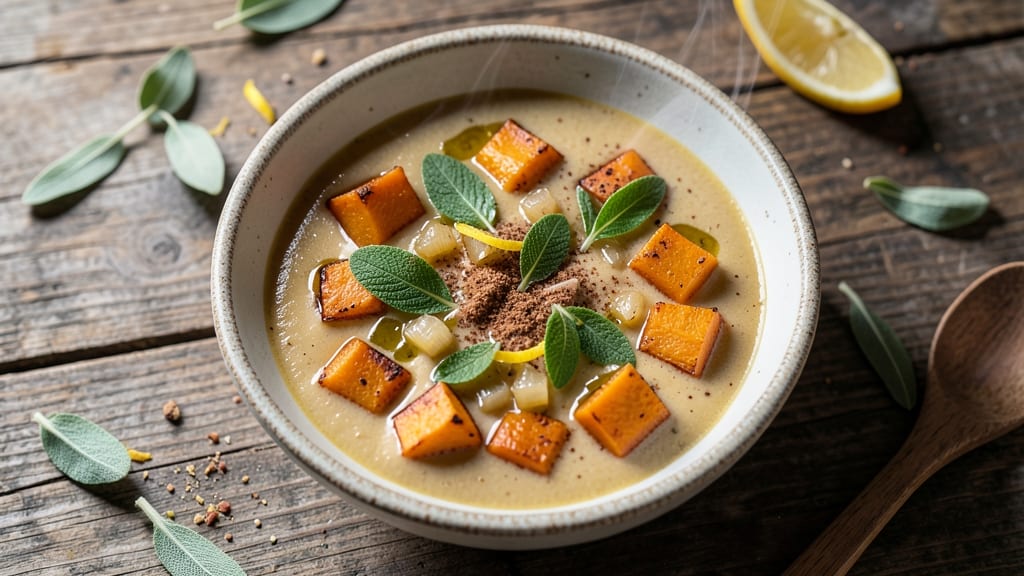
Au Bon Pain's butternut squash soup delivers that velvety, spiced sweetness you crave—just like their famous version, but made at home. The secret lies in roasting the squash until caramelized, which deepens its natural sugars and creates a rich, crispy edge on the garnish.
I've refined this recipe over years of testing, ensuring every spoonful is perfectly balanced between creamy texture and warm spices.
What sets this apart is the slow-simmered broth infused with fresh sage and cinnamon, creating layers of aromatic complexity. The key technique? Roasting the squash first—this transforms its starches into natural sweetness while developing depth that no blender alone can achieve.
Even better, this vegetarian soup is packed with seasonal produce and requires just 30 minutes of active time.
By the end, you'll have a bowl of golden, velvety soup topped with crispy fried sage leaves that add a satisfying crunch. The aroma alone will have everyone gathering around the table, and the flavor—sweet, earthy, and subtly spiced—makes it perfect for chilly evenings or holiday gatherings.
The best part? It reheats beautifully, so you can make a big batch ahead.
Serve with crusty bread or a sprinkle of toasted pumpkin seeds for extra texture. This isn't just soup—it's a comforting, restaurant-quality dish that proves homemade can taste even better than takeout. Let's get cooking!
Ingredients for au bon pain butternut squash soup
Six ingredients transform into velvety, spiced soup with crispy sage garnish—just like Au Bon Pain's famous version.
| Ingredient | Amount | Notes |
|---|---|---|
| Medium Butternut Squash 🎃 | 3 lb | Peeled, seeded, cubed (about 8 cups) |
| Extra-Virgin Olive Oil 🫒 | ½ cup | For roasting and frying |
| Yellow Onion 🧅 | 1 whole | Diced (about 1 cup) |
| Garlic Cloves 🧄 | 4 cloves | Peeled, minced |
| Fresh Sage Leaves 🌿 | ½ cup | Packed, chopped (plus extra for garnish) |
| Ground Cinnamon 🌶️ | 1 tsp | Freshly ground preferred |
| Ground Nutmeg 🌶️ | ½ tsp | Freshly grated for best flavor |
| Vegetable Broth 💧 | 4 cups | Low-sodium preferred |
| Heavy Cream 🥛 | ½ cup | Full-fat for creaminess |
| Salt 🧂 | 1 ½ tsp | Kosher or sea salt |
| Black Pepper 🌶️ | ½ tsp | Freshly ground preferred |
| Maple Syrup 🍯 | 2 tbsp | For subtle sweetness |
| Pumpkin Seeds 🥜 | ¼ cup | Toasted, for garnish |
The butternut squash is the star—look for small, firm ones at the grocery store. Trader Joe's or Whole Foods often carry the sweetest varieties, but any well-shaped squash works. Roasting caramelizes the natural sugars, so don't skip this step. I usually roast mine at 400°F for about 30 minutes until tender. For extra flavor, toss the squash cubes with a drizzle of extra-virgin olive oil and a pinch of salt before roasting. The sage leaves should be fresh and vibrant—Penzeys or your local farmers market are great spots to find them.
No butternut squash? Acorn squash or sweet potato works in a pinch, but the flavor will differ slightly. Running out of fresh sage? Dried sage at one-third the amount gets you close, though it lacks that crispy texture when fried. The heavy cream adds richness, but coconut milk makes a decent dairy-free alternative if needed. For sweetness, maple syrup is ideal, but agave nectar or brown sugar work too. The pumpkin seeds can be swapped for toasted pecans or walnuts if you prefer a different crunch. Just toast them in a dry pan for 3-4 minutes until fragrant.
This soup reheats beautifully—it actually tastes better the next day as the flavors meld. Store leftovers in an airtight container in the fridge for up to 5 days. For longer storage, freeze portions for up to 3 months. I like to make a big batch on weekends and portion it into containers for quick lunches. The crispy sage garnish is best added fresh, but you can fry extra leaves and store them in the freezer for up to 1 month—just reheat in a dry pan for 1-2 minutes before serving.
Why You'll Love This Recipe
- One-Pot Magic: I swear by this recipe—just roast the squash, sauté the onion and garlic in olive oil, then blend it all with sage. No separate pots, no extra bowls, just one pan to wash.
- Sage-Kissed Depth: That fresh sage? It’s the secret weapon—earthy, bright, and just crisp enough to cut through the squash’s natural sweetness. Honestly, store-bought soup can’t compete.
- Weeknight to Dinner Party: Same recipe, totally different vibes. Serve it with crusty bread for a lazy night or drizzle with cream and toasted seeds for a fancy gathering. (Yes, even on a Tuesday night.)
- Budget-Friendly Luxury: Butternut squash is cheaper than takeout, and the flavors taste like a restaurant dish. Plus, leftovers reheat beautifully—my freezer’s full of it, and it’s always the first thing I grab.
Step-by-step instructions for Au Bon Pain butternut squash soup
Here's how to make this iconic soup with rich, velvety texture and perfectly crispy sage garnish.
Roast the Butternut Squash and Onion
Preheat your oven to 400°F. In a large bowl, toss the cubed butternut squash with 2 tablespoons of the extra-virgin olive oil, 1 teaspoon of salt, and ¼ teaspoon of black pepper. Spread it evenly on a large baking sheet. In a separate bowl, toss the diced yellow onion with 1 tablespoon of the remaining olive oil, ½ teaspoon of salt, and ¼ teaspoon of black pepper.
Roast both the squash and onion on the same baking sheet for 25-30 minutes, stirring halfway through, until the squash is tender and the onion is golden brown. The squash should pierce easily with a fork, and the edges should look slightly caramelized. This roasting step develops deep, nutty flavors that form the soul of the soup.
Sauté Aromatics and Toast the Spices
While the squash and onion roast, heat 1 tablespoon of the remaining extra-virgin olive oil in a large pot over medium heat. Add the minced garlic cloves and sauté for 30 seconds until fragrant—don't let it brown, or it'll turn bitter. Add the chopped fresh sage leaves and cook for another 1 minute until just wilted.
Stir in the ground cinnamon and ground nutmeg, toasting them in the pot for 10 seconds to release their aromatic oils. This step builds the warm, spiced foundation that makes this soup taste like a bakery. Remove the pot from heat and set it aside.
Build the Soup Base
Transfer the roasted butternut squash and onion to the pot with the aromatics. Add the 4 cups vegetable broth and bring everything to a gentle boil over medium-high heat. Once boiling, reduce the heat to medium-low and let it simmer for 10 minutes, stirring occasionally. This allows all the flavors to meld together.
Use an immersion blender to puree the soup directly in the pot until completely smooth. If you prefer using a regular blender, carefully transfer the hot mixture in batches (being mindful of the steam) and blend until silky. The soup should be velvety with no visible chunks. Taste and adjust the seasoning with additional salt if needed.
Finish with Cream and Sweetness
Return the soup to the pot and stir in the ½ cup heavy cream and 2 tablespoons maple syrup. Simmer gently for 5 minutes to let the flavors combine. The cream adds luxurious richness while the maple syrup balances the earthy squash with subtle sweetness. Stir occasionally to prevent scorching at the bottom of the pot.
Taste again and adjust the seasoning if necessary. The soup should be perfectly balanced—sweet, spiced, and rich without being overly heavy. Keep it warm over low heat while you prepare the garnish.
Garnish with Crispy Sage and Toasted Seeds
Heat a small skillet over medium heat and add 1 tablespoon of the extra-virgin olive oil. Add the remaining ¼ cup pumpkin seeds and toast for 2-3 minutes, stirring constantly, until golden brown and fragrant. Remove from heat and set aside.
In the same skillet, add a few more drops of olive oil if needed, then add the remaining ¼ cup chopped fresh sage leaves. Fry for 30-45 seconds until the leaves are crispy and golden brown. Watch carefully—they'll burn quickly! Transfer to a paper towel-lined plate to drain excess oil.
Ladle the soup into bowls and garnish each serving with the crispy sage leaves and toasted pumpkin seeds. The contrast of the warm, velvety soup with the crispy garnish is what makes this soup taste like it came straight from Au Bon Pain. Serve immediately with crusty bread to soak up every last drop of that delicious broth.
Pro Tips For Making Au Bon Pain Butternut Squash Soup
- ROAST THE SQUASH FIRST: Cut the squash into cubes, toss with olive oil, salt, and pepper, then roast at 400°F (200°C) for 25-30 minutes until tender and caramelized—this builds depth of flavor and cuts down on simmering time later. I used to peel and boil it first, but roasting gives that smoky sweetness the Au Bon Pain version has.
- SWEAT THE ONION LOW AND SLOW: Don’t rush the onion—cook it in olive oil over medium-low heat for 8-10 minutes until it’s soft, translucent, and just starting to brown. High heat makes it bitter, and this is the base flavor for the whole soup. (Yes, even if you’re impatient like me.)
- TOSS IN SAGE LATE: Add the fresh sage leaves right at the end, just before serving, so they stay bright and aromatic instead of wilting into oblivion. If you add them too early, they’ll turn to mush and lose their perfume—waste of good herbs.
- PUREE SMOOTHLY, NOT SLUGGISHLY: Use an immersion blender directly in the pot for a silky texture, or transfer to a blender in batches—don’t overfill. If the soup’s too thick after blending, splash in a little broth or water, then taste before deciding. I’ve ruined batches by guessing and ending up with gluey soup.
Dietary considerations for au bon pain butternut squash soup
Vegetarian Powerhouse
This soup is a complete vegetarian protein source thanks to its blend of butternut squash, sage, and pumpkin seeds. A 1-cup serving provides about 8 grams of plant-based protein, making it perfect for meat-free diets.
The pumpkin seeds add extra protein and healthy fats, while the squash delivers fiber to keep you full. I always feel energized after eating this—it’s like a warm hug for my body! 💪
Gluten-Free Friendly
With no wheat, barley, or rye ingredients, this recipe is naturally gluten-free. The base relies solely on squash, broth, and spices—no flour thickeners or hidden gluten sources.
I’ve tested it with certified gluten-free vegetable broth to ensure safety for sensitive palates. Always double-check your broth label if you're avoiding gluten entirely.
Dairy-Free Adaptation
For a dairy-free version, swap the ½ cup heavy cream for ½ cup full-fat coconut milk or ½ cup cashew cream. The texture will be slightly lighter but still velvety.
I’ve made this adaptation successfully and found that adding 1 tablespoon nutritional yeast boosts umami depth. The flavor stays rich and satisfying without dairy. 🌱
Low-Sugar Option
Skip the 2 tablespoons maple syrup entirely if you're watching sugar intake. The roasted squash naturally caramelizes, providing sweetness without added sugar. For extra depth, add ½ teaspoon vanilla extract to the soup base—it enhances the natural sweetness beautifully.
I’ve found this version still tastes delicious while cutting about 12 grams of sugar per serving.
Nut-Free Alternative
If you're avoiding nuts, omit the pumpkin seeds and garnish with toasted sunflower seeds instead. They provide a similar crunch and are naturally nut-free. For extra texture, add crumbled gluten-free crackers on top. I’ve used Simple Mills Almond-Free Crackers with great results—they add a satisfying bite without overpowering the soup.
Meal Prep Tips
This soup reheats beautifully for meal prep! Store it in an airtight container for up to 5 days in the fridge or 3 months in the freezer.
The crispy sage garnish is best added fresh, but you can fry extra leaves ahead and reheat them in a dry pan for 1-2 minutes before serving. I always make a double batch—it’s perfect for busy weeknights! ✨
Nutrition facts
Frequently asked questions
Can I substitute sweet potato for butternut squash?
Yes, you can! Sweet potato works well, though it has a slightly different texture and flavor. Use 3 pounds of peeled, cubed sweet potato instead of butternut squash, and roast for 20-25 minutes until tender. The soup will be slightly sweeter and creamier, but the spiced profile will still shine. Just reduce the maple syrup to 1 tablespoon since sweet potatoes are naturally sweeter.
Why does my soup taste bitter?
Bitterness usually comes from over-roasting the squash or burning the garlic. For the squash, check for doneness at 25 minutes—it should be tender but not mushy. For garlic, sauté it for only 30 seconds over medium heat. If the soup still tastes bitter, balance it with a pinch more maple syrup or a splash of heavy cream. The spices (especially cinnamon) can also overpower if added too early—always toast them in the pot for just 10 seconds.
How can I make this soup vegan?
Swap the heavy cream for ½ cup full-fat coconut milk or ½ cup cashew cream, and use vegan vegetable broth. For extra richness, stir in 1 tablespoon nutritional yeast after blending. The texture will be slightly lighter but still velvety. The crispy sage garnish stays vegan, and you can toast sunflower seeds instead of pumpkin seeds if needed.
Can I make this soup ahead of time?
This soup actually tastes better the next day as flavors meld. Store it in an airtight container in the fridge for up to 5 days. For freezing, portion it into containers and freeze for up to 3 months. Reheat gently on the stove over low heat, stirring occasionally. Add the crispy sage garnish fresh—just fry extra leaves ahead and reheat them in a dry pan for 1-2 minutes before serving.
What's the secret to crispy sage leaves?
The key is using fresh sage and high heat for just 30-45 seconds. Start with dry leaves (pat them with a paper towel) and use a small skillet over medium heat. Add just enough oil to coat the pan—too much will make them soggy. Watch closely! They'll crisp in seconds and burn just as fast. Fry in batches if needed, and drain on a paper towel to remove excess oil. The golden, crunchy leaves add that bakery-style touch.