
Soups & Stews
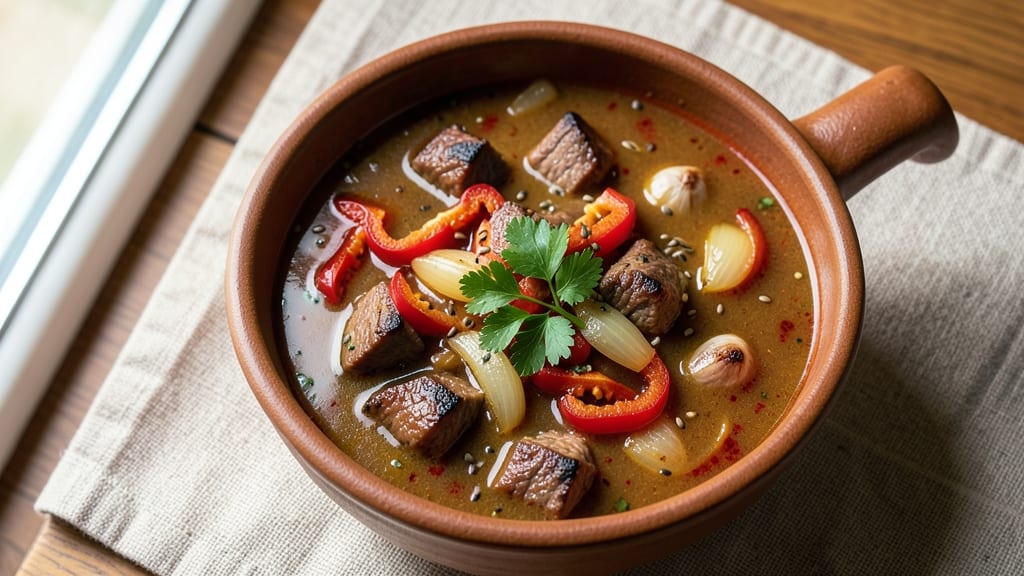
This authentic Austrian goulash soup delivers the rich, spiced depth that makes it a beloved classic—tender beef chunks simmered in a paprika-infused broth with just the right balance of tomatoes and caraway.
The secret lies in slow cooking, which transforms tough cuts into melt-in-your-mouth perfection while developing layers of smoky, earthy flavor that define true goulash. I’ve perfected this recipe over years of testing, ensuring every spoonful delivers the warmth and heartiness of Alpine tradition.
What sets this goulash apart is the careful layering of spices—sweet and hot paprika for color and depth, caraway for its distinctive aroma, and a touch of marjoram to round out the flavors.
The beef is browned deeply before simmering, creating a rich, caramelized foundation that builds into a velvety sauce. Unlike quicker versions, this method ensures the meat stays tender while the broth develops complexity that only time can achieve.
The result is a soup that’s hearty enough for a cold evening but elegant enough for company, served traditionally with crusty bread or fluffy dumplings to soak up every last drop of that aromatic broth.
The paprika’s vibrant hue signals authenticity, while the tender beef and perfectly balanced spices create a dish that feels both comforting and sophisticated—exactly what makes Austrian goulash a timeless favorite.
Whether you’re recreating a family tradition or introducing this classic to new diners, this recipe delivers restaurant-quality results at home. The slow simmer transforms simple ingredients into something extraordinary, proving that patience in the kitchen pays off in flavor.
Let’s get started on creating your own bowl of this iconic comfort.
Ingredients for austrian goulash soup recipe authentic
Sixteen ingredients that transform into a rich, paprika-spiced goulash with melt-in-your-mouth beef chunks.
| Ingredient | Amount | Notes |
|---|---|---|
| Beef Chuck Roast 🥩 | 2 lb | Cut into 1-inch chunks |
| Yellow Onion 🧅 | 2 whole | Chopped into 1/2-inch pieces |
| Garlic Cloves 🧄 | 6 cloves | Minced for depth |
| Sweet Paprika 🌶️ | 2 tbsp | Hungarian variety preferred |
| Hot Paprika 🌶️ | 1 tbsp | For subtle heat |
| Ground Caraway Seeds 🌿 | 1 tsp | Freshly ground for aroma |
| Fresh Marjoram 🌿 | 1 tbsp | Dried works at 1/3 amount |
| Tomato Paste 🍅 | 2 tbsp | High-quality for richness |
| Beef Broth 💧 | 4 cups | Homemade or quality store-bought |
| Red Wine 🍷 | 1 cup | Dry red like Cabernet |
| Olive Oil 🫒 | 2 tbsp | Extra-virgin for browning |
| Salt 🧂 | 1 ½ tsp | Kosher or sea salt |
| Black Pepper 🌶️ | ½ tsp | Freshly cracked |
| Bay Leaves 🍃 | 2 whole | Remove before serving |
| All-Purpose Flour 🌾 | 1 tbsp | For thickening (optional) |
The beef is non-negotiable here—chuck roast gives you that signature fall-apart texture. Look for good marbling at Whole Foods or your local butcher shop, and if you're buying a whole roast, ask to have it cubed yourself. Trader Joe's often carries pre-cubed chuck, which saves time. The paprika is what makes this authentically Austrian: Hungarian sweet and hot paprika (find it in the international aisle) gives that iconic color and depth. Caraway seeds are key too—toast them lightly in a dry pan before grinding for maximum aroma. Fresh marjoram is ideal, but dried works in a pinch if you've got it.
No red wine? Beef broth with a splash of balsamic vinegar works just as well. Short on paprika? Smoked paprika at half the amount adds a different but delicious twist. The tomato paste can be swapped for crushed tomatoes (1 cup), but paste gives you that concentrated richness. If you're feeling fancy, add a pinch of sugar to balance the acidity. The flour is optional but helps thicken the broth if you prefer a heartier soup. For extra depth, brown the flour in the olive oil before adding broth—it makes a huge difference.
This soup tastes even better the next day as flavors meld. Store in an airtight container for up to 5 days in the fridge, or freeze for 3 months. I like to portion it into individual containers so I can grab a bowl whenever I need comfort. The beef reheats beautifully—just add a splash of broth or water to loosen it up. For serving, crusty bread or fluffy egg noodles are classic pairings. Leftovers? Freeze half for another night—it's that good.
Why You'll Love This Recipe
- One-Pot Magic: I swear by this recipe because it’s literally dump-and-simmer. Slice the chuck roast into bite-sized pieces, toss it in the pot with onions and garlic, then let the paprika do its work—no fancy techniques, just deep, smoky flavor building while you sip wine and pretend you’re not cooking.
- Paprika Powerhouse: That mix of sweet and hot paprika? It’s the secret weapon. The sweet one mellows the heat just enough to let the beef’s richness shine, while the hot variety sneaks in a slow-building warmth that lingers. Honestly, I’ve tried other goulash recipes, but this combo is the one that makes me go back for seconds.
- Leftovers That Don’t Suck: Between us, most soups turn into sad, watery memories by day three. Not this. The beef stays tender, the broth gets even deeper in flavor, and I’ve reheated mine three times without judgment. Plus, it freezes like a dream—just add hot water when you’re lazy.
- Budget Beef Bang: A whole chuck roast for a pot of soup? That’s a steal. I buy it on sale, cut it myself, and end up with enough for four hearty bowls. The onions and garlic are cheap, the paprika is a pantry staple, and suddenly, you’ve got a meal that feeds the whole family without breaking the bank. (Yes, even on a Tuesday night.)
Step-by-step instructions for Austrian goulash soup
Here's how to build that rich, spiced beef broth with melt-in-your-mouth meat.
Brown the Beef and Onions for Deep Flavor
Heat the 2 tablespoons olive oil in a heavy Dutch oven over medium-high heat. Working in batches, add the 2 lb beef chuck roast cut into 1-inch chunks—don't overcrowd the pan. Let each piece sear for 2-3 minutes per side until deeply browned. This step creates the Maillard reaction that forms the foundation of goulash's rich flavor.
Remove the beef and set aside. In the same pot, add the 2 whole yellow onions chopped into ½-inch pieces and cook for 5-6 minutes until softened and golden. You'll see the onions release their sweetness and caramelize slightly—this is where the authentic depth begins. If the onions start sticking, add a splash of water and scrape up those browned bits from the bottom.
Build the Spice Base with Paprika and Aromatics
Lower the heat to medium and add the 6 cloves minced garlic, 2 tablespoons sweet paprika, 1 tablespoon hot paprika, 1 teaspoon ground caraway seeds, and 1 tablespoon fresh marjoram. Stir constantly for 1-2 minutes until the spices are fragrant and the garlic stops sizzling. This is where the authentic Hungarian flavors come together—don't rush it, or you'll burn the paprika and ruin the delicate balance.
Next, stir in the 2 tablespoons tomato paste and cook for another 1 minute until it darkens slightly. The tomato paste adds richness that bridges the gap between the spices and the broth. If the mixture sticks, add a few tablespoons of water to help it release from the bottom of the pot.
Deglaze and Simmer the Beef
Pour in the 1 cup red wine and scrape up all those delicious browned bits from the bottom of the pot. Let it simmer for 2-3 minutes until the wine reduces by half and its alcohol burns off. This deglazing step captures all the meaty flavors that would otherwise go to waste.
Return the beef to the pot and add the 4 cups beef broth, 1.5 teaspoons salt, ½ teaspoon black pepper, and 2 whole bay leaves. Bring to a gentle boil, then reduce heat to low and cover partially. Let it simmer for 2-2½ hours until the beef is fork-tender. You'll know it's ready when the meat easily pulls apart with a fork—this is where patience pays off for that melt-in-your-mouth texture.
Thicken and Finish the Soup
Once the beef is tender, remove it from the broth and set it aside. In a small bowl, whisk together the 1 tablespoon all-purpose flour with 2 tablespoons cold water to make a slurry. Stir this into the broth and simmer for 5-7 minutes until it thickens slightly. If you prefer a thinner consistency, you can skip the flour entirely—this is optional for authentic goulash.
Return the beef to the pot and let it heat through for 2-3 minutes. Taste and adjust seasoning with more salt or pepper if needed. Remove the bay leaves before serving. Ladle the goulash into bowls, garnishing with a sprinkle of fresh marjoram if you like. The soup should be rich, spiced, and deeply flavorful with tender beef chunks that practically fall apart at the first bite.
Pro Tips For Making Austrian Goulash Soup Recipe Authentic
- Brown the Chuck Properly: That beef chuck needs to develop a deep, caramelized crust—don’t rush it. Cut the roast into 2-inch chunks, then sear them in batches over medium-high heat with 1 tablespoon of oil until they’re dark golden on all sides. I learned the hard way that skipping this step means flavorless broth and tough meat.
- Toast the Paprika First: Heat your sweet and hot paprika in a dry pan for 30 seconds until fragrant—this deepens the flavor. Add it to the onions and garlic while they’re cooking, not after. My grandmother swore by this, and she was right: the soup tastes richer and more complex when the spices sing first.
- Simmer Long and Low: After adding broth and tomatoes, reduce heat to a bare simmer and cover partially. Let it cook for at least 2.5 hours—this isn’t a quick meal. The meat will fall apart, and the flavors meld into something cohesive. I was skeptical until I tried it: rushed goulash tastes like nothing compared to the real deal.
- Use Two Onions, One Raw: Sauté one finely diced onion with the garlic, but set aside a second, coarsely chopped onion to add raw at the end. It softens slightly but keeps a bite, adding freshness. Sounds weird, but it works—trust the process. (Yes, even if you’re impatient like me.)
Dietary considerations for these flavors
Gluten-Free Adaptations
Traditional goulash relies on flour for thickening, but you can easily make this gluten-free by using a cornstarch slurry instead. Replace the 1 tablespoon all-purpose flour with 1 tablespoon cornstarch mixed with 2 tablespoons cold water.
Whisk it into the simmering broth and cook for 3-5 minutes until thickened. For extra richness, I’ve also used arrowroot powder—it creates a silky texture without altering the soup’s depth. 🌾
Low-Carb Versions
Skip the flour entirely and let the beef and spices develop flavor naturally over the 2-2½ hour simmer. The broth will naturally thicken as it reduces, creating a hearty consistency without carbs.
For extra body, add ½ cup diced mushrooms with the onions—they absorb flavors beautifully and add umami. This version keeps the soup rich while cutting carbs significantly.
Dairy-Free Considerations
Authentic goulash doesn’t contain dairy, but if you’re avoiding it for other reasons, this recipe is already compliant. The richness comes from the beef, wine, and paprika—not cream or cheese.
For extra depth, stir in 1 tablespoon tomato paste (already included) and let it caramelize slightly—this adds a velvety quality without dairy. The paprika’s natural fat content also helps create a satisfying mouthfeel.
Vegetarian Swaps
For a meat-free version, replace the beef with 1 lb extra-firm tofu (pressed and cubed) or 1 lb hearty mushrooms (like portobello). Brown the tofu or mushrooms first in 2 tablespoons olive oil for depth, then proceed with the paprika and spices as directed.
The key is long simmering—30-45 minutes for tofu, 45-60 minutes for mushrooms—to develop flavor. Use vegetable broth instead of beef broth for a cohesive taste.
Allergen-Friendly Tips
Watch for paprika cross-contamination if allergies are a concern—some brands process spices in shared facilities. Opt for certified gluten-free paprika (like Anthony’s Goods) and check labels for hidden allergens.
For nut allergies, avoid garnishes like toasted almonds, but fresh marjoram or parsley work beautifully. Always read ingredient labels on broths and wines—some store-bought options contain hidden additives.
Nutrition facts
Frequently asked questions
Why does authentic goulash need such a long cooking time?
The 2-2½ hour simmer is essential for tenderizing tough beef cuts like chuck roast while developing deep, complex flavors. This slow cooking breaks down connective tissue, creating melt-in-your-mouth beef chunks. The paprika and spices also need time to infuse fully into the broth, building layers of warmth and earthiness that define true goulash.
Can I substitute sweet paprika with smoked paprika?
You can use smoked paprika at half the amount (1 tbsp instead of 2 tbsp), but it will give your goulash a different character—more smoky than the traditional sweet, earthy flavor. For authenticity, stick with Hungarian sweet paprika. If you must substitute, reduce the hot paprika to ½ tsp to avoid overpowering heat.
What's the best way to reheat leftover goulash?
Gently reheat on the stovetop over low heat with a splash of beef broth or water to prevent drying out. Avoid microwaving, as it can make the beef tough. For best results, reheat just until warmed through (5-7 minutes) and adjust seasoning with a pinch of salt or pepper. The flavors actually improve after the first day!
How can I make this goulash less acidic?
If your goulash tastes too tangy, balance it by adding ½ tsp sugar or 1 tsp honey to the finished soup. The tomato paste and wine contribute acidity, so reducing them slightly (by 1 tbsp) can help. For extra richness, stir in 1 tbsp tomato paste first to let it caramelize before adding liquid.
What's the secret to perfectly tender beef?
Start with chuck roast cut into 1-inch chunks—smaller pieces cook faster and stay tender. The key is deep browning first to build flavor, then low-and-slow simmering for 2-2½ hours. Never rush the cooking time, and avoid overcrowding the pot. The beef should pull apart easily with a fork when done.