
Soups & Stews
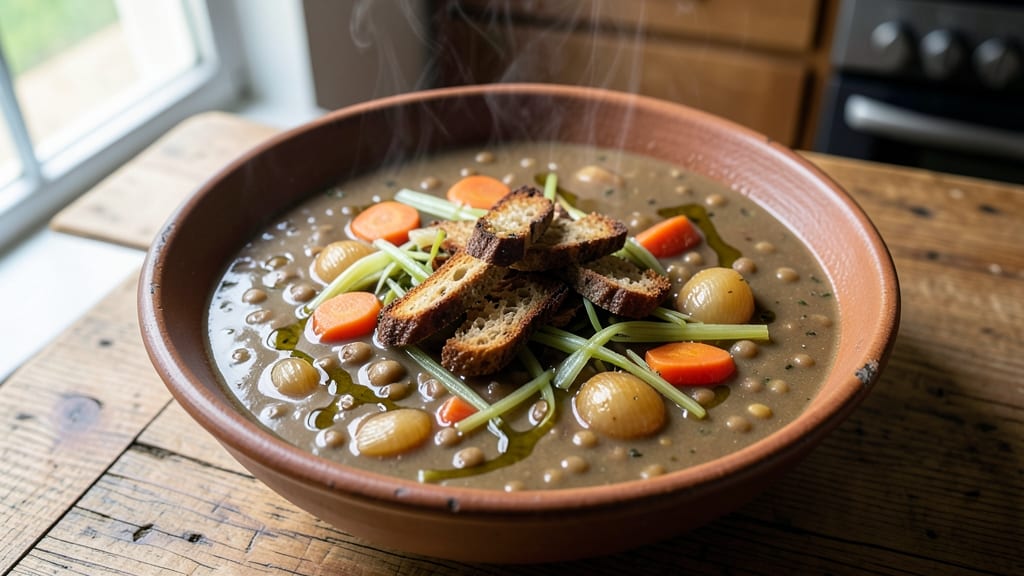
This authentic German lentil soup delivers the hearty, earthy flavors of traditional German cuisine—rich from beer-braised lentils, deepened with caramelized onions, and finished with a crispy parsley garnish that adds freshness. The secret lies in slow simmering brown lentils with dark rye bread, apple cider vinegar, and a splash of beer for that signature depth. Every spoonful carries the warmth of German kitchens, where simple ingredients transform into comforting, nourishing meals.
The recipe begins with browning onions and celery until deeply caramelized, building the foundation for flavor. Brown lentils absorb the aromatics while simmering, developing a tender yet hearty texture that’s perfect for cold weather.
A splash of apple cider vinegar brightens the broth, balancing the richness of the beer and rye bread, while bay leaves and black pepper add subtle warmth. The result is a soup that’s both rustic and refined, with layers of flavor that evolve as it sits.
What sets this apart is the crispy parsley garnish, a traditional touch that adds texture and freshness to each bowl. The parsley is fried until golden and crispy, then sprinkled on top—adding a pop of color and a satisfying crunch that contrasts the creamy lentils.
This isn’t just soup; it’s a taste of Germany’s culinary tradition, where simplicity and depth come together in every bite.
Serve with crusty dark rye bread for dipping, or pair it with a side of sauerkraut for an authentic German meal. The recipe is designed to be made ahead, allowing flavors to meld even more deeply over time.
Whether you're preparing for a cozy family dinner or a gathering with friends, this soup will bring the comfort and authenticity of German home cooking to your table.
Ingredients for authentic german lentil soup
Earthy lentils, caramelized onions, and crispy parsley—this German soup brings authentic comfort to your table.
| Ingredient | Amount | Notes |
|---|---|---|
| Brown Lentils 🌾 | 1 ½ cups | Dried, rinsed before cooking |
| Yellow Onions 🧅 | 2 whole | Medium size, thinly sliced |
| Celery Stalks 🥬 | 4 whole | Medium size, chopped |
| Carrots 🥕 | 3 medium | Peeled, sliced into rounds |
| Dark Rye Bread 🍞 | 4 oz | Crust removed, cubed |
| Apple Cider Vinegar 🍏 | 2 tbsp | Unfiltered preferred |
| Dark Beer 🍺 | 2 cups | Non-alcoholic works too |
| Bay Leaves 🌿 | 2 whole | Fresh preferred |
| Ground Black Pepper 🌶️ | 1 tsp | Freshly cracked |
| Fresh Parsley 🌿 | ¼ cup | Leaves only, chopped |
| Olive Oil 🫒 | 2 tbsp | Extra-virgin preferred |
| Vegetable Broth 💧 | 4 cups | Low-sodium preferred |
| Salt 🧂 | 1 ½ tsp | Kosher or sea salt |
The brown lentils are the heart of this dish—German markets often carry them in bulk bins, but any grocery store will have them. Look for whole, unbroken lentils with a rich brown color. The dark rye bread adds depth, so grab a crusty loaf from the bakery section—the darker, the better. For the beer, German dark lagers or stouts work best, but any non-alcoholic dark beer will give you that malty richness without the alcohol content. The vegetable broth should be low-sodium to let the other flavors shine.
No dark beer? Substitute with extra vegetable broth—just add an extra tablespoon of apple cider vinegar to mimic the acidity. Fresh bay leaves are ideal, but dried works at half the amount. The parsley garnish can be swapped for fresh chives or dill if you're out of parsley. For the carrots, baby carrots work perfectly—no peeling needed. If you're making this ahead, toast the rye bread cubes first and store them separately to keep them crispy longer.
This soup tastes even better the next day as flavors meld. Store in an airtight container for up to 5 days in the fridge. For the crispy parsley garnish, fry it in olive oil until golden—about 2 minutes—and keep it in a jar at room temperature for up to 1 week. The lentils hold up well when reheated, so double the batch if you're feeding a crowd. Pair with crusty rye bread for the full German experience.
Why You'll Love This Recipe
- Pantry-Proof Magic: I swear by this recipe when my fridge is bare—just lentils, onions, and a few veggies. No fancy ingredients, no last-minute grocery runs. The rye bread adds that deep, chewy crunch without extra effort, and honestly? It’s the kind of soup that makes you feel like you’ve cooked a whole meal when you really just stirred a pot.
- Earthy Depth in Every Spoon: The lentils soak up the carrot and celery sweetness while the onions caramelize just enough to give it that rich, almost smoky base. Between us, the dark rye bread topping—lightly toasted—adds a nutty bite that turns this into something way more interesting than your average lentil soup. It’s the kind of flavor that lingers, and I’ll take that over "mild" any day.
- Weeknight to Potluck Hero: This soup is my go-to for lazy Tuesdays, but it also shows up at holiday tables without a second thought. Serve it with crusty bread for a cozy dinner, or pack it in jars for a potluck where it’ll disappear faster than the mashed potatoes. (Yes, even on a Tuesday night.) The lentils hold up perfectly, and the rye croutons add a textural surprise that keeps people reaching for seconds.
- Leftovers That Still Feel Fresh: I make this in a big pot on Sundays, and by Wednesday, I’m still eating it—no complaints. The flavors actually improve as it sits, getting richer and more cohesive. Freeze half if you’re worried about waste, but I’ve reheated mine three times and it’s still the star of the meal. Budget-friendly? Absolutely. But more importantly, it’s the kind of dish that makes you proud to serve it.
Step-by-step instructions for authentic German lentil soup
This traditional German recipe delivers rich, earthy flavors through careful layering and slow cooking techniques.
Sauté the Vegetable Base
Heat the 2 tablespoons olive oil in a large Dutch oven over medium heat. Add the 2 whole yellow onions and 4 whole celery stalks, cooking for 5-6 minutes until the onions become translucent and the celery softens slightly. Add the 3 medium carrots and continue cooking for another 3-4 minutes until all vegetables begin to caramelize.
This slow cooking process develops deep, sweet flavors that form the foundation of the soup. Stir occasionally to prevent browning, but don't rush this step—properly caramelized vegetables create authentic German depth. You'll know it's ready when the vegetables release easily from the pan and develop a golden hue.
Deglaze and Build the Flavor Base
Pour in the 2 cups dark beer and scrape up any browned bits from the bottom of the pot using a wooden spoon. Add the 2 whole bay leaves, 1.5 teaspoons salt, and 1 teaspoon ground black pepper, stirring to combine. Bring to a gentle simmer and cook for 5 minutes to allow the beer to reduce slightly and infuse the vegetables with its malty character.
The beer reduction is critical for authentic flavor—don't skip this step. You'll notice the aroma become more complex as the alcohol cooks off and the beer's natural sweetness caramelizes. This creates the signature depth that distinguishes German lentil soup from other varieties.
Add Lentils and Broth
Rinse the 1.5 cups brown lentils thoroughly under cold water, then add them to the pot along with the 4 cups vegetable broth. Stir well to combine, then bring the mixture to a boil over high heat. Once boiling, reduce heat to low and cover partially, leaving a small gap for steam to escape. Simmer for 30-35 minutes, stirring occasionally, until the lentils are tender but still hold their shape.
German lentil soup should have a hearty texture with distinct lentil pieces—not mushy. The lentils should be fork-tender but still slightly firm to the bite. If they're cooking too quickly, reduce the heat slightly. The soup should remain thick enough to coat the back of a spoon but still be spoonable.
Incorporate the Bread and Finish
Remove the 2 whole bay leaves from the soup. Add the 4 ounces dark rye bread cubes and 2 tablespoons apple cider vinegar, stirring gently to distribute. Simmer uncovered for an additional 10 minutes to allow the bread to absorb some liquid and create a thick, hearty consistency. Taste and adjust seasoning if needed, adding more salt or pepper as necessary.
The rye bread adds a subtle sweetness and helps thicken the soup without making it gluey. The vinegar brightens the flavors and cuts through the richness of the beer and lentils. This combination creates the perfect balance of textures and flavors that define authentic German lentil soup.
Garnish and Serve
Remove the soup from heat and let it rest for 5 minutes to allow flavors to meld. Ladle into bowls and garnish each serving with 1 tablespoon chopped fresh parsley. For the crispy parsley garnish, heat a dry skillet over medium-high heat, add the remaining parsley, and toast for 30-45 seconds until just crisp. Sprinkle this over each bowl before serving.
The crispy parsley adds a textural contrast that elevates the dish, while the fresh parsley provides a bright finish. Serve immediately while hot, as the flavors continue to develop while the soup sits. This authentic German preparation delivers the rich, earthy depth that makes this soup a classic comfort dish.
Pro Tips For Making Authentic German Lentil Soup
- Sear the Onions First: I learned this the hard way—skipping the sear means your soup tastes like a vegetable stew instead of something rich and layered. Cook the onions over medium-high heat until they’re deep golden, almost caramelized, before adding celery and carrots. That extra 5 minutes builds flavor that no amount of simmering later can replace.
- Soak the Lentils: Yes, even brown lentils. Give them a 15-minute soak in warm water before cooking—it cuts down on cooking time and prevents that dreaded gummy texture. Drain well, then rinse under cold water to wash off any surface starch. Trust me, your soup will thank you.
- Toast the Rye Bread: Skip the stale-bread shortcut. Tear the dark rye into chunks and lightly toast it in a dry pan until it smells nutty and crisp. Toss it into the soup at the very end—this adds a proper German umami punch without turning the broth gluey. (I know, I know, it’s an extra step—but it’s the thing that matters most.)
- Simmer Low and Long: After everything’s in the pot, bring it to a boil once, then drop to a gentle simmer. Cover and let it cook for at least 45 minutes—no rushing. The lentils need time to soften, and the flavors need to meld. I used to walk away after 30 minutes, and the soup always tasted flat. Patience here makes all the difference.
Common mistakes when making great authentic german lentil soup
Skipping the Caramelization
Rushing the caramelization of onions, celery, and carrots is a common mistake that robs your soup of its authentic depth. These vegetables need at least 10-12 minutes of slow cooking to develop their natural sweetness and rich flavor.
I’ve seen beginners add the beer too soon, which dilutes the caramelized fond—the flavor base of German soups. Use a large Dutch oven and keep heat at medium-low to ensure even browning without burning. 🌡️
Using the Wrong Lentils
Not all lentils are created equal! This recipe calls for brown lentils because they hold their shape and absorb flavors beautifully. Green or red lentils break down too much, turning your soup into a thick stew.
I’ve made this mistake before—using green lentils resulted in a mushy texture. Always check the package or ask your grocer for brown lentils (also called "tiger lentils" in some stores).
Ignoring the Beer Reduction
Pouring in the beer and immediately adding the lentils means missing out on the malty depth that defines German lentil soup. The beer needs 5-7 minutes to reduce and infuse the vegetables with its rich flavor. Skipping this step leaves your soup tasting flat.
I recommend using a dark German lager or stout—brands like Ayinger Altbairisch or Paulaner Dunkel work perfectly. If you’re avoiding alcohol, a non-alcoholic dark beer still delivers great results!
Overcooking the Lentils
Lentils should be tender but still hold their shape—not falling apart like overcooked pasta. Simmering for more than 35-40 minutes turns them mushy, which ruins the soup’s texture. I’ve learned this the hard way! Keep an eye on them after 30 minutes and taste-test at 35 minutes.
If they’re still firm, add a splash of broth and cook for another 5 minutes. A wooden spoon should pierce them easily, but they shouldn’t disintegrate.
Forgetting the Vinegar
The apple cider vinegar is what brightens the soup and balances the richness of the beer and lentils. Skipping it leaves your soup tasting flat or overly heavy. I often see beginners omit this step, thinking it’s optional—but trust me, it’s essential!
Use unfiltered vinegar for the best flavor. Add it only in the last 10 minutes of cooking to preserve its tang. 🍏
Skipping the Resting Time
Letting the soup rest for 5-10 minutes after cooking allows the flavors to meld and the bread to absorb excess liquid. Serving it immediately can leave it watery or unevenly seasoned. I’ve rushed this step before, and the soup always tasted rushed.
Give it time—this is when the magic happens! The crispy parsley garnish also benefits from this resting period, as it crisps up perfectly when added to a hot bowl. ⏳
Nutrition facts
Frequently asked questions
Why does this German lentil soup need beer?
The beer adds a signature malty depth and sweetness that's essential for authentic flavor. Dark German lagers or stouts create that rich, earthy character while balancing the earthiness of the lentils. For a non-alcoholic version, use dark beer or add an extra tablespoon of apple cider vinegar to mimic the acidity.
Can I make this soup ahead of time?
This soup actually tastes better the next day as flavors meld. Store in an airtight container for up to 5 days in the fridge. Reheat gently on the stove, stirring occasionally. The crispy parsley garnish should be made fresh before serving to maintain its crunch.
What if I don't have dark rye bread?
Use whole wheat bread or even sourdough as substitutes. The key is to cube it and toast it first to prevent a soggy texture. For extra authenticity, look for pumpernickel bread in specialty stores—it has a similar dark, slightly sweet flavor that works beautifully in this recipe.
How do I know when the lentils are done?
Lentils should be tender but still hold their shape—like al dente pasta. After 30 minutes of simmering, taste one and press with a fork. They're done when they're soft but not falling apart. If they're still firm after 35 minutes, add a splash of broth and cook 5 more minutes. Overcooking turns them mushy.
Can I freeze this soup?
Yes, but freeze it without the crispy parsley garnish. Cool the soup completely, then transfer to freezer-safe containers. It keeps for up to 3 months. Thaw overnight in the fridge and reheat gently. The texture may be slightly thicker after freezing—add a little broth if needed when reheating.