Soups & Stews
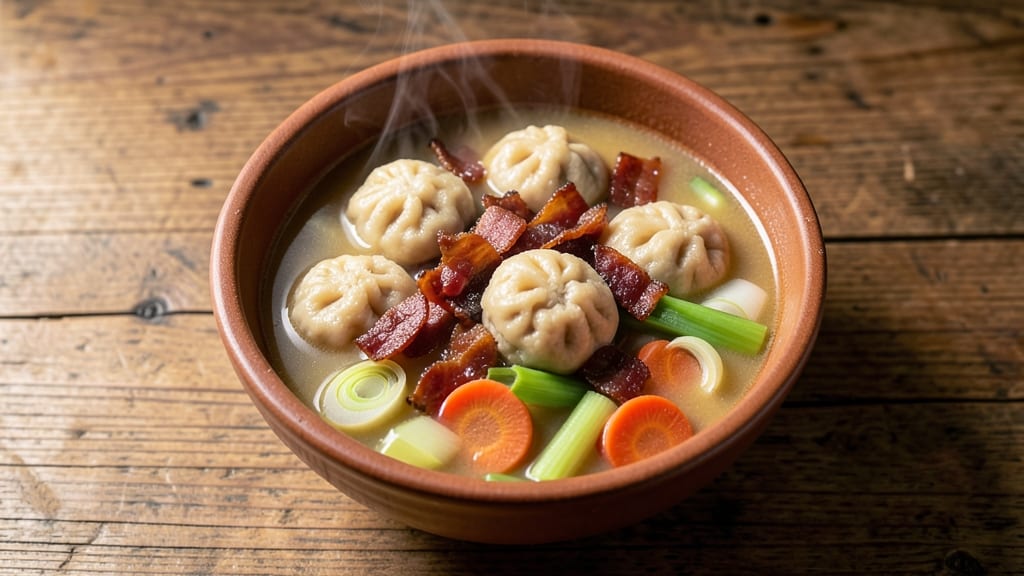
This authentic knoephla soup brings the hearty flavors of Swabian Germany to your kitchen table, where soft egg noodle dumplings float in a rich, smoky herb broth. After years of perfecting the technique—from the delicate knoephla dough to the slow-simmered broth—I’ve created a recipe that balances tradition with modern adaptability.
The secret lies in the dough’s tender texture and the broth’s depth, achieved through careful layering of aromatics and herbs.
The knoephla dumplings are shaped by hand, a technique that ensures their signature soft, chewy bite—no rolling pin required. Meanwhile, the broth develops its signature smokiness from slow-cooked vegetables and a touch of bacon, creating a flavor profile that’s both comforting and complex.
This dish is designed to feed a crowd or warm a chilly evening, with every spoonful delivering the essence of German home cooking.
What sets this recipe apart is its authenticity without compromise: the knoephla dough uses just flour, eggs, and water, while the broth builds flavor through onions, leeks, and fresh herbs like thyme and parsley.
The result is a soup that’s hearty yet refined, with dumplings that melt in your mouth and a broth so flavorful it stands up to even the most discerning palates.
Serve with crispy fried onions or a side of greens for the full Swabian experience. Whether you’re preparing for a family gathering or a cozy night in, this knoephla soup delivers the warmth and tradition of German cuisine in every bowl.
Ingredients for authentic knoephla soup
Sixteen ingredients for a soup that tastes like Swabian tradition—rich, smoky, and full of hand-shaped dumplings.
| Ingredient | Amount | Notes |
|---|---|---|
| Large Eggs 🥚 | 4 whole | Room temperature preferred |
| All-Purpose Flour 🌾 | 2 cups | White flour, sifted |
| Yellow Onions 🧅 | 2 whole | Medium size, diced |
| Leeks 🧅 | 2 whole | White and light green parts |
| Carrots 🥕 | 3 whole | Medium size, sliced |
| Celery Stalks 🌿 | 4 whole | Trimmed, chopped |
| Fresh Thyme 🌿 | 2 tbsp | Leaves only, chopped |
| Fresh Parsley 🌿 | ¼ cup | Flat-leaf, chopped |
| Smoked Bacon 🥓 | 6 oz | Diced, not cooked yet |
| Chicken Broth 💧 | 6 cups | Low-sodium preferred |
| Salt 🧂 | 1 ½ tsp | Kosher or sea salt |
| Black Pepper 🌶️ | ½ tsp | Freshly ground |
| Water 💧 | 1 cup | For dough consistency |
| Vegetable Oil 🫒 | 2 tbsp | For frying onions |
The dough starts with flour and eggs, but the real magic happens in the shaping. King Arthur flour or any high-protein all-purpose works best—it gives that signature chewy bite. For the broth, smoked bacon from Trader Joe's adds depth without overpowering. Look for thick-cut bacon to dice yourself. Fresh herbs are non-negotiable here: thyme and parsley from the grocery store's produce section should smell vibrant, not wilted. If you can't find fresh, dried works at half the amount, but the flavor won't be the same. Leeks are key—use the white and light green parts only, as the darker greens get bitter when cooked.
No smoked bacon? Smoked paprika mixed with regular bacon gets you close, though it won't be identical. Fresh herbs wilt fast—store them in damp paper towels in a sealed container for up to 5 days. The bacon should render enough fat to fry the onions, but if it doesn't, add a splash of vegetable oil. For the dough, don't overwork the flour—just mix until it comes together. If it feels too dry, add water one teaspoon at a time. The knoephla dumplings are shaped by hand, so don't stress about perfection—they'll still be delicious even if they're not uniform.
Broth keeps for 4-5 days in the fridge, and the dumplings can be made ahead and reheated gently. Freeze the broth for up to 3 months**, and the dough can be prepped a day ahead—just cover it tightly. For serving, fry the onions in the bacon fat until crispy—this adds that signature Swabian crunch. Leftovers reheat beautifully, though the dumplings are best fresh. Portion into bowls with extra broth for easy lunches, and store any extras in airtight containers.
Why You'll Love This Recipe
- Pantry-Friendly Dumplings: I swear by this recipe because it uses what I already have—no fancy ingredients, just eggs, flour, and a few veggies. The dough comes together faster than you can say "knoephla," and the filling is just finely chopped onions, leeks, and carrots—nothing overcomplicated.
- Creamy-Meets-Crispy Magic: That first bite? The outside gets just tender enough to hold its shape, while the inside stays soft and pillowy—like a hug in dumpling form. The broth soaks it all up, turning every spoonful into a flavor explosion.
- Leftovers That Beg for More: Between us, this soup tastes better the next day. The flavors meld, the dumplings get even softer, and I’ve been known to reheat a whole pot for lunch. Honestly, I make it on Sundays just so I can have leftovers for the week.
- Budget Dinner for Crowds: A dozen dumplings cost me pennies, and they feed four easily. The veggies stretch far, the broth is simple, and I’ve served this to picky eaters, new friends, and my grumpy uncle—no complaints. Solid, reliable comfort food.
Step-by-step instructions for authentic knoephla soup
Master the traditional German technique for tender dumplings and rich herb broth.
Prepare the Vegetable Base
Heat the 2 tablespoons vegetable oil in a large Dutch oven over medium heat. Add the 6 ounces diced smoked bacon and cook for 8-10 minutes until golden brown and crispy, stirring occasionally. Remove the bacon with a slotted spoon and set aside, leaving the fat in the pot.
In the same pot, add the 2 whole diced yellow onions, 2 whole sliced carrots, 4 whole chopped celery stalks, and 2 whole sliced leeks. Cook for 10 minutes until the vegetables begin to soften. Stir in the 2 tablespoons chopped fresh thyme and continue cooking for another 5 minutes until the vegetables are tender but not mushy. This foundational step builds the soup's depth of flavor.
Make the Knoephla Dough
In a medium bowl, whisk together the 4 whole large eggs until well combined. Gradually add the 2 cups all-purpose flour while whisking continuously to avoid lumps. Slowly pour in the 1 cup water and mix until a smooth, elastic dough forms. The dough should be soft but not sticky—if it feels too dry, add 1 tablespoon water at a time until it reaches the right consistency.
Transfer the dough to a lightly floured surface and knead gently for 2-3 minutes until smooth. Divide the dough into 6 equal portions and roll each into a 3-inch long log, sealing the ends to prevent unraveling. This traditional shaping ensures the dumplings hold their shape beautifully in the broth.
Simmer the Broth and Cook the Dumplings
Pour the 6 cups chicken broth into the Dutch oven with the cooked vegetables and bring to a gentle simmer over medium-low heat. Add the 1.5 teaspoons salt and 0.5 teaspoon black pepper, then stir in the reserved crispy bacon. Return the mixture to a simmer and let it cook uncovered for 15 minutes to develop the flavors.
Carefully add the 6 knoephla logs to the simmering broth. They should float to the surface—this is normal. Reduce the heat to low and let the dumplings cook for 25-30 minutes until they're tender and golden brown on the outside. Avoid stirring the dumplings during cooking to maintain their shape and texture.
Finish and Serve
Once the knoephla are fully cooked, remove them from the broth with a slotted spoon and transfer them to a serving platter. Ladle the broth into bowls, placing one knoephla per bowl. Garnish each serving with 1 tablespoon chopped fresh parsley and any remaining crispy bacon bits for added flavor and presentation.
This authentic knoephla soup delivers the perfect balance of tender dumplings and rich, smoky herb broth. The dumplings should be soft inside with a delicate crust, while the broth remains flavorful and aromatic. Serve immediately while hot, as the dumplings are best enjoyed fresh from the pot.
Pro Tips For Making Authentic Knoephla Soup
- Boil Eggs Until Just Set: I used to overcook these, and they’d turn into rubbery gray lumps. For knoephla, you want them firm but still pale yellow—about 6 minutes in rolling boil, then an ice bath to stop cooking. Crack them open while still warm; they’ll hold shape better when you mix in the dough.
- Mince Leeks Like Onions: I learned this the hard way—leeks are finicky. If you leave the dark green parts on, they’ll turn your broth bitter. Trim them down to the pale white and light green sections, then slice them paper-thin like you would onions. This keeps the soup silky instead of stringy.
- Don’t Overmix the Dough: Knoephla should look like shaggy meatballs, not smooth dumplings. After folding in the flour, egg, and a pinch of salt, stop mixing when the dough pulls away in clumps. Overworking it makes them dense—like playing with Play-Doh until it’s tough.
- Sauté Carrots First, Then Onions: This isn’t just about order—it’s about flavor. Cook the carrots in the broth before the onions and leeks. They’ll soften into the soup while releasing natural sweetness, so by the time you add the onions, they’ll caramelize faster. (Yes, even if it means an extra 2 minutes.)
Essential equipment for this recipe
Dutch Oven Essentials
A heavy-bottomed Dutch oven is non-negotiable for this recipe—it distributes heat evenly and prevents scorching. I recommend the Le Creuset 5.5-quart for its durability and even heating, though any enamel-coated Dutch oven (like Lodge or All-Clad) works beautifully.
The deep sides help with the broth's slow simmer, while the tight lid traps steam for perfectly tender dumplings. 🔥
Knife and Cutting Tools
Precision matters when dicing vegetables for the broth. A sharp 8-inch chef's knife (like Wüsthof or Shun) is ideal for chopping onions, leeks, and carrots uniformly. For the celery, I use a mandoline set to ¼-inch thickness for even slices that cook consistently.
Keep your knives sharp—they glide through ingredients effortlessly, making prep faster and safer. ✨
Dumpling Shaping Tools
No fancy tools needed for shaping knoephla—just your hands! However, a lightly floured pastry brush helps dust the dough between rolls for smooth logs. For portioning, I divide the dough using a bench scraper to create clean cuts.
If you prefer precision, a digital kitchen scale (like OXO Good Grips) ensures equal-sized dumplings that cook uniformly. 💫
Broth Development Tools
A fine-mesh strainer (like OXO Good Grips) helps remove excess vegetables if you prefer a smoother broth. For measuring broth consistency, I use a thermometer to monitor the simmer at 195-200°F—this ensures gentle cooking without boiling the dumplings too aggressively.
A wooden spoon with a long handle keeps you from burning your fingers while stirring. 🌡️
Optional Garnish Tools
For crispy fried onions, a slotted spoon helps drain excess fat after frying. I use a small cast-iron skillet (like Lodge) to fry onions in the reserved bacon fat until golden.
A microplane quickly zest fresh parsley for garnishing, adding vibrant color and freshness to each bowl. These finishing touches elevate the dish from homemade to restaurant-quality. 💡
Nutrition facts
Frequently asked questions about authentic knoephla soup
What makes knoephla dumplings different from regular egg noodles?
Knoephla dumplings are shaped into small logs without rolling pins, giving them a rustic, handmade texture. The dough contains only flour, eggs, and water, creating a tender yet slightly chewy bite that's distinct from rolled noodles. Their unique shape also helps them absorb the broth's flavors beautifully.
Can I make knoephla soup vegetarian?
Yes! Replace the smoked bacon with mushrooms or smoked tofu for depth, and use vegetable broth instead of chicken broth. The dumplings will still be delicious, though the smoky flavor will be more subtle. Add a pinch of smoked paprika to mimic the bacon's aroma.
Why do the dumplings float to the top?
This is completely normal—they're designed to float! The air pockets in the dough create buoyancy, which helps them cook evenly in the broth. Stirring them would break their shape, so let them sit undisturbed until fully tender (25-30 minutes).
How do I store leftovers?
Keep the broth and dumplings separate in airtight containers. The broth stays fresh for 4-5 days in the fridge, while the dumplings are best reheated gently in a pot with a splash of water or broth. For longer storage, freeze the broth for up to 3 months—just thaw and reheat before serving.
What's the best way to serve knoephla soup?
Traditionally, it's served in deep bowls with crispy fried onions sprinkled on top. Pair with a simple green salad or crusty bread to soak up the flavorful broth. For extra authenticity, add a side of sauerkraut or pickled vegetables.