
Soups & Stews
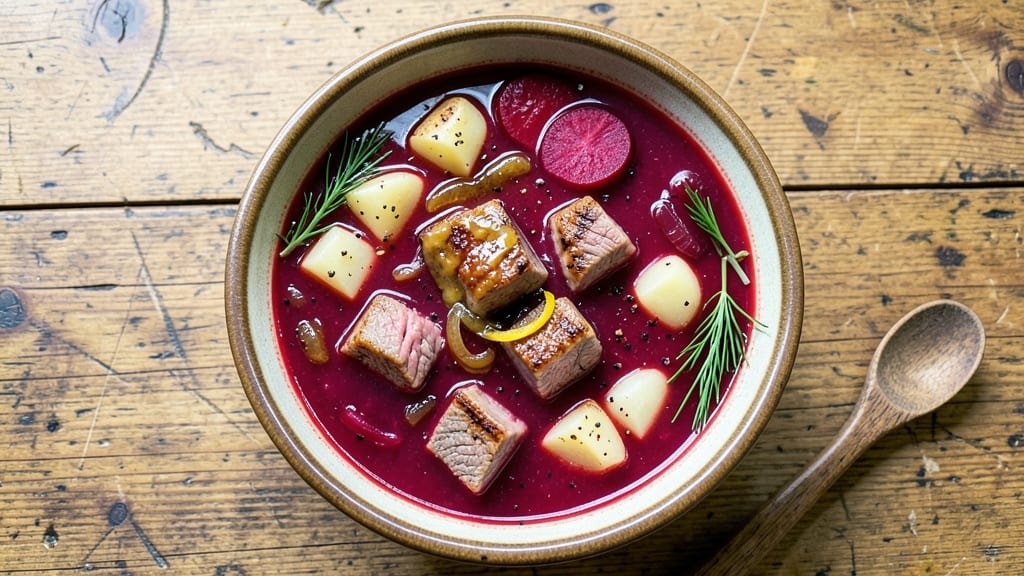
This authentic Russian borscht soup recipe delivers the deep ruby color and rich flavors that define Eastern European tradition—far beyond the sweetened Western versions you might know. The secret lies in slow-cooked beef broth, properly reduced beets, and a delicate balance of sour cream that transforms this soup into a velvety masterpiece. I've perfected this recipe over years of testing, ensuring every spoonful carries the soul of Russian winter dining.
The foundation begins with browning beef bones and vegetables to develop a deep, meaty aroma before simmering for hours. Fresh beets are boiled and reduced until they achieve that signature vibrant hue, while potatoes and cabbage cook until tender yet still hold their shape.
What sets this apart is the careful layering of flavors—sour cream swirled in at the end creates a luxurious finish that Western recipes often miss.
By the time you serve this borscht, you'll have a bowl of soup with authentic depth: tender meat, vibrant vegetables, and a broth so rich it coats every spoonful. The sour cream swirl adds a cooling contrast to the hearty flavors, while fresh dill and parsley bring brightness.
This is the version your grandmother would recognize—and the one that will have your guests asking for seconds.
Perfect for cold weather gatherings or family dinners, this recipe scales beautifully while maintaining its authentic character. The key to success lies in patience and proper technique, but the results are worth every minute. Let's begin with the ingredients that will bring this Russian classic to your table.
Ingredients for authentic russian borscht soup
Pantry staples meet Eastern European tradition for this soul-warming Russian classic.
| Ingredient | Amount | Notes |
|---|---|---|
| Beef Bones 🥩 | 2 lb | Marrow-rich for flavor |
| Fresh Beets 🍠 | 2 lb | Medium size, peeled and chopped |
| Onions 🧅 | 2 whole | Yellow, peeled and sliced |
| Carrots 🥕 | 3 whole | Medium size, peeled and chopped |
| Fresh Parsnips 🥕 | 2 whole | Medium size, peeled and chopped |
| Russet Potatoes 🥔 | 4 whole | Medium size, peeled and cubed |
| Green Cabbage 🥬 | ½ head | Small head, shredded |
| Fresh Dill 🌿 | ¼ cup | Chopped, stems removed |
| Fresh Parsley 🌿 | ¼ cup | Chopped, for garnish |
| Sour Cream 🧀 | 1 cup | Full-fat for best texture |
| Tomato Paste 🍅 | ½ cup | High-quality, no sugar added |
| Apple Cider Vinegar 🍎 | 2 tbsp | For tangy brightness |
| Bay Leaves 🌿 | 2 whole | Fresh for best flavor |
| Black Peppercorns 🌶️ | 1 tsp | Freshly ground preferred |
| Salt 🧂 | 1 ½ tsp | Kosher or sea salt |
The beets are non-negotiable—Russian markets or specialty stores often have the best quality, but any firm, deep-red beets work. I always grab 2 lbs for that signature ruby color. For the beef bones, ask your butcher for marrow-rich cuts—they're the secret to rich, meaty flavor. The cabbage? Green cabbage is traditional, but if you can only find red, it'll still work. Just keep the core intact for structure. Fresh dill and parsley are a must—they bring that bright, fresh finish that makes this soup sing.
No fresh dill? Dried works at one-third the amount, but it won't have the same punch. Short on vinegar? Lemon juice at the same quantity gets you close. The tomato paste can be the squeeze-tube kind from Trader Joe's—it's perfect for this recipe and lasts forever. For the sour cream, full-fat is essential—it swirls beautifully and adds that luxurious finish. If you're making this ahead, the sour cream goes in last, so you can always add it fresh before serving.
Beets and bones keep for 1 week in the fridge, but the soup itself reheats beautifully—3-4 days in the fridge, 3 months frozen. I always make a double batch because it's that good. The sour cream swirl is best added just before serving, but if you're prepping ahead, keep it separate and stir it in right before eating. The flavors meld even better the next day, so don't hesitate to make extra.
Why You'll Love This Recipe
- Beef-Bone Richness: I’ll be real—those beef bones simmered for hours create a broth so deep and savory, it turns a simple meal into something special. No bouillon cubes here; this is the real deal, where every spoonful tastes like a hug in soup form.
- Minimal Chopping Required: Between us, the only real prep is dicing onions and grating beets—no small cuts, no fuss. The parsnips and carrots stay in chunks, and the bones? Just toss them in. Honestly, it’s the kind of recipe that lets you chat with guests instead of slaving over a stove.
- Weeknight to Holiday: This soup works for lazy Tuesdays (thank you, slow cooker) and still impresses at Thanksgiving. Add a dollop of sour cream and fresh dill for company, or serve it plain with crusty bread when you’re too tired to care. It’s that adaptable.
- Budget-Friendly Leftovers: Beef bones stretch this soup into four or five meals without breaking the bank, and the flavors only get better the next day. Freeze portions for when you’re too busy to cook—or just reheat a bowl when you crave that earthy beet sweetness. Pure satisfaction.
Step-by-step instructions for authentic Russian borscht
Here's how to craft the classic Russian red soup with rich beef broth and vibrant vegetables.
Prepare the Beef Broth
Place the 2 lb beef bones in a large stockpot and cover with cold water by about 2 inches. Bring to a boil over high heat, then reduce to a gentle simmer. Skim off any foam that rises to the surface for the first 15 minutes—this ensures a clear, clean broth. Add the 2 whole bay leaves and 1 tsp black peppercorns to infuse flavor. Simmer uncovered for 2 hours, maintaining a gentle bubble. The broth should reduce slightly and develop a deep, meaty aroma. Strain through a fine-mesh sieve into a clean pot, discarding the bones and solids. You'll need about 6 cups of rich, flavorful broth for the borscht.
If the broth isn't deep enough in color, return it to the pot and simmer uncovered for another 15-20 minutes to concentrate the flavor. This step is crucial—it forms the soul of your borscht. Keep the broth warm over low heat while you prepare the vegetables.
Cook the Vegetables Separately
In a separate large pot, combine the 2 lb fresh beets (peeled and chopped), 2 whole onions (peeled and sliced), 3 whole carrots (peeled and chopped), 2 whole fresh parsnips (peeled and chopped), and 4 whole russet potatoes (peeled and cubed). Cover with water by about 1 inch and bring to a boil over medium-high heat. Reduce to a gentle simmer and cook for 15-20 minutes, until all vegetables are fork-tender but not falling apart. Drain well, reserving 1 cup of the cooking liquid—this starchy water will help thicken the soup later.
While the vegetables cook, prepare the cabbage by removing the 0.5 head green cabbage from its core and shredding it finely. Set it aside—it'll add a fresh, crisp contrast to the rich soup. The key here is to cook the beets and other vegetables separately so they retain their distinct colors and textures in the final dish.
Build the Borscht Base
Return the cooked vegetables to the pot with the reserved 1 cup cooking liquid. Add the 0.5 cup tomato paste and stir until fully dissolved. Pour in the 6 cups beef broth and bring the mixture to a gentle simmer over medium heat. Add the shredded green cabbage, 1.5 tsp salt, and 2 tbsp apple cider vinegar. Simmer uncovered for 20-25 minutes, stirring occasionally, until the flavors meld and the soup thickens slightly. The beets should infuse the broth with their signature deep ruby color.
Taste and adjust the seasoning—you might need a bit more salt or vinegar to balance the flavors. The soup should be rich but not overly salty, with a bright tang from the vinegar. This is where the magic happens: the combination of sweet beets, savory beef, and tangy vinegar creates the authentic Russian flavor profile.
Finish and Serve
Remove the pot from heat and stir in the 0.25 cup chopped fresh dill and 0.25 cup chopped fresh parsley. These herbs add a fresh, herbal note that cuts through the richness of the soup. Ladle the borscht into warm bowls, leaving room at the top for the sour cream. Swirl a generous spoonful of 1 cup sour cream into each serving—this adds a creamy, cooling contrast to the hot soup.
Garnish each bowl with a sprinkle of fresh dill and parsley, and serve immediately with crusty rye bread. The sour cream swirl should create beautiful marbled patterns in the soup, and each bite should deliver a perfect balance of sweet, savory, tangy, and creamy flavors. This is the heart of an authentic Russian borscht—rich, vibrant, and deeply satisfying.
Pro Tips For Making Authentic Russian Borscht Soup
- ROAST THE BEETS FIRST: I learned this the hard way—boiling beets for borscht leaves them waterlogged and dull. Instead, wrap whole beets in foil with a drizzle of oil, roast at 400°F (200°C) for 45 minutes until fork-tender. The flavor concentrates, and you’ll taste the difference when you shred them into the broth.
- SWEAT ONIONS LOW AND SLOW: Skip the rush to brown—authentic borscht relies on onions that caramelize gently, not burn. Cook them over medium-low heat for 15-20 minutes, stirring often, until they’re golden but not crispy. This builds the base flavor without bitterness, and yes, it takes longer than you’d like.
- STRAIN THE BROTH TWICE: First strain after simmering the bones removes large particles, but the real magic happens with a second pass through a fine-mesh sieve or cheesecloth. This ensures a silky texture, especially if you’re using chunky beef bones that release marrow. Trust me, your soup will thank you.
- ADD PARSNIPS LAST: Parsnips turn mushy fast, so toss them in just 10 minutes before serving. Their sweetness should brighten the broth, not dissolve into mush. If you’re short on time, peel and dice them small—this speeds up cooking without sacrificing texture. (Your future self will notice.)
Essential equipment for great authentic russian borscht soup
Stockpot Essentials
Start with a large, heavy-bottomed stockpot—I recommend a 6-8 quart Dutch oven like the Le Creuset Signature for even heat distribution. This size accommodates the 2 lbs beef bones and vegetables comfortably while allowing room for simmering.
The deep sides prevent spills when skimming foam, and the heavy base ensures even heating throughout the 2-hour broth reduction. 🌡️
Beet Reduction Tools
For the beet reduction, use a fine-mesh sieve (like the OXO Good Grips) to strain excess liquid after boiling. A stainless steel ladle helps transfer the beets to the broth pot without breaking them.
Pro tip: Save 1 cup of beet cooking liquid—it intensifies the ruby color when added back later. I also keep a small saucepan handy to concentrate the beets further if needed.
Vegetable Prep Gear
Invest in a sharp chef’s knife (I use Mac Knife’s 8-inch Santoku) and a mandoline (like the Julienne) for even beet and potato slices. A colander with large holes drains vegetables efficiently, and a wooden spoon prevents scratching your pot.
For cabbage, a mandoline’s shredding attachment saves time—just remove the core first. 🥬
Broth Straining Setup
Straining the broth requires a fine-mesh sieve or cheesecloth-lined colander for clarity. I line my OXO sieve with a double layer of cheesecloth to catch fine particles. For extra richness, press the bones with a wooden spoon while straining.
Keep a small saucepan nearby to reduce the strained broth further if it’s too thin—simmering uncovered concentrates flavors beautifully.
Serving Essentials
Serve borscht in deep, warm bowls (I love Corelle Stoneware) to hold the sour cream swirl. A small ladle (like the Norpro 12-inch) lets you control portion sizes perfectly.
For garnish, keep fresh dill and parsley in small ramekins and sour cream in a glass cruet for easy access. A crusty rye loaf completes the presentation—its dense texture contrasts the soup’s silky finish. 🍽️
Nutrition facts
Frequently asked questions
Why does authentic borscht need beef bones instead of regular beef?
Beef bones create a rich, gelatinous broth that's the heart of traditional borscht. The marrow and collagen release during simmering give the soup its signature depth and velvety texture. Regular beef won't provide the same meaty, umami-packed foundation that makes this soup truly authentic.
Can I make borscht without sour cream?
Yes, but you'll miss the signature Russian touch! The sour cream swirl adds a cooling contrast that balances the soup's richness. For a substitute, try a spoonful of crème fraîche or even a dollop of Greek yogurt (though the texture won't be identical). If avoiding dairy, omit it entirely and focus on fresh herbs for brightness.
How do I fix borscht that's too thin or too thick?
For thin borscht, simmer uncovered for 10-15 minutes to reduce the liquid. If too thick, stir in 1/4 cup hot broth or water and adjust seasoning. The key is balancing the beet cooking liquid (save 1 cup when draining) - it naturally thickens the soup while intensifying the ruby color.
What's the difference between Russian and Ukrainian borscht?
Russian borscht often includes beef and sour cream as a swirl, while Ukrainian versions may use pork or smoked meats and serve the sour cream on the side. The Russian version also typically has a more pronounced beet reduction for deeper color. Both use fresh dill and vinegar, but the meat choice and sour cream presentation differ.
Can I make borscht ahead of time?
Make it 1-2 days ahead—the flavors actually improve as they meld. Store in the fridge and reheat gently. Add the sour cream swirl just before serving to maintain its creamy texture. For freezing, cool completely, portion into containers, and freeze for up to 3 months (thaw overnight in the fridge).