
Soups & Stews
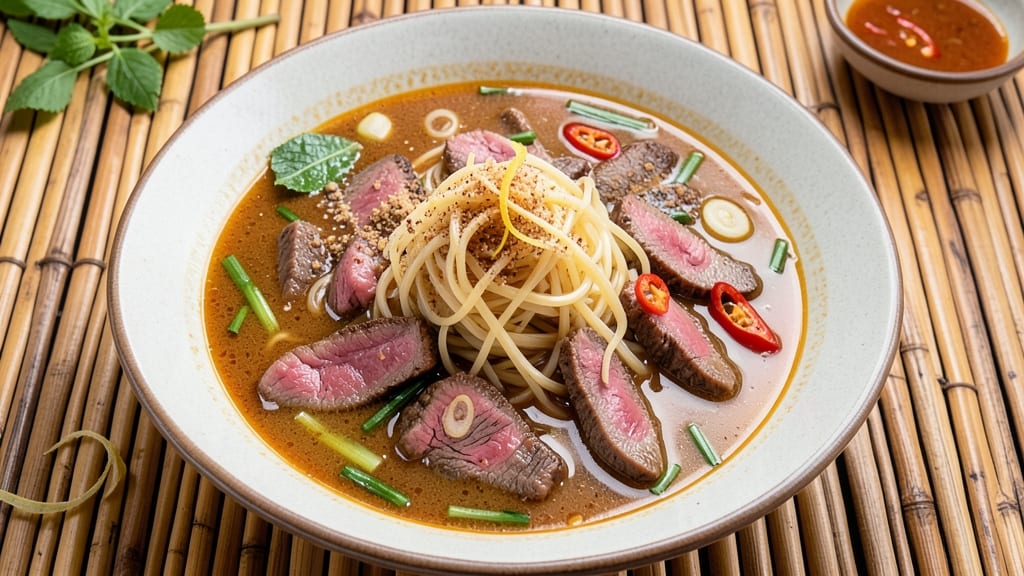
This authentic Thai beef noodle soup recipe brings the aromatic streets of Bangkok to your kitchen with its signature balance of fragrant lemongrass, galangal, and a perfect harmony of sweet, sour, and spicy flavors.
The secret lies in slow-simmering the broth with fresh herbs and spices until every ingredient melds into a deeply flavorful base that transforms simple beef and rice noodles into a restaurant-worthy dish.
What sets this recipe apart is the traditional approach to building layers of flavor—starting with a fragrant paste of lemongrass, galangal, kaffir lime leaves, and garlic, then simmering it with beef stock until the aromatics release their full potential.
The beef is seared to lock in juiciness before being added to the broth, ensuring tender, flavorful bites that dissolve into the rich, herbal broth.
The result is a bowl of soup that’s as visually appealing as it is delicious—clear golden broth with tender beef slices, delicate rice noodles, and a medley of fresh herbs and lime wedges for brightness.
Each spoonful delivers a complex dance of flavors that’s both comforting and invigorating, making this more than just a meal—it’s an experience.
Perfect for a cozy weeknight dinner or a special gathering, this recipe serves four and can be easily doubled. The key to success? Patience in building the broth and balancing the flavors to your preference. Let’s get started on creating your own taste of Thailand.
Ingredients for authentic thai beef noodle soup
This fragrant broth builds on just 15 ingredients—herbs, spices, and tender beef.
| Ingredient | Amount | Notes |
|---|---|---|
| Beef Flank Steak 🥩 | 1 lb | Thinly sliced against grain |
| Lemongrass Stalks 🌿 | 3 whole | Bottom 6 inches only, bruised |
| Galangal Root 🍃 | 3 oz | Peeled, sliced thin |
| Kaffir Lime Leaves 🍋 | 4 whole | Bruised lightly |
| Garlic Cloves 🧄 | 6 cloves | Smashed, not minced |
| Shallots 🧅 | 4 whole | Peeled, halved lengthwise |
| Thai Bird's Eye Chilies 🌶️ | 2 whole | Adjust to taste |
| Coconut Milk 🥥 | 1 can | Full-fat, 13.5 oz |
| Beef Stock 💧 | 4 cups | Homemade preferred |
| Fish Sauce 🍶 | 2 tbsp | Red Boat brand |
| Palm Sugar 🍯 | 2 tbsp | Or brown sugar |
| Rice Noodles 🍜 | 8 oz | Flat, medium width |
| Fresh Thai Basil Leaves 🌿 | ½ cup | Plus extra for garnish |
| Lime Wedges 🍋 | 2 whole | For serving |
| Salt 🧂 | 1 tsp | Kosher preferred |
The galangal and lemongrass are non-negotiable for that authentic Thai aroma. Asian markets carry fresh galangal—it looks like ginger but with a citrusy kick. If you can't find it, ginger plus a splash of lime juice gets you close. Kaffir lime leaves? Freeze extras in a bag—they keep for months. For the beef, flank steak is ideal (thinly sliced), but sirloin or ribeye work too. Slice against the grain for tender bites. The lemongrass stalks should be bruised—not chopped—to release their oils gradually.
No fish sauce? Soy sauce plus a pinch of sugar works in a pinch, but the umami depth won't be the same. Palm sugar is the traditional sweetener, but brown sugar or coconut sugar are fine substitutes. Chilies can be adjusted—remove seeds for less heat. The coconut milk adds richness, but skip it entirely if you prefer a lighter broth. For the noodles, rice vermicelli is traditional, but flat rice noodles are easier to find. Soak them in hot water for 5-7 minutes until pliable, then rinse under cold water to stop cooking.
This broth tastes even better the next day—make a double batch and freeze half. Store the cooked broth in airtight containers for 5 days in the fridge or 3 months frozen. For the noodles, keep them submerged in water with a splash of oil to prevent sticking. Fresh herbs like Thai basil should be added right before serving—they wilt fast in hot broth. Lime wedges add brightness, so serve them on the side.
Why You'll Love This Recipe
- Minimal Chopping Required: I swear by this—just slice the flank steak thin, crush the garlic, and smash the lemongrass with the side of your knife. No dicing, no julienne, no stress. The galangal and kaffir lime leaves? Toss them whole in the pot—they’ll perfume the broth beautifully without fuss.
- Herb-Packed Punch: That first sip? Chef’s kiss. The galangal adds a peppery kick, lemongrass brings citrusy brightness, and the kaffir lime leaves? They infuse the broth with a floral, almost lime-zest aroma that makes this soup sing. (Yes, even my garlic-averse husband asks for seconds.)
- Leftovers That Taste Better: Between us—this soup only gets richer overnight. The beef stays tender, the broth deepens in flavor, and reheating it is zero effort. I make a double batch on Sundays and eat it all week, no takeout in sight.
- Budget-Friendly Luxury: Flank steak is affordable, and the herbs (especially if you buy dried galangal or lime leaves) stretch a long way. One pot feeds four, and the leftovers? Even better. It’s the kind of meal that makes you feel fancy without breaking the bank—or your schedule.
Step-by-step instructions for authentic Thai beef noodle soup
Here's how to build that signature Thai broth with deep, aromatic layers—every step matters for that restaurant-quality taste.
Prepare the Aromatic Base
In a large pot, combine the 4 cups beef stock, 2 tbsp palm sugar, and 1 tsp salt. Bring to a gentle simmer over medium heat—you want bubbles breaking the surface, not a rolling boil. This is where all those complex flavors start to meld.
While the stock heats, bruise the 3 whole lemongrass stalks (bottom 6 inches) by pounding lightly with a rolling pin or heavy pan. Peel and slice the 3 oz galangal root into thin rounds. Lightly bruise the 4 whole kaffir lime leaves by tapping them with the flat side of your knife. Add these to the simmering broth along with the 6 smashed garlic cloves and 4 halved shallots. Let everything steep for 10 minutes—this infuses the stock with those signature Thai aromas.
Build the Broth and Cook the Beef
Slice the 1 lb beef flank steak thinly against the grain (about ¼-inch thick slices). Add the beef to the pot and simmer gently for 10-12 minutes until just cooked through. The meat should be tender but still hold its shape—overcooking turns it tough. Remove the beef with a slotted spoon and set aside.
Strain the broth through a fine-mesh sieve into a clean pot, pressing gently on the aromatics to extract every last bit of flavor. Discard the solids. Return the broth to medium heat and stir in the 1 can coconut milk and 2 tbsp fish sauce. Taste and adjust seasoning—you want a balance of sweet, salty, and umami. If it needs more depth, add a splash of the reserved beef stock.
Assemble and Finish the Soup
Bring the broth back to a gentle simmer, then add the 8 oz rice noodles. Cook for 3-4 minutes until the noodles are tender but still slightly chewy. The noodles should float at the surface when done—this is the perfect texture. Remove from heat.
Return the beef slices to the pot and gently stir to coat them in the creamy broth. Add the 0.5 cup fresh Thai basil leaves and the 2 whole Thai bird's eye chilies (remove seeds if you prefer less heat). Let it sit for 1-2 minutes so the basil wilts slightly and the chilies infuse the soup. Taste again and adjust seasoning if needed—this is where you fine-tune the balance.
Serve with Classic Thai Touches
Ladle the soup into bowls, dividing the noodles and beef evenly. Garnish each serving with a lime wedge and a handful of extra Thai basil leaves. Serve immediately while everything is hot—this soup is all about that first steaming bowl experience. The lime brightens the rich broth, and the basil adds that fresh, herbal finish that makes it taste authentic.
Here's the thing—this soup tastes even better the next day as the flavors deepen. If you have leftovers, store them in the fridge and reheat gently on the stove, stirring in a splash of water or stock to restore the creamy texture. The key to authenticity isn't just the ingredients, but how they come together in this precise order.
Pro Tips For Making Authentic Thai Beef Noodle Soup
- Char the Aromatics Hard: Skip the gentle simmer—sear those garlic, galangal slices, and lemongrass stalks in a smoky, dry pan for 2-3 minutes until they release deep, resinous oils. I used to rush this step, and the broth always tasted flat. The char adds complexity that no slow cooking can replace—just don’t let it burn into bitterness.
- Slice Galangal Thin: Use a sharp knife and cut the galangal root into paper-thin slices (about 1/16-inch thick) rather than chunks. Thinner slices release their citrusy, ginger-like flavor evenly without overpowering the broth. Thick slices? You’ll just chew through them and wonder why it tastes underwhelming.
- Blanch Beef Before Searing: Parboil the flank steak for 2 minutes in salted water, then pat dry before searing. This locks in juices while creating a perfect crust—no more dry, chewy beef. I learned this the hard way after serving my first batch with tough slices that ruined the whole dish.
- Toast Kaffir Lime Leaves: Lightly toast the kaffir lime leaves in a dry pan for 10 seconds per side until fragrant. This intensifies their floral notes without bitterness—just enough to make the broth sing. Skip this, and you’ll miss the subtle depth that separates good Thai soup from great.
Flavor customization for authentic thai beef noodle soup
Spice Level Control
Thai cuisine thrives on balancing heat, so adjust the Thai bird's eye chilies to your preference. For mild heat, remove seeds and slice them thinly—this keeps the broth aromatic without overwhelming spice.
If you love heat, leave seeds in and add an extra chili. I like to serve extra chilies on the side so everyone can customize their bowl. 🌶️
Sweet-Tangy Balance
The palm sugar and fish sauce create the signature Thai sweet-sour profile. Taste the broth after simmering—if it needs more brightness, add 1 tsp lime juice. For extra depth, stir in 1 tsp soy sauce (it enhances umami without overpowering).
I once forgot the sugar and the broth tasted flat—always taste as you go!
Creamy vs. Light Broth
Traditional Thai beef noodle soup often includes coconut milk for richness, but you can make it lighter. Skip the coconut milk and use ½ cup additional beef stock instead.
This creates a clearer broth that still carries all the aromatic flavors. For extra creaminess, stir in 1 tbsp cashew butter at the end—it blends seamlessly. 🥥
Herb Variations
Fresh Thai basil is non-negotiable for authenticity, but you can experiment with other herbs. Swap in cilantro for a brighter note or add mint leaves for freshness.
If you can't find Thai basil, regular basil works in a pinch—just double the amount. I once used Vietnamese coriander and it added a lovely citrusy twist.
Protein Swaps
While beef is traditional, this soup adapts beautifully to other proteins. Swap in chicken thigh for a lighter option or shrimp for seafood lovers. For vegetarians, use mushrooms or tofu—just marinate them in 1 tbsp fish sauce and 1 tbsp lime juice before adding.
The broth's depth will carry any protein you choose. 🍗
Noodle Alternatives
Rice noodles are standard, but egg noodles or udon add fun textures. For gluten-free, use rice vermicelli or buckwheat noodles. If you prefer chewier noodles, undercook them slightly and let them finish in the hot broth.
I once used spaghetti for a fusion twist—it worked surprisingly well with the creamy broth! 🍜
Nutrition facts
Frequently asked questions
Can I substitute galangal if I can't find it?
Yes, but the flavor won't be identical. Use a mix of 1 oz fresh ginger and 1 tsp lime zest for the closest approximation. Galangal has a citrusy, peppery aroma that ginger can't fully replicate, but this combo works in a pinch. For best results, add the ginger a few minutes earlier than the galangal would be added.
How do I prevent the rice noodles from turning mushy?
Cook the noodles separately in the broth for just 2-3 minutes—they should float at the surface when done. Remove them immediately and let them rest in the hot broth for 1 minute before serving. Overcooking releases excess starch, making them gummy. For extra insurance, rinse them briefly under cold water after cooking.
What's the best way to store leftovers?
Store the soup in an airtight container for up to 3 days in the fridge. Reheat gently on the stove, adding 1-2 tbsp water or beef stock to restore creaminess. The broth actually improves overnight as flavors meld! Save the fresh herbs for garnishing—add them fresh when reheating to maintain their vibrant flavor.
Why does my broth taste bitter?
Bitter broth usually means overcooking the aromatics or beef. Simmer gently—never boil—and remove the beef when it's just cooked through (10-12 minutes). For extra depth without bitterness, add ½ tsp soy sauce or a pinch of sugar to balance. If using store-bought stock, opt for low-sodium varieties to avoid accumulation of salt.
Can I make this soup in an Instant Pot?
Yes! Sauté the aromatics for 2 minutes on high, then add all ingredients except noodles and basil. Pressure cook for 15 minutes, then quick-release. Finish by adding noodles and basil separately. The Instant Pot speeds up cooking but may slightly dilute the delicate herbal notes—adjust seasoning at the end.