
Soups & Stews
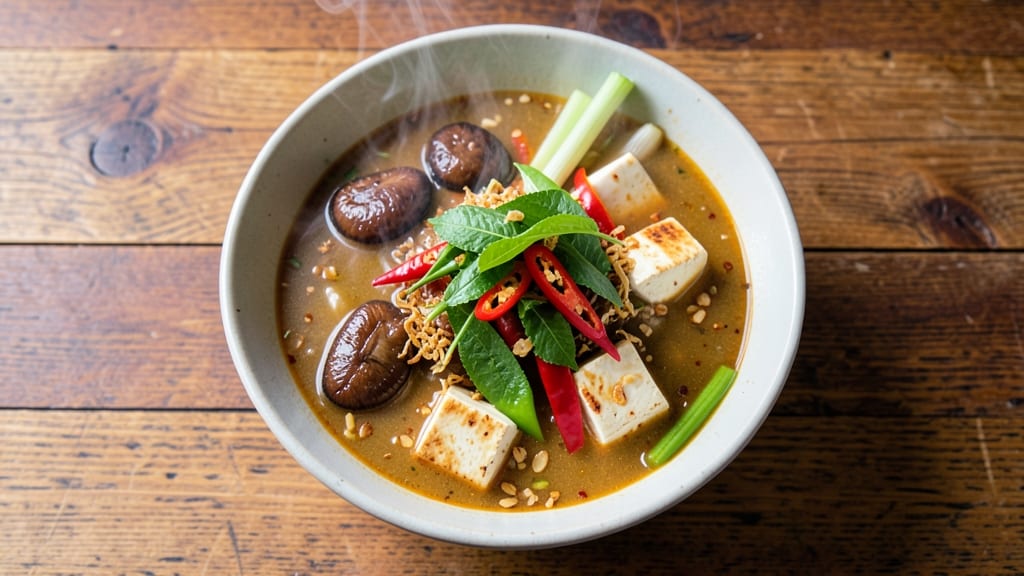
This authentic vegetarian tom yum soup delivers the same vibrant, tangy-spicy balance you crave from Thai restaurants—just without the fish sauce. The secret lies in balancing lemongrass, galangal, kaffir lime leaves, and mushrooms for deep umami, while lime juice and chili paste keep it bright and fiery.
I’ve perfected this version after years of testing, ensuring every sip packs that signature Thai complexity.
The magic happens in the simmer: fresh herbs steeped in hot broth, mushrooms breaking down for meaty texture, and a final splash of lime to cut through the richness.
Unlike many vegetarian adaptations, this recipe doesn’t skimp on flavor—it replaces fish sauce with soy sauce and mushroom powder for that unmistakable savory depth. The result? A bold, aromatic soup that’s as satisfying as the original, with layers of sour, spicy, and umami in perfect harmony.
What sets this apart is the authentic technique: proper galangal slicing (never pre-grated), lemongrass bruising to release oils, and a slow simmer to meld flavors. No shortcuts—just the careful balance that makes tom yum soup unforgettable.
Serve it piping hot with steamed jasmine rice to soak up every last drop of that zesty, lemony broth.
Ready to master this restaurant-quality vegetarian version? The process is straightforward, but the flavor payoff is what makes it worth every minute. Let’s get cooking—your taste buds will thank you.
Ingredients for authentic vegetarian tom yum soup
Fresh herbs, umami mushrooms, and zesty lime create this restaurant-quality vegetarian tom yum soup.
| Ingredient | Amount | Notes |
|---|---|---|
| Vegetable Broth 💧 | 4 cups | Homemade or high-quality store-bought |
| Lemongrass Stalks 🌿 | 3 whole | Bruised to release oils, cut into 2-inch pieces |
| Galangal Slices 🍠 | 2 pieces | Fresh, peeled, sliced thinly (never pre-grated) |
| Kaffir Lime Leaves 🍋 | 4 whole | Torn into quarters, stems removed |
| Shiitake Mushrooms 🍄 | 8 oz | Fresh, stems removed, sliced |
| Red Chili Paste 🌶️ | 1 tbsp | Thai brand preferred (e.g., Maesri) |
| Soy Sauce 🥢 | 2 tbsp | Light or all-purpose |
| Mushroom Powder 🍄 | 1 tsp | For umami depth (or 2 tbsp dried shiitake) |
| Lime Juice 🍋 | ½ cup | Freshly squeezed, seeds strained |
| Coconut Milk 🥥 | ½ cup | Full-fat for creaminess (e.g., Thai Kitchen) |
| Garlic Cloves 🧄 | 4 cloves | Minced finely |
| Brown Sugar 🍚 | 1 tbsp | Lightly packed |
| Salt 🧂 | ½ tsp | Adjust to taste |
| Fresh Thai Basil Leaves 🌿 | ¼ cup | For garnish (or regular basil) |
| Cilantro Leaves 🌿 | ¼ cup | Chopped, for garnish |
The heart of this soup lies in the authentic aromatics—lemongrass and galangal are non-negotiable. Skip the pre-grated galangal (it loses potency fast), and buy fresh stalks from an Asian market or well-stocked grocery store like Whole Foods. Look for vibrant, unbruised lemongrass with tight layers—it should smell citrusy and fresh. Kaffir lime leaves add a floral note; if you can't find them, sub with lime zest and a splash of lime juice, but it won’t be the same. For mushrooms, shiitake gives the best meaty texture—fresh is ideal, but dried shiitake (rehydrated) works in a pinch. The red chili paste should be Thai-made (like Maesri) for that signature heat.
No soy sauce? Coconut aminos is a close substitute, though the flavor will differ slightly. Short on mushroom powder? Dried shiitake (soaked and blended into a powder) does the trick—just use twice the amount. The coconut milk should be full-fat for that creamy finish; Thai Kitchen or Chaokoh brands are my go-tos. Swapping lime juice? Key lime juice is brighter, but regular lime works fine. For the brown sugar, light or dark doesn’t matter here—just don’t skip it entirely. The broth can be homemade (vegetable-based) or a high-quality store-bought like Pacific Foods or Imagine. Avoid anything with added salt.
This soup tastes even better the next day—flavors meld beautifully when refrigerated. Store in an airtight container for up to 4 days in the fridge or 3 months frozen. For freezing, cool completely first, then portion into containers with a little headspace. To reheat, warm gently on the stove with a splash of water—never microwave, or the herbs will turn mushy. Garnish with fresh basil and cilantro right before serving, as they wilt quickly. Double the batch if you’re feeding a crowd—it disappears fast!
Why You'll Love This Recipe
- No Chopping Nightmare: I’ll be real—lemongrass and galangal can sound intimidating, but this recipe only asks you to bruise the stalks and slice the galangal thinly (no julienne skills needed). The kaffir lime leaves just get torn—no precision required. That’s 10 minutes saved right there, and the broth still sings.
- Umami Bomb: Shiitake mushrooms and galangal? That’s the flavor combo that turns "vegetarian soup" into "I need seconds." The mushrooms add meaty depth, while the galangal’s peppery kick cuts through the broth like a citrus zing. Honestly, it’s the kind of taste that makes you forget it’s not packed with shrimp.
- Leftovers That Beg: This soup only gets better the next day—yes, even on a Tuesday night. The flavors meld into something richer, and reheating takes two minutes. I’ve sent it to work with coworkers, brought it to potlucks, and my partner still asks for it midweek. It’s the kind of dish that works as hard as you do.
- Pantry Stash Magic: Between us, this recipe uses ingredients you might already have lurking in your freezer or spice rack. Vegetable broth is cheap, galangal freezes well, and shiitakes last ages. I’ve made it for under $8 a bowl, and it still feels like a restaurant-worthy splurge. Budget-friendly? More like budget genius.
Step-by-step instructions for authentic vegetarian tom yum soup
The secret to this vibrant soup lies in balancing heat, sourness, and umami—let's build it layer by layer.
Prepare the Aromatic Base
In a medium pot over medium-high heat, combine the 4 cups vegetable broth, 3 whole lemongrass stalks (bruised and cut), 2 pieces galangal slices, and 4 whole kaffir lime leaves (torn). Bring to a gentle boil, then immediately reduce heat to medium-low and let simmer uncovered for 10 minutes. You'll notice the broth develops a fragrant, citrusy aroma—this is your foundation.
Here's the thing—galangal and lemongrass release their oils gradually, so don't rush this step. The broth should smell like a Thai market: bright, herbal, and slightly peppery. If you're using homemade broth, taste it now and adjust seasoning with the 0.5 teaspoon salt if needed. This is where authentic flavor begins.
Build the Umami and Heat
Add the 8 ounces shiitake mushrooms (sliced), 1 tablespoon red chili paste, 2 tablespoons soy sauce, 1 teaspoon mushroom powder, 4 cloves garlic (minced), and 1 tablespoon brown sugar to the simmering broth. Stir gently and increase heat to medium-high until the mixture reaches a rolling boil.
Once boiling, reduce heat to medium and let cook for 8-10 minutes until the mushrooms soften and the flavors meld. You'll see the broth darken slightly—this is normal and indicates the umami is developing. Taste the broth now; it should be tangy from the mushrooms, slightly sweet from the brown sugar, and have a subtle heat from the chili paste. If it needs more depth, add another ½ teaspoon mushroom powder.
Finish with Sour and Creamy Elements
Remove the pot from heat and carefully stir in the 0.5 cup lime juice and 0.5 cup coconut milk. The lime juice will make the broth bubble slightly—this is normal. Let it sit off heat for 2 minutes to allow the citrus to brighten the flavors without cooking off completely. The coconut milk adds a luxurious creaminess that balances the acidity.
Here's where the magic happens: the lime juice should make your eyes water slightly and your mouth pucker—this is the signature tang of authentic tom yum. The coconut milk should create a velvety sheen on the surface. If the soup tastes too sharp, add a splash more broth; if it's too mild, add another ½ teaspoon red chili paste or a squeeze of lime.
Garnish and Serve Immediately
Strain the soup through a fine-mesh sieve into a clean pot to remove the lemongrass, galangal, and lime leaves (discard these). Ladle the soup into bowls and immediately garnish with 0.25 cup fresh Thai basil leaves and 0.25 cup chopped cilantro leaves. The herbs should float on top, releasing their aromatic oils as they warm from the hot soup.
Serve with steamed jasmine rice and a side of fresh chili slices for those who want extra heat. The soup should be piping hot when served—each spoonful should deliver a perfect balance of heat, sourness, and umami. The mushrooms should be tender but still hold their shape, and the broth should coat the back of your spoon with a silky texture. This is the moment that matters: the first sip should make you close your eyes and smile.
Pro Tips For Making Authentic Vegetarian Tom Yum Soup
- SMASH THE GALANGAL: I learned this the hard way—fresh galangal is non-negotiable, but don’t just toss in raw slices. Lightly crush them with the flat side of your knife first (3-4 firm whacks) to release oils without turning it to mush. If using powdered, start with half the recipe’s amount—it’s way stronger than you’d think.
- STEAM THE LEMONGRASS: Skip the chopping. Tie 2-3 stalks together, bruise them with your palm, and add them whole to the broth. After 10 minutes of simmering, fish them out—you’ll get all the flavor without the bitter, fibrous texture. (Yes, even if you’re impatient like me.)
- CONTROL THE MUSHROOM TEXTURE: Shiitake stems are tough—discard them unless you’re making a second batch. Slice the caps into ¼-inch pieces and cook them separately in a dry pan for 2 minutes before adding to the soup. This guarantees they stay tender, not rubbery, even if you forget to adjust the broth’s simmer time.
- SALT THE BROTH LATE: Wait until the very end to add salt—tom yum’s acidity (from lime juice) needs room to develop. Taste the broth first, then season with just a pinch of salt (maybe ¼ teaspoon) and a splash of lime. Overdoing it here kills the balance. (Your future self will thank you.)
Troubleshooting perfect results
Broth Too Mild?
If your soup lacks depth, the broth might be under-seasoned. Boost umami by adding 1 extra teaspoon mushroom powder or ½ teaspoon fish sauce (if you're okay with a tiny amount for depth).
For a vegetarian alternative, stir in 1 tablespoon soy sauce and ½ teaspoon miso paste—this combo adds richness without overpowering the bright flavors. Taste frequently after simmering; authentic tom yum should have a bold, savory punch that lingers. 💛
Herbs Losing Flavor?
Fresh herbs are essential—never use dried substitutes for kaffir lime leaves or Thai basil. If your soup tastes bland, the herbs may have cooked too long. Simmer the base aromatics (lemongrass, galangal, lime leaves) for no more than 10 minutes before adding mushrooms.
For extra brightness, add 1 extra lime leaf or a few drops of lime zest at the end. Garnish with fresh herbs right before serving to preserve their aroma. ✨
Chili Paste Too Overpowering?
Start with ½ teaspoon red chili paste instead of the full 1 tablespoon if you're sensitive to heat. Balance it with 1 extra tablespoon of brown sugar to mellow the spice. For a smoother finish, strain the broth through a fine-mesh sieve before adding lime juice and coconut milk.
If the heat lingers, stir in 1 tablespoon coconut milk at the end—it cools the palate naturally. 🌶️
Mushrooms Too Mushy?
Overcooking mushrooms turns them to mush. Simmer them for only 8-10 minutes—they should remain firm yet tender. For extra texture, add ½ cup sliced king oyster mushrooms (they hold shape better).
If using dried shiitake, soak them in warm water for 20 minutes before slicing to prevent excess moisture in the broth. 🍄
Coconut Milk Separating?
This happens when coconut milk is heated too vigorously. Always stir gently when adding it off the heat, and let the soup sit for 2 minutes before serving. For a smoother texture, blend the coconut milk with 2 tablespoons broth before stirring it in.
If separation occurs, whisk in 1 teaspoon cornstarch mixed with 1 tablespoon water to stabilize it. 🥥
Lime Juice Too Tart?
Balance excessive tartness with ½ teaspoon brown sugar or 1 teaspoon soy sauce. If the soup tastes too sharp, add 1 tablespoon coconut milk or a splash of broth to dilute the acidity.
For a smoother finish, strain the lime juice through a fine-mesh sieve to remove seeds. A little honey or agave (½ teaspoon) can also soften the tang without overpowering the dish. 🍋
Nutrition facts
Frequently asked questions
Can I make this vegetarian tom yum soup spicier?
Start with 1 extra teaspoon of red chili paste and adjust to taste. For heat lovers, add 1-2 sliced fresh Thai chilies at the end or serve with extra chili flakes on the side. Remember, the lime juice will amplify the heat—balance it with a touch more brown sugar if needed.
What's the best vegetarian protein substitute for mushrooms?
For a meatier texture, try extra-firm tofu (pressed and cubed) or king oyster mushrooms. Both hold shape well when simmered. Tofu absorbs flavors beautifully—marinate it in 1 tbsp soy sauce + 1 tsp lime juice for 10 minutes before adding. For a seafood-like taste, use ½ cup rehydrated wood ear mushrooms (soaked in broth).
How do I find galangal if my store doesn't carry it?
Galangal is the soul of tom yum—try these substitutes: 1 tbsp fresh ginger + ½ tsp turmeric (for color) or 1 tbsp grated ginger + ½ tsp coriander. For best results, combine both. If you can't find it, check Asian markets (often in the produce section) or order online. The root should be firm and smell citrusy—never yellow or moldy.
Can I make this soup ahead of time?
Yes! Store it in an airtight container in the fridge for up to 4 days. The flavors actually improve as the herbs infuse longer. Reheat gently on the stove with a splash of water—never microwave, or the herbs will turn bitter. For freezing, cool completely first, then freeze for up to 3 months. Thaw overnight in the fridge before reheating.
Why does my soup taste flat compared to restaurant versions?
Restaurant tom yum often uses fish sauce and shrimp paste—here's how to boost depth: Add ½ tsp mushroom powder + 1 tsp soy sauce for umami, or a pinch of MSG (if you use it). Fresh herbs are key—never use dried substitutes. Simmer aromatics for exactly 10 minutes (no longer!) to preserve their bright flavors. Taste as you go and adjust gradually.