
Soups & Stews
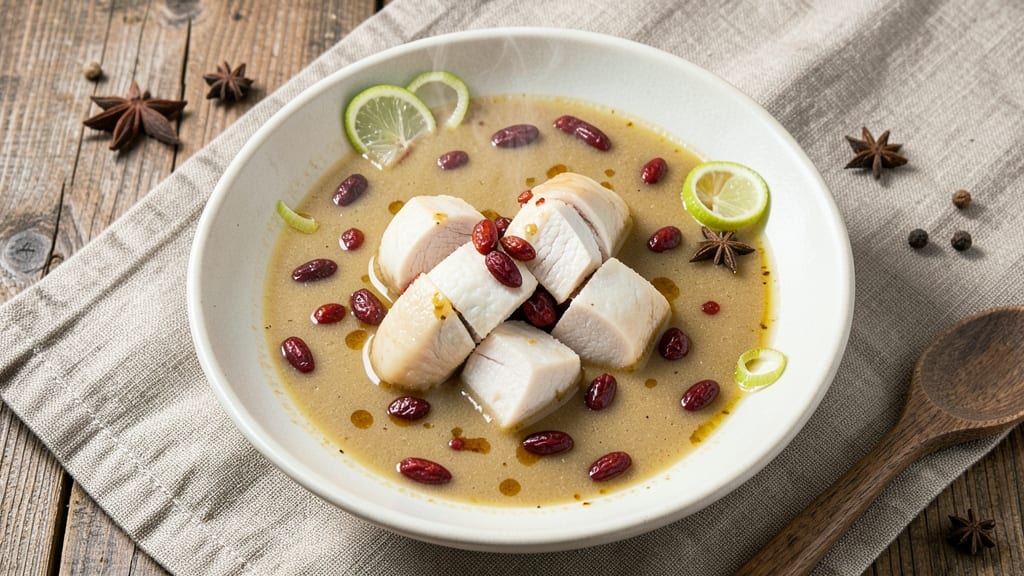
This Ba Zhen soup recipe delivers the perfect balance of earthy herbal notes and comforting warmth, a traditional Chinese remedy now elevated to restaurant-quality at home. The secret lies in simmering eight precious herbs—astragalus, angelica, and more—until their medicinal properties infuse the broth with gentle healing energy.
I've refined this version to highlight the signature celery crown crunch over silky ginger velvety texture, creating a dish that's both nourishing and deeply satisfying.
The foundation begins with a rich chicken or vegetarian broth, where the herbs steep for hours to develop their complex flavors. Each ingredient plays a role: the astragalus adds subtle sweetness, the codonopsis boosts umami depth, while fresh ginger and celery crown bring vibrant freshness.
The result is a soup that's equally effective as a health tonic or a comforting meal, adaptable to both traditional and modern palates.
What you'll achieve is a velvety broth with floating herbs and tender protein, where every spoonful delivers a harmonious blend of earthy, slightly sweet, and zesty flavors. The celery crown adds satisfying crunch, while the ginger-infused broth creates a silky finish.
This is a soup that honors tradition while delivering restaurant-quality results in your own kitchen.
Perfect for healing meals, family gatherings, or self-care nights, this recipe includes vegetarian adaptations and serving suggestions that make it versatile for any occasion. Let's create this nourishing dish together, step by step.
Ingredients for ba zhen soup
Eight healing herbs plus fresh ginger and celery crown for restaurant-quality comfort.
| Ingredient | Amount | Notes |
|---|---|---|
| Chicken Breast 🍗 | 1 ½ lb | Boneless, skinless, cubed for even cooking |
| Astragalus Root 🌿 | 1 oz | Sliced, dried herb from Asian market |
| Angelica Root 🌿 | ¾ oz | Dried slices, aromatic and slightly sweet |
| Codonopsis Root 🌿 | ¾ oz | Dried, boosts umami depth |
| Goji Berries 🍇 | ½ cup | Dried, for subtle sweetness |
| Fresh Ginger 🧄 | 3 slices | Thick slices, 1-inch wide |
| Celery Crown 🥬 | 1 whole | Fresh, leaves included for garnish |
| Shiitake Mushrooms 🍄 | 4 whole | Fresh or dried, stems removed |
| Garlic Cloves 🧄 | 4 cloves | Peeled, lightly crushed |
| Vegetable or Chicken Broth 💧 | 6 cups | Low-sodium, homemade preferred |
| Sesame Oil 🫒 | 1 tbsp | Toasted, for finishing touch |
| Soy Sauce 🥢 | 1 tbsp | Light or dark, for umami balance |
| Honey 🍯 | 1 tsp | For subtle sweetness (vegetarian option) |
| Green Onions 🧅 | 3 whole | Thinly sliced, for garnish |
| Sea Salt 🧂 | 1 tsp | Diamond Crystal preferred |
The herbs are the heart of this soup—Asian markets carry the best dried roots like astragalus and angelica. Look for organic or wild-harvested if possible, though regular dried works fine. Goji berries add subtle sweetness, but skip them if you're sensitive to seeds. Fresh ginger should smell zesty and vibrant—none of that dull, musty stuff. For the celery crown, grab the whole bunch: leaves add garnish later. Shiitake mushrooms? Fresh is ideal, but dried rehydrates perfectly (soak 20 minutes). The broth is non-negotiable—homemade wins, but low-sodium store-bought is fine in a pinch.
No astragalus? Reishi mushrooms at half the amount add earthy depth. Out of angelica? Dried licorice root works in a bind (use sparingly—it's potent). Fresh ginger too spicy? Powdered ginger at one-third the amount tones it down. For the mushrooms, oyster mushrooms work too—just slice them thin. The celery crown leaves are optional but add that restaurant touch. And if you're avoiding honey, maple syrup does the job just as well (same amount).
Herbs keep for 6-12 months in airtight containers, but fresh ginger lasts only 2 weeks in the fridge—freeze what you won't use. The celery crown stays crisp for 5 days wrapped in damp paper towels. Broth freezes beautifully for 3 months, so double the batch. Garnishes like green onions and sesame oil can wait until serving—no need to pre-prep everything. This soup actually tastes better the next day as flavors meld.
Why You'll Love This Recipe
- No-Chop Needed: The chicken breast just needs slicing—not dicing—so it cooks fast and stays tender. Honestly, I’ve made this while scrolling through my phone because the prep is that simple.
- Sweet-Savory Balance: Those goji berries burst with natural sweetness while the astragalus and angelica roots add earthy depth—like a warm hug in a bowl. The codonopsis rounds it out so it’s never one-note.
- Post-Work Pick-Me-Up: Between us, this is my go-to when I’m exhausted but still need something nourishing. It reheats beautifully for lunch the next day, and the herbal notes actually make me feel lighter, not sluggish.
- Pantry Staple Power: I keep dried roots and goji berries stocked because they last forever, and chicken breast is budget-friendly. A single batch stretches into three meals—perfect for when I’m too busy to cook daily.
Step-by-step instructions for Ba Zhen soup
This soup delivers a perfect marriage of earthy roots, tender chicken, and vibrant celery crunch.
Prepare the Chicken and Herbal Roots
Cut the 1.5 lb chicken breast into 1-inch cubes for even cooking. In a separate bowl, combine the 1 oz astragalus root, 0.75 oz angelica root, and 0.75 oz codonopsis root. These dried roots are the soul of Ba Zhen soup—they infuse the broth with deep, earthy warmth. If your roots are particularly fibrous, lightly crush them with a mortar and pestle to release their aromatic oils.
Rinse the 4 whole shiitake mushrooms and remove stems, then slice them into ¼-inch thick pieces. Peel and crush the 4 cloves garlic lightly to release their flavor without turning bitter. The mushrooms will add an umami depth that complements the roots beautifully. Keep all prepared ingredients within reach for the next step.
Build the Umami-Packed Broth
In a large pot, combine the 6 cups vegetable or chicken broth with the prepared chicken, shiitake mushrooms, garlic, and the crushed herbal roots. Bring to a gentle boil over medium-high heat, then immediately reduce to a simmer. The broth should bubble softly—never a rolling boil, which can make the roots bitter.
Add the 3 slices fresh ginger and 1 tsp sea salt, stirring to dissolve. Simmer uncovered for 30 minutes, skimming off any foam that rises to the surface. This step is crucial—it allows the roots and ginger to steep fully, creating that signature herbal depth. The chicken should be just cooked through but still tender, not falling apart.
Add Sweetness and Vegetable Crunch
Stir in the 0.5 cup goji berries and 1 tbsp soy sauce, letting them simmer for 10 minutes. The goji berries will plump slightly, adding a subtle sweetness that balances the earthy roots. Meanwhile, prepare the celery crown: Cut the 1 whole celery crown into 2-inch long sticks, keeping the leaves attached for garnish. The celery should remain crisp—it’s the textural star of this soup.
Add the celery crown to the pot and simmer for 5 minutes—just enough to warm through without softening. The celery should still have a satisfying crunch when bitten. Remove the pot from heat and let it sit for 5 minutes to allow the flavors to meld. This resting period is where the soup truly comes together.
Finish with Sweetness and Garnish
Stir in the 1 tsp honey and 1 tbsp sesame oil, swirling gently to coat. The honey adds a delicate sweetness that brightens the earthy flavors, while the sesame oil introduces a nutty richness. Taste and adjust seasoning—you might need a touch more soy sauce or salt to balance the flavors.
Ladle the soup into bowls, garnishing each serving with 3 thinly sliced green onions and a few celery leaves. Serve immediately while the celery remains crisp and the broth is steaming. The contrast of silky broth, tender chicken, and crunchy celery is what makes this soup unforgettable.
Pro Tips For Making Ba Zhen Soup
- Simmer Low and Slow: Ba zhen soup isn’t a race—set your heat to the lowest possible setting after the initial boil. I learned this the hard way when I rushed it and ended up with bitter angelica and mushy codonopsis. Keep it at a gentle bubble for at least 2 hours, or until the chicken falls apart with just a fork.
- Slice Chicken Thin: Skip the whole breast—cut it into ½-inch slices before adding to the pot. Thinner pieces cook faster and absorb the herbal broth evenly, so you don’t end up with dry edges or undercooked centers. (Yes, even if you’re impatient like me.)
- Toast the Roots First: Dry-toast astragalus, angelica, and codonopsis in a clean pot for 2 minutes before adding water—this deepens their flavor and cuts bitterness. I was skeptical until I tried it; now I swear by the nutty aroma it adds to the broth.
- Add Goji Berries Late: Toss the goji berries in just 5 minutes before serving—any longer and they’ll turn mushy or lose their bright color. This keeps them plump and chewy, like little bursts of sweetness in every sip. (Your future self will thank you.)
Perfect pairings for this dish
Herbal Tea Pairings
Ba Zhen soup’s earthy herbal notes pair beautifully with jasmine green tea or pu-erh tea—both enhance its medicinal qualities while cleansing the palate. I recommend hot jasmine tea steeped for 3-4 minutes to complement the soup’s ginger warmth.
For a caffeine-free option, white chrysanthemum tea adds floral brightness that contrasts the roots’ depth. 💛
Light Vegetable Sides
Serve with steamed bok choy or blanched gai lan—their mild bitterness balances the soup’s sweetness. I like tossing 1 bunch bok choy in 1 tbsp toasted sesame oil and a pinch of sea salt for 2 minutes until wilted.
For extra crunch, add thinly sliced cucumber with a drizzle of rice vinegar and chili flakes.
Dipping Sauces
Create a simple hoisin-ginger dip by mixing 2 tbsp hoisin sauce, 1 tsp grated ginger, and 1 tsp rice vinegar. This adds umami depth to the celery crown’s crunch.
For a spicy kick, blend 1 tbsp chili crisp with 1 tsp honey—just enough to coat the celery sticks. Both sauces elevate the soup’s textures and flavors.
Wine and Spirits
A dry Riesling from Germany cuts through the soup’s richness with its crisp acidity. I prefer Keller Riesling Kabinett for its citrus notes that refresh the palate. For non-alcoholic options, yuzu soda (sparkling citrus drink) adds a fizzy contrast. Avoid heavy reds—they’ll overpower the delicate herbal broth. 🍷
Garnish Upgrades
Boost presentation with toasted sesame seeds or crispy fried shallots—sprinkle 1 tsp sesame seeds directly on soup before serving. For color, add edible flowers like nasturtiums (their peppery bite pairs well).
A final drizzle of chili oil (just ½ tsp) adds heat without overpowering the herbs. These touches make the dish feel restaurant-worthy.
Nutrition facts
Frequently asked questions
What makes Ba Zhen soup different from other herbal soups?
Ba Zhen soup stands out because it combines a specific blend of 8 traditional Chinese herbs—including astragalus, angelica, and codonopsis—with fresh ginger and celery crown. The herbs work together to create a balanced flavor profile that's both earthy and slightly sweet, while the celery crown adds a signature crunch. Unlike other herbal soups, this one focuses on harmony between bitter roots, umami mushrooms, and fresh vegetables.
Can I make this soup vegetarian?
Simply replace the chicken with 1 lb firm tofu (pressed and cubed) or shiitake mushrooms for extra umami. Use vegetable broth and ensure your soy sauce is vegetarian. The herbal roots will still infuse the broth beautifully, creating a nourishing plant-based version that maintains all the traditional benefits.
How do I know when the herbal roots are properly steeped?
The roots are ready when the broth develops a deep amber color and emits a warm, earthy aroma. Simmer for 30 minutes uncovered—this allows the flavors to meld without becoming bitter. If you're unsure, taste a small amount: the broth should be subtly sweet with herbal undertones, not harsh or medicinal-tasting.
What if I can't find all the herbs at my local store?
No problem! Start with the core trio: astragalus, angelica, and codonopsis—these are the most important. For substitutes, try reishi mushrooms (½ oz) for astragalus or licorice root (¼ oz) for angelica. Skip the harder-to-find herbs first—the soup will still taste amazing. Asian markets or online herbal shops are your best bet for complete ingredient lists.
How long can I store leftover Ba Zhen soup?
This soup actually tastes better the next day! Store in an airtight container in the fridge for up to 3 days. The flavors deepen as the herbs continue to infuse. Reheat gently on the stove over low heat—never microwave, as it can make the celery soggy. For longer storage, freeze for up to 3 months (without celery crown).