
Soups & Stews
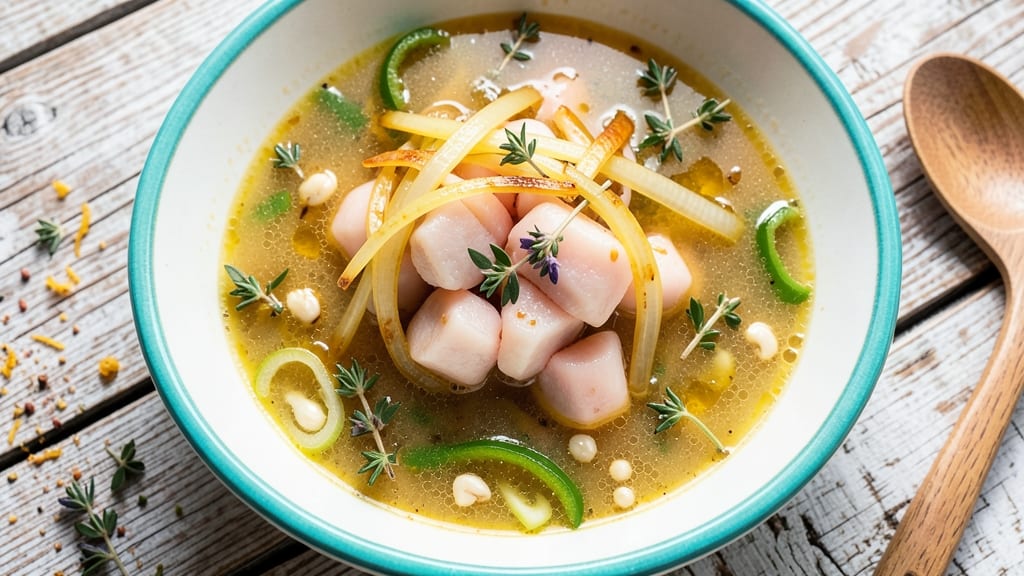
This Bahamian conch soup delivers the island's signature flavors in every spoonful—bright citrus, aromatic spices, and tender conch that practically melts in your mouth. 🌊 The secret lies in slow simmering the conch with fresh thyme, scallions, and a splash of spiced rum that infuses the broth with deep, caramelized richness.
After years of perfecting this recipe, I've found the key is patience: letting the conch cook low and slow until it's fork-tender while building layers of flavor in the broth.
The recipe begins with a fragrant base of onions, garlic, and bell peppers sautéed until soft, forming the foundation for the soup's complex taste profile.
Fresh thyme and scallions add that unmistakable Bahamian touch, while a splash of spiced rum (traditionally made with Bahamian rum) creates a subtle warmth that balances the bright citrus notes.
The conch, pre-cooked and cleaned properly, becomes the star—its delicate texture absorbing all the flavors while contributing a briny sweetness unique to this Caribbean delicacy.
What you'll end up with is a steaming bowl of soup where each component shines: tender conch pieces floating in a golden broth infused with citrus and spice, topped with fresh lime wedges and chopped scallions.
The aroma alone will transport you to a Bahamian beachside restaurant, but the taste proves you don't need to travel to experience authentic island flavors.
This soup is equally at home as a light lunch or hearty dinner, especially when paired with crusty bread to soak up every last drop of that flavorful broth.
The beauty of this recipe lies in its versatility—it works equally well made ahead for potlucks or served fresh from the stove for intimate gatherings. The conch can be substituted with shrimp or crab for those who prefer alternatives, though purists will insist nothing compares to the authentic experience.
Let's bring the Bahamas to your kitchen with this one-pot masterpiece that captures the essence of island cooking in every bite.
Ingredients for bahamian conch soup
Conch, citrus, and spiced rum—the perfect trio for authentic Bahamian flavor.
| Ingredient | Amount | Notes |
|---|---|---|
| Fresh Conch Meat 🦪 | 1 ½ lb | Pre-cooked, cleaned, cut into bite-sized pieces |
| Yellow Onion 🧅 | 1 whole | Diced, medium size |
| Green Bell Pepper 🍅 | 1 whole | Diced, any color |
| Garlic Cloves 🧄 | 4 cloves | Minced, fresh preferred |
| Fresh Thyme 🌿 | ¼ cup | Chopped, stems removed |
| Scallions 🧅 | ¼ cup | Sliced, white and green parts |
| Spiced Rum 🍹 | ½ cup | Bahamian preferred, like Gosling's |
| Fresh Lime Juice 🍋 | ½ cup | Freshly squeezed |
| Tomato Paste 🍅 | 2 tbsp | Squeeze tube preferred |
| Vegetable Oil 🫒 | 2 tbsp | For sautéing |
| Chicken or Vegetable Broth 💧 | 4 cups | Low-sodium preferred |
| Salt 🧂 | 1 ½ tsp | Kosher or sea salt |
| Black Pepper 🌶️ | ½ tsp | Freshly ground |
| Fresh Limes 🍋 | 2 whole | For garnish, cut into wedges |
| Fresh Cilantro 🌿 | ¼ cup | Chopped, for garnish |
The conch is the star, so look for fresh, pre-cooked pieces at specialty seafood markets or Caribbean grocery stores. If you can't find it, shrimp or crab work as a solid substitute—just adjust cooking time. For the spiced rum, Gosling's Black Seal is the classic choice, but any quality spiced rum will do. The lime juice needs to be fresh—bottled won't cut it here. As for thyme, farmers markets often have fresher bundles than grocery stores, and it makes a huge difference in flavor.
No spiced rum? Dark rum plus a pinch of cinnamon and allspice gets you close. Fresh thyme is ideal, but dried works at one-third the amount if that's what you've got. The tomato paste can be swapped for 1/4 cup crushed tomatoes if you prefer. For the broth, low-sodium is key—you'll be adding plenty of salt later. The bell pepper adds sweetness, but if you're not a fan, substitute with 1/4 cup diced celery for a different flavor profile. And if you're feeling adventurous, a dash of hot sauce at the end brings it all together.
This soup tastes even better the next day—make extra for leftovers. Store in an airtight container in the fridge for up to 3 days or freeze for 3 months. The conch pieces will get even more tender as it sits. For serving, I like to keep the lime wedges and cilantro separate until right before eating so they stay bright. The broth reduces slightly when reheated, so you might want to add a splash of water or broth when warming it up.
Why You'll Love This Recipe
- One-Pot Magic: I swear by this recipe when I’m short on time—just toss everything into one pot, simmer, and let the conch melt into that rich, briny broth. No chopping boards to clean, no extra pans to wash.
- Thyme for Adventure: That fresh thyme and garlic? It’s the secret weapon—earthy, bright, and just sweet enough to balance the oceanic depth of the conch. Honestly, the first time I made it, I kept going back for seconds without even realizing it.
- Leftovers That Don’t Suck: This soup actually improves the next day. The flavors meld even more, and it’s perfect for packing lunches or reheating for a lazy afternoon. (Yes, even on a Tuesday night.)
- Budget-Friendly Luxury: Conch might sound fancy, but you use less than you think—plus, the onions, peppers, and garlic stretch it into a hearty meal for two or three. Between us, it’s the kind of dish that makes you feel like you’re eating at a seaside shack without the price tag.
Step-by-step instructions for Bahamian conch soup
This one-pot wonder delivers bold Bahamian flavors with tender conch and citrusy brightness.
🍳 Step 1: Sauté the Aromatic Base
Heat the 2 tablespoons vegetable oil in a large pot over medium heat. Add the diced yellow onion and diced green bell pepper, cooking for 5-6 minutes until softened and beginning to caramelize. You'll smell that sweet, earthy aroma developing—this is where all the flavor starts.
Add the 4 cloves minced garlic and cook for another 30 seconds until fragrant. Here's the thing—don't let the garlic burn. It should smell amazing but not bitter. If it starts to darken too quickly, reduce the heat slightly. This aromatic base forms the flavor foundation for your entire soup.
🍳 Step 2: Build the Spiced Rum and Tomato Base
Stir in the 2 tablespoons tomato paste and cook for 1 minute until it darkens slightly. This step deepens the sauce's richness and balances the bright citrus flavors coming up. Then pour in the ½ cup spiced rum—you'll see it sizzle and evaporate quickly. Let it cook for 2 minutes until the alcohol smell completely dissipates.
This is where the magic happens. The rum's caramelization creates a subtle sweetness that pairs perfectly with the conch's briny flavor. If you're using a high-proof rum, you might need an extra minute to fully cook off the alcohol. The key is patience—rushing this step leaves a harsh alcohol taste.
🥘 Step 3: Simmer the Conch and Vegetables
Add the 1.5 pounds bite-sized conch meat, ¼ cup chopped fresh thyme, ¼ cup sliced scallions, 1.5 teaspoons salt, and ½ teaspoon black pepper. Pour in the 4 cups chicken or vegetable broth and bring everything to a gentle boil. Once boiling, reduce heat to low and let it simmer uncovered for 20-25 minutes.
You'll notice the conch pieces will sink to the bottom initially but will gradually rise as they cook. Stir occasionally to prevent sticking, but don't overdo it—you want that natural crust to develop on the conch. The soup should reduce slightly, becoming more concentrated in flavor. Taste after 20 minutes—it should be tender but still have a slight bite.
🍋 Step 4: Finish with Citrus and Fresh Herbs
Remove the pot from heat and stir in the ½ cup fresh lime juice. The citrus will brighten all the rich flavors and cut through the conch's natural sweetness. Let the soup sit off heat for 5 minutes to allow the lime to fully integrate. Then add the ¼ cup chopped fresh cilantro and give it one final stir.
Here's a pro tip: If you want extra brightness, add a few drops of lime zest along with the juice. The soup should now have layers of flavor—sweet from the caramelized aromatics, rich from the conch, bright from the citrus, and herby from the thyme and cilantro. The texture should be creamy from the conch but not overly thick.
🍽️ Step 5: Serve with Lime Wedges
Ladle the soup into bowls, making sure each serving gets a good portion of the conch pieces. Garnish each bowl with a wedge of the 2 whole fresh limes and an extra sprinkle of chopped fresh cilantro. Serve immediately while hot—this soup tastes best fresh from the pot when all the flavors are at their peak.
The conch should be tender but still hold its shape slightly, with a delicate texture that almost melts in your mouth. Each spoonful should deliver that perfect balance of spiced rum warmth, citrus zing, and herby freshness that makes Bahamian cuisine so special. Don't forget to squeeze that lime wedge into your soup before taking the first bite—it's the finishing touch that makes all the difference.
Pro Tips For Making Bahamian Conch Soup
- Sear the Conch First: Hit the conch with a quick sear in hot oil—just 2-3 minutes per side—before adding liquids. This builds flavor fast and keeps the meat from turning rubbery later. (Yes, even if it looks like overkill, it’s worth the extra 5 minutes.)
- Dice Onion Like Dice: Cut the yellow onion into ¼-inch cubes, not thin slices. Larger pieces caramelize slower but sweeten the broth more deeply, which is non-negotiable for Bahamian depth. (I used to rush this and wondered why my soup tasted flat.)
- Don’t Overcrowd the Pot: Add the conch in batches if needed—overloading the pot steams the meat instead of simmering it, and you’ll end up with a watery, flavorless mess. (Your future self will thank you for the extra 2 minutes of patience.)
- Toast the Thyme Leaves: Strip the thyme sprigs and crush the leaves between your fingers before adding them to the pot. This releases their oils and amplifies the herbal punch without bitterness. (Sounds weird, but it works—trust me.)
Pro cooking tips for this dish
Conch Prep Essentials
Fresh conch is non-negotiable for authentic flavor—never substitute frozen unless absolutely necessary. Start by cleaning each piece thoroughly under cold water to remove any grit or sand.
I like to soak the conch in a bowl of cold water with 1 tablespoon lemon juice and 1 tablespoon baking soda for 10 minutes to remove any lingering impurities. Pat them completely dry before cutting into 1-inch pieces—this helps them sear better and absorb flavors faster. 🦪
Spiced Rum Caramelization
The rum isn't just for flavor—it's for developing depth through caramelization. Use Gosling's Black Seal rum (or equivalent) and pour it in slowly while stirring constantly. Let it cook until it reduces by about 30% and turns a deep amber color—this takes 3-4 minutes on medium heat.
The alcohol burn-off is crucial: if you smell anything boozy after cooking, simmer another 30 seconds. This step transforms the soup from good to extraordinary.
Low-and-Slow Simmering
Conch cooks best at a gentle simmer—never a rolling boil. Maintain the temperature at 180-190°F using a thermometer if possible. The conch releases its natural sweetness when cooked this way, creating a velvety texture.
I cover the pot loosely with a lid to allow some steam to escape, which helps concentrate the broth. Stir gently every 5 minutes to prevent sticking, but avoid breaking up the conch pieces too much—their shape adds visual appeal.
Citrus Integration Timing
Add lime juice off the heat to preserve its bright acidity. Let it steep for 5 minutes before adding cilantro—this allows the flavors to meld without cooking off the citrus oils. For extra zing, I sometimes add 1 teaspoon lime zest along with the juice.
The key is balance: the soup should finish with a 30-40% citrus brightness to complement the rich conch and spiced rum notes. Taste as you go—adjust with more lime or a pinch of salt if needed.
Broth Reduction Secrets
For a more concentrated flavor, reduce the broth by 20-25% before adding the conch. This works best if you start with 4.5 cups broth instead of 4. Simmer uncovered for 10 minutes before adding the conch and other ingredients.
The reduced broth will be more flavorful and help tenderize the conch faster. Just be careful not to over-reduce—you want a soup, not a sauce. 💫
Garnish Like a Pro
Fresh lime wedges aren't just decoration—they're essential for that final burst of acidity. I like to serve them on the side so everyone can squeeze to taste. For garnish, use cilantro (not parsley) to maintain authentic Bahamian flavor.
A sprinkle of freshly cracked black pepper right before serving adds a subtle heat that elevates the dish. The presentation should look vibrant and inviting, with bright green herbs contrasting against the golden broth.
Nutrition facts
Frequently asked questions
Can I substitute conch with another seafood?
Yes! For a similar texture, use 1.5 pounds of shrimp (peeled and deveined) or 1 pound of crab meat. Cooking time will be shorter—shrimp needs only 5-7 minutes after adding to the broth, while crab should simmer for 10 minutes. Adjust seasoning to taste, as crab is naturally saltier than conch.
How do I make this soup spicier?
Add 1-2 teaspoons of hot sauce at the end or stir in ½ teaspoon of cayenne pepper with the thyme and scallions. For a smoky kick, include 1 teaspoon smoked paprika when sautéing the aromatics. Always taste first—spice builds as the soup sits!
Can I prepare this soup ahead of time?
This soup tastes even better the next day. Store in an airtight container in the fridge for up to 3 days or freeze for 3 months. When reheating, add a splash of water or broth to restore the proper consistency. The conch will get more tender with time.
What's the best way to serve Bahamian conch soup?
Serve with warm crusty bread or conch fritters on the side. For a complete Bahamian meal, pair with fried plantains or a simple lime-marinated salad. The soup's rich broth pairs perfectly with the sweetness of plantains and the crunch of fresh greens.
Why does my conch soup taste watery?
Watery soup usually means the broth wasn't reduced enough. Try simmering uncovered for 10-15 extra minutes to thicken it. If needed, remove the conch, reduce the broth further, then return the conch to heat through. Also check your measurements—too much broth can dilute the flavors.