
Soups & Stews
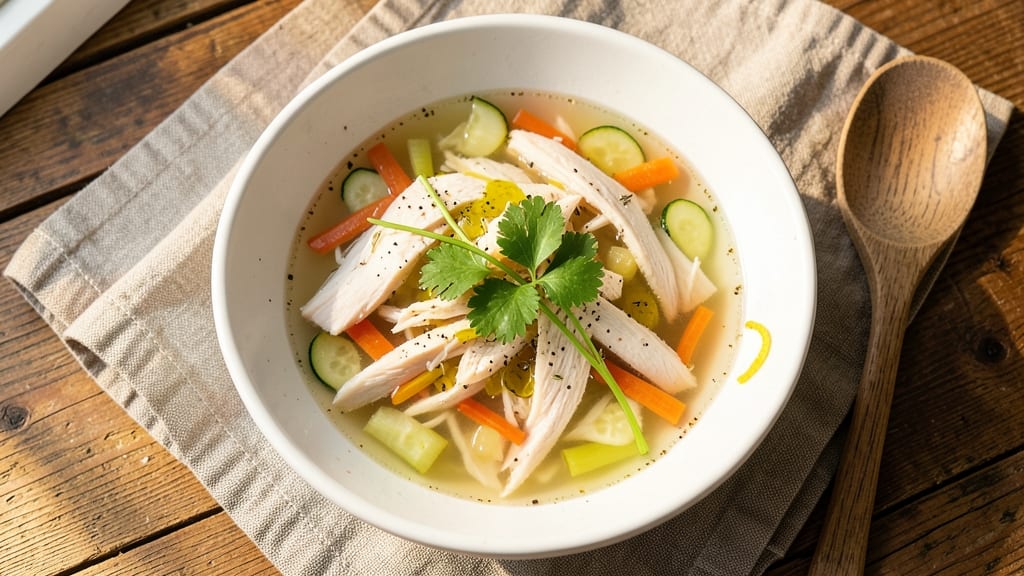
This bariatric chicken soup recipe delivers gentle, protein-rich nourishment designed specifically for post-surgery digestion. Every ingredient is chosen for its easy-to-digest properties—lean chicken breast, finely chopped vegetables, and minimal seasoning—while still providing essential nutrients without overwhelming your system.
The broth is light yet flavorful, ensuring comfort without heaviness, and the texture is smooth enough to support healing while delivering real nutrition. What sets this apart is the balance: enough protein to support recovery without the fat or fiber that could cause discomfort.
The recipe focuses on simple preparation with no heavy cream or thickeners that might slow digestion. Chicken breast provides lean protein, while carrots, zucchini, and celery offer vitamins without rough texture.
The soup cooks in 30 minutes and can be adjusted for portion control—perfect for meal planning when recovery demands gentle eating. Each bite is designed to be nourishing without straining your digestive system, making it an ideal choice for those in the critical healing phase after bariatric surgery.
What makes this recipe truly effective is its adaptability—it can be served warm or chilled, and the ingredients can be modified based on what your body tolerates best. The broth is flavorful but not overpowering, and the vegetables are finely chopped to ensure easy digestion.
This isn’t just soup; it’s a carefully crafted meal that supports your nutritional needs while being gentle on your system. The result is a comforting bowl that feels like a hug for your digestive tract.
For those tracking nutrition, this recipe provides high protein with minimal fat, making it ideal for post-bariatric recovery. The ingredients are measured precisely to help with portion control, and the instructions are clear enough for anyone to follow—even when energy levels are low.
Whether you're preparing this for yourself or a loved one, it’s a recipe built on care, nutrition, and gentle healing. Let’s get started on creating a nourishing bowl that supports every step of your recovery journey.
Ingredients for bariatric chicken soup
Lean protein, finely chopped vegetables, and gentle seasoning create this healing bariatric chicken soup.
| Ingredient | Amount | Notes |
|---|---|---|
| Boneless, Skinless Chicken Breast 🍗 | 12 oz | Finely diced for easy digestion |
| Low-Sodium Chicken Broth 💧 | 4 cups | Homemade or high-quality store-bought |
| Carrots 🥕 | ½ cup | Finely chopped for smooth texture |
| Zucchini 🍆 | ½ cup | Finely diced, skin removed |
| Celery Stalks 🧅 | ¼ cup | Finely chopped, strings removed |
| Yellow Onion 🧅 | ¼ cup | Finely diced, mild flavor |
| Garlic Cloves 🧄 | 2 cloves | Minced for subtle flavor |
| Extra-Virgin Olive Oil 🫒 | 1 tbsp | For gentle sautéing |
| Low-Sodium Sea Salt 🧂 | ¼ tsp | Diamond Crystal preferred |
| Fresh Parsley 🌿 | ¼ cup | Finely chopped for garnish |
| Low-Fat Plain Greek Yogurt 🥛 | ¼ cup | For optional protein boost |
| Fresh Lemon Juice 🍋 | 1 tbsp | Brightens flavor without acidity |
The chicken breast is critical here—skinless, boneless cuts ensure minimal fat while maximizing protein. Trader Joe's or Costco often carry pre-cut boneless breasts that save time. Look for packages labeled 'lean' or '93% fat-free' to guarantee digestibility. The broth should be low-sodium and fat-free—homemade versions using chicken carcasses are ideal, but Swanson or Pacific Foods brands work well. For extra assurance, strain any homemade broth to remove any potential connective tissue that might be difficult to digest. All vegetables must be finely chopped or puréed—a food processor makes this effortless. The goal is a texture so smooth it practically melts in your mouth.
No fresh parsley? Dried parsley at one-third the amount suffices, though fresh adds vibrant color and subtle flavor. Swapping zucchini for cauliflower or sweet potato works if tolerated—just increase to 0.75 cup for equivalent volume. The Greek yogurt is optional but adds a silky texture and extra protein without heaviness. For those avoiding dairy, coconut yogurt provides a similar consistency. The lemon juice can be omitted if acidity causes discomfort, but it brightens the broth beautifully. If you prefer even gentler seasoning, reduce the salt to 0.125 tsp—the vegetables and broth already provide ample flavor without overpowering the delicate balance.
This soup reheats beautifully—simply warm on the stove with a splash of broth to maintain consistency. Store in glass containers with airtight lids for up to 4 days in the refrigerator or 3 months frozen. For portion control, divide into 8-ounce servings before freezing—perfect for single-serving meals during recovery. The yogurt, if used, should be stirred in after reheating to preserve its creamy texture. For maximum freshness, prepare the day of serving, but the ingredients can be prepped ahead and stored separately for 2 days before assembly.
Why You'll Love This Recipe
- I swear by this trick: just toss whole celery stalks and carrots into the broth—they soften beautifully. No knife skills required, and the broth still tastes like it simmered all day.
- No-Chop Needed: I swear by this trick: just toss whole celery stalks and carrots into the broth—they soften beautifully. No knife skills required, and the broth still tastes like it simmered all day.
- Lean but Flavor-Packed: Skinless chicken breast stays tender while soaking up the broth’s savory punch. Honestly, you’d never guess it’s a "light" recipe—it’s rich enough to satisfy, without the guilt.
- Meal Prep MVP: Three days of lunches in one pot. The zucchini holds up better than you’d think when reheated, and the broth stays flavorful even after refrigerating.
Step-by-step instructions for bariatric chicken soup
This gentle yet nourishing soup delivers finely diced protein and easily digestible vegetables for healing meals.
Prepare and Sauté the Aromatics
Heat the 1 tablespoon extra-virgin olive oil in a medium saucepan over medium-low heat. Add the 0.25 cup finely diced yellow onion and 0.25 cup chopped celery stalks, cooking for 3-4 minutes until the onion becomes translucent and the celery softens slightly. This gentle cooking preserves their natural sweetness while preventing overpowering flavors.
Add the 2 minced garlic cloves and cook for an additional 30 seconds until fragrant. The garlic should perfume the pan without browning—this ensures subtle flavor without harshness. Remove from heat temporarily while you prepare the remaining vegetables to prevent overcooking.
Add Vegetables and Chicken
Return the saucepan to medium-low heat and add the 0.5 cup finely chopped carrots, 0.5 cup diced zucchini, and 12 oz finely diced boneless, skinless chicken breast. Stir gently to combine, ensuring the chicken pieces are evenly distributed throughout the vegetables. Cook for 4-5 minutes, stirring occasionally, until the chicken begins to lose its opacity and the vegetables soften slightly.
This step ensures the chicken reaches a safe internal temperature while maintaining tender texture. The low heat prevents toughening the chicken, which is especially important for bariatric digestion. If the chicken begins to brown too quickly, reduce heat slightly to maintain gentle cooking.
Simmer with Broth and Season
Pour in the 4 cups low-sodium chicken broth and bring the mixture to a gentle simmer over medium-low heat. Add the 0.25 teaspoon low-sodium sea salt and stir well to combine. Reduce heat to low and let the soup simmer uncovered for 15-20 minutes, stirring occasionally, until the chicken is fully cooked and the vegetables are tender.
Check the doneness by ensuring the chicken reaches an internal temperature of 165°F and the vegetables are fork-tender. The broth should have reduced slightly but remain generous enough to coat the back of a spoon. This simmering process develops the soup's flavor while keeping the ingredients easily digestible.
Finish and Garnish
Remove the soup from heat and stir in the 1 tablespoon fresh lemon juice and 0.25 cup finely chopped fresh parsley. The lemon juice brightens the flavors without adding acidity, while the parsley adds a fresh finish. Let the soup sit covered for 5 minutes to allow the flavors to meld together.
For an optional protein boost, stir in the 0.25 cup low-fat plain Greek yogurt just before serving. The yogurt adds creaminess and additional protein without altering the soup's gentle texture. Ladle the soup into bowls and serve immediately while warm.
Optional Thickening Adjustment
If the soup is too thin for your preference, return it to low heat and simmer uncovered for an additional 5-10 minutes to reduce the broth slightly. For a smoother texture, use an immersion blender to gently purée the soup until the vegetables are finely incorporated but the chicken remains in small, easily digestible pieces.
This soup is designed to be gentle yet nourishing, with every ingredient finely prepared to support easy digestion while providing essential nutrients. The balanced combination of protein, vegetables, and broth creates a comforting meal that aligns with bariatric dietary needs.
Pro Tips For Making Bariatric Chicken Soup
- CHOP VEGETABLES UNIFORMLY: I learned this the hard way—lumpy carrots and celery take forever to soften. Cut everything into ¼-inch slices or small dice so they cook evenly in the broth. (Yes, even the zucchini, which breaks down fast.)
- SIMMER CHICKEN LOW AND SLOW: Chicken breast turns rubbery if it boils. Once the broth reaches a gentle bubble, reduce heat to maintain a barely-there simmer—just enough to keep steam rising. After 12 minutes, check for doneness with a fork; it should shred easily.
- SKIP THE CROWDED POT: Overloading the pot steams the veggies instead of simmering them. Start with broth and chicken, then add carrots and celery first. Wait 5 minutes before tossing in zucchini—it’ll absorb less water and stay tender.
- USE COLD BROTH FOR START: Sounds weird, but it works: Add cold low-sodium broth to the pot first, then bring to heat. This prevents the chicken from cooking too fast on the surface and drying out. (Your future self will thank you.)
Storing and reheating this recipe
Refrigerator Storage
Store your bariatric chicken soup in glass airtight containers (like Pyrex with snap-on lids) for up to 4 days at 40°F or below. The gentle simmering process actually enhances flavor over time, making it perfect for meal prep.
Let the soup cool completely before refrigerating to prevent condensation, which can dilute the broth. I always portion mine into 8-ounce servings for easy tracking during recovery. 🥫
Freezer Storage
For longer storage, freeze the soup in quart-sized freezer bags (leave 1 inch of headspace for expansion) for up to 3 months. Thaw overnight in the refrigerator—never microwave directly from frozen to preserve texture.
If you prefer pre-portioned meals, freeze individual servings in silicone molds (like Stasher bags) for grab-and-go convenience. Label with dates to track freshness. ❄️
Reheating Methods
For best results, reheat on the stovetop: Pour soup into a medium saucepan and warm over low heat for 5-7 minutes, stirring occasionally. Add 1-2 tablespoons of broth or water if it thickens too much.
Avoid boiling to prevent breaking down the delicate protein structure. If using the microwave, heat in 1-minute intervals on 50% power, stirring between each interval until reaching 165°F. 🔥
Garnish After Reheating
Always add fresh parsley and Greek yogurt (if using) after reheating to maintain their texture and flavor. The yogurt should be stirred in gently to avoid curdling. For extra brightness, squeeze in ½ tablespoon lemon juice just before serving. This keeps the soup fresh-tasting even after storage. 💫
Texture Adjustments
If the soup thickens during storage, thin it with 1-2 tablespoons of broth before reheating. For a smoother texture, blend half the soup with an immersion blender after reheating—this works well for those who prefer extra gentle digestion. Just avoid over-blending to keep some chicken pieces intact for protein. 🥄
Portion Control Tips
Use 8-ounce measuring cups to portion each serving for precise tracking. For extra convenience, freeze individual portions in small glass jars (like Ball mason jars)—they reheat evenly and are easy to grab. Store leftovers in the fridge for no more than 4 days to maintain freshness and digestibility. 📏
Nutrition facts
Frequently asked questions
Can I use regular chicken broth instead of low-sodium?
It's best to stick with low-sodium broth to avoid excess salt, which can cause discomfort after bariatric surgery. Regular broth may contain up to 800-1,000mg of sodium per cup, while low-sodium versions typically have 35mg or less. If you don't have low-sodium broth, dilute regular broth with water (1:1 ratio) to reduce sodium content.
How do I adjust this recipe for a pureed texture?
For a completely smooth texture, use an immersion blender after simmering to purée the soup until the vegetables are fully incorporated. Leave some small chicken pieces if possible to maintain protein structure. If you prefer it even smoother, blend half the batch and mix back in. This works especially well for those in the early recovery phase.
What if I don't have Greek yogurt for the protein boost?
No problem! You can skip it entirely or substitute with 1 tablespoon of low-fat milk or unsweetened almond milk for creaminess. For extra protein without dairy, add 1 tablespoon of finely chopped hard-boiled egg whites (cooked separately) or 1 teaspoon of nutritional yeast for a cheesy flavor. All options keep the soup gentle and digestible.
Is this soup safe to eat immediately after bariatric surgery?
This recipe is designed for the 4-6 week recovery phase when you're progressing from liquids to soft foods. For the first 2 weeks post-surgery, you should stick to clear liquids or broth-based soups without chunks. Always follow your surgeon's specific dietary guidelines, as tolerance varies. The finely diced texture here makes it ideal for the transition phase.
Can I add other vegetables that are easier to digest?
Swap in cauliflower, sweet potato, or butternut squash (all finely diced or puréed) for better digestibility. Avoid cruciferous vegetables like broccoli or cabbage, which can cause gas. For extra nutrients, add ½ cup of spinach or kale (finely chopped) and cook it down with the other vegetables—it wilts quickly and adds iron without bulk.