
Soups & Stews
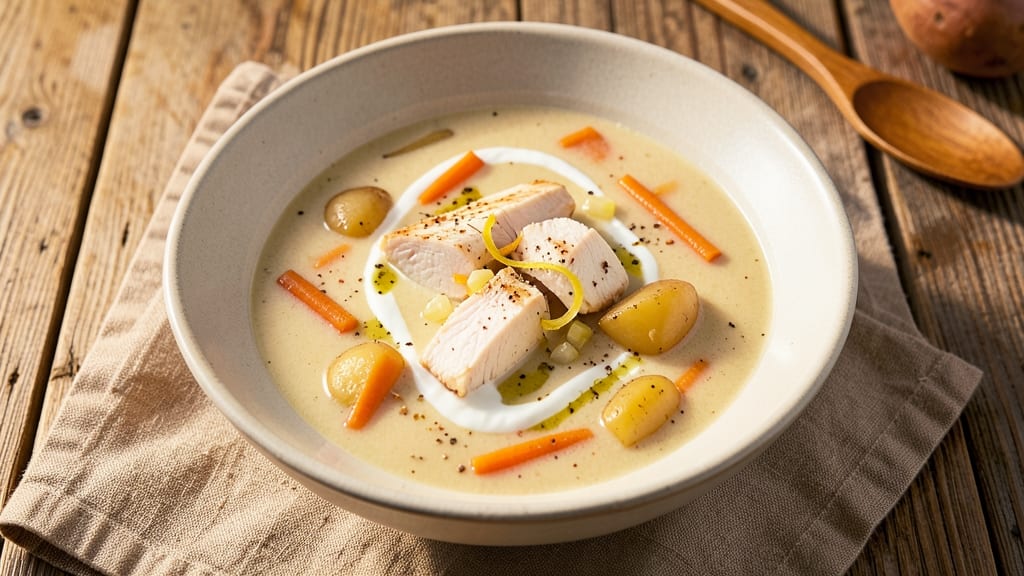
This bariatric potato soup recipe delivers all the comforting creaminess of classic potato soup—without the heavy calories or thick textures that challenge digestion. 💛 The secret lies in blending potatoes until silky smooth, using lean protein for satiety, and carefully controlling fat content while preserving that velvety mouthfeel everyone loves.
What makes this version truly special is how it transforms simple ingredients into a meal that feels indulgent yet supports your dietary needs.
Perfect for those following bariatric guidelines, this soup skips skins and heavy cream while still achieving that signature creamy consistency through smart techniques like vegetable broth reduction and a touch of Greek yogurt for richness.
The recipe emphasizes protein-packed additions like chicken breast or turkey, ensuring you stay full longer without compromising flavor. What you'll end up with is a smooth, comforting bowl that's gentle on digestion while delivering restaurant-quality satisfaction.
Each spoonful offers that familiar potato soup experience—creamy yet lightweight, with just enough seasoning to please your palate without overwhelming your system. The blending process creates an ultra-soft texture that's easy to swallow, while the careful balance of ingredients delivers both nutrition and comfort.
This is the kind of meal that proves healthy eating can still feel indulgent.
Ideal for meal prep or immediate enjoyment, this soup reheats beautifully while maintaining its smooth texture. Serve with a sprinkle of fresh herbs for visual appeal and a side of whole-grain crackers for added fiber. The portion control makes it perfect for bariatric diets without sacrificing the flavors you crave.
Ingredients for bariatric potato soup
Simple ingredients that blend into velvety comfort—perfect for bariatric-friendly eating.
| Ingredient | Amount | Notes |
|---|---|---|
| Russet Potatoes 🥔 | 2 lb | Peeled, cubed small for blending |
| Low-Sodium Chicken Broth 🍲 | 4 cups | Homemade or high-quality store-bought |
| Nonfat Greek Yogurt 🥛 | ½ cup | Plain, for creaminess without fat |
| Boneless Skinless Chicken Breast 🍗 | 1 lb | Diced small for protein boost |
| Carrots 🥕 | 1 ½ cups | Diced small, no skins |
| Yellow Onion 🧅 | 1 whole | Diced fine, no skins |
| Celery Stalks 🧄 | 3 whole | Diced fine, no leaves |
| Garlic Cloves 🧄 | 3 cloves | Minced for subtle flavor |
| Fresh Thyme Leaves 🌿 | ¼ cup | Or 1 tbsp dried thyme |
| Bay Leaves 🌿 | 2 whole | Removed before blending |
| Salt 🧂 | ½ tsp | Diamond Crystal preferred |
| Black Pepper 🌶️ | ¼ tsp | Freshly ground for best flavor |
| Olive Oil 🫒 | 1 tbsp | For sautéing vegetables |
| Fresh Parsley 🌿 | ⅛ cup | Chopped for garnish |
The potatoes are the star here, but don't skimp on the chicken breast—it's what makes this soup filling without the calories. Grab boneless, skinless cuts from the butcher section or pre-cut packages at Trader Joe's for convenience. The Greek yogurt is non-negotiable for creaminess—nonfat keeps it light, but full-fat works too if you're not strict on calories. For the broth, homemade is ideal, but Pacific Foods or Imagine brands are solid store-bought options with less sodium. Look for organic carrots and celery at Whole Foods if you want to splurge—they're sweeter and more vibrant, which translates to better flavor.
No fresh thyme? Dried works at one-third the amount, but fresh is worth hunting down at your local Latin market—it's brighter and more aromatic. Running low on chicken? Turkey breast swaps one-to-one, or white beans add fiber if you're vegetarian. The onion and celery can be swapped for leeks if you prefer milder flavor—just use the same amount. Need to skip the parsley? Fresh dill works too, but parsley's bright green color makes it perfect for garnish. For extra protein, add a handful of cooked quinoa—it blends right in without changing the texture.
This soup tastes even better the next day—reheat gently on the stove or microwave until just warm. Keeps for 4-5 days in the fridge, but freezes beautifully for 3 months if you make a double batch. Store in glass containers for best flavor retention, and always cover with a thin layer of broth before sealing to prevent a skin from forming. Portion into single-serving containers for easy grab-and-go meals—perfect for bariatric meal prep when you're on the go.
Why You'll Love This Recipe
- Foolproof Simplicity: I swear by this recipe because it’s the kind of meal that doesn’t demand perfection—just a knife, a pot, and 15 minutes of chopping. The chicken shreds itself after simmering, and the carrots soften effortlessly, so you’re not stuck peeling or dicing anything complicated.
- Creamy Without Guilt: Honestly, the nonfat Greek yogurt is my secret weapon here. It makes this soup velvety smooth without a hint of heaviness—no one would guess it’s bariatric-friendly. The carrots add natural sweetness, balancing the richness perfectly.
- Meal Prep Magic: Between us, this is the soup I make on Sundays when I need to feed the family for days. It reheats beautifully, and the flavors actually deepened after sitting overnight. My kids grab it straight from the fridge for school lunches—no complaints.
- Budget-Friendly Protein: The chicken breast stretches thin but packs a punch, and Russets are the cheapest potatoes at the store. I’ve made this for under $2 a serving, and it still feels like a restaurant-quality meal. That’s the kind of value I live for.
Step-by-step instructions for bariatric potato soup
Here's how to make a rich, protein-packed soup that's gentle on digestion yet satisfyingly creamy.
🍳 Step 1: Sauté the Aromatic Vegetable Base
Heat the 1 tablespoon olive oil in a large pot over medium heat. Add the diced yellow onion, carrots, and celery stalks, stirring frequently for 5-6 minutes until the vegetables soften and the onion becomes translucent. You'll notice the carrots release their natural sweetness and the celery adds a subtle crunch.
Add the minced garlic cloves and cook for another 30 seconds until fragrant. Here's the thing—don't let the garlic brown or it'll turn bitter. Immediately add the fresh thyme leaves and bay leaves, stirring to combine. This aromatic base forms the flavor foundation for your entire soup.
🔥 Step 2: Cook the Chicken and Potatoes Together
Increase heat to medium-high and add the diced boneless skinless chicken breast and cubed russet potatoes. Stir everything together and pour in the 4 cups low-sodium chicken broth. Bring to a gentle boil, then reduce heat to low-medium and let it simmer uncovered for 15-18 minutes until the chicken is fully cooked and the potatoes are tender.
You'll know the chicken is done when it flakes easily with a fork and the potatoes pierce cleanly with a knife. The soup should have a rich, savory aroma at this point. If you notice the liquid reduces too quickly, add a splash of water to maintain the proper consistency.
🥘 Step 3: Blend for Silky Smooth Texture
Remove the bay leaves and transfer half the soup mixture to a blender. I like to use an immersion blender for convenience, but a countertop blender works too. Blend until completely smooth, about 30-45 seconds. The texture should be velvety with no visible chunks—this is what makes it so satisfying yet easy to digest.
Return the blended soup to the pot and stir in the remaining unblended portion. This creates a beautiful marbled effect with creamy pockets throughout. Season with the 0.5 teaspoon salt and 0.25 teaspoon black pepper, adjusting to taste. The soup should be flavorful but not overly salty—this is especially important for bariatric diets.
🍲 Step 4: Add Creaminess Without Heavy Cream
Reduce heat to low and stir in the 0.5 cup nonfat Greek yogurt until fully incorporated. This is the secret to achieving that creamy texture without the heavy calories. The yogurt will blend smoothly, creating a luxurious mouthfeel while keeping the soup light. Let the soup simmer gently for another 5 minutes to allow all the flavors to meld together.
Here's where it gets fun—taste the soup and adjust seasoning if needed. The Greek yogurt adds a subtle tang that balances the sweetness of the carrots and potatoes. If you want extra richness, you could add a splash of broth and blend again, but the yogurt alone should give you that perfect creamy consistency.
🍽️ Step 5: Finish and Serve Warm
Remove from heat and let the soup rest for 5 minutes to allow the flavors to settle. Ladle into bowls and garnish with the chopped fresh parsley. The parsley adds a fresh, bright note that cuts through the richness. Serve immediately while warm, as the texture is best when freshly made.
This soup is perfect for bariatric diets because it's packed with protein from the chicken and Greek yogurt, fiber from the vegetables, and complex carbs from the potatoes—all while being gentle on digestion. The creamy texture comes from the yogurt rather than heavy cream, making it both satisfying and nutritious.
Pro Tips For Making Bariatric Potato Soup
- Parboil Potatoes First: I learned this the hard way—skipping the parboil means your Russets turn to mush before they even get creamy. Cut them into ½-inch cubes, boil in salted water for 5 minutes, then drain. This keeps their shape and cuts cooking time later by half.
- Shred Chicken Cold: Hot chicken shreds like wet cardboard. After cooking the breast, let it cool for 10 minutes, then shred with two forks—no blender needed. Cold chicken separates cleanly and blends better into the soup without making it gluey.
- Temper the Yogurt: Dumping cold Greek yogurt into hot broth curdles it faster than you can say "smooth soup." Mix a spoonful of warm broth into the yogurt first, then stir it into the pot. Your future self will thank you when the soup stays silky.
- Simmer, Don’t Boil: This isn’t the prettiest method, but it’s the tastiest. Keep the soup at a gentle bubble—just enough to see tiny ripples—so the potatoes absorb flavor instead of turning to paste. Low heat also prevents the broth from turning cloudy.
Storing and reheating this recipe
Refrigerator Storage
Let your bariatric potato soup cool to room temperature (about 30-45 minutes) before transferring to airtight containers. I prefer glass Pyrex containers with snap-on lids—they distribute heat evenly and prevent odors from seeping in. Store in the refrigerator at 40°F or below for up to 4-5 days.
The Greek yogurt and blended texture actually improve overnight, deepening the flavor profile while keeping it smooth and easy to digest. 💛
Freezer-Friendly Tips
For long-term storage, portion the soup into quart-sized freezer bags or glass containers with 1-inch headspace to prevent expansion cracks. Freeze for up to 3 months—the texture remains velvety when reheated properly.
I like to label each container with the date and portion size (about 1 cup per serving) for easy tracking. Place containers flat in the freezer to save space and thaw faster.
Stovetop Reheating
My preferred method is stovetop reheating because it preserves the smooth texture. Transfer the desired portion to a pot and heat over low-medium heat for 8-10 minutes, stirring occasionally. Add 1-2 tablespoons of broth or water if the soup thickens too much during reheating.
The gentle heat prevents the Greek yogurt from curdling, which can happen with microwave reheating. Always bring to an internal temperature of 165°F to ensure safety.
Microwave Safety
For quick reheating, use the microwave on 50% power in 1-minute intervals, stirring between each interval. Cover with a microwave-safe lid or damp paper towel to prevent skin formation. Start with 2 minutes total and check consistency—add a splash of broth if needed.
Avoid high power settings, as they can cause the yogurt to separate or the soup to become grainy. This method works best for single servings when you're short on time.
Portion Control
This soup is perfect for bariatric portion control—each 1-cup serving contains about 150-180 calories and 15g protein. Use single-serving containers (like Rubbermaid TakeAlong containers) for easy grab-and-go meals. Mark each container with your portion size to avoid overeating.
The smooth texture makes it satisfying in smaller portions, which is ideal for weight management after bariatric surgery. Store extras in the fridge for up to 5 days for consistent meal prep.
Texture Preservation
To maintain the silky texture when reheating, avoid boiling the soup. The Greek yogurt can break down at high temperatures, making the soup grainy. If you notice any separation after reheating, simply stir in 1 teaspoon of cold Greek yogurt to restore smoothness.
For extra insurance, add a pinch of xanthan gum (just ¼ teaspoon) when reheating—it helps stabilize the blend without altering flavor. The result is always that restaurant-quality creaminess you crave. ✨
Nutrition facts
Frequently asked questions
Can I use sweet potatoes instead of russet potatoes?
Yes, but with a few adjustments! Sweet potatoes add natural sweetness that pairs beautifully with the savory broth. Use 1.5 pounds (instead of 2) since they're denser, and reduce the carrots to 1 cup to balance flavors. For a lighter texture, blend the sweet potatoes until completely smooth—this prevents any graininess from their natural starch. The soup will have a slightly orange hue and a subtle caramelized depth when reheated.
How do I make this soup thicker without adding calories?
Try these bariatric-friendly thickening tricks: First, simmer the soup uncovered for 5-10 extra minutes to reduce the broth naturally. For instant thickening, stir in 1 teaspoon of cornstarch mixed with 1 tablespoon cold water per cup of soup, then heat gently until smooth. Another option is to blend in ¼ cup cooked white beans—they add fiber and protein while boosting thickness without fat. Avoid heavy cream or flour-based roux, which add unnecessary calories.
Can I substitute the chicken with another protein?
For a vegetarian option, use ½ cup cooked white beans or ½ cup silken tofu (blended smooth) per serving. For meat lovers, try turkey breast (same amount) or lean ground beef (93% lean)—just reduce to ½ pound to keep it light. The key is maintaining the 15g protein per serving target. Always dice proteins into small pieces for even cooking and blending.
Why does my soup get watery when reheating?
This happens when the starches break down during storage. To fix it, stir in 1 teaspoon of cold Greek yogurt or ½ teaspoon of xanthan gum while reheating. For prevention, always cool the soup completely before refrigerating and store it in shallow containers (no deeper than 2 inches) to maintain texture. If reheating on the stove, use low heat and stir frequently—high heat causes the yogurt to separate and the soup to thin out.
Can I make this soup in an Instant Pot?
Yes! Sauté the vegetables for 3 minutes on "Sauté" mode, then add all ingredients except the Greek yogurt. Seal the lid and cook on High Pressure for 8 minutes, followed by a 10-minute natural release. Remove the bay leaves, blend half the soup, then stir in the yogurt. The Instant Pot version cooks 30% faster but requires careful monitoring to avoid over-blending (which can make the soup gluey). For best results, use the "Soup" setting if available.