
Soups & Stews
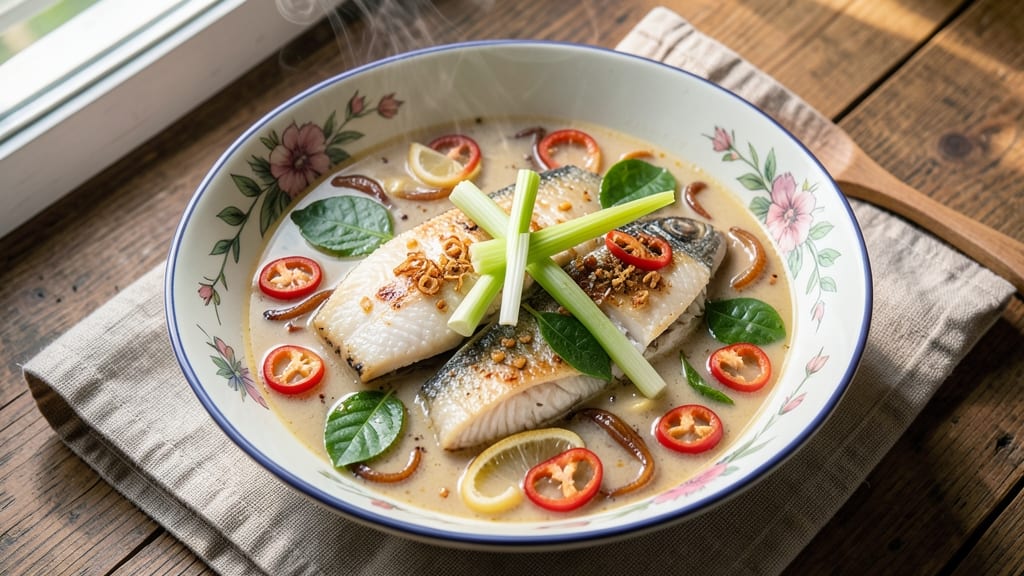
This basa fish soup recipe delivers a fragrant, aromatic broth packed with silky fish and traditional Southeast Asian flavors. 🌟 The secret lies in slow-simmering lemongrass, ginger, and aromatic spices that infuse the broth with deep, complex notes while keeping the delicate basa fish tender and flaky.
Unlike many quick soups, this recipe builds flavor through careful preparation—starting with a fragrant base of lemongrass, galangal, and kaffir lime leaves, then gently poaching the fish to preserve its natural sweetness. The result is a comforting, restaurant-quality soup that’s both elegant and approachable.
What makes this basa fish soup special is the balance of textures: silky fish, tender vegetables, and a velvety broth that coats every spoonful. The aromatics create an inviting scent that fills your kitchen, while the subtle heat from chili adds just the right kick.
Perfect for chilly evenings or as a healing meal, this dish brings warmth and comfort to the table.
Whether you're serving it as a light lunch or a comforting dinner, this recipe scales beautifully and can be customized with your favorite herbs or vegetables. Let’s create a bowl of pure, fragrant goodness that feels like a hug in a soup.
Ingredients for basa fish soup
Aromatic base meets delicate fish in this restaurant-quality basa fish soup.
| Ingredient | Amount | Notes |
|---|---|---|
| Basa Fish Fillets 🐟 | 1 ½ lb | Fresh, skinless, cut into 4 pieces |
| Lemongrass Stalks 🌿 | 3 whole | Bruised, bottom 3 inches only |
| Galangal Root 🌿 | 3 oz | Peeled, sliced thin (or substitute ginger) |
| Kaffir Lime Leaves 🍋 | 4 whole | Bruised, stems removed |
| Fresh Ginger Root 🧄 | 2 oz | Peeled, sliced into thin coins |
| Shallots 🧅 | 4 whole | Peeled, thinly sliced |
| Garlic Cloves 🧄 | 6 cloves | Peeled, lightly crushed |
| Bird's Eye Chilies 🌶️ | 2 whole | Seeds removed for mild heat |
| Vegetable Oil 🫒 | ½ cup | High smoke point preferred |
| Fish Stock 💧 | 4 cups | Homemade or quality store-bought |
| Coconut Milk 🥥 | 1 cup | Full-fat, unsweetened |
| Bamboo Shoots 🌱 | 1 cup | Canned, drained and rinsed |
| Baby Bok Choy 🥬 | 2 whole | Trimmed, halved lengthwise |
| Fresh Thai Basil Leaves 🌿 | ¼ cup | Packed, stems removed |
| Lime Wedges 🍋 | 2 whole | For serving, seeds removed |
| Salt 🧂 | 1 ½ tsp | Diamond Crystal preferred |
| White Peppercorns 🌶️ | ½ tsp | Crushed lightly |
The aromatic trio—lemongrass, galangal, and kaffir lime leaves—is non-negotiable for authentic flavor. Asian markets are your best bet for fresh galangal and kaffir lime leaves, though galangal can be substituted with ginger (though the flavor won't be identical). Look for stalks of lemongrass that are vibrant green and firm to the touch—avoid any that feel woody or dried out. For galangal, choose pieces that are firm and have a fresh, citrusy aroma. If you can't find fresh galangal, ginger works in a pinch but won't replicate the exact flavor profile. The fish stock should be rich and flavorful—homemade is ideal, but Pacific Foods or Knorr brands are solid store-bought options.
No fresh galangal? Ginger works but reduces authenticity. For basil, Thai basil is essential—regular basil won't give that anise-like kick. The bamboo shoots can be swapped for water chestnuts or bean sprouts if needed. Chilies can be adjusted to taste: remove seeds for mild heat or keep them for extra spice. The coconut milk should be full-fat for creaminess—Thai Kitchen brand is widely available and reliable. If you prefer a lighter broth, reduce the coconut milk to ½ cup and add extra fish stock. For a vegetarian version, substitute the fish with extra mushrooms or tofu, but the broth will lose its signature depth.
This soup tastes even better the next day as flavors meld. Store the broth and fish separately in airtight containers for up to 3 days in the fridge. The fish will stay tender if kept cold, while the broth can be reheated gently. For longer storage, freeze the broth for up to 3 months—just thaw overnight in the fridge before reheating. The aromatics like lemongrass and galangal can be prepped ahead and stored in the freezer for up to 2 weeks. When ready to cook, simply toss them into the pot with the oil. The lime wedges should be added fresh at serving time to prevent browning and maintain brightness.
Why You'll Love This Recipe
- No-Fuss Freshness: I swear by this soup because it’s the only one where I can chop lemongrass and galangal while chatting—no precision required. The stalks bruise easily? No problem. Toss them in whole, and the broth still sings with that bright, citrusy punch.
- Umami Bomb: That first sip? The basa fish melts into the broth, soaking up the ginger and galangal like a sponge, while the kaffir lime leaves drop in these little herbal whispers. It’s not just flavor—it’s a full-body experience, the kind that makes you set down your spoon mid-bite.
- Weeknight Workhorse: Between us, this is my go-to when I’m too tired to plan. Double the batch on Sunday, and I’ve got lunch for three days—no sad leftovers here. The broth actually improves overnight, and reheating it? Just add a splash of water. Magic.
- Budget Win: Basa fillets are the unsung hero of affordable seafood, and this recipe treats them like royalty without breaking the bank. Galangal and kaffir lime leaves might sound fancy, but a few dollars at the Asian market stretches to multiple bowls. My wallet and my taste buds high-five every time.
Step-by-step instructions for basa fish soup
Transform fresh basa into a fragrant, silky soup with this aromatic broth technique.
🍳 Step 1: Build the Aromatic Base
Heat the 0.5 cup vegetable oil in a large pot over medium heat. Add the 4 whole shallots, 6 cloves garlic, and 2 oz fresh ginger root, cooking for 3-4 minutes until the shallots turn translucent and the garlic just begins to color. Here's where the magic happens - add the 3 oz galangal root, 3 whole lemongrass stalks, and 4 whole kaffir lime leaves all at once.
Stir constantly for 2 minutes until the galangal and lemongrass release their oils and the mixture becomes deeply fragrant. The galangal should soften slightly but not brown - this is your signal to move quickly. Add the 2 whole bird's eye chilies (seeds removed) and cook for another 30 seconds just to infuse their heat. The pot should smell like a Thai market at this point - that's exactly what you want.
🥘 Step 2: Develop the Fragrant Broth
Pour in the 4 cups fish stock and bring to a gentle simmer over medium-low heat. The broth should bubble softly but not boil vigorously - you want to extract all those aromatic flavors without cooking them dry. Add the 1 cup bamboo shoots and 2 whole baby bok choy (halved lengthwise) to the pot and simmer uncovered for 8-10 minutes until the bamboo shoots are tender and the bok choy wilts slightly.
This is where patience pays off. The broth should reduce slightly, becoming more concentrated with flavor. If it starts to smell too strong, crack the lid slightly to release excess steam. Taste the broth now - it should be aromatic with bright ginger, lemongrass, and galangal notes, but not yet fully seasoned. That comes next.
🍳 Step 3: Finish the Broth and Prepare the Fish
Reduce heat to low and stir in the 1 cup coconut milk and 1.5 tsp salt. The coconut milk should gently steam into the broth, creating a velvety texture without curdling. Add the 0.5 tsp crushed white peppercorns and taste again - you're looking for a balance of salty, spicy, and aromatic. Adjust salt if needed, but remember the fish will add more flavor.
While the broth finishes, prepare the 1.5 lb basa fish fillets by patting them completely dry with paper towels. Season lightly with just a pinch of salt - we want the fish to absorb the broth's flavors rather than overpower them. Keep the fish at room temperature while you complete the soup.
🔥 Step 4: Cook the Fish to Perfection
When the broth is simmering gently, carefully add the prepared basa fillets. The fish should be placed in a single layer - if your pot is crowded, work in batches to avoid overcooking. Simmer gently for 8-10 minutes until the fish is just cooked through. You'll know it's perfect when it flakes easily with a fork but still holds together - the flesh should be opaque and slightly translucent at the edges.
Here's the critical moment: the fish should cook in the broth, not boil. If you see any bubbles forming around the fish, reduce the heat immediately. The broth should remain at a gentle simmer, not a rolling boil. This ensures the fish stays moist and absorbs the aromatic flavors without breaking apart.
🍽️ Step 5: Finish and Serve
Remove the pot from heat and carefully transfer the fish to a serving platter. Ladle the hot broth over the fish, then stir in the 0.25 cup fresh Thai basil leaves. The basil should wilt slightly but remain vibrant in color. Let the soup sit off the heat for 2-3 minutes to allow the flavors to meld completely.
Divide the soup among bowls, placing one fish fillet in each. Garnish with the 2 whole lime wedges and serve immediately with steamed jasmine rice. The soup should be fragrant with lemongrass and ginger, the broth silky from the coconut milk, and the fish perfectly tender with just a hint of flakiness. Each spoonful should deliver that perfect balance of heat, aroma, and silky texture.
Pro Tips For Making Basa Fish Soup
- Bruise, Don’t Slice, Lemongrass: I learned this the hard way—chopping lemongrass finely makes the soup taste like perfume samples instead of food. Use the flat side of your knife to gently smash the stalks (about 3-4 inches) before adding them to the pot. This releases the oils without turning the broth into a floral punch.
- Start with Cold Water: Basa fish turns rubbery if dropped into boiling water. Fill your pot with cold water, then bring it to a gentle simmer before adding the fish. This keeps the fillets tender and lets the aromatics (ginger, galangal) infuse properly without shocking the fish.
- Skip the Crowding: I used to toss all the fish in at once, and half the batch ended up gray and sad. Work in batches—add 2-3 fillets at a time, spaced apart in the pot, so they cook evenly. Overcrowding steams the fish instead of searing it.
- Toast the Ginger First: Sounds weird, but it works: Lightly char a thin slice of fresh ginger in a dry pan for 30 seconds before adding it to the broth. The smoky edge cuts through the herbal notes of galangal and kaffir lime, giving the soup depth without extra seasoning. (Yes, even if you’re impatient like me.)
Dietary considerations for these flavors
Gluten-Free Adaptations
This basa fish soup is naturally gluten-free, but always double-check your ingredients. The fish stock is the critical component—opt for certified gluten-free brands like Pacific Foods or Imagine to avoid cross-contamination. Their stocks are made in dedicated facilities, ensuring safety for those with celiac disease or gluten sensitivity. 🌱
Low-Carb & Keto Options
For a keto-friendly version, skip the bamboo shoots and bok choy—they add carbs—and focus on the fish, coconut milk, and aromatics. The broth itself is already low-carb, with only 3g net carbs per serving when made without vegetables.
Add cauliflower rice instead of jasmine rice to keep it under 5g net carbs per serving. The rich coconut milk and fish provide ample fat to satisfy keto macros.
Dairy-Free & Vegan Substitutes
To make this soup vegan, replace the basa fish with extra-firm tofu (pressed and cubed) or mushrooms (shiitake or oyster). For the coconut milk, use a full-fat dairy-free alternative like So Delicious coconut milk.
The broth will still be fragrant, though the texture will differ—mushrooms add umami while tofu mimics the fish’s protein. Garnish with extra Thai basil and lime for brightness. 🌿
Allergen-Friendly Swaps
If you’re avoiding seafood, try chicken breast or shrimp instead of basa—both cook quickly in broth. For nut allergies, ensure your coconut milk is processed in a nut-free facility (brands like Thai Kitchen often specify this).
If shellfish is a concern, swap bamboo shoots for zucchini or celery to maintain texture without cross-contamination risks. Always label your substitutions clearly for guests with dietary restrictions.
Protein Adjustments
Need more protein? Add 1 cup cooked jasmine rice or ½ cup quinoa per serving to bulk up the dish. For a higher-protein vegan option, include edamame or lentils in the broth.
If using shrimp or scallops, reduce cooking time to 3-4 minutes—they cook faster than basa. The broth’s richness will complement any protein, so don’t hesitate to customize! 💪
Child-Friendly Versions
For picky eaters, remove the bird’s eye chilies and galangal (substitute extra ginger for mildness). Blend the soup lightly for a smoother texture, or serve the fish and broth separately. Kids often prefer smaller portions, so use ½ lb basa per serving and double the broth.
A sprinkle of crushed white pepper adds flavor without heat, and lime wedges can be served on the side for a tangy touch. 🧒
Nutrition facts
Frequently asked questions
Can I substitute basa fish with another type of fish?
Yes, but choose carefully! For best results, use mild white fish like cod, halibut, or mahi-mahi—they hold up well in broth. Avoid flaky fish like snapper or flounder, which may break apart. If using shrimp, reduce cooking time to 3-4 minutes since they cook faster. The broth's richness will complement any protein, but basa's firm texture is ideal for this recipe.
How do I make this soup less spicy?
Remove the seeds from the bird's eye chilies before cooking to reduce heat, or omit them entirely. For a milder version, substitute with 1-2 slices of red chili or a pinch of mild paprika. Taste the broth before adding the fish—if it's still too spicy, stir in 1 tsp sugar or a splash of coconut milk to balance the flavors.
Can I prepare the broth ahead of time?
The broth tastes even better the next day. Simmer all aromatics (lemongrass, galangal, kaffir lime leaves) with stock for 20-30 minutes, then strain and store in an airtight container in the fridge for up to 3 days or freeze for 3 months. When ready to serve, reheat the broth gently, add coconut milk, and cook the fish fresh for maximum tenderness.
What if I can't find galangal or kaffal lime leaves?
No problem! For galangal, use extra ginger (2 oz total), though the flavor won't be identical. Skip kaffir lime leaves and add 1 tsp lime zest or ½ tsp lime juice to the broth. The soup will still be delicious—just slightly less complex. Asian markets often carry these ingredients fresh, but most recipes adapt well with substitutions.
How do I know when the fish is fully cooked?
The fish is done when it reaches 145°F internally and flakes easily with a fork. The edges should turn opaque, and the flesh should separate cleanly but still hold together. Overcooking makes it dry, so remove it from the broth just as it reaches this point—it continues cooking slightly off the heat. For extra assurance, use a meat thermometer.