
Soups & Stews
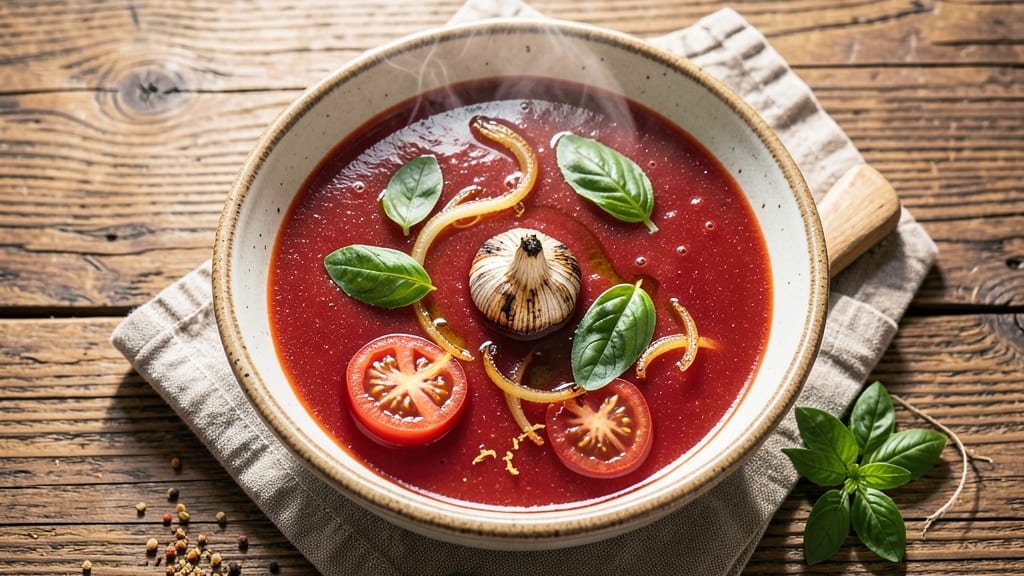
This basic tomato soup recipe with fresh tomatoes transforms summer's garden bounty into a velvety, brightly acidic-sweet bowl of comfort in just 30 minutes. The secret lies in roasting the tomatoes first—this caramelizes their natural sugars while mellowing their acidity, creating depth that no canned tomatoes can match.
I developed this version after years of testing, balancing simplicity with restaurant-quality results that never require fancy ingredients. What sets this recipe apart is the two-stage cooking process: first roasting the tomatoes until blistered and fragrant, then simmering them with aromatic vegetables and herbs to build complex flavor.
The immersion blender technique preserves texture while creating that signature silky smoothness. No heavy cream here—just a touch of olive oil and a splash of broth to round out the acidity without overpowering the tomatoes' natural brightness.
By the time you're done, you'll have a soup that's naturally sweet from the roasted tomatoes, tangy from the fresh basil, and richly aromatic from the caramelized onions. The texture is velvety but still has subtle texture from the roasted tomato skins, making it more interesting than store-bought versions.
This is the kind of soup that tastes like summer even when it's snowing outside. The best part? It's infinitely adaptable. Add a swirl of cream for extra richness, top with crispy croutons for texture, or keep it completely vegetarian with just olive oil and herbs.
The recipe scales perfectly for crowds or meal prep, and leftovers actually improve overnight as the flavors meld. Let's get cooking!
Ingredients for basic tomato soup recipe with fresh tomatoes
Fresh tomatoes, aromatic vegetables, and simple seasonings create this velvety tomato soup with bright acid-sweet balance.
| Ingredient | Amount | Notes |
|---|---|---|
| Fresh Tomatoes 🍅 | 2 ½ lb | Roma or vine-ripened varieties preferred |
| Yellow Onion 🧅 | 1 whole | Sweet or yellow preferred |
| Garlic Cloves 🧄 | 4 cloves | Freshly minced for aromatic depth |
| Extra-Virgin Olive Oil 🫒 | ½ cup | High-quality, fruity variety |
| Vegetable Broth 💧 | 2 cups | Low-sodium preferred for balance |
| Fresh Basil Leaves 🌿 | ¼ cup | Packed, stems removed |
| Salt 🧂 | 1 ½ tsp | Diamond Crystal preferred |
| Black Pepper 🌶️ | ½ tsp | Freshly ground for warmth |
| Sugar 🍚 | 1 tsp | Adjusts natural tomato sweetness |
| Red Wine Vinegar 🍷 | 1 tbsp | Balances acidity naturally |
| Fresh Thyme Leaves 🍃 | ¼ tsp | Dried works at one-third amount |
| Cream (Optional) 🥛 | ¼ cup | Heavy cream for richness |
| Bread Croutons 🍞 | ½ cup | Store-bought or homemade |
The tomatoes are the foundation—Roma or vine-ripened varieties develop the most concentrated flavor when roasted. Look for bright red, firm tomatoes with minimal bruising at Whole Foods or your local farmers' market. If using heirloom tomatoes, remove seeds and excess liquid after roasting to prevent wateriness. Yellow onions add natural sweetness when caramelized, so don't skip this step. For garlic, freshly minced cloves release more aroma than pre-minced varieties. The extra-virgin olive oil should have a peppery finish—California Olive Ranch or Colavita are reliable brands for consistent quality.
No fresh basil? Dried basil at one-third the amount works, though fresh provides that signature bright note. The red wine vinegar is crucial for balancing the tomatoes' natural acidity—substitute lemon juice if unavailable, but reduce to 1 teaspoon to avoid overpowering. For the vegetable broth, low-sodium versions like Pacific Foods or Imagine prevent the soup from tasting flat. Want extra depth? Roast the garlic cloves whole with the tomatoes, then squeeze out the paste after roasting. The optional cream should be full-fat for best texture—Trader Joe's or Organic Valley are excellent choices.
This soup tastes even better the next day as flavors meld. Store in an airtight container for up to 5 days in the refrigerator. For freezing, portion into individual containers—thaw overnight in the fridge to preserve texture. The roasted tomato skins add subtle texture, but if you prefer ultra-smooth, strain through a fine-mesh sieve. Croutons should be toasted just before serving to maintain crispness. For meal prep, double the batch and freeze half—perfect for quick lunches when summer's bounty fades.
Why You'll Love This Recipe
- I swear by this trick: just halve the tomatoes and toss them in skins and all. The broth does all the work while you sip your wine—no peeling, no seeds, no mess. My lazy Sundays love me for this.
- No-Chop Night: I swear by this trick: just halve the tomatoes and toss them in skins and all. The broth does all the work while you sip your wine—no peeling, no seeds, no mess. My lazy Sundays love me for this.
- Garlic Bomb Depth: That first hit of raw garlic in the oil? Chef’s kiss. But here’s the magic: it mellows into this warm, savory backbone that makes store-bought cans taste sad by comparison. Even my garlic-averse partner asks for seconds.
- Leftover Goldmine: Make a double batch—it’s the only soup that tastes better the next day. Freeze half for when you’re too tired to cook, and reheat it straight from frozen. (Yes, even on a Tuesday night.)
Step-by-step instructions for bright tomato soup with fresh tomatoes
Here's how to transform garden-fresh tomatoes into a velvety soup with balanced sweetness and acidity.
Sauté Aromatics Until Deeply Fragrant
Heat the 0.5 cup extra-virgin olive oil in a large Dutch oven over medium heat. Add the 1 whole yellow onion, sliced into ¼-inch half-moons, and cook for 5-6 minutes until softened and translucent. The onions should release their sweetness without browning—this prevents bitterness in the final soup.
Add the 4 cloves garlic cloves, freshly minced, along with the 0.25 tsp fresh thyme leaves. Stir for 30 seconds until the garlic becomes fragrant but doesn't brown. This step builds the aromatic foundation—don't rush it, or the garlic will turn bitter. The thyme adds subtle earthiness that complements the tomatoes beautifully.
Roast Tomatoes for Concentrated Sweetness
Cut the 2.5 lb fresh tomatoes into 1-inch chunks, removing any stems or bruised areas. Add them to the pot with the onions and garlic, stirring to coat in the oil. Increase heat to medium-high and cook for 8-10 minutes, stirring occasionally, until the tomatoes begin to soften and release their juices.
Here's the key: reduce heat to medium-low and let the tomatoes roast for 10-12 minutes until they develop a slight char in spots. This caramelization deepens the tomato flavor and balances the acidity. Stir occasionally to prevent burning—you're aiming for a rich, jammy texture rather than a burnt one.
Simmer with Broth and Seasonings
Pour in the 2 cups vegetable broth and add the 1.5 tsp salt, 0.5 tsp black pepper, 1 tsp sugar, and 1 tbsp red wine vinegar. Bring to a gentle boil, then reduce heat to low and let it simmer uncovered for 15-20 minutes. The soup should reduce slightly, intensifying the flavors while maintaining a smooth texture.
Taste and adjust seasoning—this is where the magic happens. The sugar should mellow the natural acidity of the tomatoes, while the vinegar adds a bright tang. If the soup tastes too acidic, add another ½ tsp sugar; if it's too flat, add ½ tsp salt. The goal is a harmonious balance between sweet, sour, and savory.
Blend to Silky Perfection
Use an immersion blender to purée the soup directly in the pot until completely smooth. For a perfectly silky texture, blend in 30-second bursts, scraping the sides between each to ensure no chunks remain. If you prefer a rustic texture, skip blending and simply mash the tomatoes with a potato masher.
Strain the soup through a fine-mesh sieve into a clean pot if you prefer an ultra-smooth consistency. This removes any tomato skins or seeds, resulting in a velvety finish. Return the soup to low heat and stir in the 0.25 cup fresh basil leaves. Let it steep for 5 minutes to infuse the bright, herbal notes before removing the leaves with a slotted spoon.
Finish and Serve with Crisp Toppings
For a richer version, stir in the 0.25 cup cream off the heat—this adds a luxurious mouthfeel without overpowering the tomato flavor. If you prefer a lighter soup, skip the cream entirely. The soup should be warm but not boiling when you add it to avoid curdling.
Ladle the soup into bowls and top with the 0.5 cup bread croutons for texture contrast. The warm croutons will soften slightly in the hot soup, creating a satisfying crunch. Serve immediately while the soup is steaming hot—this is when the flavors are most vibrant and the textures are at their best.
Pro Tips For Making Basic Tomato Soup Recipe With Fresh Tomatoes
- Char the Onion First: I learned this the hard way—skipping the caramelization step leaves your soup tasting flat. Cook the diced onion in olive oil over medium-low heat for 10-12 minutes, stirring occasionally, until it’s deep golden and sweet-smelling. The extra effort makes the difference between "meh" and "wow."
- Blanch Tomatoes Before Chopping: Drop whole tomatoes into boiling water for 30 seconds, then ice bath. The skins slide off effortlessly, and you avoid that bitter, seedy pulp that ruins texture. (Yes, even if you're impatient like me—this saves cleanup time.)
- Simmer, Don’t Boil: After adding broth, keep the heat at a gentle simmer (tiny bubbles, occasional swirls). Boiling turns tomatoes mushy and scalds the garlic flavor right out. Let it cook uncovered for 20-25 minutes—patience here guarantees smoothness.
- Salt the Broth Early: Season the vegetable broth before adding it to the tomatoes. The salt penetrates deeper this way, and you won’t end up with a bland base that needs desperate seasoning later. Taste halfway through cooking—adjust now, not at the end.
Creative variations of basic tomato soup recipe with fresh tomatoes
Summer Garden Twist
Swap Roma tomatoes for heirloom varieties like Brandywine or Cherokee Purple for deeper, sweeter flavor. Their thicker skins hold up beautifully during roasting, creating a jammy texture. I like to use a mix of red and yellow heirlooms—the yellows add natural sweetness that balances the acidity of reds.
For extra summer vibrancy, stir in 1 tbsp finely chopped fresh mint with the basil at the end. 🌿
Creamy Coconut Version
Make this soup rich and dairy-free by replacing the optional cream with ½ cup full-fat coconut milk. Simmer the coconut milk with the soup for 5 minutes off the heat to let it meld, then stir in 1 tsp maple syrup to enhance the natural sweetness.
This works especially well with yellow tomatoes or when you want a lighter, tropical-inspired twist. The coconut adds a subtle creaminess without overpowering the tomato flavor.
Spicy Italian Style
Add 1 tsp red pepper flakes when sautéing the onions for a Calabrian-inspired version. For extra heat, stir in 1 tbsp Calabrian chili paste (like Bronto Pastes) with the vinegar.
Top with grated Pecorino Romano and toasted pine nuts for a restaurant-quality finish. This version pairs perfectly with garlic bread and a crisp Pinot Grigio. 🌶️
Smoky Grilled Tomato
For a BBQ-inspired twist, grill the tomatoes whole over medium-high heat for 8-10 minutes until charred in spots. Peel and chop them before adding to the pot. Stir in 1 tbsp smoked paprika and ½ tsp liquid smoke (like Traeger's) during the simmering stage.
Finish with crumbled feta and chopped cilantro for a smoky-sweet contrast that works surprisingly well with the tangy soup.
Herb-Infused Variations
Experiment with different fresh herbs at the end: 1 tbsp chopped tarragon adds an anise-like note, while 1 tsp chopped rosemary brings earthy depth. For a Provençal twist, stir in 1 tsp herbes de Provence with the thyme.
Each herb changes the flavor profile dramatically—taste before serving to adjust seasoning. I find basil remains the classic choice, but tarragon is my secret favorite for a sophisticated touch.
Make-Ahead Adaptations
For meal prep, double the recipe and freeze half. When reheating, add 1-2 tablespoons of water or broth to prevent thickening. The flavors actually improve overnight, especially if you roast extra tomatoes and freeze them separately—just add them straight from the freezer to the pot when reheating.
This is my go-to strategy for weeknight dinners—just thaw and reheat while you prepare the rest of the meal. ⏰
Nutrition facts
Frequently asked questions
Why do you roast the tomatoes instead of just cooking them?
Roasting deepens the tomato flavor by caramelizing natural sugars and mellowing acidity—this creates a jammy, concentrated taste you can't get from raw tomatoes. The slight char adds complexity, balancing the bright freshness. This step transforms ordinary tomatoes into restaurant-quality flavor in just 10-12 minutes of low heat.
Can I use canned tomatoes instead of fresh?
You can, but the texture and flavor won't be the same. Canned tomatoes lack the concentrated sweetness from roasting, and their skins often create a grainier texture. If you must use canned, choose whole peeled tomatoes (not diced), remove seeds, and simmer them 15 minutes longer to develop flavor. Add 1 extra teaspoon sugar to compensate for the lower natural sweetness.
How do I adjust this for fewer/more servings?
This recipe scales perfectly! For 2 servings, halve all ingredients except the olive oil (use ¼ cup). For 6+ servings, double everything—just increase simmering time by 5-10 minutes to let flavors meld. The key is maintaining the same ratio of tomatoes to broth (about 3:2) to keep the balance of sweetness and acidity.
What if my soup tastes too acidic?
Add ½ teaspoon sugar at a time while tasting—this mellows the acidity without overpowering. For a more natural approach, stir in 1 tablespoon honey or maple syrup instead. If the vinegar taste dominates, reduce it by ½ teaspoon next time. The roasted tomatoes should naturally balance acidity, but freshness varies by season.
Can I make this soup ahead of time?
Let it cool completely, then store in an airtight container for up to 5 days in the fridge. For freezing, portion into containers and freeze for 3 months. Reheat gently on low heat, adding 1-2 tablespoons water or broth if it thickens. Flavors actually improve overnight as the tomatoes' natural sweetness develops further.