
Soups & Stews
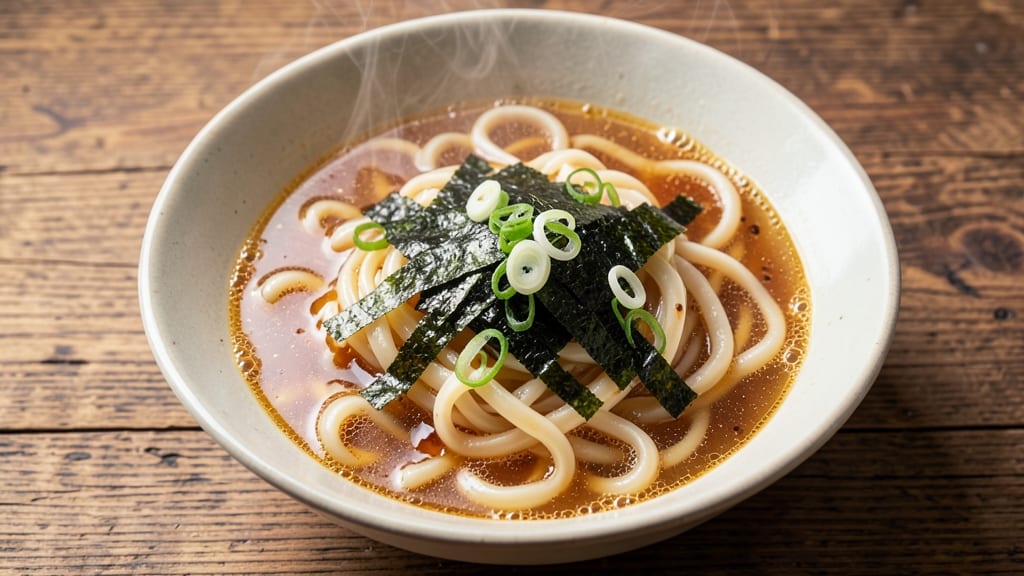
This basic udon soup recipe delivers the comforting, silky perfection of Japanese home cooking in under 30 minutes. The secret lies in balancing umami-rich dashi broth with tender udon noodles and simple toppings that transform a simple meal into something truly special.
I've perfected this version after countless bowls—each one better than the last—with techniques that ensure rich flavor without complexity.
What sets this udon apart is the broth: a simple yet profound combination of dashi stock, soy sauce, and a touch of mirin that creates depth without overpowering. The udon noodles cook perfectly in the simmering liquid, absorbing just enough of that savory broth to become irresistibly tender.
For beginners, this recipe breaks down every step—from preparing the broth to adjusting seasoning—so you'll achieve restaurant-quality results at home.
By the time you're done, you'll have a steaming bowl of udon with silky noodles floating in a fragrant, well-balanced broth. The toppings—green onions, nori strips, and soft tofu—add layers of texture and freshness that make every slurp satisfying.
This is the kind of comforting meal that feels like a warm hug on a chilly evening.
The beauty of this recipe is its versatility. Use it as a light lunch or a hearty dinner, and adjust toppings based on what you have on hand. Whether you're serving a family or treating yourself, this udon soup delivers the perfect balance of simplicity and sophistication. Let's get cooking!
Ingredients for basic udon soup
Pantry staples meet Japanese comfort—just 12 ingredients for silky udon perfection.
| Ingredient | Amount | Notes |
|---|---|---|
| Dashi Stock 🍜 | 4 cups | Homemade or high-quality store-bought |
| Udon Noodles 🍜 | 8 oz | Fresh or dried, cut into 4-inch pieces |
| Light Soy Sauce 🧂 | 2 tbsp | Kikkoman preferred for authentic flavor |
| Mirin 🍶 | 1 tbsp | Sweet rice wine for balance |
| Green Onions 🧅 | 3 whole | Thinly sliced for garnish |
| Dried Nori Strips 🍣 | 4 pieces | Cut into thin strips |
| Soft Tofu 🧀 | ½ lb | Silken tofu, cubed |
| Sesame Oil 🫒 | ½ tsp | For finishing aroma |
| Garlic Cloves 🧄 | 2 cloves | Minced for subtle depth |
| Ginger 🌿 | 1 tsp | Freshly grated |
| Salt 🧂 | ½ tsp | Adjust to taste |
| Vegetable Oil 🫒 | 1 tbsp | For sautéing aromatics |
The dashi stock is non-negotiable here. Homemade wins—simmer kombu and bonito flakes in water for that unmatched umami—but Hondashi or Kikkoman brands work in a pinch. Fresh udon noodles are ideal (they cook in minutes), but dried works too—just soak them first. For the tofu, silken is key—it dissolves beautifully into the broth without turning mushy. I always grab mine at Asian grocery stores like H Mart or 99 Ranch, where they keep it fresh in the refrigerated section.
No mirin? Substitute 1 tbsp sugar plus 1 tbsp dry sake—it’s not identical, but close enough. Dried nori too expensive? Toasted sesame seeds add crunch and a similar nutty note. The garlic and ginger are optional but worth it—they add layers of warmth that elevate the broth. If you’re short on time, skip the sautéing and just add them directly to the simmering broth. And for the soy sauce, light (usukuchi) is essential—dark soy sauce will make your broth too bitter. Trust me on this.
Broth reheats beautifully—just warm it gently on the stove. The udon noodles? Cook fresh for the best texture, but if you’re prepping ahead, store the broth separately and cook the noodles just before serving. Tofu keeps for 5 days in the fridge, wrapped tightly in a damp towel. And if you’re making a big batch, freeze the broth in ice cube trays—thaw and use as needed for quick bowls.
Why You'll Love This Recipe
- Five-Ingredient Magic: I swear by this combo—dashi, mirin, and soy sauce balance perfectly without overpowering. No fancy techniques, just simmering and savoring that umami punch.
- Weeknight Crutch: Boil water, add noodles, pour broth. Done. Even on days when I’ve forgotten to meal prep, this comes together faster than takeout.
- Leftovers That Shine: The broth thickens beautifully after reheating—better the next day, honestly. I’ll make a double batch just to enjoy it twice.
- Budget Comfort: Udon noodles stretch for meals, and dashi stock lasts for weeks. A few dollars’ worth of ingredients feeds my whole family without breaking the bank.
Step-by-step instructions for basic udon soup
Here's how to craft a silky udon broth with perfectly balanced flavors.
Prepare the Udon Noodles
Bring a large pot of water to a rolling boil and add the 8 oz udon noodles. Cook according to package instructions for fresh udon—typically 3-4 minutes—until they float to the surface and are tender but still slightly firm to the bite. For dried udon, follow the package directions, which usually require 8-10 minutes of cooking time.
Drain the noodles immediately and rinse briefly under cold water to stop the cooking process. This prevents them from becoming mushy when added back to the broth. Drain thoroughly and set aside in a colander. The noodles should be hot but not steaming when you're ready to assemble the soup.
Build the Silky Broth Base
In a separate pot, heat the 1 tablespoon vegetable oil over medium heat. Add the 2 minced garlic cloves and 1 teaspoon freshly grated ginger, cooking for 30 seconds until fragrant. You'll smell the aromatic oils release—this is your cue that the aromatics are ready.
Pour in the 4 cups dashi stock and bring to a gentle simmer. Add the 2 tablespoons light soy sauce and 1 tablespoon mirin, stirring to combine. The broth should be clear with a subtle golden hue from the soy sauce. Taste and adjust seasoning with the 0.5 teaspoon salt if needed—this is your flavor foundation.
Add Tofu and Nori for Depth
Gently add the 0.5 lb cubed soft tofu to the simmering broth. The tofu should float near the surface—it's delicate and will cook through quickly. Simmer for 2-3 minutes until the tofu is heated through but still maintains its shape. Avoid boiling vigorously, as this can cause the broth to become cloudy.
Next, add the 4 pieces dried nori strips and let them warm through for 1 minute. The nori will soften slightly and infuse the broth with its oceanic umami. Remove the pot from heat and let the broth sit for 2 minutes to allow the flavors to meld together.
Assemble and Finish the Soup
Divide the cooked udon noodles evenly among 4 bowls. Ladle the hot broth over the noodles, ensuring each serving gets a generous portion of tofu and nori. The broth should cover the noodles completely, creating a comforting, steaming presentation.
Drizzle each bowl with 0.5 teaspoon sesame oil and garnish with thinly sliced green onions. The sesame oil adds a delicate nutty aroma that elevates the dish, while the green onions provide a fresh contrast. Serve immediately while the broth is hot and the noodles are tender.
Pro Tips For Making Basic Udon Soup
- Boil Stock First: I learned this the hard way—adding soy sauce and mirin to cold water makes the broth cloudy and dull. Heat your dashi stock to a simmer before tossing in the noodles, then add the seasonings. The broth will clear up and taste brighter, like it’s actually working with you.
- Salt the Water Lightly: Udon noodles are already salted, and throwing them into heavily salted water turns the broth into a sad, brackish mess. Just a pinch of salt in the pot (if your dashi isn’t already seasoned) is enough—you’re not making pasta here.
- Slice Green Onions Thin: Thick green onion chunks sink to the bottom and turn mushy. Give them a sharp angle cut (about 1/8-inch thick) so they float prettily and add freshness without disappearing into the broth. Bonus: They cook faster this way.
- Simmer, Don’t Boil: After adding noodles, keep the heat at a gentle simmer—no rolling boils. Udon turns to mush if it’s jostled around too much, and you’ll end up with a gluey, unsatisfying bowl. A low simmer keeps them tender but hold their shape.
Dietary considerations for this recipe
Gluten-Free Adaptations
Traditional udon noodles contain wheat, making them unsuitable for gluten-free diets. Swap them for shirataki noodles (made from konjac yam) or rice-based udon like U-Foods brand or Nongshim Shin Ramyun udon—both are certified gluten-free and hold up well in broth.
For extra heartiness, use gluten-free ramen noodles (like Nakamura brand) which have a similar texture when cooked properly. 💫
Vegetarian & Vegan Options
This recipe is already vegetarian-friendly, but for a fully vegan version, replace the dashi stock with vegan dashi (made from kombu and shiitake mushrooms) or Hondashi vegan dashi. Skip the tofu or use firm tofu for a meatier texture, and ensure your soy sauce is tamari (gluten-free soy sauce).
The mirin can be substituted with 1 tbsp sugar + 1 tbsp rice vinegar for a similar sweetness. 🌱
Low-Sodium Adjustments
Store-bought dashi and soy sauce often contain high sodium levels. Reduce the light soy sauce to 1 tablespoon and use low-sodium soy sauce if available.
For homemade dashi, simmer 2 cups water + 1 sheet kombu + 1 tbsp dried bonito flakes for 10 minutes, then strain—this cuts sodium by half. Add extra mirin or a pinch of white miso paste for umami without extra salt. Taste as you go! 🧂
Protein Swaps
Need more protein? Replace the tofu with chicken breast (cubed and poached in the broth) or shrimp (add in the last 2 minutes of cooking).
For a vegetarian boost, try tempeh (marinated in 1 tbsp soy sauce + 1 tsp sesame oil) or edamame (add shelled pods in the last 1 minute). Each swap adds depth—just adjust cooking times to avoid overcooking delicate proteins. 🍗
Dairy-Free & Allergen-Friendly
This recipe is naturally dairy-free, but if you're avoiding other allergens, double-check your dashi stock (some brands use fish-based ingredients). For egg-free versions, ensure your udon noodles don’t contain egg wash (most fresh udon do, but dried udon is typically safe).
Always verify labels—H Mart or 99 Ranch carry clearly marked allergen-free options. 🛡️
Nutrition facts
Frequently asked questions
Can I make this udon soup without dashi stock?
For a quick substitute, use 4 cups chicken or vegetable broth enriched with 1 teaspoon fish sauce or 1/2 teaspoon white miso paste for umami depth. If you have no broth, combine 4 cups water + 1 tbsp soy sauce + 1 tbsp Worcestershire sauce—it won't be traditional but will still be flavorful. The key is balancing saltiness with umami.
How do I prevent my udon noodles from getting mushy?
Rinse the cooked noodles briefly under cold water to stop the cooking process immediately after draining. Then drain them thoroughly in a colander for 1-2 minutes to remove excess moisture. Never let them sit in water or they'll re-absorb liquid and turn soggy. For extra insurance, cook them just until al dente (about 1 minute less than package instructions).
Can I prepare the broth ahead of time?
Yes! The broth keeps well for 3 days in the refrigerator or 3 months in the freezer. Store it in airtight containers, leaving 1 inch of headspace for expansion. When reheating, warm gently on low heat—never boil—to preserve clarity. For frozen broth, thaw overnight in the fridge and reheat slowly. The noodles are best cooked fresh, but you can par-cook them and reheat in the broth for 1-2 minutes.
What if my broth tastes too salty?
Start by tasting your broth before adding the tofu and nori. If it's too salty, dilute it with 1/4 cup hot water per cup of broth. For deeper flavor without salt, stir in 1 teaspoon mirin or 1/2 teaspoon white miso paste—both add umami. Avoid adding water after cooking, as it can make the broth watery. Adjust gradually and taste frequently.
Can I use instant udon noodles for this recipe?
Technically yes, but the texture won't be as satisfying. Instant udon contains preservatives that make them chewier and less delicate. For best results, use fresh or dried udon. If you must use instant, discard the seasoning packet (it's too salty) and cook the noodles separately in plain water for 2 minutes less than package instructions. They'll still work, but the experience won't match traditional udon.