
Soups & Stews
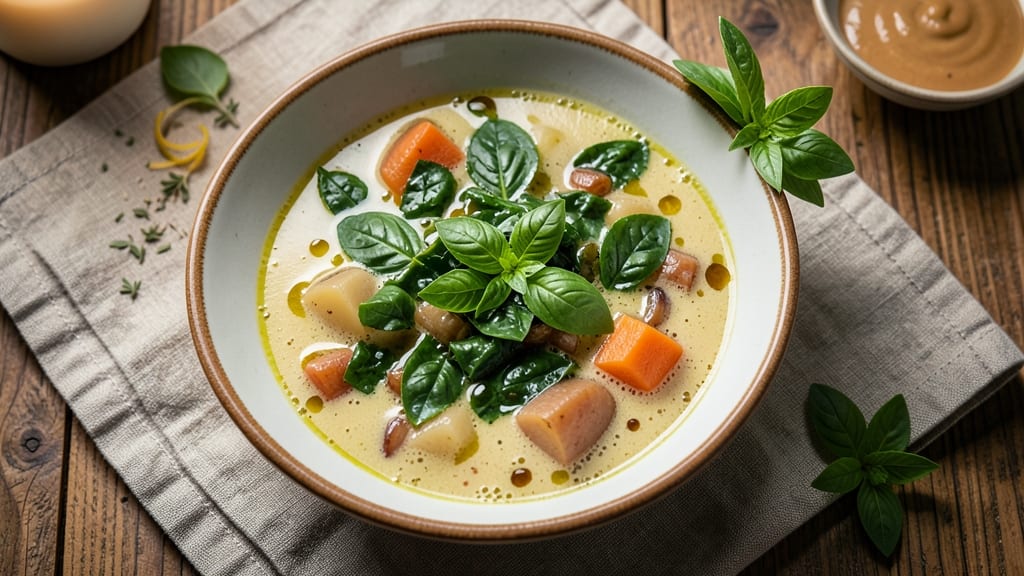
This vegetarian basil soup transforms simple ingredients into a velvety, herb-infused velouté that feels like a hug in a bowl. The secret lies in slow-simmered aromatics and fresh basil, blended just enough to create a silky texture without losing that bright, herbal essence.
I developed this recipe during a particularly chilly spring evening when I wanted something comforting yet light—no heavy cream, just plant-based richness that still feels indulgent.
The foundation starts with sautéed onions and garlic, which form the flavor base before being deglazed with white wine (or vegetable broth for a non-alcoholic version). Vegetable stock carries the depth, while potatoes or sweet potatoes add natural creaminess.
What sets this apart is the basil—added at the end so its vibrant flavor shines without wilting into oblivion. The result is a soup that’s both elegant and approachable, perfect for weeknight dinners or impressing guests.
By the time you taste that first spoonful, you’ll notice the balance: creamy yet bright, savory without being heavy, and infused with that unmistakable basil aroma that transports you to an Italian countryside table.
The texture is smooth but not overly refined—just enough body to coat your spoon, with a few visible herb flecks for visual appeal. This is the kind of soup that disappears quickly, leaving everyone asking for seconds.
Garnish with fresh basil leaves, a drizzle of olive oil, and a sprinkle of grated Parmesan (or nutritional yeast for a vegan option) to elevate it further. Serve with crusty bread to soak up every last drop, or enjoy it as-is for a meal that’s simple yet sophisticated.
Here’s how to make it—step by step, with all the details you need for success.
Ingredients for basil soup recipe vegetarian
Fresh basil, slow-cooked potatoes, and aromatic aromatics create this velvety vegetarian basil soup.
| Ingredient | Amount | Notes |
|---|---|---|
| Yellow Onion 🧅 | 1 whole | Medium size, finely chopped |
| Garlic Cloves 🧄 | 4 cloves | Peeled, minced finely |
| White Wine 🍷 | ½ cup | Dry variety, or sub broth |
| Vegetable Stock 💧 | 4 cups | Low-sodium preferred |
| Russet Potatoes 🥔 | 1 ½ lb | Peeled, cubed small |
| Sweet Potatoes 🍠 | 1 lb | Peeled, cubed small |
| Fresh Basil Leaves 🌿 | 1 cup | Packed, stems removed |
| Extra-Virgin Olive Oil 🫒 | ¼ cup | For sautéing |
| Salt 🧂 | 1 ½ tsp | Kosher or sea salt |
| Black Pepper 🌶️ | ½ tsp | Freshly ground |
| Fresh Lemon Juice 🍋 | 1 tbsp | Brightens flavor |
| Nutritional Yeast 🍞 | 2 tbsp | For vegan cheesy flavor |
The basil is non-negotiable here—farmers market basil has the most vibrant flavor, but grocery store containers work in a pinch. For the potatoes, Russet and sweet potatoes give you that perfect creamy texture, but sub all sweet potatoes if you prefer. The vegetable stock should be low-sodium—you'll be adding plenty of salt later. I always grab Trader Joe's vegetable stock for this recipe; it's rich without being overpowering. The white wine adds depth, but if you're avoiding alcohol, vegetable broth works just as well—just add a splash of lemon juice at the end for brightness.
No fresh basil? Dried basil at half the amount will work, but the flavor won't be the same. Sweet potatoes can be swapped for more Russets if that's what you have—just add an extra 1/4 cup vegetable stock since they're denser. The nutritional yeast gives that cheesy note without dairy, but white miso paste at 1 tsp adds umami if you're feeling adventurous. For the wine, any dry white like Sauvignon Blanc or Pinot Grigio works—whatever's open in your fridge. The key is to deglaze it properly so you get all those fond flavors.
This soup tastes even better the next day as the flavors meld. Store in an airtight container in the fridge for up to 5 days. For freezing, portion into 2-cup containers—it reheats beautifully and keeps for 3 months. I always make a double batch because it disappears so fast. Garnish with extra basil and a drizzle of olive oil right before serving—that's when it looks most impressive. The nutritional yeast can be toasted in a dry pan for 1-2 minutes for a nuttier flavor if you're feeling fancy.
Why You'll Love This Recipe
- One-Pot Magic: I swear by this recipe when I’m too tired to wash extra bowls—the potatoes soften in the stock while the onions caramelize right in the same pot. No straining, no fuss, just pure, creamy satisfaction with minimal cleanup.
- Wine-Infused Depth: That splash of white wine isn’t just for show—it cuts through the richness of the potatoes and amplifies the basil’s bright, herbal punch. Honestly, it’s the little details like this that make a simple soup feel like a restaurant-worthy dish.
- Lunchbox Hero: Between us, this soup is my go-to for meal prep. The texture holds up beautifully when reheated, and I’ll often pack it in a thermos for work—warm, flavorful, and way better than sad office salads.
- Budget Stretch: Russet potatoes and onion bulk buy cheap, and vegetable stock lasts forever. I make this twice in one week—once for dinner, once for leftovers—without breaking the bank. Plus, the garlic makes everything taste like a splurge.
Step-by-step instructions for herb-infused velouté
Here's how to create a velvety, basil-forward soup that's rich but never heavy.
Sauté the Aromatics Until Fragrant
Heat the 0.25 cup extra-virgin olive oil in a large pot over medium heat. Add the 1 whole yellow onion and cook for 5-6 minutes until soft and translucent, stirring occasionally. I like to press down gently with a wooden spoon to help it caramelize just slightly—this builds deeper flavor.
Add the 4 cloves minced garlic and cook for another 30 seconds until you can smell that sweet, pungent aroma. Be careful not to let it brown—garlic burns quickly and turns bitter. This step is the flavor foundation, so don't rush it. You want the garlic to be fragrant but still pale, not golden.
Deglaze with Wine and Add Potatoes
Pour in the 0.5 cup white wine and scrape up any browned bits from the bottom of the pot with a wooden spoon. This deglazing step captures all those concentrated flavors that would otherwise stick to the pan. Let the wine simmer for 2-3 minutes until it reduces by about half—you'll see it go from pale to slightly syrupy.
Add the 1.5 lb cubed russet potatoes and 1 lb cubed sweet potatoes, along with the 4 cups vegetable stock. Bring everything to a gentle boil, then reduce heat to medium-low and let it simmer uncovered for 20-25 minutes. You want the potatoes to soften completely but not fall apart—when you can pierce them easily with a fork, they're ready.
Blend Until Silky Smooth
Remove the pot from heat and let it cool slightly for 5 minutes—this prevents steam explosions when you blend. Use an immersion blender to purée the soup directly in the pot until completely smooth. If you prefer using a countertop blender, carefully transfer the hot soup in batches (it will be very hot), blend until smooth, and return to the pot.
Here's the thing—don't worry if it looks too thick at first. The soup will thin out as it cools. If it's still too thick after cooling, you can add a splash of hot water or vegetable stock to reach your desired consistency. The goal is a velvety texture that coats the back of a spoon.
Finish with Basil and Nutritional Yeast
Return the soup to medium heat and stir in the 1 cup fresh basil leaves and 2 tbsp nutritional yeast. Let it simmer gently for 3-4 minutes—just enough to wilt the basil and infuse the soup with its bright, herbal notes. Don't let it boil or the basil will turn bitter.
Season with 1.5 tsp salt and 0.5 tsp black pepper, then stir in the 1 tbsp fresh lemon juice. Taste and adjust the seasoning—you might need a little more salt to balance the acidity from the lemon. The nutritional yeast adds a cheesy, umami depth that makes this soup incredibly satisfying, even without dairy.
Serve Warm with Fresh Herbs
Ladle the soup into bowls and garnish with additional fresh basil leaves if you like. I serve it with a drizzle of olive oil and a sprinkle of black pepper for extra visual appeal. This soup tastes best served warm—it's creamy, herbaceous, and perfectly balanced between earthy sweet potatoes and bright basil.
For extra richness, you can stir in a splash of coconut milk or cashew cream just before serving, but the nutritional yeast already gives it a luxurious texture. The lemon juice keeps it from feeling too heavy, making this a light yet satisfying meal that's perfect for any time of year.
Pro Tips For Making Basil Soup Recipe Vegetarian
- SOFTEN POTATOES FIRST: Cut the Russets into even 1-inch chunks and boil them in salted water for 8-10 minutes before adding to the soup. This guarantees they’ll break down smoothly rather than turn to mush or stay stubbornly dense—no one wants potato lumps in their basil cream.
- SWEEP THE POT: After deglazing with white wine, use a wooden spoon to scrape up every last bit of browned onion and garlic from the pot. Those bits pack flavor, and skipping this step means you’re leaving good taste on the bottom—like ignoring the last bite of cake.
- SALT THE STOCK: Taste your vegetable stock before adding it to the pot and adjust the salt if needed. Store-bought stock is often bland, and you’ll regret it later if your soup tastes like it’s missing something—especially when the basil can’t cover up the flatness.
- SAVE THE BASIL: Stir in fresh basil leaves at the very end, just to warm through for 30 seconds, then remove them with a slotted spoon. This keeps their bright flavor intact instead of turning them bitter—because no one wants soup that tastes like they’re eating a potted plant.
Health benefits of this dish
Herb-Rich Antioxidant Boost
Fresh basil is packed with antioxidants like vitamin A and C, which help combat oxidative stress and support your immune system. A 1-cup serving of this soup provides about 30% of your daily vitamin K, crucial for blood clotting and bone health.
The lemon juice adds extra vitamin C, enhancing absorption of iron from plant-based ingredients. 💛
Plant-Based Protein Power
While not a complete protein, this soup combines potatoes and nutritional yeast to create a satisfying plant-based profile. The nutritional yeast provides 8 grams of protein per 2 tablespoons and contains all nine essential amino acids when paired with whole grains.
Sweet potatoes add fiber and complex carbs for sustained energy.
Digestive-Friendly Fiber
The combination of russet and sweet potatoes delivers 6-8 grams of fiber per serving, supporting healthy digestion and gut bacteria. The natural sweetness of sweet potatoes also helps satisfy cravings without refined sugars. I always notice lighter digestion after eating this comforting soup.
Heart-Healthy Fat Profile
Extra-virgin olive oil provides monounsaturated fats that support cardiovascular health, while the vegetable stock keeps sodium in check when using low-sodium versions. The basil's eugenol compound has been shown to help lower blood pressure naturally. This makes it a smart choice for heart-conscious eaters.
Low-Calorie Comfort
At around 250-300 calories per serving, this soup delivers rich flavor without heavy calories. The lemon juice adds brightness that prevents the dish from feeling too dense. I make double batches because it's so satisfying yet guilt-free—perfect for meal prep when you want comfort without excess.
Anti-Inflammatory Benefits
The combination of basil's rosmarinic acid and sweet potatoes' beta-carotene creates an anti-inflammatory powerhouse. Studies show these compounds work synergistically to reduce chronic inflammation. The garlic in the base adds allicin, another potent anti-inflammatory compound that boosts circulation. 🌱
Nutrition facts
Frequently asked questions
Can I make this basil soup without wine?
Simply replace the 0.5 cup white wine with 0.5 cup vegetable broth and add an extra 1 tbsp lemon juice at the end to brighten the flavors. The acidity helps balance the earthiness of the potatoes while keeping the soup vibrant. This non-alcoholic version works just as well for kids or those avoiding alcohol.
What if I don't have an immersion blender?
No problem! Transfer the hot soup to a countertop blender in batches (be careful—it will be very hot). Blend until completely smooth, then return to the pot. For extra safety, let the soup cool slightly first, but don't let it sit too long or it may thicken too much. A regular blender works perfectly for achieving that velvety texture.
How can I make this soup vegan?
Swap the nutritional yeast for 2 tbsp white miso paste or omit it entirely for a simpler version. Use coconut milk instead of olive oil for sautéing (about 0.25 cup full-fat coconut milk) to add richness. The miso adds umami depth without dairy, while coconut milk gives a naturally creamy texture. Garnish with toasted pumpkin seeds for extra protein.
Can I use frozen basil instead of fresh?
Frozen basil works in a pinch, but fresh is ideal for maximum flavor. If using frozen, thaw it first and drain excess water. Use 1.5 cups frozen basil (about 1 cup packed fresh equivalent) and simmer it for 5-6 minutes to infuse the soup. Fresh basil adds a brighter, more vibrant taste that frozen basil can't quite match, but it's still delicious.
Why does my basil soup taste bitter?
Bitter flavors usually come from overcooking the basil or using too much garlic. Simmer the basil for only 3-4 minutes—any longer turns it bitter. For garlic, remove it from heat as soon as it's fragrant (about 30 seconds). If the soup tastes bitter, balance it with more lemon juice or a pinch of sugar. Taste as you go to adjust seasoning!