
Soups & Stews
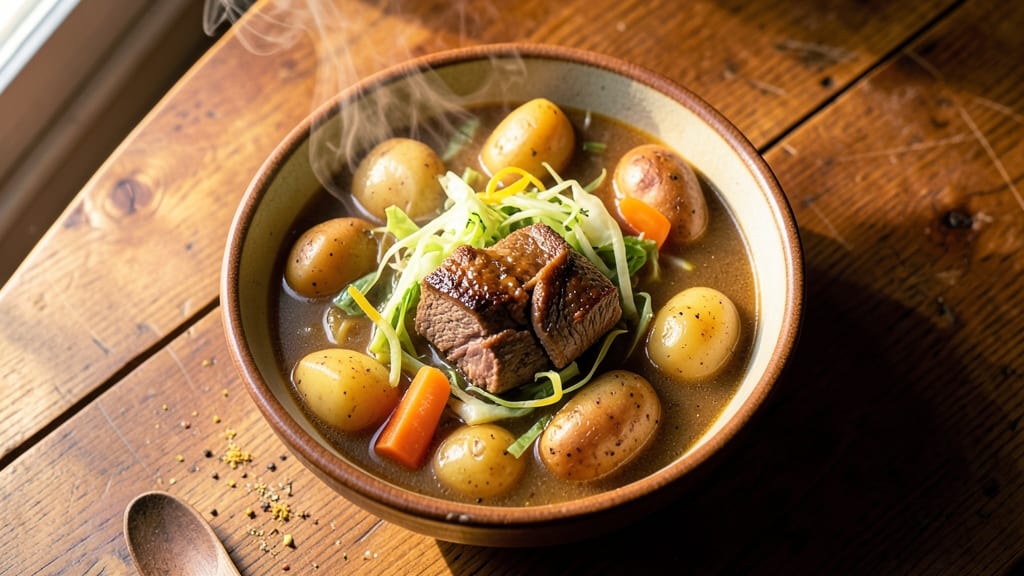
This beef and cabbage soup recipe with potatoes delivers the kind of hearty, comforting meal that warms you from the inside out—perfect for chilly evenings when you crave a one-pot wonder. 💛 The secret lies in slow-simmered beef that practically melts in your mouth, tender cabbage with just the right bite, and potatoes that soak up all the rich, savory broth.
What sets this recipe apart is the layered flavor approach: caramelized onions and garlic form the base, while herbs and spices infuse the broth as it simmers for hours.
The result is a soup that tastes even better the next day, with flavors deepening as they meld together. No fancy techniques required—just patience and a few simple ingredients.
By the time you’re done, you’ll have a steaming bowl of restaurant-quality stew with tender beef chunks, perfectly cooked potatoes, and cabbage that’s just crisp enough. The aroma alone will have everyone gathering around the table, and the first spoonful delivers that satisfying, homey taste you’ve been craving.
The best part? This soup scales effortlessly—double the ingredients for a crowd or halve it for leftovers. Whether you’re using a stovetop, slow cooker, or Instant Pot, the method stays the same. Let’s get cooking!
Ingredients for beef and cabbage soup recipe with potatoes
Pantry staples and a few fresh veggies—this hearty stew comes together with minimal effort.
| Ingredient | Amount | Notes |
|---|---|---|
| Chuck Roast 🥩 | 2 lb | Cut into 1.5-inch cubes |
| Yellow Onions 🧅 | 2 whole | Thinly sliced for caramelizing |
| Garlic Cloves 🧄 | 4 cloves | Minced for aromatic base |
| Russet Potatoes 🥔 | 2 lb | Cut into 1-inch chunks |
| Green Cabbage 🥬 | 1 lb | Shredded, core removed |
| Carrots 🥕 | 4 whole | Cut into 1-inch pieces |
| Beef Broth 💧 | 6 cups | Low-sodium preferred |
| Tomato Paste 🍅 | ½ cup | For depth of flavor |
| Dried Thyme 🌿 | 1 tsp | Or 1 tbsp fresh |
| Bay Leaves 🌿 | 2 whole | Remove before serving |
| Salt 🧂 | 1 ½ tsp | Adjust to taste |
| Black Pepper 🌶️ | ½ tsp | Freshly ground |
| Olive Oil 🫒 | 2 tbsp | For sautéing onions |
The chuck roast is your secret weapon here—it's budget-friendly and breaks down beautifully when slow-cooked. Look for well-marbled cuts at your local butcher or grab pre-cut chuck roast from the meat section at Costco or Walmart. If you're using a whole roast, ask the butcher to cube it for you—saves time. The potatoes should be firm and free of sprouts; Russets or Yukon Golds work best. For the cabbage, skip the pre-shredded bags—they get soggy fast. Grab a whole head and shred it yourself; it's fresher and holds up better during cooking. Carrots can be any variety, but orange or purple ones add nice color contrast to the soup.
No beef broth? Chicken broth plus a splash of soy sauce works in a pinch, but the flavor won't be quite as rich. Fresh thyme is ideal, but dried is fine at one-third the amount. If tomato paste feels like overkill, a can of crushed tomatoes works too—just use 14 oz and skip the extra paste. The onions and garlic are non-negotiable for that deep, sweet base. If you're short on time, microwave the onions for 2 minutes first to jumpstart the caramelization. And trust me on the bay leaves—they disappear during cooking but add incredible depth to the broth.
This soup tastes even better the next day—make a double batch if you can. Store leftovers in the fridge for 4-5 days or freeze for 3 months. I like to portion mine into containers so I can grab a bowl straight from the freezer on busy mornings. The cabbage will soften further when reheated, so don't overcook it initially. For extra richness, stir in a spoonful of sour cream or vegan crème fraîche before serving. Leftovers reheat beautifully—just add a splash of broth or water to loosen things up.
Why You'll Love This Recipe
- One-Pot Wonder: I swear by this recipe when I’m too tired to wash a million dishes. Chuck roast and potatoes simmer together—no extra pots, no fuss—just dump, stir, and let the slow cooker or pot do the work while I sip wine (or tea, no judgment).
- Garlic Bomb Flavor: Between us, that minced garlic and onions caramelizing in the beef broth? It’s the kind of aroma that makes my whole kitchen smell like a cozy restaurant. The cabbage adds that perfect crunch, and the potatoes soak up all the rich, savory goodness.
- Leftover Goldmine: This soup only gets better the next day. I’ll be real: I often make double batches because reheating it turns the beef impossibly tender and the flavors meld into something even more addictive. Packed lunches? Done. Emergency dinner? Also done.
- Budget-Friendly Feast: Chuck roast on sale? Cabbage lasts forever? This is the recipe that stretches every dollar without sacrificing taste. It feeds four for under $15, and honestly, that’s a win I’ll take any day—especially when my kids still ask for seconds.
Step-by-step instructions for beef and cabbage soup with potatoes
Here's how to build this comforting stew from scratch—rich, hearty, and full of homey flavors.
🍳 Step 1: Build the Flavor Base with Onions and Garlic
Heat the 2 tablespoons olive oil in a large Dutch oven over medium heat. Add the 2 whole yellow onions, sliced thinly, and cook them for 8-10 minutes until they turn a beautiful golden brown and caramelize. This step is where the soup gets its deep, sweet foundation—don't rush it.
When the onions are nearly done, add the 4 cloves garlic, minced, and cook for another 30 seconds until fragrant. The garlic should just start to turn golden—if it browns too quickly, lower the heat slightly. Here's the thing—this aromatic base will carry through the entire soup, so take your time getting it right.
🍳 Step 2: Brown the Chuck Roast for Maximum Flavor
Push the onions and garlic to one side of the pot and add the 2 lb chuck roast, cut into 1.5-inch cubes, to the empty space. Let the beef brown undisturbed for 3-4 minutes until you get a deep, rich crust on all sides. This browning creates the Maillard reaction that gives your soup that restaurant-quality depth.
Once the beef is browned on one side, give it a stir and repeat on the other sides. You might need to work in batches if your pot isn't large enough—just set the first batch aside and brown the rest. Don't worry about overcrowding the pot at this stage; we'll be adding more ingredients soon.
🥘 Step 3: Layer in Vegetables and Broth
Return all the beef to the pot and sprinkle with 1 teaspoon dried thyme, 1.5 teaspoons salt, and 0.5 teaspoon black pepper. Stir to coat the meat evenly with the spices. Then add the 0.5 cup tomato paste, stirring to combine with the onions and garlic.
Pour in the 6 cups beef broth and bring everything to a gentle boil. Add the 2 lb russet potatoes, cut into 1-inch chunks, the 4 whole carrots, cut into 1-inch pieces, and the 1 lb green cabbage, shredded. Stir gently to combine, then add the 2 whole bay leaves. This is where the magic starts to happen—the flavors melding together in the broth.
🔥 Step 4: Simmer Until Everything is Tender
Reduce the heat to low and let the soup simmer gently, uncovered, for 1 hour to 1 hour 15 minutes. You're looking for the beef to become fork-tender and the potatoes to be easily pierced with a fork. Stir occasionally, but not too often—this helps develop the rich, deep flavors.
Partway through cooking, around the 45-minute mark, give the soup a taste and adjust the seasoning if needed. You might need to add a bit more salt or pepper, depending on your broth. The cabbage should be just starting to soften, and the carrots should be tender but still holding their shape. If the soup looks too thin, you can remove the bay leaves and let it simmer uncovered for another 10-15 minutes to thicken slightly.
🍽️ Step 5: Finish and Serve Warm
Once everything is tender, remove the bay leaves and give the soup one final taste. Adjust the seasoning one last time if needed. Ladle the soup into bowls, making sure each serving gets a good portion of the beef and vegetables. The broth should be rich and flavorful, with the beef falling apart easily.
Serve immediately with crusty bread on the side to soak up every last drop of that hearty broth. This soup tastes even better the next day, so if you have leftovers, store them in the refrigerator for up to 3 days or freeze for up to 3 months. The flavors will continue to develop and deepen as it sits, making it even more comforting.
Pro Tips For Making Beef And Cabbage Soup Recipe With Potatoes
- Sear the Chuck Roast Hard: I learned this the hard way—skipping a deep sear means flavorless beef. Use a Dutch oven on high heat with 2 tablespoons of oil, and let that roast sit undisturbed for 5 solid minutes until it’s got a proper crust. Yes, it’ll look scary, but that’s how you lock in taste.
- Cut Potatoes Uniformly: Big chunks stay tough; tiny bits turn to mush. Aim for 1.5-inch pieces—thick enough to hold shape but small enough to cook through in the same time as the beef. Russets break down fast, so don’t overcrowd the pot later.
- Salt the Potatoes Early: Toss the potatoes with 1 teaspoon of salt when you add them to the pot. It’s not just about flavor—it jumpstarts the starch release, making them tender faster. (Your future self will thank you when they’re creamy instead of gluey.)
- Shred Cabbage Last: Whole cabbage wedges cook faster and stay crispier than pre-shredded. Add them in the final 15 minutes, cut-side down, so they soften just enough to blend with the broth without turning to sludge. —I know, I know, but trust the process.
Wine and beer pairings for this recipe
Red Wine Classics
For this hearty beef and cabbage soup, I always reach for a medium-bodied red wine that can stand up to the rich beef flavors while complementing the cabbage's earthiness.
A Chianti Classico from Tuscany is my go-to—its bright acidity and cherry notes cut through the soup's richness beautifully. 🍷 If you prefer something smoother, try a Pinot Noir from Oregon; its lighter body won't overpower the dish but still enhances the beef's savory depth.
Avoid heavy, tannic wines like Cabernet Sauvignon—they'll clash with the soup's tender vegetables. Instead, opt for wines aged 3-5 years, as they've softened enough to pair harmoniously with the dish's comforting flavors.
I like to chill my wine slightly (about 50°F) before serving to refresh the palate between bites.
Crisp White Options
If you're serving this soup during warmer months or prefer white wine, a dry Riesling from Germany is a fantastic choice. Its slight sweetness balances the soup's acidity, while its citrus notes echo the cabbage's freshness.
I particularly enjoy Dr. Loosen Blue Slate Riesling—it's crisp enough to cleanse your palate between spoonfuls. 🍷
For a lighter option, try a Sauvignon Blanc from New Zealand. The wine's herbal notes complement the thyme and bay leaves in the soup, while its zesty acidity brightens the dish. Look for wines with 12-13% alcohol—they're lively enough to stand up to the soup's heartiness without overwhelming it.
Beer Pairings
A dark lager like Sam Adams Boston Lager is my top beer pairing—its malty sweetness and caramel notes mirror the soup's caramelized onions and beef.
The beer's slight bitterness also helps balance the richness, making each bite more refreshing. 🍺 For a craft option, try a Belgian Dubbel like Westmalle Dubbel; its complex flavors of dark fruit and spice add an unexpected depth to the soup.
Avoid overly hoppy IPAs or stouts—they'll compete with the soup's robust flavors. Instead, opt for beers with 4-6% ABV and a moderate carbonation to complement the soup's texture without overpowering it. I like to serve beer slightly chilled (around 45°F) to enhance its maltiness.
Non-Alcoholic Choices
For a refreshing non-alcoholic option, try sparkling apple cider like Martinelli's.
Its crisp acidity and subtle sweetness echo the cabbage's freshness while cleansing the palate between spoonfuls. 🍎 For something more savory, ginger beer (like Brew Dr. Brown's) adds a spicy kick that pairs surprisingly well with the soup's hearty flavors.
Herbal teas like hibiscus iced tea (chilled) also work beautifully—their tartness balances the soup's richness. Brew a strong batch, chill it thoroughly, and serve over ice for the best experience. The tea's floral notes complement the thyme in the soup, creating a harmonious flavor profile.
Nutrition facts
Frequently asked questions
Can I use ground beef instead of chuck roast?
Yes, but the texture will be different. Ground beef will make the soup thicker and more like a thick stew. For best results, use 1 lb of 80/20 ground beef and brown it thoroughly before adding other ingredients. The cooking time will also be shorter (45-50 minutes) since ground beef cooks faster than chuck roast.
How do I make this soup in a slow cooker?
Follow the same steps for browning the beef and caramelizing onions, then transfer everything to your slow cooker. Add the broth, potatoes, carrots, cabbage, and spices, then cook on low for 6-7 hours or high for 3-4 hours. The slow cooker's gentle heat will make the beef incredibly tender with minimal effort.
Why is my cabbage still crunchy after cooking?
Cabbage needs more time to soften than you might think. If it's still crunchy after 1 hour 15 minutes, add it only in the last 20-30 minutes of cooking. For extra tenderness, cut it into smaller pieces (about 1-inch) before adding to the pot.
Can I make this soup dairy-free?
This recipe is naturally dairy-free. For extra richness, stir in 1 tablespoon olive oil or 2 tablespoons nutritional yeast when serving. The potatoes and cabbage will absorb these additions beautifully, adding a creamy texture without dairy.
What's the best way to reheat leftovers?
Gently reheat on the stove over medium-low heat, stirring occasionally, until warmed through (5-7 minutes). For microwave reheating, cover with a damp paper towel and heat in 1-minute intervals, stirring between each. Add a splash of broth or water if the soup seems too thick.