
Soups & Stews
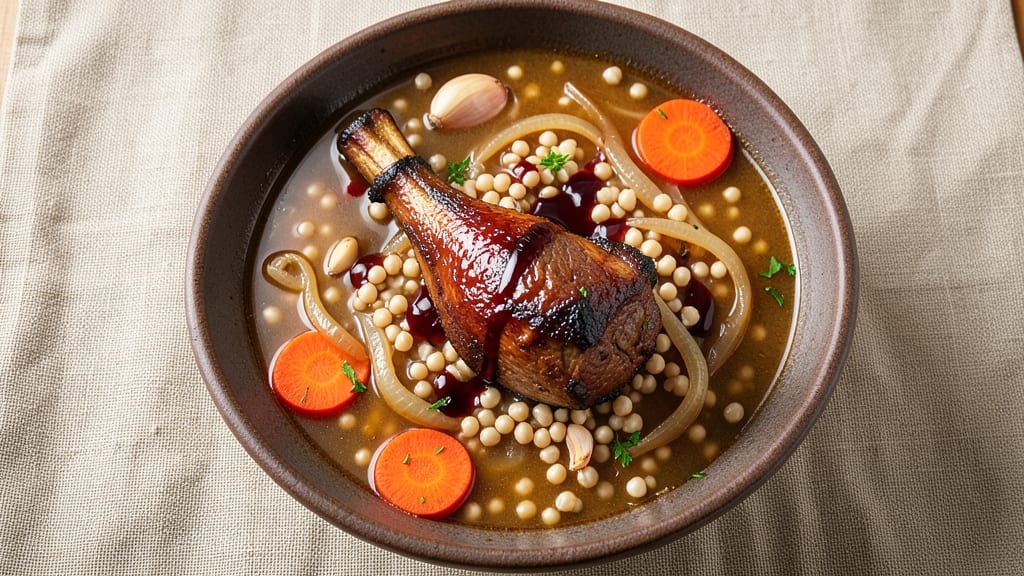
Slow-braised beef shank transforms tough cuts into melt-in-your-mouth richness, while pearl barley adds hearty texture—this beef barley soup delivers restaurant-quality depth with traditional technique. The key lies in simmering the shank until it practically falls apart, infusing the broth with layers of umami that barley soaks up beautifully.
What starts as a simple pot of ingredients evolves into a deeply flavorful stew that tastes even better the next day.
This recipe balances simplicity with sophistication, using just 10 ingredients but requiring patience—about 3 hours of hands-off simmering—to develop the complex flavors that define it. The beef shank's collagen dissolves into the broth, creating a velvety texture, while the barley softens just enough to hold its shape.
Seasoning is subtle but impactful, with bay leaves, thyme, and a splash of red wine adding aromatic depth without overpowering.
By the final hour, you'll have a soup so rich and satisfying it feels like a hug in a bowl—golden broth with tender beef chunks, chewy barley, and carrots that caramelize slightly at the edges.
The aroma alone will have everyone gathering around the table, and the leftovers reheat beautifully, making this a perfect meal for busy weeknights or cozy weekend gatherings. Serve with crusty bread to soak up every last drop of that flavorful broth.
For those short on time, a pressure cooker cuts the cooking time to about 90 minutes while preserving all the depth of flavor. The same principles apply—slow cooking is essential for breaking down the collagen and developing the rich, umami-packed broth that makes this soup unforgettable.
Whether you simmer on the stovetop or use a pressure cooker, the result is a comforting, nourishing dish that's worth every minute of effort.
Ingredients for beef barley soup recipe with beef shank
Ten ingredients, three hours of simmering—transforming tough beef shank into velvety broth and al dente barley.
| Ingredient | Amount | Notes |
|---|---|---|
| Beef Shank 🥩 | 3 lb | Bone-in, cut into 2-inch chunks |
| Pearl Barley 🌾 | 1 cup | Uncooked, rinsed well |
| Carrots 🥕 | 4 whole | Peeled, cut into 1-inch chunks |
| Yellow Onion 🧅 | 1 whole | Large, peeled, chopped |
| Garlic Cloves 🧄 | 4 cloves | Peeled, smashed |
| Dry Red Wine 🍷 | 1 cup | Bold Cabernet Sauvignon |
| Beef Broth 💧 | 6 cups | Homemade or high-quality store-bought |
| Fresh Thyme 🌿 | 2 sprigs | Or 1 tsp dried thyme |
| Bay Leaves 🍃 | 2 whole | Dried, standard size |
| Salt 🧂 | 1 ½ tsp | Kosher or sea salt |
| Black Peppercorns 🌶️ | 1 tsp | Freshly cracked |
The beef shank is the heart of this soup—look for well-marbled cuts at your butcher or specialty grocer like Whole Foods or D'Agostino. Bone-in shanks develop deeper flavor as collagen renders into the broth. If using pre-cut shanks, 2-inch chunks ensure even cooking. For barley, Bob's Red Mill or Quaker brands are reliable, but any pearl barley will work. The carrots should be firm with vibrant color—organic carrots from Trader Joe's stay fresher longer. Fresh thyme and bay leaves elevate the dish beyond basic seasoning; Penzeys Spices offers excellent quality for herbs.
No red wine? Substitute with 1 cup beef broth plus 1 tbsp balsamic vinegar—it mimics the acidity and depth. Fresh thyme unavailable? Use one-third the amount of dried thyme, but toast it first in a dry pan for 30 seconds to deepen the flavor. For a quicker version, swap pearl barley for instant barley—it cuts cooking time by 30 minutes but loses some texture. The onions can be yellow or red, but yellow onions have more sweetness. If your carrots are large, cut them into 1-inch chunks for even cooking. Prefer less wine? Use 1/2 cup wine and 1/2 cup broth—the balance is flexible.
This soup tastes even better the next day as flavors meld. Store in an airtight container in the fridge for up to 5 days, or freeze portions for 3 months. For reheating, add 2 tbsp broth per serving to prevent drying. The barley thickens when cold, so stir in extra broth if serving immediately. Keep bay leaves in the pot—they infuse subtle aroma but should be removed before serving. For meal prep, portion into thermos containers to maintain warmth for up to 8 hours.
Why You'll Love This Recipe
- One-Pot Magic: I swear by this recipe because it’s literally one pot—no chopping boards, no extra pans, just dump, simmer, and forget. The beef shank practically melts into the broth while you prep the onions and garlic, so I’m never stuck with a sink full of dishes afterward.
- Deep Umami Bomb: That beef shank? It’s the star—slow-cooked until it’s fall-apart tender, so every bite delivers rich, savory depth. Add the pearl barley for a chewy texture that soaks up all the flavor, and suddenly, you’ve got a bowl that tastes like a hug from your grandma’s kitchen.
- Leftovers That Shine: Between us, this soup only gets better the next day. The flavors meld into something even more complex, and reheating it is a breeze—just a quick stir on the stove or microwave. I make a double batch on Sundays because it’s my go-to for lazy lunches all week.
- Budget-Friendly Feast: Pearl barley and beef shank stretch this recipe into a full meal without breaking the bank. A single shank feeds four, and the veggies add freshness without costing much. Honestly, it’s the kind of dish that makes grocery day feel like a win.
Step-by-step instructions for beef shank and barley soup
A rich, deeply flavorful soup emerges from slow-cooked beef shank and hearty barley. Here's how to build layers of umami and texture through precise technique.
Sear the Beef Shank for Deep Flavor
Pat the 3 lb beef shank dry with paper towels to ensure maximum browning. In a heavy Dutch oven, heat 1 tablespoon of the beef fat (or olive oil) over medium-high heat until shimmering. Add the beef shank in a single layer and sear for 4-5 minutes per side until deeply browned and caramelized. This step develops the Maillard reaction, creating complex flavors that infuse the broth.
Transfer the seared beef to a plate and set aside. The browned fond left in the pot will form the flavor base for your soup. If the fat doesn't render sufficiently, add another 1 tablespoon of oil to maintain proper heat. Never rush this step - patience here ensures a rich, meaty broth.
Build the Aromatic Base with Onions and Carrots
In the same Dutch oven, add the chopped 1 whole yellow onion and 4 whole carrots (cut into 1-inch chunks). Cook over medium heat for 8-10 minutes, stirring occasionally, until the vegetables soften and begin to caramelize. This process breaks down their natural sugars, adding sweetness to the soup.
Add the 4 smashed garlic cloves and cook for another 1 minute until fragrant. Stir in the 2 sprigs fresh thyme and 2 whole bay leaves, allowing their essential oils to infuse the vegetables. The thyme should release its piney aroma while the bay leaves add subtle earthiness. This aromatic base forms the flavor foundation for your soup.
Deglaze and Simmer the Beef
Pour in the 1 cup dry red wine, scraping up all the browned bits from the bottom of the pot with a wooden spoon. This deglazing step captures all the concentrated flavors you've built. Bring to a simmer and cook for 5 minutes until the wine reduces by half and its alcohol content evaporates.
Return the seared beef shank to the pot. Add the 6 cups beef broth and bring to a gentle boil. Reduce heat to low and cover partially. Simmer for 2 hours, turning the beef occasionally, until it's fork-tender and pulls away from the bone easily. The broth should now be deeply infused with beef flavor and rich in collagen.
Add Barley and Season
Rinse the 1 cup pearl barley well to remove any surface starch. Add it to the pot along with the 1.5 tsp salt and 1 tsp freshly cracked black peppercorns. Stir gently to distribute the barley evenly throughout the broth. The barley should be fully submerged - if not, add enough water to cover.
Return to a simmer and cook uncovered for another 45-50 minutes, stirring occasionally, until the barley is tender with a slight bite. The soup should have a thick, hearty consistency with the barley absorbing the beefy broth. Taste and adjust seasoning if needed - the barley often enhances the natural saltiness of the meat.
Finish and Serve
Remove the beef shank from the pot and let it cool slightly before shredding the meat with two forks. Return the shredded beef to the soup and discard the bones. Skim off any excess fat that has risen to the surface. The soup should now have a velvety texture with visible barley grains and tender beef pieces.
Ladle the soup into bowls and serve immediately, garnished with additional fresh thyme if desired. Each spoonful should deliver a perfect balance of tender beef, chewy barley, and deeply flavorful broth. For best results, serve with crusty bread to soak up the rich liquid.
Pro Tips For Making Beef Barley Soup Recipe With Beef Shank
- BROWN THE SHANK FIRST: I learned this the hard way—skipping the deep sear means your soup will taste like broth, not flavor. Get that pot smoking hot, pat the shank dry, and let it sit undisturbed for 5-6 minutes until it’s a deep mahogany color. That crust? It’s where all the richness hides.
- SOAK BARLEY 30 MINUTES: Pearl barley’s tough—treat it like oats. A quick 30-minute soak in hot water softens it enough to cook through without turning to mush. Drain before adding to the pot, or your soup will turn gluey. (Yes, even if you’re impatient like me.)
- DON’T CUT CARROTS TOO SMALL: Big chunks hold up better, and you’re not making a purée here. Aim for 1-inch pieces—they’ll soften but stay recognizable, and the texture contrast makes the soup more interesting. Tiny matchsticks? They’ll disappear into nothingness.
- ADD BARLEY LATE: Barley cooks fast once the broth is hot, so toss it in the last 20-25 minutes. If you add it early, it’ll turn to porridge, and no one wants that. (Pro move: Taste the broth first—it should be fully seasoned before the barley goes in.)
Troubleshooting this recipe
Broth Too Thin?
If your soup ends up watery, don't panic—simmering time will thicken it naturally as collagen releases from the beef. For immediate fixes, mash a few barley grains with a fork to release starch, or stir in 1 tbsp cornstarch mixed with 2 tbsp cold water until thickened.
Avoid adding flour directly, as it can make the soup cloudy. 💧
Barley Undercooked
Pearl barley needs 45-50 minutes to reach perfect doneness, but if yours remains firm, it's likely undercooked. Try adding ½ cup hot broth and simmering uncovered for another 15 minutes.
For next time, rinse the barley thoroughly to remove surface starch, which can make it gummy. If using instant barley, reduce cooking time by 20 minutes—but expect a softer texture.
Meat Too Tough
Overcooked beef shank becomes stringy and dry. The key is removing it at 195°F internal temperature—when it's fork-tender but not falling apart. If yours is still tough after 2 hours, shred it and return it to the pot.
The long simmer will continue tenderizing it. For future attempts, use a meat thermometer to avoid guesswork. 🌡️
Muted Flavor
If your soup lacks depth, the issue is often insufficient browning or skimping on aromatics. Next time, sear the beef until deeply caramelized, and don't skip the wine reduction—it adds acidity that brightens flavors.
Boost umami by adding 1 tsp soy sauce or ½ tsp Worcestershire sauce during the final 30 minutes of cooking. A pinch of smoked paprika also adds complexity without overpowering.
Barley Too Mushy
Overcooked barley turns to mush, losing its satisfying chew. To prevent this, start checking for doneness at 40 minutes—it should be tender but still hold its shape. If it's already too soft, drain some broth and return it to the pot to thicken.
For a firmer texture, use wild rice blend instead of pearl barley, which holds up better to long cooking.
Fat Floating on Top
Excess fat can make the soup greasy, but skimming it off is easy. Use a fine-mesh skimmer or a spoon to remove fat as it rises during the final 30 minutes of cooking.
For a cleaner finish, chill the soup overnight—the fat solidifies on top and can be scooped off before reheating. If you prefer less fat, trim visible fat from the beef shank before searing. 🥄
Nutrition facts
Frequently asked questions
Why does beef shank work better than other beef cuts in this soup?
Beef shank is packed with connective tissue and collagen that slowly breaks down during long cooking, creating a naturally rich, velvety broth. Unlike leaner cuts, it stays tender while infusing deep umami flavor into every spoonful. The bone-in pieces also add mineral richness to the broth.
Can I substitute beef shank with another cut?
Yes, but with adjustments. Use chuck roast (cut into chunks) and simmer for 3 hours instead of 2. For quicker results, try brisket (2 hours) but expect slightly less tender meat. Avoid lean cuts like sirloin—they'll dry out. The key is choosing a well-marbled, tough cut that benefits from slow cooking.
How do I know when the barley is perfectly cooked?
Barley should be tender with a slight resistance—like al dente pasta. Test by tasting a grain: it should be soft but still hold its shape. For perfect results, cook uncovered during the final 10 minutes to prevent mushiness. If using instant barley, reduce cooking time by 20 minutes (it's pre-steamed).
Can I make this soup in a slow cooker?
Sear the beef shank first, then transfer everything to your slow cooker. Cook on low for 7-8 hours or high for 4-5 hours. The long cook time mimics stovetop simmering. For barley, add it only during the final 1 hour of cooking to prevent overcooking. The slow cooker's gentle heat ensures tender meat and perfectly cooked grains.
What's the best way to reheat leftovers?
Reheat gently on the stove over low heat with 2 tbsp broth per serving to prevent drying. For microwave reheating, cover with a damp paper towel and heat in 30-second intervals, stirring between each. The soup tastes even better the next day as flavors meld! Store in an airtight container for up to 5 days or freeze for 3 months.