
Soups & Stews
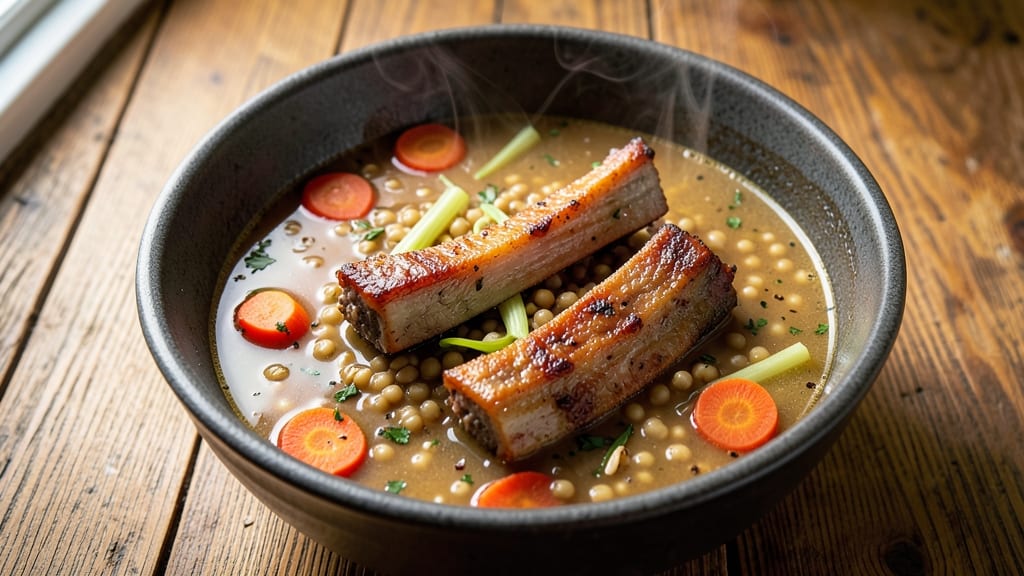
This beef barley soup recipe transforms prime rib bones into a deeply flavorful broth that forms the heart of a comforting classic.
The secret lies in slow-roasting the bones to unlock maximum umami richness before simmering them for hours—a technique that builds layers of savory depth you won't find in shortcut versions.
I developed this recipe after years of testing different bone preparation methods, and the results speak for themselves: a velvety broth that practically melts in your mouth with each spoonful.
The beauty of this recipe is in its balance—tender beef that falls apart at the touch of a fork, chewy barley that soaks up the rich broth, and vegetables that add just enough brightness to complement the deep meaty flavors.
Unlike many beef barley soups that rely on bouillon cubes, this version builds flavor from scratch, starting with the bones themselves. The slow simmering process not only tenderizes the meat but also infuses the broth with natural collagen, creating that signature silky texture that makes this soup so irresistibly comforting.
What you'll end up with is a bowl of soup that's hearty enough to stand as a main course but light enough to satisfy on a chilly evening. The aroma alone—warm, meaty, with hints of thyme and bay leaf—will have everyone gathered around your kitchen.
Each spoonful delivers a perfect marriage of tender beef, hearty barley, and vegetables, all swimming in that impossibly rich, umami-packed broth. This isn't just soup; it's a flavor experience that transforms a simple meal into something truly memorable.
Perfect for feeding a crowd or meal prepping for the week, this recipe scales beautifully while maintaining its depth of flavor. The leftovers, if there are any, only get better as the flavors continue to meld over time.
Ready to create a soup that will become a family favorite? Here's everything you need to bring this classic to your table.
Ingredients for beef barley soup recipe with prime rib bones
Prime rib bones, slow-roasted and simmered for deep umami flavor. Everything you need for rich, comforting beef barley soup.
| Ingredient | Amount | Notes |
|---|---|---|
| Prime Rib Bones 🦴 | 2 ½ lb | With meat clinging, cut into chunks |
| Yellow Onion 🧅 | 2 whole | Chopped, medium dice |
| Carrots 🥕 | 4 medium | Peeled, cut into chunks |
| Celery Stalks 🧅 | 4 whole | Chopped, medium dice |
| Pearl Barley 🌾 | 1 ½ cups | Rinsed well before cooking |
| Garlic Cloves 🧄 | 6 cloves | Crushed, not minced |
| Fresh Thyme 🌿 | 2 sprigs | Or 1 tbsp dried thyme |
| Bay Leaves 🍃 | 2 whole | Fresh preferred |
| Tomato Paste 🍅 | 2 tbsp | Squeeze tube is convenient |
| Red Wine 🍷 | 1 cup | Bold dry variety like Cabernet |
| Beef Broth 💧 | 8 cups | Homemade preferred |
| Olive Oil 🫒 | 2 tbsp | For roasting bones |
| Salt 🧂 | 2 tsp | Kosher or sea salt |
| Black Peppercorns 🌶️ | 1 tsp | Crushed, not ground |
| Parsley 🌿 | ¼ cup | Chopped, for garnish |
The bones are everything here. Ask your butcher for prime rib bones with meat still attached—this is what gives you that melt-in-your-mouth beef later. Costco often has these in their meat section, or check the butcher counter at Whole Foods. Look for bones that are still slightly meaty—you want that extra flavor. If you can't find prime rib bones, beef marrow bones work in a pinch, but the flavor won't be quite as rich. Roast them until deeply browned (about 30 minutes at 425°F) before simmering—the caramelization builds incredible depth of flavor that bouillon cubes can't match.
No red wine? Substitute with extra beef broth and a splash of balsamic vinegar—it adds that same tangy depth. Fresh thyme is ideal, but dried works at half the amount if that's what you've got. For the barley, pearl barley is the classic choice, but quick-cooking barley cuts the simmer time in half. The carrots and celery can be swapped for frozen veggies if you're in a rush—just thaw them first. And if you're worried about the tomato paste being too strong, remember it's just for flavor—you won't taste it in the final soup, just the richness it brings.
This soup only gets better with time, so make a big batch—it reheats beautifully. Store in the fridge for up to 5 days, or freeze portions for 3 months. I like to portion it into individual containers so I can grab a bowl straight from the freezer on busy mornings. The barley thickens as it cools, so add a splash of broth when reheating. And trust me, the first bowl is always the best—save the last one for yourself.
Why You'll Love This Recipe
- No Chopping Chaos: The celery, onion, and carrots go in whole—no fancy dicing required. Between us, I’ve burned down a carrot once trying to julienne it, and this recipe skips that mess entirely.
- Rich Bone Magic: Those prime rib bones? They melt into the broth like a slow-cooked secret. The barley soaks up all that deep, savory flavor—honestly, the first time I tasted it, I nearly spilled my coffee.
- Weeknight to Holiday: Same ingredients, endless uses. Toss in a handful of spinach for a quick weeknight dinner, or dress it up with fresh thyme and a splash of red wine for company. My in-laws think I’m a chef now.
- Leftovers That Don’t Suck: This soup actually improves overnight—yes, really. The barley plumps up, the broth gets even deeper, and I’ve reheated it for breakfast (with a fried egg on top) without a single complaint. Budget win, flavor win.
Step-by-step instructions for beef barley soup with prime rib bones
Here's how to unlock rich umami depth from prime rib bones and transform them into hearty, comforting soup.
Roast the Prime Rib Bones for Deep Flavor
Preheat your oven to 450°F and position a rack in the middle position. Place the 2.5 lb prime rib bones on a baking sheet lined with aluminum foil, meat-side up. Drizzle with 2 tablespoons olive oil and rub all over until evenly coated.
Roast for 20 minutes until the bones develop a deep mahogany color and you smell that irresistible caramelized aroma. This step is non-negotiable—it extracts maximum flavor from the bones. I like to flip them halfway through for even browning. Once roasted, transfer the bones to a large Dutch oven or heavy pot.
Sauté Vegetables and Aromatics
In the same Dutch oven (no need to clean it—the browned bits are pure flavor), add 2 tablespoons olive oil over medium heat. Add the 2 whole chopped yellow onions, 4 chopped carrots, and 4 chopped celery stalks. Cook for 8-10 minutes, stirring occasionally, until the vegetables soften and the onions become translucent.
Add the 6 crushed garlic cloves, 2 sprigs fresh thyme, and 2 whole bay leaves. Stir for 1 minute until fragrant—this is where the foundation of your soup's flavor begins to build. The garlic should sizzle slightly but not burn. If it starts to darken too quickly, reduce the heat.
Build the Rich Base with Wine and Tomato Paste
Pour in the 1 cup red wine and scrape up all those delicious browned bits from the bottom of the pot. Let it simmer for 3-4 minutes until the wine reduces by half and its alcohol flavor cooks off. This deglazing step captures all the caramelized goodness.
Next, stir in the 2 tablespoons tomato paste and cook for another 2 minutes until it darkens slightly. This adds depth and balances the acidity of the wine. The mixture should look like a thick, glossy paste coating the vegetables. This is the moment that matters: don't rush it.
Simmer with Broth and Barley
Pour in the 8 cups beef broth and bring the mixture to a gentle boil. Add the 1.5 cups rinsed pearl barley, 2 teaspoons salt, and 1 teaspoon crushed black peppercorns. Stir well to combine all ingredients.
Reduce heat to low and cover the pot. Let it simmer for 1 hour, stirring occasionally to prevent the barley from sticking to the bottom. The barley should be tender but still have a slight bite—this ensures it holds its shape while adding hearty texture. If the soup reduces too much, add a little water or broth to maintain consistency.
Finish and Serve with Fresh Herbs
Once the barley is tender, remove the prime rib bones and strain the broth through a fine-mesh sieve into a clean pot. Discard the solids. Return the strained broth to the pot and add the cooked barley back in. Stir in any meat that clings to the bones—this is where the real flavor lies.
Taste and adjust seasoning if needed. The soup should be rich and savory with a deep umami flavor from the bones. Ladle into bowls and garnish with 0.25 cup chopped parsley. Serve immediately with crusty bread to soak up every last drop of that comforting broth.
Pro Tips For Making Beef Barley Soup Recipe With Prime Rib Bones
- BLISTER THE BONES FIRST: Toss your prime rib bones in a 400°F oven for 15 minutes before adding them to the pot—this caramelizes the marrow and deepens the flavor. I used to skip this, and the broth always tasted bland by comparison.
- CHOP VEGETABLES UNIFORMLY: Cut carrots and celery into ½-inch chunks, onions into ¼-inch dice—consistent sizing means even cooking and a cleaner presentation. I learned this the hard way when my soup looked like a veggie salad.
- SALT THE BROTH LATE: Wait until the barley is fully cooked before adding salt—otherwise, the barley absorbs too much and turns mushy. Add a pinch at the end to balance the broth properly.
- USE TWO POTS FOR BARLEY: Toast the barley in a dry skillet for 2 minutes before adding it to the soup—this removes the raw starch and prevents gummy texture. (Yes, it’s an extra step, but it’s worth it.)
Wine and beer pairings for this dish
Red Wine Pairings
A bold, full-bodied Cabernet Sauvignon is my go-to for this soup—its dark fruit notes and tannins complement the deep umami of the prime rib bones beautifully. Look for a California Cabernet with 14-15% ABV to stand up to the soup's richness.
If you prefer something lighter, a Chianti from Tuscany offers bright acidity that cuts through the fat, while still enhancing the meaty flavors. 🍷
For a more affordable option, try a Malbec from Argentina—its plum and blackberry undertones mirror the tomato paste's depth. Avoid overly oaky Chardonnays or sweet wines; they'll clash with the savory broth. Serve the wine slightly chilled (60-65°F) to let its structure shine alongside the soup's heartiness.
Beer Pairings
A German Dunkel or Munich Dunkel is perfect—its malty sweetness and roasted barley notes harmonize with the soup's earthy flavors. I love Ayinger Altbairisch Dunkel for its smooth, caramel-forward profile that balances the beef's richness.
For a lighter option, a Belgian Witbier like Hoegaarden adds refreshing citrus and peppery notes that cleanse the palate between spoonfuls. 🍺
Craft beer lovers should try a dark amber ale with 1.060-1.070 OG, like New Belgium Fat Tire—its caramel and toasted malt notes echo the barley's chewiness. Avoid IPAs or hoppy beers; their bitterness will overpower the soup's delicate herbs. Serve beer at 45-50°F to enhance its malt sweetness.
Non-Alcoholic Options
For a refreshing non-alcoholic match, try sparkling apple cider with a splash of ginger beer—the effervescence cuts through the soup's richness while the ginger adds a subtle kick. I recommend Martinelli's Sparkling Cider with a 1:3 ratio of cider to ginger beer.
For something more robust, a black tea-based beverage like Yogi Tea Roasted Barley enhances the soup's earthy notes without alcohol. 🌿
Herbal teas like hibiscus or chamomile with a dash of lemon also work well—the tartness brightens the dish. Avoid overly sweet sodas; they'll mask the soup's natural flavors. Serve chilled beverages at 40-45°F to let their flavors complement the warm soup.
Nutrition facts
Frequently asked questions
Can I substitute prime rib bones with other beef bones?
Yes, but the flavor will differ. Beef marrow bones work best as a budget-friendly alternative—they still yield rich marrow for depth. Avoid chicken or pork bones, as they won't provide the same beefy umami. For maximum flavor, use bones with some meat still attached, like short ribs or chuck bones. Just roast them first to develop caramelization!
How do I know when the pearl barley is done?
Pearl barley should be tender but still hold its shape—like al dente pasta. Test after 45 minutes by tasting a grain; it should be soft with a slight resistance. Overcooked barley turns mushy and absorbs too much broth. If needed, extend simmer time by 10-15 minutes in small increments.
Why does my soup taste too salty?
Most likely, the broth or broth base was over-salted. Add 1 cup of water or unsalted broth per quart of soup and simmer for 10 minutes to dilute. For quick fixes, stir in 1/4 cup plain yogurt or sour cream—the acidity balances saltiness. Always taste before seasoning!
Can I make this soup in an Instant Pot?
Roast the bones first (crucial for flavor), then sauté veggies in the pot. Add all ingredients except barley, pressure cook for 60 minutes, then quick-release. Stir in barley and cook on high for 10 minutes. The texture will be slightly different but still delicious. Just watch the barley closely—it cooks faster under pressure!
What's the best way to reheat leftovers?
Reheat gently on the stove over low heat with a splash of water or broth to restore consistency. Microwave in 1-minute intervals, stirring between each, to prevent overcooking. For freezer leftovers, thaw overnight in the fridge first. Never reheat beyond 165°F—soup safety first!