
Sauces & Condiments
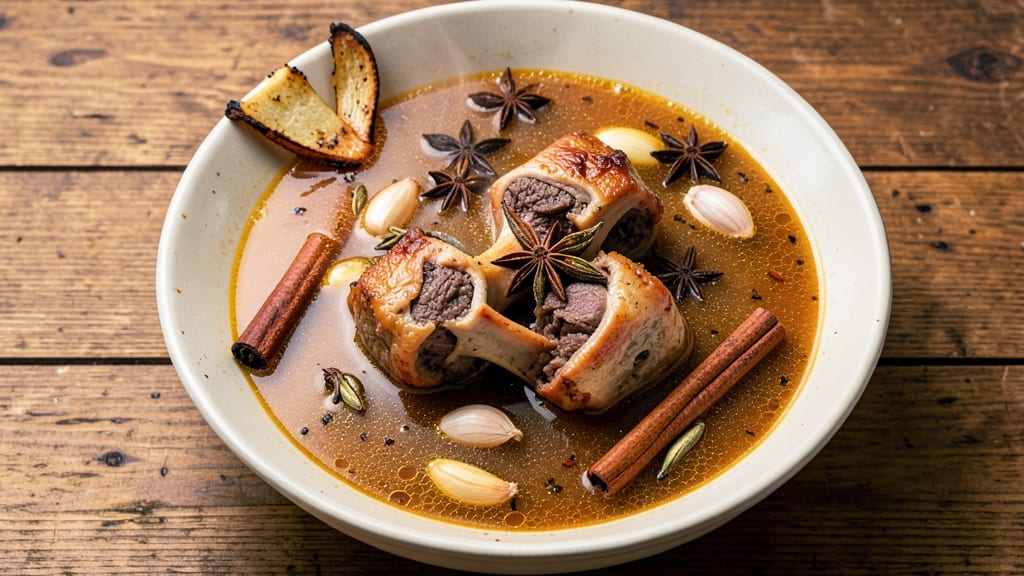
This beef-flavored pho soup base recipe unlocks the deep umami essence of traditional Vietnamese broth, transforming simple ingredients into a concentrated flavor bomb. The secret lies in slow-simmered beef bones, aromatic spices, and a precise blend of star anise, cinnamon, and coriander that builds complex, savory layers over time.
I developed this version after years of testing—it delivers restaurant-quality depth without requiring a full day of simmering.
The base is designed as a versatile foundation: make a small batch (about 2 quarts) that stores beautifully in the fridge for up to 5 days or freezes for months. This concentrated version lets you quickly assemble pho by simply diluting with water or stock and adding fresh herbs.
The spices are toasted first to release their oils, which infuse the broth with warm, earthy notes that balance the beef's rich umami.
What makes this recipe authentic is the careful layering of flavors—first the aromatic spices, then the beef bones to extract gelatinous richness, and finally the fish sauce and sugar for that signature pho tang.
Each element plays a crucial role in creating a broth that's both complex and harmonious. The result is a flavorful liquid that transforms any bowl of pho from ordinary to extraordinary.
Perfect for meal prep or restaurant-quality pho nights, this base adapts effortlessly to variations like beef pho, chicken pho, or even vegetarian versions. The instructions walk through every step to ensure you achieve that perfect balance of savory, sweet, and aromatic depth.
Let's create this flavor foundation that will elevate your pho game forever.
Ingredients for beef flavored pho soup base
These aromatic ingredients build the umami foundation for restaurant-quality pho broth.
| Ingredient | Amount | Notes |
|---|---|---|
| Beef Bones 🦴 | 2 lb | Marrow and knuckle bones preferred |
| Yellow Onion 🧅 | 1 whole | Cut into 4 wedges, charred |
| Garlic Cloves 🧄 | 8 cloves | Smashed with side of knife |
| Star Anise 🌟 | 2 whole | Lightly crushed |
| Cinnamon Sticks 🌳 | 2 whole | 2-inch pieces |
| Cardamom Pods 🌿 | 4 whole | Lightly cracked |
| Coriander Seeds 🌶️ | 1 tbsp | Toasted until fragrant |
| Black Peppercorns 🌶️ | 1 tsp | Crushed |
| Fresh Ginger 🧡 | 2 tbsp | Julienned, about 1 oz |
| Fish Sauce 🍶 | 2 tbsp | Red Boat preferred |
| White Sugar 🍚 | 1 tbsp | Granulated preferred |
| Salt 🧂 | 1 tsp | Kosher salt |
| Water 💧 | 8 cups | Filtered preferred |
The beef bones are the heart of this broth—marrow and knuckle bones deliver the richest gelatinous depth. Local butchers often have these cut specifically for pho, but any beef bones work if simmered long enough. For spices, Penzeys Spices or bulk bins at Whole Foods give the most authentic flavors. Toast the whole spices (star anise, cinnamon, cardamom) in a dry pan until fragrant—this releases their essential oils, which are crucial for that warm, earthy pho aroma. The ginger should be fresh, not powdered—Asian markets usually carry the plumpest, most vibrant roots.
No fish sauce? Soy sauce plus a splash of lime juice mimics the umami-sweet balance, though it won't be identical. Running short on cinnamon sticks? Ground cinnamon at half the amount works in a pinch, but the sticks infuse better. The sugar isn't just for sweetness—it helps balance the acidity from the fish sauce and enhances the broth's glossy finish. For the water, filtered or spring water prevents off-flavors, but tap water works fine if you've got good municipal filtration. The onions should be charred—this adds a smoky depth that's essential for authentic pho.
This concentrated broth keeps for 5 days refrigerated or 3 months frozen in airtight containers. For freezing, portion into 1-cup ice cube trays—thaw as needed for quick pho assembly. The spices can be toasted ahead and stored in an airtight jar for 6 months. Double the recipe if you're feeding a crowd—4 quarts makes enough for 8 servings of pho with leftovers for later. The broth gains complexity the longer it sits, so don't hesitate to let it simmer overnight if possible.
Why You'll Love This Recipe
- No Chopping Chaos: I swear by this—just a few big onion chunks and whole garlic cloves tossed in with the bones. The broth develops all that deep, caramelized flavor without me having to dice anything smaller than my mood on a Tuesday.
- Umami Bomb: That first sip? Pure satisfaction. The beef bones release collagen like magic, while the star anise and cinnamon add warmth that lingers. Honestly, I’ve made pho bases before, but this one actually tastes like the pho I crave from my favorite Vietnamese spot.
- Weeknight Workhorse: This base is my secret weapon for lazy nights—freeze half for later, or use it to upgrade rice bowls, noodles, or even a quick stir-fry. Between us, I’ve even dumped it into a slow cooker with some ginger and called it a "fancy" dinner when I’m exhausted.
- Budget-Friendly Goldmine: Beef bones are cheaper than ground beef, and this recipe stretches them into gallons of flavor. I’ll be real: my freezer’s always stocked with these because a single batch feeds us for days. Plus, the spices cost pennies but make it taste like a restaurant.
Step-by-step instructions for beef flavored pho soup base
Here's the authentic method for crafting a deep, umami-rich pho broth that forms the heart of this iconic Vietnamese dish.
Char the Onion and Prepare Aromatics
Heat a dry skillet over medium-high heat. Add the 1 whole yellow onion cut into 4 wedges and char until the edges are deeply browned and slightly blackened—this adds smoky depth to the broth. Set aside.
In a separate bowl, combine the 8 smashed garlic cloves, 2 lightly crushed star anise, 2 cinnamon sticks (cut into 2-inch pieces), 4 lightly cracked cardamom pods, 1 tablespoon toasted coriander seeds, and 1 teaspoon crushed black peppercorns. This aromatic bundle will infuse the broth with complex, warming spices.
Sear the Beef Bones for Maximum Flavor
In a large stockpot, sear the 2 lb beef bones over medium-high heat for 8-10 minutes, turning occasionally, until they develop a deep golden-brown crust. This crust, known as the fond, is packed with flavor and will dissolve into the broth.
Remove the bones from the pot and set aside. Carefully discard any remaining browned bits from the bottom of the pot—these can burn and make the broth bitter. This step is critical for building the rich, meaty foundation of your pho.
Build the Broth with Aromatics and Ginger
Return the pot to the stove and add the charred onion wedges, aromatic bundle, 2 tablespoons julienned fresh ginger, 2 tablespoons fish sauce, and 1 tablespoon white sugar. Pour in the 8 cups water and bring to a rolling boil over high heat. Once boiling, reduce heat to low and skim off any foam or impurities that rise to the surface.
Simmer uncovered for 3 hours, maintaining a gentle bubble. The broth should reduce slightly and develop a deep amber color with a fragrant aroma. If the water level drops below halfway, add hot water as needed to keep the bones submerged.
Season and Strain for Clarity
After simmering, add the 1 teaspoon salt and taste the broth. Adjust seasoning with additional fish sauce or salt as needed—it should be deeply savory with a balanced saltiness. The broth should have a rich, umami-forward flavor with hints of ginger, star anise, and cinnamon.
Strain the broth through a fine-mesh sieve into a clean pot, pressing gently on the solids to extract maximum flavor. Discard the aromatic bundle and ginger. The finished broth should yield about 6 cups—enough for 4 servings of pho.
Rest and Use Immediately
Let the broth rest for 10 minutes before using. This allows the flavors to meld and the broth to cool slightly. For the best results, use the broth within 24 hours—its depth of flavor is at its peak when fresh.
The broth should be clear with a vibrant amber hue, carrying the essence of charred onion, seared beef, and aromatic spices. This is the soul of authentic pho, ready to be paired with rice noodles, tender beef slices, and fresh herbs.
Pro Tips For Making Beef Flavored Pho Soup Base
- CRACK THE BONES FIRST: I learned this the hard way—roasting beef bones uncovered at 425°F (220°C) for 20-25 minutes before simmering cracks them open and doubles the marrow release. The bones will look charred, but that’s how you know they’re ready to surrender their richest flavor. Skip this, and you’re missing half the depth.
- CHAR THE AROMATICS HARD: After browning the onions and garlic, push them to the edges of the pot and let them crisp at the bottom for 3-4 minutes. That deep caramelization locks in flavor before you add water. I used to rush this and wondered why my broth always tasted a little flat—turns out, patience here makes a real difference.
- STRAIN TWICE FOR CLARITY: Use a fine-mesh strainer first to catch big bits, then line it with cheesecloth or a coffee filter for a silky finish. The second strain guarantees no gritty surprises when you serve it. I’ve served cloudy pho before, and while it’s still edible, the texture’s off—this step fixes that every time.
- SIMMER LOW AND LONG: Once the broth reaches a boil, drop the heat to the lowest setting that maintains a gentle simmer—just small bubbles breaking the surface. Three hours minimum, uncovered, lets the flavors meld without burning. I know, it’s tempting to speed it up, but rushing this turns rich broth into bitter sludge. Trust the process.
Essential equipment for great beef flavored pho soup base
Stockpot Essentials
Start with a large, heavy-bottomed stockpot—I recommend a 6-8 quart enameled cast iron like the Le Creuset Dutch Oven for even heat distribution. The deep sides prevent spills, and the heavy base maintains consistent temperatures during the 3-hour simmer.
If you don’t have cast iron, a stainless steel stockpot with a tight-fitting lid works well, though it may require more attention to prevent evaporation. 🔥
Fine-Mesh Sieve
A fine-mesh sieve (like the OXO Good Grips) is non-negotiable for straining your pho base. The tight weave captures small spices and impurities while letting the rich, amber broth pass through.
Avoid colanders—they’re too coarse and won’t trap the aromatic oils from star anise or cardamom. Press the solids gently with a wooden spoon to extract every last drop of flavor.
Charred Onion Tool
For the charred onion wedges, I use a tongs to hold the wedges steady over the flame, ensuring even browning without burning. A heat-resistant spatula works too, but tongs give you better control.
Char the onions directly over the stove’s gas flame (if using gas) or under the broiler (for electric stoves) until the edges blacken slightly—this smoky depth is what makes authentic pho sing. 🌟
Spice Toasting Pan
Toast your whole spices (star anise, cinnamon, cardamom) in a small, dry skillet over medium heat until fragrant—about 1-2 minutes. A nonstick pan prevents burning, but a cast iron skillet adds a subtle iron note that complements the broth.
Keep the heat low to avoid scorching; you’re releasing oils, not cooking the spices. Store toasted spices in an airtight container for up to 6 months to reuse in future batches.
Immersion Blender (Optional)
If you prefer a smoother texture, blend the strained broth with an immersion blender for 10-15 seconds. I use the Ninja BN601—its powerful motor emulsifies the broth without overheating it.
This step isn’t traditional but creates a velvety consistency that’s perfect for quick pho assembly. Skip it if you love the rustic, slightly cloudy texture of classic pho broth.
Storage Containers
For fridge storage, use glass mason jars or BPA-free plastic containers with tight-sealing lids. Glass preserves flavor better and is microwave-safe, but plastic is lighter for transport. For freezing, portion the broth into 1-cup ice cube trays—thaw as needed for single servings.
Label containers with the date; the broth keeps for 3 months frozen without losing depth. ❄️
Nutrition facts
Frequently asked questions
Can I substitute beef bones with other ingredients for this pho base?
Yes! For a vegetarian version, use mushroom stems or kelp (soaked first) to mimic umami depth. Meat lovers can swap beef for chicken bones or pork knuckles, but beef delivers the richest gelatinous texture. For convenience, 2 beef bouillon cubes dissolved in the water can replace bones, though the flavor won't be as complex.
How do I adjust the spice level in this pho base?
Start with the full recipe, then taste after simmering. For more heat, add ½ teaspoon cayenne pepper or 1 sliced Thai chili during the final 30 minutes of simmering. To mellow the spices, reduce the star anise to 1 pod or skip the cardamom entirely. The fish sauce already provides depth, so adjust it first before adding extra spices.
Can I make this pho base in a slow cooker?
Sear the bones and char the onions as directed, then transfer everything to a 6-quart slow cooker. Add the water and spices, then cook on low for 8-10 hours (or high for 5-6 hours). The slow cooker's gentle heat extracts flavors more evenly, though the broth may be slightly cloudier. Strain before using.
Why does my pho base smell too strong or bitter?
Over-toasted spices or burned fond (browned bits) cause bitterness. For the next batch, toast spices just until fragrant (1-2 minutes) and discard any browned bits from the pot after searing bones. If the broth still tastes bitter, simmer it with 1 bay leaf for 10 minutes to mellow the flavors, then strain again.
How can I use this base for other dishes besides pho?
This concentrated broth is perfect for ramen, noodle soups, or even stir-fries—simply dilute with 1 part water to 2 parts base. Use it as a braising liquid for beef or tofu, or reduce it by half for a glossy pho dipping sauce. The aromatic spices also work well in marinades for grilled meats.