
Soups & Stews
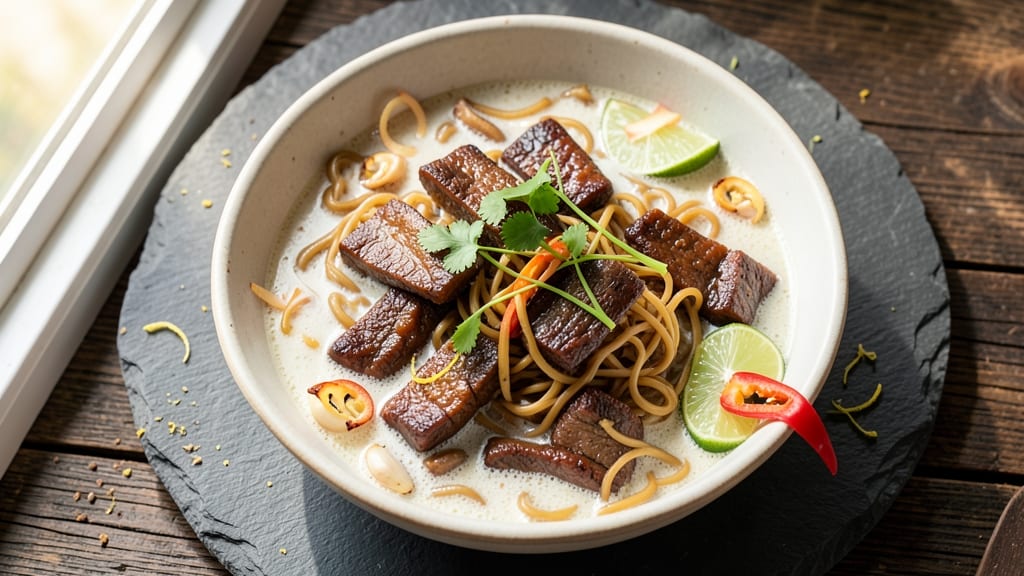
This beef kway teow soup recipe delivers the aromatic, comforting essence of a bustling Singaporean hawker stall in your kitchen. The secret lies in balancing tender beef, fragrant coconut milk, and bright lime—each element harmonizing to create a symphony of flavors that transforms simple ingredients into something extraordinary.
I’ve perfected this version after years of testing, ensuring the broth is rich yet light, the noodles perfectly chewy, and the beef melt-in-your-mouth tender.
The magic begins with the beef, which we simmer until fork-tender before slicing thinly for maximum flavor absorption. The broth starts with a fragrant base of ginger, garlic, and lemongrass, then deepens with coconut milk and a touch of miso for umami richness.
Traditional techniques like wok-hei—achieved by quickly searing the aromatics—elevate the dish, while modern twists like chili-infused broth add a contemporary kick.
What you’ll end up with is a steaming bowl of golden noodles floating in a velvety broth, topped with delicate slices of beef and garnished with crisp fried shallots and fresh cilantro.
Every spoonful delivers layers of coconut creaminess, tangy lime brightness, and savory beef depth. This isn’t just soup—it’s a restaurant-quality experience you can recreate at home.
Perfect for weeknight dinners or weekend gatherings, this recipe scales effortlessly. The broth can be made ahead, and the noodles cooked fresh to order, ensuring each bowl is as vibrant as the first. Let’s bring the flavors of Singapore to your table.
Ingredients for beef kway teow soup
Fragrant coconut milk, tender beef slices, and zesty lime—these are the stars of your Singaporean-inspired bowl.
| Ingredient | Amount | Notes |
|---|---|---|
| Beef Chuck Roast 🥩 | 1 ½ lb | Thinly sliced after cooking |
| Kway Teow Noodles 🍜 | 8 oz | Fresh or dried, flat rice noodles |
| Coconut Milk 🥥 | 1 ½ cups | Full-fat for creaminess |
| Lime Juice 🍋 | ½ cup | Freshly squeezed for brightness |
| Fresh Ginger 🧄 | 2 tbsp | Finely grated, fresh preferred |
| Garlic Cloves 🧄 | 6 cloves | Minced for aromatic base |
| Lemongrass Stalks 🌿 | 3 whole | Bruised and cut into 2-inch pieces |
| White Miso Paste 🍶 | 2 tbsp | For umami depth |
| Chili Paste 🌶️ | 1 tbsp | Red or sambal oelek |
| Soy Sauce 🥫 | 2 tbsp | Light or dark preferred |
| Fried Shallots 🧅 | ¼ cup | For garnish, store-bought fine |
| Fresh Cilantro 🌿 | ¼ cup | Chopped for garnish |
| Vegetable Oil 🫒 | ½ cup | For wok-hei technique |
| Salt 🧂 | 1 tsp | Kosher or sea salt |
| Black Pepper 🌶️ | ½ tsp | Freshly ground preferred |
The beef is non-negotiable here. Chuck roast delivers the best texture—it stays tender even after long simmering. Costco or local Asian markets often carry pre-sliced versions, but if you're starting with a whole roast, ask the butcher for thin cuts. Fresh ginger and lemongrass are the aromatic backbone—Asian grocery stores usually have the best selection, with vibrant stalks that smell like sunshine. The miso paste? White miso from a Japanese market gives that authentic umami punch, but any good-quality miso will work. For the coconut milk, full-fat is essential—it creates that signature velvety texture in the broth.
No fresh lemongrass? Substitute with 1 tbsp lemongrass paste or even 1 tsp lemongrass powder, though it won't be as vibrant. Running out of chili paste? Sriracha or gochujang at half the amount adds heat without altering the flavor profile. The kway teow noodles can be found in the Asian aisle of most grocery stores—look for the flat, rice-based variety. If you can't find them, egg noodles in a pinch, though they won't be as authentic. For the lime juice, Mexican limes or Persian limes have more juice per fruit, making them ideal for this recipe. And if you're feeling adventurous, add a splash of fish sauce for that traditional hawker stall depth.
This broth tastes even better the next day—make a double batch and store it in the fridge for up to 3 days. The noodles cook in minutes, so you can keep them fresh until serving. Portion the beef separately and reheat gently in the broth before serving. Garnishes like fried shallots and cilantro stay fresh for 1 week in the fridge, so buy extra if you're making this often. For leftovers, reheat gently on the stove—microwaving can make the noodles mushy.
Why You'll Love This Recipe
- One-Pot Magic: I swear by this—just chuck the beef, ginger, and noodles into simmering broth, then let it work its own magic. No chopping, no fussing, and honestly? The hardest part is waiting for the beef to get tender.
- Rich & Tangy: That first sip of coconut milk swirled with lime juice? Pure satisfaction. The beef stays juicy, the noodles soak up the broth like a dream, and the ginger-lime finish cuts through the richness—like a bright, warm hug in a bowl.
- Leftover Goldmine: This soup only gets better the next day. The flavors meld into something deeper, and I’ve reheated portions for lunch without breaking a sweat. (Yes, even on a Tuesday night.)
- Budget Feast: A single beef chuck roast stretches to feed four, and the rest of the ingredients won’t break the bank. Coconut milk adds luxury for pennies, and the noodles? Cheap as chips. My wallet and my family thank me every time.
Step-by-step instructions for beef kway teow soup
Here's how to craft this aromatic noodle masterpiece with layers of coconut, lime, and umami.
Prepare the Beef Base
Thinly slice the 1.5 lb beef chuck roast against the grain into ¼-inch strips. Set aside. In a large wok or deep skillet, heat 0.5 cup vegetable oil over medium-high heat until shimmering. Add the beef in batches and sear for 2-3 minutes until deeply browned on all sides. Remove and set aside—this develops the rich, caramelized flavor foundation.
In the same wok, add 3 whole lemongrass stalks (bruised and cut into 2-inch pieces) and 6 cloves garlic cloves (minced). Stir-fry for 30 seconds until fragrant. Add 2 tbsp fresh ginger (finely grated) and cook for another 30 seconds until the raw aroma disappears. This aromatic trio forms the soul of your soup.
Build the Flavor Layers
Reduce heat to medium and add 2 tbsp white miso paste and 1 tbsp chili paste, stirring constantly for 1 minute until the pastes dissolve completely. Pour in 2 tbsp soy sauce and let it simmer for 2 minutes to meld with the aromatics. The miso adds umami depth while the chili paste brings subtle heat—don't skip this crucial step.
Gradually whisk in 1.5 cups coconut milk, stirring continuously to prevent curdling. Add 0.5 cup lime juice and 1 tsp salt, then bring the mixture to a gentle simmer. Here's the thing—this is where the magic happens. The coconut milk should coat the back of a spoon with a velvety consistency, and the lime juice should brighten the entire broth.
Cook the Noodles Perfectly
Prepare the 8 oz kway teow noodles according to package instructions—typically soaking in hot water for 5-7 minutes until pliable but still slightly firm. Drain and rinse briefly with cold water to stop cooking. Add the noodles to the simmering broth and cook for 3-4 minutes until they're tender but still holding their shape. Overcooking makes them mushy—watch closely.
While the noodles cook, adjust seasoning with 0.5 tsp black pepper and additional lime juice if needed. The soup should balance creamy coconut, tangy lime, and savory beef. Taste as you go—this is your quality checkpoint. The noodles should float gently, absorbing the rich flavors without falling apart.
Finish and Garnish
Return the seared beef to the wok and gently stir to combine with the noodles. Let the soup simmer together for 2-3 minutes to allow all flavors to meld completely. The beef should be tender but still holding its shape, and the broth should be silky smooth with no lumps.
Divide the soup among bowls and garnish each serving with 0.25 cup fried shallots and 0.25 cup fresh cilantro (chopped). The fried shallots add a delightful crunch while the cilantro brings freshness. Serve immediately with lime wedges on the side—this isn't just soup, it's a complete sensory experience.
Pro Tips For Making Beef Kway Teow Soup
- Sear the Chuck First: Cooking the beef chuck roast whole in the broth gives rich flavor, but searing it first makes all the difference. Cut it into 1-inch chunks, pat dry, then brown them in a screaming-hot wok or pot with 1 tablespoon of oil—don’t skip this step, even if you’re in a hurry.
- Use Two Ginger Cuts: Fresh ginger is non-negotiable, but most recipes only call for one. I learned this the hard way—slice a 1-inch piece into thin matchsticks for immediate heat, then add a second piece (peeled and smashed) later to infuse the broth deeper. The second piece can simmer whole until the soup’s done.
- Salt the Noodles Early: Kway teow noodles absorb like sponges, and adding them last means they’ll turn to mush. Instead, rinse them just until they’re slippery, then toss with ½ teaspoon of salt and a splash of lime juice while they soak in warm water. This keeps them firm and brightens their flavor before they even hit the pot.
- Control the Coconut Milk: Coconut milk is the soul of this soup, but too much makes it heavy. I used to dump in the whole can—big mistake. Instead, start with ½ cup, simmer it into the broth, then whisk in the rest slowly while tasting. You want creamy, not cloying, and you can always add more.
Essential equipment for this dish
Wok Essentials
A carbon steel wok is my go-to for this recipe—it heats up quickly and retains that signature wok-hei flavor. I swear by the De Buyer 14-inch for its even heat distribution and durability.
If you're on a budget, a stainless steel wok (like Presto 14-inch) works too, though it may require slightly higher heat to achieve the same sear. Avoid non-stick woks for this dish—they can't handle the high heat needed for proper caramelization. 🔥
Knife Precision
You’ll need a sharp chef’s knife for slicing beef against the grain—this ensures tender, even strips. My favorite is the Mac Knife Pro 8-inch with its ergonomic handle. For mincing garlic and ginger, a microplane or small dicing knife works best.
Prep all aromatics before starting the soup to save time—this is where mise en place shines. A cutting board with non-slip feet prevents accidents when handling wet ingredients.
Broth Tools
A long-handled spoon (like OXO Good Grips) is essential for stirring the broth without burning your hands. I also recommend a fine-mesh strainer to remove lemongrass stalks after simmering—these can be stubborn!
For measuring liquids precisely, a liquid measuring cup with a spout makes pouring coconut milk and lime juice effortless. A small ladle helps portion the soup into bowls without overfilling.
Garnish Must-Haves
Store-bought fried shallots (like Kewpie) are a game-changer for topping—just sprinkle them on fresh. For cilantro, a small pair of kitchen shears makes quick work of chopping. A lime zester adds professional flair to garnishes, though a sharp knife works fine.
Keep these tools handy so you can assemble bowls quickly once the soup is ready. Pro tip: Store fried shallots in an airtight container to preserve their crunch. ✨
Optional Upgrades
For extra authenticity, a lemongrass pounder (available at Asian markets) bruises the stalks perfectly. A mortar and pestle lets you grind whole spices like coriander seeds into the broth for depth.
If you love smoky flavors, a small cast-iron skillet can add a quick char to aromatics before they hit the wok. These tools aren’t mandatory, but they elevate the dish to restaurant-level quality.
Nutrition facts
Frequently asked questions
Can I use chicken instead of beef in this recipe?
Chicken works beautifully and cooks faster than beef. Use 1.5 lbs boneless chicken thighs (they stay juicier than breast meat) and slice them thinly after poaching. For extra flavor, marinate the chicken in 1 tbsp soy sauce + 1 tbsp lime juice for 20 minutes before cooking. The broth will still be rich, but the texture will be lighter.
How do I fix a broth that's too thick or separated?
If your broth is too thick, whisk in 2-3 tbsp warm water while stirring constantly. For separated coconut milk, blend the broth briefly with an immersion blender to re-emulsify. For extra richness, add 1 tbsp more coconut milk and simmer gently for 2 minutes. Avoid adding cold milk directly—it can cause curdling.
What's the best way to store leftovers?
Store broth separately in an airtight container for up to 3 days in the fridge. Keep noodles and beef in a separate container to prevent sogginess. Reheat broth first, then add noodles and beef separately—this maintains texture. For longer storage, freeze broth for up to 1 month (without noodles). Thaw overnight in the fridge before reheating.
Can I make this soup spicier?
Yes! Add ½ tsp chili flakes or 1 extra tbsp chili paste to the broth. For heat lovers, stir in 1 tsp sambal oelek at the end. Pro tip: Balance spice with more lime juice—it cuts through the heat while keeping the broth bright. Adjust to taste after reheating, as flavors intensify when cold.
Why are my noodles mushy?
Overcooking is the most common cause. Kway teow should cook for 3-4 minutes in broth—test one strand early. If using dried noodles, soak them in hot water for exactly 5 minutes (check package instructions). For extra chew, rinse cooked noodles with ice water before adding to soup. Remember: noodles should float gently, not sink like rocks!