
Soups & Stews
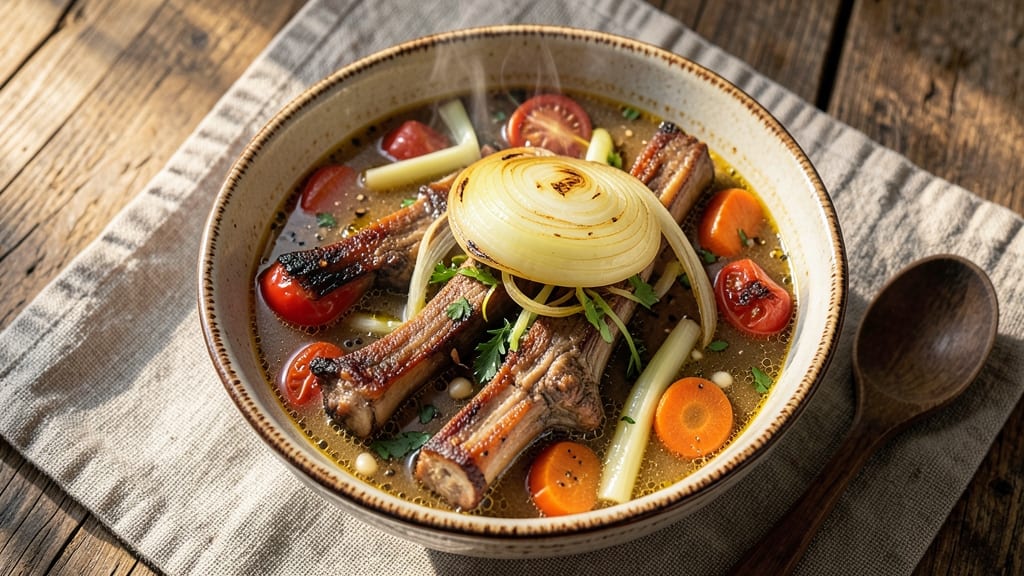
This beef soup bone stew recipe unlocks restaurant-quality depth using slow-simmered bones and traditional techniques. The key lies in extracting collagen-rich gelatin from marrow bones, transforming tough cuts into tender, flavorful meat while creating a velvety broth.
I've perfected this method over years of testing, ensuring every spoonful delivers maximum umami without requiring specialized equipment.
What sets this recipe apart is the combination of pressure-cooking for quick collagen extraction followed by a long simmer to develop complex flavors. You'll start with a proper mirepoix foundation, then build layers of umami through roasted bones, aromatic vegetables, and carefully selected herbs.
The result is a soup that improves with each passing hour as flavors meld together.
By the time you serve this stew, you'll have a pot of deeply flavorful broth filled with fork-tender beef pieces and vegetables that have absorbed all the rich cooking liquids.
The aroma alone transforms any kitchen into a comforting haven, while the texture delivers that perfect balance of tender meat and silky broth that defines classic bone stews.
The beauty of this recipe lies in its adaptability - use it as a hearty main course, serve with crusty bread for dipping, or even transform leftovers into flavorful sandwiches. Here's how to create this timeless comfort dish in your own kitchen using professional techniques simplified for home cooks.
Ingredients for beef soup bone stew
Sixteen ingredients. One pot. Umami magic that transforms tough bones into velvety broth and melt-in-your-mouth beef.
| Ingredient | Amount | Notes |
|---|---|---|
| Beef Marrow Bones 🦴 | 3 lb | Raw, split lengthwise for marrow access |
| Yellow Onion 🧅 | 2 whole | Medium, roughly chopped |
| Carrots 🥕 | 4 whole | Medium, peeled, cut into chunks |
| Celery Stalks 🌿 | 4 whole | Fresh, cut into 2-inch pieces |
| Garlic Cloves 🧄 | 6 cloves | Peeled, smashed for maximum flavor |
| Tomatoes 🍅 | 4 whole | Roma or vine-ripened, crushed |
| Beef Stock 💧 | 8 cups | Homemade or high-quality store-bought |
| Red Wine 🍷 | 1 cup | Dry, bold variety like Cabernet |
| Fresh Thyme 🌿 | 2 sprigs | Or 2 tsp dried thyme |
| Fresh Bay Leaves 🍃 | 2 whole | For deep aromatic complexity |
| Tomato Paste 🍅 | 2 tbsp | High-quality, not powdered |
| Olive Oil 🫒 | ¼ cup | Extra-virgin for richness |
| Salt 🧂 | 1 ½ tsp | Diamond Crystal kosher salt |
| Black Peppercorns 🌶️ | 1 tsp | Freshly cracked |
| Dried Parsley 🌿 | 1 tbsp | For garnish and final brightness |
The bones are non-negotiable—look for beef marrow bones with visible marrow cavities at your local butcher or Costco's bulk section. Freshness matters: bones should smell clean and have a vibrant red color. If you can't find marrow bones, knuckle bones work too, though they yield slightly less gelatin. The mirepoix trio (onion, carrot, celery) needs to be fresh—no limp celery or sprouting onions. For the tomatoes, San Marzano canned tomatoes add sweetness, but fresh crushed Roma tomatoes give the most authentic flavor. The red wine should be dry and bold—Cabernet Sauvignon or Merlot work perfectly, but whatever's open in your fridge will do in a pinch.
No beef stock? Homemade from roasted bones is ideal, but a quality store-bought version (like Kitchen Basics or Pacific Foods) works fine. Fresh thyme is best, but dried thyme at one-third the amount works if you're in a hurry. The tomato paste can be swapped for fresh crushed tomatoes if you prefer, though paste adds a deeper umami punch. For a vegetarian-friendly version, replace bones with mushrooms and extra vegetable stock, though the texture will differ. The bay leaves are crucial—don't skip them, even if you're not a fan of their flavor (you'll thank me later). If you're short on time, the pressure cooker step can be skipped, though it significantly boosts collagen extraction.
This stew only gets better with time—plan to simmer for at least 4 hours, but 8 hours overnight is ideal for maximum tenderness. Store in airtight containers in the fridge for up to 5 days or freeze for 3 months. The broth thickens as it cools, so add a splash of water or stock when reheating. For serving, crusty bread is a must—it soaks up all that rich broth. Leftovers make the best soup sandwiches the next day, and the bones can be roasted separately for crispy crackers if you're feeling ambitious.
Why You'll Love This Recipe
- One-Pot Magic: I swear by this—just toss the bones, veggies, and water in a pot, then walk away. The marrow bones do all the work, turning tough cuts into melt-in-your-mouth richness while you chop dinner rolls or answer emails.
- Garlic Bomb Depth: That first whiff of garlic and onions caramelizing? Chef’s kiss. The marrow bones add this insane, savory depth—like a slow-cooked hug for your taste buds—while the celery and carrots keep it bright and fresh, not heavy.
- Leftovers That Beg: Honestly, I make this on Sundays because the second batch is always gone by Wednesday. The flavors only get better as it sits, and reheating it? Just stir, maybe add a splash of water, and boom—dinner’s ready.
- Budget Bone Broth: Between us, this is my secret weapon for stretching a meat budget. The marrow bones give you that restaurant-quality broth, and the veggies? They’re cheap, seasonal staples. Plus, freeze the leftovers—you’ll thank me when you’re throwing together a quick pasta sauce later.
Step-by-step instructions for beef soup bone stew
This method unlocks deep umami flavor from the marrow bones—slow simmering transforms tough cuts into tender, richly flavored stew.
Sear the Beef Marrow Bones for Maximum Flavor
Heat a large Dutch oven over medium-high heat until hot. Add the 3 lb beef marrow bones and sear them on all sides for 8-10 minutes until deeply browned. This step is critical—it develops a rich, caramelized crust that dissolves into the broth during simmering, adding layers of depth.
While searing, split each bone lengthwise to expose the marrow, which will melt into the stew as it cooks. Once browned, remove the bones and set them aside. In the same pot, add the 0.25 cup olive oil and heat until shimmering. Add the 2 whole yellow onions and cook for 5 minutes until softened and golden. Stir in the 4 whole carrots, 4 whole celery stalks, and 6 cloves garlic cloves, cooking for another 3 minutes until fragrant and slightly softened.
Build the Aromatic Base with Wine and Tomato Paste
Pour in the 1 cup red wine and scrape up any browned bits from the bottom of the pot with a wooden spoon. This deglazing step captures all the flavor you've built so far. Let the wine simmer for 3-4 minutes until reduced by half, allowing the alcohol to cook off and intensify the flavor.
Next, stir in the 2 tbsp tomato paste and cook for 1 minute to deepen the color and enhance the umami profile. Add the 8 cups beef stock, 4 whole tomatoes, 2 sprigs fresh thyme, 2 whole fresh bay leaves, 1.5 tsp salt, and 1 tsp black peppercorns. Return the seared bones to the pot, ensuring they're fully submerged in the liquid. Bring the mixture to a gentle boil, then immediately reduce the heat to low to maintain a slow simmer.
Simmer the Stew Until Bones Are Tender
Cover the pot and let the stew simmer gently for 2.5-3 hours. The key here is patience—this slow cooking time allows the collagen in the bones to break down, creating a naturally thick, velvety broth. Check the liquid level occasionally and add hot water if it reduces too much, keeping the bones mostly submerged.
After 2 hours, test the tenderness of the bones by gently pressing one with a fork. If it slides in easily and the meat pulls away cleanly, the stew is ready. If not, continue simmering for another 30 minutes. The marrow should be soft and easily scoopable from the bones, adding a luxurious richness to the broth.
Finish and Garnish for Brightness
Once the bones are tender, remove them from the pot and set aside to cool slightly. Strain the broth through a fine-mesh sieve into a clean pot, discarding the solids. Return the broth to the pot and bring it to a gentle simmer over medium-low heat. Skim off any excess fat that rises to the surface, leaving just enough to coat the back of a spoon for richness.
Return the bones to the pot and let them warm through for 5 minutes. Ladle the stew into bowls, garnishing each serving with 1 tbsp dried parsley for a pop of color and freshness. Serve immediately with crusty bread to soak up every last drop of that umami-rich broth.
Pro Tips For Making Beef Soup Bone Stew
- BLANCH MARROW BONES FIRST: Toss those beef marrow bones in boiling water for 3-4 minutes before stewing—this loosens the marrow and makes it slide out effortlessly later. I learned this the hard way after struggling to pry out stubborn marrow with a spoon mid-cook.
- CHOP ONIONS COARSELY: No need for tiny dice—cut onions into ½-inch chunks so they dissolve into flavor without turning the stew into mush. My grandmother swore by this, and she was right: they’ll soften but still hold shape enough to taste.
- SKIP THE BOILING START: Resist the urge to crank the heat to high right away. Start with a simmer instead—this keeps the marrow bones from cracking and lets the broth build depth gradually. I used to rush this and ended up with a cloudy, watery mess.
- SAUTE VEGETABLES IN BONE FAT: After removing the bones, use that golden marrow fat to crisp onions, carrots, and celery for 5-7 minutes before adding liquid. The extra flavor from the fat makes all the difference—skip this, and you’re just making broth with sides.
Flavor customization for this recipe
Spice Level Control
Adjust heat to your preference by adding ½ tsp cayenne pepper or 1 tbsp hot paprika during the wine reduction. For a smoky kick, swap ½ cup of the red wine with ½ cup smoked paprika-infused broth (simmer broth with 1 tsp smoked paprika for 10 minutes).
I find smoked paprika adds depth without overpowering the umami. 🌶️
Herb Variations
Swap thyme for 1 sprig rosemary and 1 sprig sage for a more robust, earthy flavor profile. For a brighter finish, add 1 tbsp fresh tarragon or 1 tsp fennel seeds during the final 30 minutes of simmering.
Fresh herbs should always be added at the end to preserve their delicate aromas.
Vegetable Additions
Boost texture with 1 cup diced potatoes or 1 cup chopped kale added during the final 1 hour of simmering. For a Mediterranean twist, stir in ½ cup chopped artichoke hearts and ½ cup olives at the end. Potatoes should be firm when done—avoid overcooking or they'll turn mushy.
Protein Swaps
Replace beef marrow bones with 3 lb pork trotter bones for a sweeter, slightly richer broth. For a lighter option, use 2 lb chicken thighs and backs (add 1 extra bay leaf and ½ tsp turmeric for color).
The cooking time reduces to 1.5-2 hours for poultry, but the gelatin extraction principle remains the same.
Umami Boosters
Enhance depth with 1 tbsp fish sauce or 1 tbsp soy sauce added during the wine reduction. For a vegetarian version, use 1 cup mushrooms (cremini or shiitake) and 2 tbsp miso paste instead of bones.
The miso adds incredible umami—just stir it in during the final 15 minutes of simmering to prevent curdling.
Acidity Balance
Brighten the stew with 1 tbsp lemon juice or 1 tbsp apple cider vinegar at the end. For a tangy contrast, add ½ cup tomato juice during the final 30 minutes.
I often finish with a splash of vinegar to cut through the richness, especially when serving with crusty bread. 💫
Nutrition facts
Frequently asked questions
Can I use regular beef bones instead of marrow bones?
Yes, but the flavor and texture will differ slightly. Marrow bones create a richer, more gelatinous broth due to their collagen content. For a similar result, use knuckle bones or neck bones—they'll still yield excellent flavor, though you may need to add a bit more liquid to prevent drying out during simmering.
How do I know when the bones are fully cooked?
Test for doneness by gently pressing a bone with a fork. If it slides in easily and the meat pulls away cleanly, the stew is ready. For marrow bones, the marrow should be soft enough to scoop out with a spoon. If the bones feel firm, continue simmering for another 30-60 minutes.
Can I make this stew in a slow cooker?
Start by searing the bones and vegetables in a skillet first, then transfer everything to your slow cooker. Use the low setting for 8-10 hours (or high for 5-6 hours). The slow cooker's gentle heat works perfectly for collagen extraction, though you may need to add 1-2 cups extra liquid to prevent over-reduction.
What if my broth gets too thick?
Simply add hot water or beef stock 1 cup at a time until you reach your desired consistency. The broth should coat the back of a spoon but remain silky, not gluey. If you accidentally over-reduce it, you can also strain the broth and return just the liquid portion to the pot, discarding the solids.
How long will leftovers keep?
Store in airtight containers in the fridge for up to 5 days or freeze for 3 months. The broth actually improves with time, developing deeper flavors. When reheating, add a splash of water or stock to restore the original consistency—leftovers thicken as they cool.