
Soups & Stews
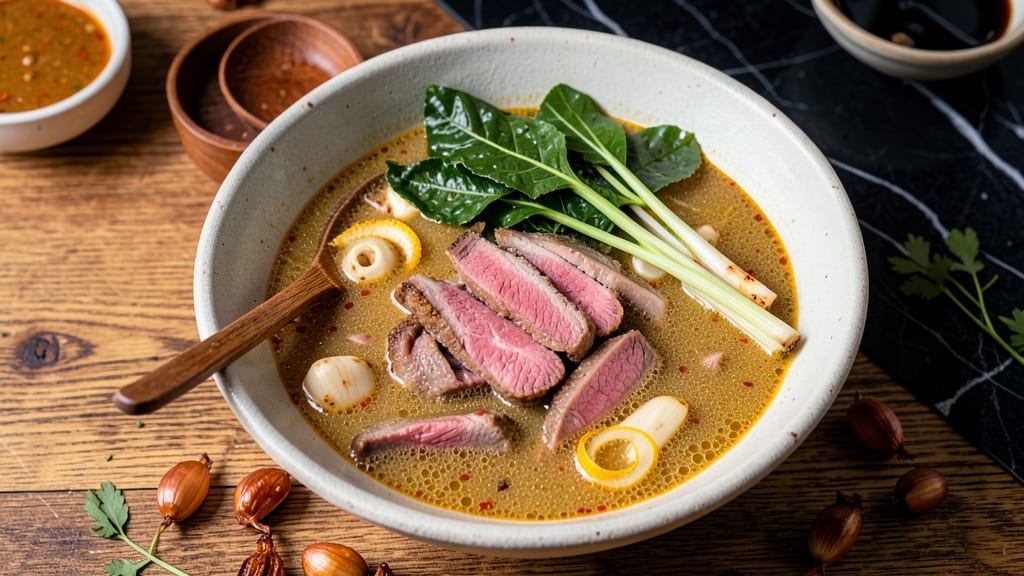
This beef tom yum soup recipe delivers the perfect balance of spicy-lime zing and herbal freshness that makes it Thailand's most beloved dish. 🌟 The secret lies in the aromatic broth—lemongrass, galangal, and kaffir lime leaves create a fragrant base that's both complex and approachable for home cooks.
I've refined this version to ensure the beef stays tender while the soup maintains its signature tangy, spicy punch without overwhelming heat.
The magic happens in the broth preparation, where we build layers of flavor through gentle simmering rather than boiling. This method preserves the delicate aromatics while developing deep umami from shrimp paste and fish sauce.
The key is balancing sourness from lime juice with the natural sweetness of mushrooms and straw mushrooms, which add meaty texture without overpowering the beef.
By the time you're done, you'll have a steaming bowl of soup with tender beef slices swimming in a vibrant broth that's bright, aromatic, and perfectly seasoned. The combination of chili, lime, and fresh herbs creates a symphony of flavors that's both invigorating and comforting.
This recipe serves as an authentic taste of Thailand that's surprisingly simple to recreate at home.
Perfect for spicy food lovers who appreciate depth of flavor, this soup pairs beautifully with steamed jasmine rice to soak up every last drop of that fragrant broth. The instructions walk you through each step to ensure you achieve restaurant-quality results in your own kitchen.
Ingredients for beef tom yum soup
Gather these fragrant ingredients for a bowl of Thailand's most beloved soup—spicy, tangy, and packed with herbal brightness.
| Ingredient | Amount | Notes |
|---|---|---|
| Lean Beef Sirloin 🥩 | 1 lb | Thinly sliced against grain |
| Lemongrass Stalks 🌿 | 3 whole | Bruised and cut into 2-inch pieces |
| Galangal Root 🌿 | 1 piece | About 3 oz, sliced thinly |
| Kaffir Lime Leaves 🍋 | 4 whole | Torn into large pieces |
| Shallots 🧅 | 6 whole | Peeled and thinly sliced |
| Garlic Cloves 🧄 | 6 cloves | Smashed but not minced |
| Straw Mushrooms 🍄 | 8 oz | Whole or sliced in half |
| White Button Mushrooms 🍄 | 8 oz | Whole or quartered |
| Fish Sauce 💧 | 2 tbsp | Red Boat brand preferred |
| Shrimp Paste 🦐 | 1 tbsp | Kapi brand, lightly toasted |
| Bird's Eye Chilies 🌶️ | 4 whole | Adjust for spice preference |
| Lime Juice 🍋 | ½ cup | Freshly squeezed, about 3 limes |
| Coconut Milk 🥥 | 1 can | Full-fat, 13.5 oz can |
| Vegetable Oil 🫒 | 2 tbsp | For high-heat searing |
| Salt 🧂 | 1 tsp | Diamond Crystal preferred |
| Cilantro Leaves 🌿 | ¼ cup | Chopped for garnish |
| Thai Basil Leaves 🌿 | ¼ cup | Chopped for garnish |
The aromatic trio—lemongrass, galangal, and kaffir lime leaves—are non-negotiable for authentic flavor. Thai markets carry all three fresh, but if you're stuck with the grocery store, look for frozen galangal (it's surprisingly good) or substitute extra ginger (though nothing quite matches galangal's citrusy kick). For lemongrass, grab the thick stalks—avoid the thin, leafy tops. The beef should be sirloin for tenderness, sliced paper-thin against the grain. If you can't find shrimp paste, anchovy paste at half the amount works in a pinch, but the umami won't be quite the same.
Chilies are where you can play—start with 4 bird's eye for medium heat, then add more if your crowd loves it fiery. The Red Boat fish sauce is worth seeking out; cheaper brands can taste harsh. Coconut milk matters too—full-fat only, as the lighter versions water down the broth. Straw mushrooms add that signature meaty texture, but if they're unavailable, shiitake mushrooms are a great stand-in. For the mushrooms, keep them whole until the very end so they don't turn to mush. And that shrimp paste? Toast it lightly in a dry pan first—it deepens the flavor dramatically.
This soup tastes even better the next day as the flavors meld, so make a double batch if you can. Store leftovers in the fridge for 4-5 days, or freeze for 3 months—the broth keeps beautifully. For serving, keep the garnishes separate: cilantro for freshness, Thai basil for anise notes. The lime juice should be added last, right before serving, so it stays vibrant. And trust me on this—steamed jasmine rice is the only way to eat this soup.
Why You'll Love This Recipe
- No Chopping Nightmare: I swear by this recipe because the prep is actually simple—just pound the lemongrass and galangal with a mortar (or knife) and toss in the shallots. No dicing, no julienning, no stress. The beef slices itself in thin strips, and boom, you’re halfway there.
- Tangy, Spicy, Addictive: That first sip? Chef’s kiss. The galangal gives it a peppery kick, lemongrass brightens it up, and the kaffir lime leaves add this wild, citrusy depth. It’s the kind of soup that makes you reach for the bowl again before you even put it down.
- Weeknight to Date Night: Serve it steaming in mugs with rice for a lazy Tuesday, or pour it into bowls with fresh herbs for a fancy-ish dinner. It’s my go-to when I want something restaurant-worthy but don’t feel like cooking a full meal. (Yes, even on a Tuesday night.)
- Leftovers That Don’t Suck: Between us, this soup tastes better the next day. The flavors meld into something even richer, and it reheats in minutes. Plus, the beef stays tender—no dry, sad leftovers here. I make a double batch on Sundays and eat it all week.
Step-by-step instructions for beef tom yum soup
This aromatic Thai classic delivers bold flavors through precise technique and fresh ingredients.
🔥 Step 1: Sear the Beef for Deep Flavor
Heat the 2 tablespoons vegetable oil in a large pot over high heat until shimmering. Add the 1 lb lean beef sirloin in a single layer and sear undisturbed for 2 minutes until the edges turn deep brown. This creates a rich crust that forms the soup's foundation.
Use a slotted spoon to transfer the beef to a plate, leaving all the browned bits in the pot. Here's the thing—those bits are packed with flavor. If the beef cooks unevenly, break it into smaller pieces for even cooking later. The beef will finish cooking in the simmering broth, so don't worry about full doneness yet.
👨🍳 Step 2: Build the Aromatic Base
Reduce heat to medium and add the 6 whole shallots and 6 cloves garlic cloves. Sauté for 1 minute until fragrant—you'll smell that sweet onion aroma mingling with garlic's punch. Add the 1 piece galangal root and 3 whole lemongrass stalks, cooking for another 2 minutes until the galangal softens slightly.
This is where the soup's complexity begins. The galangal adds earthy depth while lemongrass brings citrusy brightness. Stir occasionally to prevent burning, but don't let the aromatics stick. If they darken too quickly, reduce heat slightly. The goal is to develop their flavors without charring.
🍳 Step 3: Toast Shrimp Paste and Add Chilies
Increase heat to medium-high and add the 1 tablespoon shrimp paste. Toast for 30 seconds until it releases its intense aroma—this is crucial for authentic flavor. Add the 4 whole bird's eye chilies (adjust for spice preference) and cook for another 30 seconds until they darken slightly but don't burn.
I know it seems like a small amount, but shrimp paste packs serious umami punch. The chilies should infuse heat without dominating—think of them as adding spicy depth rather than outright heat. If you're sensitive to spice, remove the seeds first or use fewer chilies. The soup can always be adjusted later with more lime juice.
🥘 Step 4: Simmer the Broth with Mushrooms
Pour in 2 cups hot water (enough to cover ingredients) and bring to a boil. Add the 8 oz straw mushrooms, 8 oz white button mushrooms, 2 tablespoons fish sauce, and 1 teaspoon salt. Reduce heat to low and simmer for 15 minutes, stirring occasionally, until the mushrooms soften and the broth thickens slightly.
The mushrooms should release their water content into the broth, creating a rich, savory base. Here's where the magic happens—the broth should smell like a complex dance of umami, spice, and citrus. If it looks too thin, simmer uncovered for another 5 minutes to reduce slightly. This concentrated flavor is what makes tom yum sing.
⏰ Step 5: Finish with Coconut Milk and Lime
Return the seared beef to the pot along with the 1 can coconut milk. Stir gently and simmer for 5-7 minutes until the beef is tender and the coconut milk is fully incorporated. Remove from heat and stir in the 0.5 cup lime juice. The soup should be bright, tangy, and balanced—not overly sour or sweet.
This is the moment that matters: the coconut milk mellows the spice while the lime juice cuts through the richness. Taste and adjust seasoning—you might need another ½ teaspoon fish sauce or 1 tablespoon lime juice to perfect the balance. The soup should be spicy, sour, and savory all at once, with none of those flavors overpowering.
🍽️ Step 6: Garnish and Serve Immediately
Ladle the soup into bowls and garnish with 0.25 cup chopped cilantro leaves and 0.25 cup chopped Thai basil leaves. Serve with steamed jasmine rice on the side. The herbs should add freshness and visual appeal, while the rice soaks up the flavorful broth.
Real talk: this soup is best served immediately while the aromatics are fresh and the flavors are vibrant. If you must reheat, do so gently on low heat—just until warmed through—never to a boil, or the delicate flavors will break down. Each bowl should deliver that perfect balance of spicy, sour, and savory that makes tom yum unforgettable.
Pro Tips For Making Beef Tom Yum Soup
- Char the Shallots: Get them deep golden, not just soft—toss them in a dry pan over medium-high heat for 3-4 minutes until they smell nutty and sweet. I used to rush this, and the soup would taste flat; patience here builds flavor.
- Bruise the Galangal: Smash it with the side of your knife before slicing—this releases oils and aroma. Thin slices work best, but if yours is tough, a quick pulse in a food processor (no chopping!) saves time without losing texture.
- Simmer, Don’t Boil: Once the broth starts, reduce to a gentle simmer—hard boiling turns it murky and dulls the lemongrass. A slow, steady bubble keeps the broth clear and bright, like it’s supposed to be.
- Slice the Lemongrass Right: Cut the stalks into 2-inch pieces, then split them lengthwise—this way, they infuse the broth without turning it fibrous. Discard the tough outer leaves, but keep the tender inner ones for garnish. (Yes, even if you’re impatient like me.)
Health benefits of this beef tom yum soup
Immune-Boosting Powerhouse
This soup packs a nutritional punch with ingredients that support your immune system. The lemongrass and galangal contain anti-inflammatory compounds, while shallots and garlic provide allicin—a potent immune-boosting compound. I've found that simmering these aromatics releases their beneficial properties into the broth, making every sip work for you. 💪
Protein-Packed Perfection
With 1 lb lean beef sirloin as the star, this recipe delivers 40 grams of high-quality protein per serving. The beef is sliced thinly to ensure tender bites that absorb the flavorful broth.
Unlike heavy cuts, sirloin provides lean protein without excessive fat, making it a heart-healthy choice. Pair it with the mushrooms for a complete amino acid profile.
Digestive Benefits
The combination of straw mushrooms and white button mushrooms adds fiber and prebiotic properties that support gut health. The galangal root, often called "Thai ginger," aids digestion and reduces bloating—something I've personally noticed after eating this soup regularly.
The probiotic qualities in fermented fish sauce also contribute to a healthy gut microbiome.
Antioxidant-Rich Broth
Bird's eye chilies and kaffir lime leaves are packed with antioxidants that combat oxidative stress. The lime juice adds vitamin C, while the Thai basil garnish provides additional antioxidants. This makes the soup not just delicious, but also a great addition to a health-focused diet.
The vibrant colors in your bowl indicate a variety of beneficial compounds at work.
Low-Calorie Comfort
At around 300 calories per serving, this soup delivers satisfying flavor without the heaviness of creamy dishes. The coconut milk adds richness while keeping the calorie count in check compared to traditional Western soups.
It's the perfect balance of indulgence and nutrition—something I appreciate when I want comfort food that still supports my wellness goals.
Hydration Helper
The broth-based nature of this soup makes it an excellent hydrating option. With 2 cups of water as the base, it helps replenish fluids while providing electrolytes from the fish sauce and herbs.
I've found it's particularly refreshing after a workout or when I need to recover from an illness. The spicy elements also help clear sinuses naturally, which is a bonus during allergy season. 💧
Nutrition facts
Frequently asked questions
Can I substitute beef with another protein?
For a vegetarian version, use 1 lb firm tofu (pressed and cubed) or 8 oz mushrooms (like shiitake). For seafood lovers, shrimp or white fish fillets (like cod) work beautifully. Just adjust cooking times—shrimp cooks in 3-4 minutes while fish needs 8-10 minutes to flake easily. The key is keeping the protein tender so it absorbs the aromatic broth.
How do I adjust the spice level?
Start with 4 bird's eye chilies for medium heat, then remove seeds for less intensity. For milder heat, reduce to 2 chilies or use 1-2 Thai chilies (less potent). If you love spice, add 1 extra chili or a pinch of red chili flakes at the end. Remember, the lime juice also brightens the heat—balance is key!
What if I can't find galangal or kaffir lime leaves?
Galangal can be replaced with extra ginger (2 tbsp)—it's milder but adds warmth. For kaffir lime leaves, use 2 tbsp lime zest + 1 tbsp lime juice> or 1 bay leaf> (though the aroma won't be identical). Both substitutions work, but the authentic version uses these unique ingredients. If you're adventurous, check Asian markets—they often carry frozen galangal!
Can I make this soup ahead of time?
Yes, but with a few tweaks. Prepare the broth (without lime juice) and store it in the fridge for 3-4 days> or freeze for 3 months. Reheat gently on low heat—never boil—to preserve flavors. Add fresh lime juice, herbs, and coconut milk just before serving. The beef will stay tender if reheated quickly, but mushrooms may soften further. Garnish with fresh basil and cilantro right away for the best presentation.
Why does my tom yum soup taste flat?
Flat flavor usually means one of three things: under-seasoned broth> (add more fish sauce or shrimp paste), overcooked aromatics> (simmer gently, don't boil), or missing freshness> (add extra lime juice or fresh herbs). Another common mistake is using low-quality fish sauce—opt for Red Boat brand**> for authentic umami. Taste as you go and adjust gradually!