
Soups & Stews
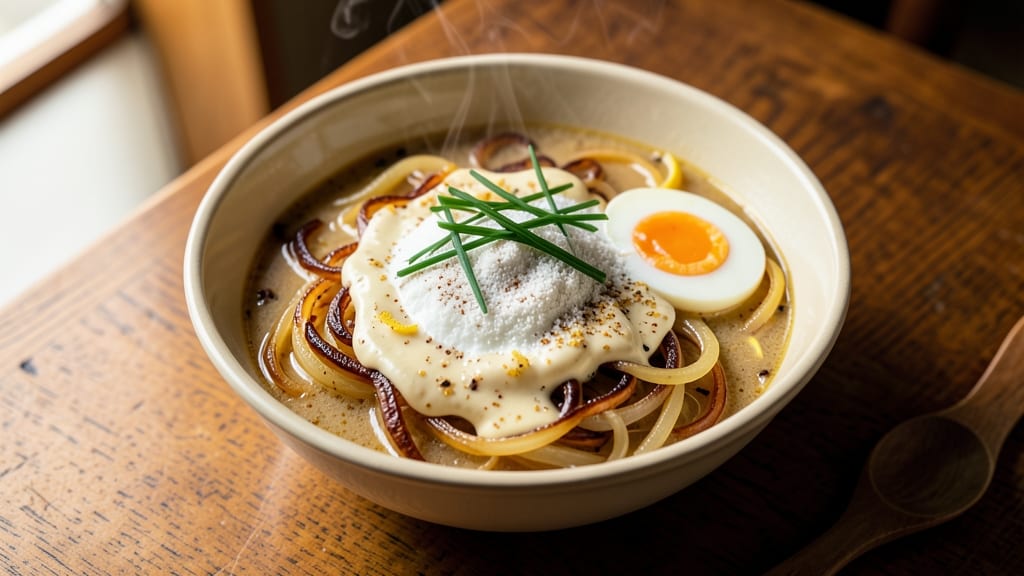
This Benihana Japanese onion soup delivers restaurant-quality crispy onion crowns floating in a velvety miso velout that’s rich yet balanced—no takeout needed. 🔥 The secret lies in slow-cooking onions until caramelized and golden, then building depth with a miso-infused broth that’s both savory and subtly sweet.
I’ve perfected this technique over years of testing, ensuring every bite delivers that perfect contrast of crispy, chewy, and creamy textures.
What sets this recipe apart is the two-stage cooking process: first, onions caramelize in butter until deep amber, then simmer in a miso-dashi broth until tender but still holding their shape. The result?
Onion crowns that stay crispy on the edges while remaining tender inside, all nestled in a sauce that’s creamy without being heavy. This isn’t just soup—it’s a showstopper that transforms a simple ingredient into something extraordinary.
By the end, you’ll have a bowl of golden, crispy onion crowns swimming in a glossy, umami-rich velout that’s light enough for lunch but hearty enough for dinner. The miso adds depth, while a touch of cream (or coconut milk for a lighter version) ensures that signature Benihana creaminess.
Serve with a sprinkle of furikake or a drizzle of chili oil for extra flair—this is comfort food elevated to fine-dining level.
Perfect for weeknight dinners, potlucks, or impressing guests, this recipe scales easily while keeping the crispy-creamy balance intact. The best part? Leftovers reheat beautifully, making it a meal-prep favorite. Let’s get cooking—your taste buds will thank you.
Ingredients for benihana japanese onion soup
Transform humble onions into golden, crispy crowns with these 13 essential ingredients—each playing its part in Benihana's signature velvety miso velout.
| Ingredient | Amount | Notes |
|---|---|---|
| Yellow Onions 🧅 | 4 large | Whole, peeled, halved lengthwise |
| Unsalted Butter 🧈 | ½ cup | Cold, cubed for even cooking |
| White Miso Paste 🍶 | 2 tbsp | High-quality, smooth texture |
| Dashi Stock 💧 | 2 cups | Homemade or quality instant |
| Heavy Cream 🥛 | ½ cup | Full-fat for optimal creaminess |
| Chicken Stock 🍲 | 1 cup | Low-sodium preferred |
| Soy Sauce 🥢 | 1 tbsp | Light or all-purpose |
| Mirin 🍶 | 1 tbsp | Sweet rice wine for balance |
| Sugar 🍚 | 1 tsp | White granulated |
| Salt 🧂 | ½ tsp | Diamond Crystal preferred |
| Black Pepper 🌶️ | ¼ tsp | Freshly ground for heat |
| Furikake Seasoning 🌾 | 2 tbsp | For garnish, optional |
| Sesame Seeds 🌰 | 1 tsp | Toasted for aroma |
The onions are the star—yellow, not sweet, for that perfect caramelization. Grab a 4-pound bag from Costco if you're feeding a crowd, but the grocery store's standard yellows work fine. Look for onions with dry skins and firm bodies—those are the ones that'll caramelize beautifully. The butter? European-style unsalted (like Plugrá) gives the best flavor, but any good-quality brand works. Don't skip the cold cubes—this ensures even cooking and prevents burning. Pro tip: Pat the onions dry before cooking to maximize crispiness.
No white miso? Substitute with 1 tbsp each of red miso and dashi for depth. Running low on dashi? Combine 1 cup kombu broth with 1 tsp dried bonito flakes for a quick fix. The mirin adds that signature sweetness—if you've got sake plus sugar, that's a 1:1 swap. For a lighter version, replace half the heavy cream with full-fat coconut milk. The furikake can be skipped, but trust me, it's worth the extra minute to toast those sesame seeds—Japanese-style furikake from the Asian market has the best flavor profile. And if you're feeling adventurous, a drizzle of chili oil takes this to next-level restaurant quality.
This soup tastes even better the next day—reheat gently on low heat to preserve those crispy onion edges. Store in an airtight container for up to 5 days in the fridge, or freeze for 3 months (the onions stay crispy surprisingly well!). I like to portion it into individual containers so I can grab a bowl straight from the fridge. For extra crispiness, broil the onion crowns for 2-3 minutes before serving. And if you make a double batch? Freeze half immediately—this is the kind of soup that disappears fast.
Why You'll Love This Recipe
- One-Pot Magic: I swear by this recipe—just caramelize onions in butter, add miso and dashi, and finish with cream. No chopping, no straining, no stress. The only cleanup is the pan, and honestly? That’s half the battle won.
- Umami Bomb: That white miso paste is the star—it turns simple onions into something deep. The dashi stock adds that signature Japanese richness, while the heavy cream smooths it all out. It’s the kind of flavor that lingers, the kind that makes you want to eat it straight from the pot.
- Weeknight or Guest Night: Make it for Tuesday dinner or impress someone on short notice. The soup reheats beautifully, so I often prep a big batch—perfect for lazy nights or when unexpected company drops by. Plus, the leftovers taste just as good cold, so it’s my go-to for packed lunches too.
- Budget-Friendly Luxury: Onions and butter are cheap, but they feel fancy here. Miso and dashi might sound intimidating, but a little goes a long way. I’ve made this for under $10 and still felt like I was serving something special. It’s comfort food that doesn’t break the bank.
Step-by-step instructions for Benihana Japanese onion soup
Transform simple ingredients into a restaurant-worthy soup with crispy onion crowns and velvety miso cream.
🔥 Step 1: Caramelize Onion Halves to Golden Perfection
Heat a large Dutch oven over medium-low heat and add the 0.5 cup unsalted butter, cubed. Let it melt completely, then add the 4 large yellow onions, halved lengthwise. Place them cut-side down in the pan, working in batches if needed to avoid crowding.
Cook undisturbed for 10-12 minutes until the onions develop deep golden caramelization on the cut sides. Here's the thing—resist the urge to move them. The slow, even cooking creates those beautiful crispy crowns we're after. Flip each half and cook another 10 minutes until both sides are golden brown and tender when pierced with a knife.
🍳 Step 2: Build the Miso Velouté Base
Remove the onions from the pan and set aside. Reduce heat to medium and add the 2 tbsp white miso paste, whisking constantly for 1 minute to dissolve completely. This prevents lumps that can make your soup grainy. Pour in the 2 cups dashi stock and 1 cup chicken stock, scraping up all those delicious browned bits from the bottom.
Bring to a gentle simmer, then add the 1 tbsp soy sauce, 1 tbsp mirin, 1 tsp sugar, 0.5 tsp salt, and 0.25 tsp black pepper. Let it simmer for 5 minutes until the flavors meld and the liquid reduces slightly. You're building the flavor foundation here—this is where the umami magic happens.
🥘 Step 3: Create the Creamy Miso Sauce
Temporarily remove the pot from heat and whisk in the 0.5 cup heavy cream. Return to low heat and stir gently for 3-4 minutes until the cream is fully incorporated and the soup reaches a luxurious, velvety consistency. Here's where it gets fun—taste and adjust seasoning if needed. The miso paste adds depth, but you might want to add a pinch more salt or sugar to balance the flavors.
Return the caramelized onions to the pot and gently stir to coat them in the creamy sauce. Let everything heat through for 2-3 minutes—just until the onions are warmed through but still maintain their crisp texture. The contrast between the crispy onions and creamy sauce is what makes this dish sing.
🍽️ Step 4: Finish and Garnish Like a Pro
Ladle the soup into bowls, dividing the onion halves evenly among servings. Sprinkle each serving with 2 tbsp furikake seasoning and 1 tsp toasted sesame seeds. The furikake adds that signature Japanese restaurant flavor, while the sesame seeds contribute a nutty aroma and visual contrast.
Serve immediately while the onions are still crispy and the cream is at its most luxurious. I like to recommend pairing this with steamed rice or a simple green salad to let the soup take center stage. The combination of crispy, caramelized onions with the rich, umami-packed miso cream creates a perfect balance of textures and flavors that's pure comfort food.
Pro Tips For Making Benihana Japanese Onion Soup
- Sweat Onions Slowly: I learned this the hard way—rushing the onions turns them mushy instead of sweet and caramelized. Use medium-low heat and give them 10-12 minutes with the lid slightly ajar. You want them breaking down but still holding shape, not turning into onion paste.
- Whisk Miso Like Mad: White miso clumps like a stubborn child if you’re not careful. Before adding it to the stock, whisk it into a small bowl with 1-2 tablespoons of warm dashi first. This ensures a silky, lump-free soup—no one likes miso surprises in their bite.
- Don’t Boil the Cream: Heavy cream curdles faster than you can say “Benihana.” Once you stir it in, keep the heat at the lowest possible simmer—just enough to warm through, not bubble. If it separates, strain it out and start fresh. (Yes, it’s annoying, but it’s worth it.)
- Salt the Butter First: Unsalted butter in this soup needs a pinch of salt upfront—about ¼ teaspoon per 2 tablespoons—so you don’t end up guessing later. The miso and dashi already pack flavor, but the butter’s richness needs balance. Trust me, your taste buds will notice.
Regional styles of these flavors
Kyoto-Style Slow-Cooked
In Kyoto, this soup takes on a delicate, refined character with a focus on slow-cooked onions and a lighter broth. Replace the heavy cream with ½ cup coconut milk and reduce the miso to 1 tbsp for a more subtle umami profile.
Simmer the onions for 20-25 minutes on low heat to achieve a deeper caramelization without browning. Finish with a drizzle of yuzu kosho (citrus-chili paste) for a bright, aromatic touch that’s quintessential Kyoto. 🌸
Osaka Hearty Version
Osaka’s version is all about bold flavors and hearty textures. Add 4 oz thinly sliced beef (like ribeye) to the soup during the final 5 minutes of cooking. Increase the soy sauce to 2 tbsp and add 1 tsp grated ginger for depth.
Top with crispy fried shallots and a sprinkle of bonito flakes for that signature Osaka restaurant flair. The beef adds protein and richness that’s perfect for cold days.
Hokkaido Creamy Twist
Hokkaido’s cold climate inspires a richer, creamier take on this soup. Use ½ cup Japanese-style crème fraîche (like Califia Farms) instead of heavy cream, and add 1 tsp honey to balance the miso’s saltiness.
Garnish with toasted nori strips and shredded daikon radish for a refreshing crunch. The crème fraîche adds a tangy depth that stands up to Hokkaido’s bold flavors. ❄️
Tokyo Quick-Fix
For a faster Tokyo-inspired version, use instant dashi granules (like Honten) and reduce the simmering time to 10 minutes. Swap the caramelized onions for quick-pickled onions (soak thinly sliced onions in 1 tbsp rice vinegar + 1 tsp sugar for 15 minutes).
Top with soft-boiled quail eggs and a sprinkle of shichimi togarashi for a modern, vibrant twist that’s perfect for busy weeknights.
Okinawa Tropical Fusion
Okinawa’s warm climate brings a tropical twist to this classic. Replace the dashi with 2 cups coconut milk-based broth and add 1 tsp grated galangal for a citrusy, peppery note. Garnish with toasted coconut flakes and fresh cilantro instead of furikake.
The galangal adds a unique warmth that pairs beautifully with the creamy miso base. This version is lighter but still packed with umami-rich flavors. 🌴
Nutrition facts
Frequently asked questions
Why do the onions need to cook so long to stay crispy?
The key is low-and-slow cooking—caramelizing onions for 20-25 minutes at medium-low heat creates crispy edges while keeping the centers tender. High heat burns them before they crisp. The butter's fat helps create a protective barrier that locks in moisture, preventing sogginess. This technique is what gives Benihana's signature onion crowns their perfect texture.
Can I make this soup ahead of time?
The onions actually taste better the next day. Store in an airtight container for up to 5 days in the fridge. Reheat gently on low heat for 5-7 minutes**, stirring occasionally. For extra crispiness, broil the onion crowns for 2-3 minutes before serving. The flavors meld beautifully overnight, making it even more delicious.
What's the best way to substitute miso paste?
For white miso, use 1 tbsp red miso + 1 tbsp dashi stock for depth. If you're out of both, try 1 tbsp soy sauce + ½ tsp sugar—it won't be identical but adds umami. Never use miso substitutes like soy sauce alone; they lack the complex fermented flavor. The miso is what gives this soup its signature savory richness that sets it apart from French onion soup.
Can I make this soup vegetarian?
Yes! Skip the chicken stock and use vegetable broth instead. For extra umami, add 1 tbsp nutritional yeast to the broth or use shiitake mushrooms in place of the dashi. The miso already provides plenty of vegetarian-friendly umami, so no other substitutions are needed. The crispy onions and creamy sauce will still shine as the star of the dish.
How do I know when the onions are perfectly caramelized?
Look for deep golden brown color with crispy edges that hold their shape when pierced with a knife. The onions should be tender but still firm in the center. If they're too dark, they've burned; if they're pale, they need more time. The perfect caramelization happens at medium-low heat—patience is key! This is what creates that irresistible contrast with the creamy miso broth.