
Soups & Stews
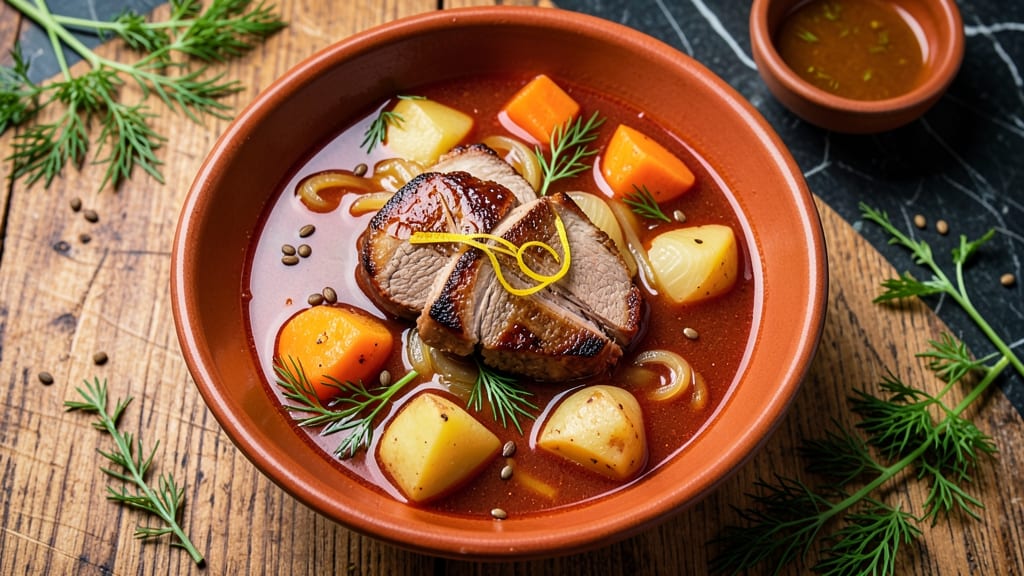
This Bergen soup recipe brings Norway's coastal traditions to your kitchen with its hearty blend of lamb, root vegetables, and fresh dill. 🌊 Born from Bergen's fishing heritage, this stew transforms simple ingredients into a deeply flavorful dish that's both comforting and sophisticated.
The secret lies in slow simmering—allowing lamb to tenderize while potatoes and carrots absorb the rich, peppery broth infused with caraway and black pepper.
What makes this recipe special is its balance of textures and flavors: tender lamb, creamy potatoes, and crisp carrots all bathed in a fragrant broth.
Unlike many seafood stews, Bergen soup incorporates lamb—a nod to Norway's agricultural roots—while still embracing the ocean's influence through fresh dill and the subtle saltiness of root vegetables. The dish is traditionally served with crusty rye bread, which soaks up every last drop of that aromatic broth.
The cooking process is straightforward but requires patience: lamb and vegetables simmer together for at least 2 hours, developing deep, layered flavors. The result is a soup that's hearty enough for a winter meal but light enough for a spring gathering.
Each spoonful delivers a symphony of savory, earthy, and slightly sweet notes, making it a dish that feels both nostalgic and entirely new.
Perfect for family dinners or cozy gatherings, this Bergen soup transforms humble ingredients into a restaurant-worthy experience. The recipe scales easily, so you can adjust quantities based on your needs—whether feeding a crowd or simply savoring a bowl on a chilly evening. Let's get started on creating this Norwegian classic.
Ingredients for bergen soup
Six ingredients anchor this Norwegian classic: lamb for depth, root vegetables for heartiness, and fresh herbs for brightness.
| Ingredient | Amount | Notes |
|---|---|---|
| Lamb Shoulder 🍖 | 2 lb | Bone-in for flavor, cut into 1-inch cubes |
| Yellow Onions 🧅 | 2 whole | Medium size, sliced into half-moons |
| Carrots 🥕 | 4 whole | Medium size, cut into 1-inch chunks |
| Russet Potatoes 🥔 | 4 whole | Medium size, cut into 1-inch chunks |
| Fresh Dill 🌿 | ½ cup | Packed, stems removed, finely chopped |
| Whole Caraway Seeds 🌱 | 1 tbsp | Toasted lightly for enhanced flavor |
| Ground Black Pepper 🌶️ | 1 tbsp | Freshly cracked for maximum aroma |
| Kosher Salt 🧂 | 2 tsp | Diamond Crystal preferred for accuracy |
| Fresh Parsley 🌿 | ¼ cup | Chopped, for garnish |
| Extra-Virgin Olive Oil 🫒 | ¼ cup | For searing lamb and sautéing onions |
| Lamb or Vegetable Stock 💧 | 6 cups | Homemade preferred, low-sodium if store-bought |
| Heavy Cream 🥛 | ½ cup | Full-fat for optimal texture |
| Lemon Juice 🍋 | 1 tbsp | Freshly squeezed, for brightness |
The lamb shoulder is the foundation—bone-in for richer flavor—and should be well-marbled. Costco or local butchers often carry high-quality cuts; look for visible fat between the muscles. If using pre-cut lamb, ensure the pieces are uniform in size for even cooking. Fresh dill is non-negotiable here; Norwegian markets or specialty grocers often carry it in abundance, but any high-quality fresh dill works. Caraway seeds should be toasted briefly in a dry pan before adding to the pot—this releases their essential oils and deepens their flavor profile. For stock, homemade lamb stock is ideal, but low-sodium vegetable stock works in a pinch, especially if you're accommodating dietary preferences.
No lamb? Beef chuck or even hearty mushrooms can substitute, though the flavor profile shifts slightly. Fresh dill wilt fast—store stems-down in a jar of water in the fridge to extend freshness. Short on caraway seeds? Fennel seeds at half the amount offer a similar earthy note. The heavy cream can be swapped for coconut milk for a lighter option, though the texture will differ. For a vegetarian version, replace lamb with extra-firm tofu or lentils, and use vegetable stock exclusively. The potatoes and carrots can be swapped for celery root or parsnips if you prefer, though the traditional root vegetables provide the best texture contrast.
This soup tastes even better the next day as flavors meld. Store in an airtight container in the fridge for up to 5 days, or freeze for 3 months. To reheat, warm gently on the stove with a splash of water or stock to restore creaminess. For serving, crusty rye bread is traditional—its dense texture soaks up the rich broth beautifully. Garnish with extra dill and a drizzle of olive oil just before serving to highlight the fresh herbs' vibrant color and aroma. The soup scales easily, so double the ingredients for a crowd—just ensure you have enough stock to maintain the right consistency.
Why You'll Love This Recipe
- One-Pot Magic: I swear by this recipe—just toss everything in one pot, let it simmer, and walk away. No chopping like a pro, no fancy techniques; the lamb shoulder practically melts into tender perfection while you’re answering emails or scrolling through memes.
- Rich, Earthy Depth: That lamb shoulder? It’s the star—slow-cooked until it’s fall-apart tender, then balanced by the sweetness of caramelized onions and carrots. The dill at the end? Fresh, bright, and just enough to cut through the richness without overpowering it.
- Leftover Heaven: Between us, this soup only gets better the next day. The flavors meld into something deeper, and reheating it is zero effort—just pop it in a pot or microwave, and you’ve got dinner sorted. Honestly, I make a double batch on Sundays just for this reason.
- Budget-Friendly Feast: Lamb shoulder is affordable, potatoes stretch it further, and the veggies bulk it up without breaking the bank. It’s the kind of meal where you’re feeding a houseful of people (or just yourself for a week) without stressing over grocery receipts.
Step-by-step instructions for Norwegian lamb and root stew
Transform simple ingredients into a hearty Norwegian-inspired stew with rich lamb flavor and aromatic herbs.
🔥 Step 1: Sear the Lamb Shoulder for Deep Flavor
Heat a large Dutch oven over medium-high heat until hot. Add the 2 lb lamb shoulder cut into 1-inch cubes in a single layer, letting them sear undisturbed for 3-4 minutes until deeply browned on all sides. This creates a flavorful crust that forms the base of your stew.
Real talk: Don't overcrowd the pan or the lamb will steam instead of sear. Work in batches if needed, keeping the first batch warm while you sear the second. Once all pieces are browned, transfer them to a plate and set aside.
🍳 Step 2: Build the Aromatic Base with Onions and Carrots
In the same Dutch oven, add 2 tablespoons of the 0.25 cup extra-virgin olive oil and swirl to coat the browned bits. Add the 2 whole yellow onions sliced into half-moons and the 4 whole carrots cut into 1-inch chunks. Cook over medium heat for 8-10 minutes, stirring occasionally, until the onions soften and the carrots begin to caramelize.
Here's the thing—you want those onions to turn golden, not brown. If they start to darken too quickly, reduce the heat slightly. This step develops the sweetness that balances the rich lamb flavor. Add the 1 tbsp whole caraway seeds now and toast them for 30 seconds to release their nutty aroma.
🥘 Step 3: Simmer the Stew with Potatoes and Stock
Return the seared lamb to the Dutch oven. Add the 4 whole russet potatoes cut into 1-inch chunks, 6 cups lamb or vegetable stock, 2 tsp kosher salt, and 1 tbsp ground black pepper. Bring to a gentle boil, then reduce heat to low and cover partially. Simmer for 1 hour to 1 hour 15 minutes until the lamb is fork-tender and the potatoes are easily pierced with a knife.
I know it seems like a long wait, but patience pays off. The lamb should pull apart easily, and the potatoes should be tender but not falling apart. If the stew looks too thin, uncover and simmer for another 5-10 minutes to reduce slightly. This is where the magic happens—the flavors meld into a rich, comforting stew.
🍳 Step 4: Finish with Fresh Herbs and Cream
Once the lamb is tender, stir in the 0.5 cup fresh dill and 0.5 cup heavy cream. Simmer uncovered for an additional 5 minutes to heat through and allow the cream to thicken slightly. The stew should be creamy but not overly thick—if it's too thick, whisk in 1-2 tablespoons of stock to reach your desired consistency.
Finish with the 1 tbsp lemon juice and taste for seasoning. The acidity brightens the rich flavors, cutting through the cream. If needed, adjust the salt and pepper to balance the seasoning. The stew should be flavorful but not overpowering—each ingredient should be recognizable.
🍽️ Step 5: Serve with Fresh Parsley Garnish
Ladle the stew into warm bowls, garnishing each serving with 1 tablespoon of the chopped fresh parsley. The parsley adds a fresh contrast to the rich, creamy stew and makes it look restaurant-worthy. Serve immediately with crusty bread to soak up every last drop of that delicious broth.
This stew tastes even better the next day as the flavors continue to develop. Store leftovers in the refrigerator for up to 3 days or freeze for up to 3 months. The lamb will continue to tenderize, making each bite more flavorful with time.
Pro Tips For Making Bergen Soup
- Brown the Lamb Hard: The first 15 minutes of searing your lamb shoulder in a Dutch oven at full heat—yes, even if it splatters—builds flavor that simmering alone won’t replicate. I used to rush this, and the soup tasted flat until I learned to let the meat develop that deep, caramelized crust first.
- Cut Potatoes Uniformly: Chop those Russet potatoes into 1-inch chunks, but make them all the same size—no tiny bits, no giant hunks. Uneven cooking means some will turn to mush while others stay rock-hard, and nobody wants that texture fight in their soup.
- Save the Onion Water: After sautéing your onions, don’t pour out that browned, flavor-packed liquid at the bottom of the pot. Deglaze with a splash of broth or water—it’s where half the sweetness went, and skipping it means missing out on depth.
- Add Dill Late: Tuck the fresh dill into the soup only in the last 10 minutes of simmering, or it’ll turn bitter and lose its bright punch. If you’re using dried, sprinkle it in even earlier, but fresh is worth the wait—trust me, your spoonful of broth will taste like summer.
Essential equipment for this recipe
Dutch Oven Essentials
A 6-8 quart Dutch oven with lid is the cornerstone of Bergen soup—its heavy construction ensures even heat distribution for that perfect slow simmer. I swear by the Le Creuset Stoneware Dutch Oven (it's pricey but lasts forever) or the budget-friendly Amazon Basics Dutch Oven for reliable performance.
The lid must fit snugly to trap steam and develop rich flavors during the 1-1.5 hour simmer. 🥘
Precision Thermometer
Invest in a meat thermometer with a probe—like the Thermoworks Smoke—to monitor lamb doneness. The internal temperature should reach 195-205°F for fork-tender results. I check it after 1 hour of simmering and adjust cooking time accordingly.
This prevents overcooking while ensuring the lamb falls apart easily. A digital thermometer also helps gauge stock reduction if your stew needs thickening.
Sharp Knife Set
Uniformly cut ingredients cook evenly, so a sharp chef's knife (like the Wüsthof Classic) and mandoline (for potatoes/carrots) are game-changers. I chop lamb into 1-inch cubes for consistent cooking, while onions and carrots should be ½-inch thick for proper caramelization.
A boning knife helps separate lamb from bones if needed. Never use dull knives—safety and precision matter here.
Wooden Spoon
A heat-resistant wooden spoon (I use OXO Good Grips) is your best friend for stirring without scratching the Dutch oven. It won’t react with acidic ingredients like metal utensils might, and its shape helps scrape up browned bits from the bottom—those flavorful fond deposits are essential for depth.
Avoid plastic spoons, which can melt at high heat.
Fine-Mesh Strainer
For stock reduction or clarifying broth, a fine-mesh strainer (like the OXO Good Grips) separates solids cleanly. I strain the stew before adding cream to ensure a silky texture. If you're making homemade stock, this tool helps filter out impurities for a crystal-clear base.
A cheesecloth works too, but takes longer. Store it in a dry place to prevent mold.
Timer & Measuring Tools
Set a kitchen timer (I use my phone’s) for the 30-second caraway toast and 5-minute cream finish—these short intervals are easy to miss. For measurements, a digital scale (like the OXO Good Grips) ensures accuracy with lamb portions, while a measuring cup set handles liquids and spices precisely.
A microplane grates lemon zest if you want extra brightness, but fresh juice works just as well. 💡
Nutrition facts
Frequently asked questions
Can I make Bergen soup without lamb?
For a vegetarian version, replace the lamb with 2 cups of hearty lentils or 1.5 lbs of extra-firm tofu, cut into cubes. Simmer the tofu/lentils for 20-25 minutes before adding potatoes to ensure they're fully cooked. The broth will still develop rich flavors from the root vegetables and spices.
Why does my Bergen soup taste bland?
Bland flavors usually mean the spices or herbs weren't toasted enough or the broth wasn't reduced properly. Always toast the caraway seeds for 30 seconds to release their aroma, and simmer the stew uncovered for the last 5-10 minutes to concentrate the flavors. Taste and adjust with extra black pepper or a splash of lemon juice before serving.
How do I adjust this recipe for a slow cooker?
Transfer the seared lamb, onions, and carrots to the slow cooker, then add all remaining ingredients except the cream and parsley. Cook on low for 6-7 hours or high for 3-4 hours until lamb is tender. Stir in cream and lemon juice during the last 15 minutes of cooking. The slow cooker's gentle heat helps tenderize the lamb without overcooking the vegetables.
What's the best way to reheat leftovers?
Reheat gently on the stove over low heat with 1-2 tablespoons of water or stock to restore creaminess. Avoid microwaving as it can make the potatoes gummy. For extra flavor, add a pinch of caraway seeds or a sprig of fresh dill while reheating. Leftovers taste even better the next day as flavors meld further!
Can I make this soup spicier?
Yes! Add ½ teaspoon of smoked paprika with the onions or 1-2 sliced jalapeños to the pot. For heat lovers, stir in ½ teaspoon of cayenne pepper during the final simmer.