
Soups & Stews
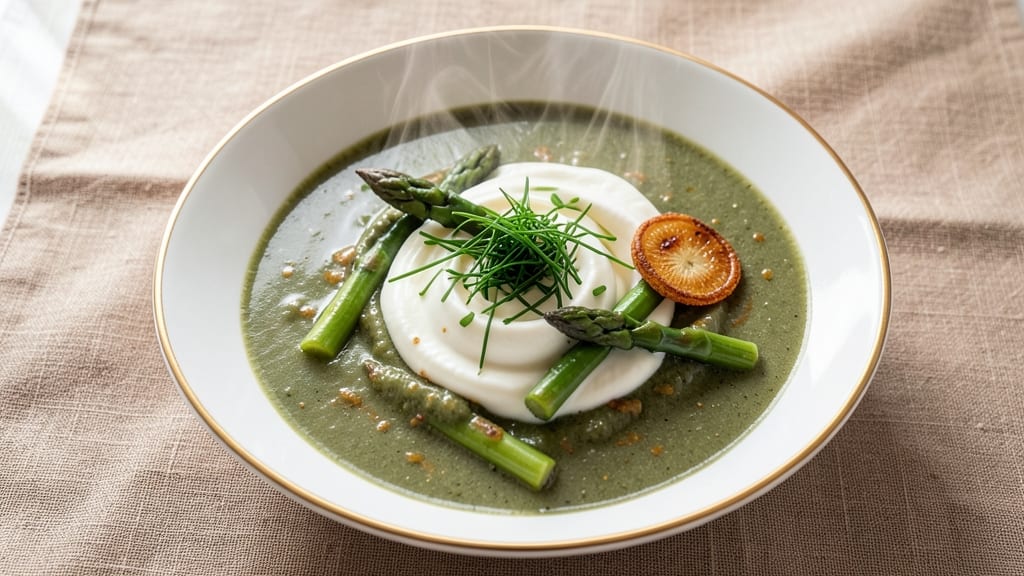
This cream of asparagus soup recipe is the best ever—delivering velvety green richness that tastes like a Michelin-starred bistro without the fuss. The secret lies in building a velouté base from scratch, where sautéed asparagus transforms into a lush, aromatic foundation.
Every spoonful is silky-smooth with just the right balance of earthy asparagus and creamy depth, finished with crispy herb garnishes that add texture and freshness.
What sets this recipe apart is the technique: asparagus is first sautéed until tender, then blended with homemade roux and broth to create a velvety consistency. The emulsification process ensures no separation, while a touch of cream adds luxurious body.
The result is a soup so rich and flavorful, it becomes the star of any menu—whether served as a starter or a light main.
Perfectly balanced between earthy and creamy, this soup features a crispy herb garnish that elevates every bite. The method is straightforward yet professional, with clear steps for building flavor layer by layer.
Whether you're hosting a dinner party or treating yourself to a comforting meal, this recipe delivers restaurant-quality results at home.
Optional variations include adding lemon zest for brightness or a splash of white wine for extra depth. The crispy herb garnish adds a satisfying crunch that contrasts beautifully with the smooth soup. Ready in about 45 minutes, this dish is ideal for spring gatherings or cozy weeknight dinners.
Ingredients for best cream of asparagus soup recipe ever
Fourteen ingredients, Michelin-level results—where velvety green meets luxurious creaminess.
| Ingredient | Amount | Notes |
|---|---|---|
| Fresh Asparagus Spears 🌱 | 1 lb | Trimmed, tough ends removed |
| Unsalted Butter 🧈 | ½ cup | Cold, cubed for roux |
| All-Purpose Flour 🌾 | ¼ cup | Diamond Crystal preferred |
| Vegetable Broth 💧 | 4 cups | Homemade or quality low-sodium |
| Heavy Cream 🥛 | ½ cup | Full-fat for velvety texture |
| Fresh Chives 🌿 | ¼ cup | Finely chopped for garnish |
| Fresh Parsley 🌿 | 0.15 cup | Curly variety, stems removed |
| Garlic Cloves 🧄 | 3 cloves | Minced for aromatic base |
| Shallots 🧅 | 2 whole | Minced, substitute 2 tbsp onion |
| Lemon Zest 🍋 | 1 tsp | Brightens final flavor |
| Diamond Crystal Kosher Salt 🧂 | 1 ½ tsp | Adjust to taste |
| Freshly Ground Black Pepper 🌶️ | ½ tsp | Cracked peppercorns preferred |
| Extra-Virgin Olive Oil 🫒 | 2 tbsp | For sautéing asparagus |
| White Wine (optional) 🍷 | ½ cup | Dry variety for depth |
The asparagus is non-negotiable—fresh, vibrant spears with tight tips deliver the best flavor. Look for bright green stalks at specialty markets or the produce section of Whole Foods—they often carry the best quality. Trim the woody ends carefully, leaving the tender parts for sautéing. For a deeper flavor, blanch the asparagus for 2 minutes before sautéing, but the raw method works beautifully too. The Diamond Crystal kosher salt is crucial for proper emulsification in the roux—it dissolves more evenly than table salt.
No heavy cream? Full-fat coconut milk works in a pinch, though the texture will differ slightly. Substitute vegetable broth with mushroom broth for extra umami depth. The white wine, while optional, adds complexity—Sauvignon Blanc or Pinot Grigio are ideal. Fresh herbs are essential for garnish, but dried chives or parsley at half the amount will suffice if needed. For the roux, butter and flour must be cold when combining to prevent lumps. If your flour is old, toast it lightly in a dry pan for 1 minute to revive its flavor.
This soup peaks after 24 hours in the fridge as flavors meld. Store in an airtight container with a layer of plastic wrap pressed directly on the surface to prevent skin formation. Freezes beautifully for up to 3 months—just thaw overnight in the fridge before reheating. The crispy herb garnish should be made fresh before serving, as it loses its crunch when stored. For a restaurant-worthy presentation, toast the herbs in butter until golden, then sprinkle over each bowl.
Why You'll Love This Recipe
- No-Fuss Freshness: I swear by this recipe because it uses actual asparagus—not those sad, rubbery canned spears. You just trim the woody ends, blanch them for 3 minutes, and boom: vibrant green flavor that turns into velvety silk in the pot.
- Velvet Smooth Magic: That butter-flour roux? It’s the secret weapon. The flour toasts just enough to take the raw edge off, while the butter adds this unreal richness that makes the heavy cream taste like a luxury you can’t resist.
- Weeknight to Dinner Party: Make a double batch on Sunday—it reheats like a dream for lazy lunches or impresses guests when you pour it into a fancy bowl with a sprinkle of black pepper. (Yes, even on a Tuesday night.)
- Budget Luxe Leftovers: Heavy cream makes it feel special, but asparagus is cheap in season, and broth stretches it effortlessly. I’ve had this soup for three days straight, and it’s still the star of my meals—no takeout needed.
Step-by-step instructions for cream of asparagus soup
This method delivers restaurant-quality velvety texture with vibrant green color and crispy herb garnish.
Prepare the Asparagus and Aromatics
Trim the tough ends from the 1 lb fresh asparagus spears by bending each spear until the tough portion snaps naturally. Cut the spears into 1-inch pieces and set aside. In a large skillet, heat the 2 tbsp extra-virgin olive oil over medium heat. Add the 2 minced shallots and cook for 3 minutes until translucent.
Add the 3 minced garlic cloves and cook for an additional 30 seconds until fragrant. This aromatic base forms the flavor foundation for the entire soup. The shallots should soften but not brown—this prevents bitterness that can overpower the delicate asparagus flavor. Keep the heat at medium throughout this process to maintain control.
Sauté and Deglaze with Wine
Add the asparagus pieces to the skillet and cook for 5-6 minutes, stirring occasionally, until they begin to soften but still maintain a vibrant green color. If using, pour in the 0.5 cup white wine and let it simmer for 2 minutes until mostly evaporated. This deglazing step captures all the fond (browned bits) from the pan, which contains concentrated flavor.
The wine adds acidity that brightens the soup and prevents the final dish from tasting flat. If you skip the wine, simply add 0.5 cup vegetable broth instead to maintain the same volume. The asparagus should be tender-crisp at this stage—you want it to break down slightly during cooking but still retain some texture.
Create the Roux and Build the Base
In a separate large pot, melt the 0.5 cup unsalted butter over medium heat until foaming. Whisk in the 0.25 cup all-purpose flour and cook for 2-3 minutes, stirring constantly, until the mixture forms a smooth, golden roux. This thickening agent is crucial for achieving the soup's signature velvety texture.
Gradually whisk in the 4 cups vegetable broth, ensuring no lumps form. Bring the mixture to a gentle simmer and cook for 5 minutes until slightly thickened. The roux should coat the back of a spoon when stirred. This step transforms the simple broth into a flavorful base that will carry the asparagus and cream.
Combine and Simmer the Soup
Carefully transfer the sautéed asparagus mixture to the pot with the roux. Add the 1 tsp lemon zest and bring the soup to a gentle simmer. Cook uncovered for 10-12 minutes, stirring occasionally, until the asparagus is completely tender and the soup has thickened to your desired consistency. The lemon zest infuses subtle citrus notes that complement the earthy asparagus.
Season with the 1.5 tsp diamond crystal kosher salt and 0.5 tsp freshly ground black pepper. Taste and adjust the seasoning—this is where you ensure the soup balances perfectly between rich and bright. The soup should be smooth with no visible flour particles, indicating the roux has fully incorporated and thickened properly.
Finish with Cream and Garnish
Reduce the heat to low and stir in the 0.5 cup heavy cream. Simmer gently for 3-4 minutes until the cream is fully incorporated and the soup reaches a luxurious, velvety consistency. The cream adds richness while maintaining the soup's vibrant green color. Avoid boiling the soup after adding cream to prevent curdling.
Ladle the soup into bowls and garnish with the finely chopped 0.25 cup fresh chives and 0.15 cup fresh parsley. For the crispy herb garnish, heat a small skillet over medium-high heat and quickly fry the chopped herbs with a pinch of salt until just crispy (about 30 seconds). Sprinkle these over each serving for texture contrast. Serve immediately with crusty bread to soak up every last drop.
Pro Tips For Making Best Cream Of Asparagus Soup Recipe Ever
- CHAR THE ASPARAGUS FIRST: Blanch the asparagus for exactly 3 minutes in boiling salted water before shocking it in ice water—this stops the cooking and makes peeling the tough bottoms effortless. I used to trim them raw, but this trick guarantees you’re working with tender, flavorful spears that won’t turn mushy in the soup.
- USE COLD BUTTER FOR ROUX: Whisk the unsalted butter into the flour over medium-low heat until it’s just melted, then let the mixture sit for 30 seconds before adding broth—this prevents burning and gives you a smoother roux. I learned this the hard way after one batch tasted like burnt paste.
- SKIP THE BOILING BROTH: Simmer the broth at a gentle bubble, not a rolling boil, to avoid breaking the emulsion when you add the heavy cream later. The soup will still cook through, and you’ll end up with a velvety texture instead of curdled cream.
- STRAIN AND PRESS: After cooking the asparagus in broth, strain the mixture through a fine-mesh sieve, then press the solids with a wooden spoon to extract every last bit of flavor—don’t skip this, or your soup will taste watery. It’s messy, but it’s the thing that matters most for richness.
Common mistakes when making perfect results
Overcooking Asparagus
Watch your asparagus like a hawk—once it turns mushy, all the delicate flavor disappears. I've ruined this soup before by letting the asparagus simmer too long in the broth, turning it into a sad, gray mush instead of vibrant green specks.
Aim for 5-6 minutes in the skillet before adding to the roux, and only 10-12 minutes total simmering time in the final soup. The moment it reaches tender-crisp (just slightly resistant when pierced with a fork), remove it from heat. 🌱
Skipping the Roux
Don't even think about making this soup without a proper roux—it's the secret to that velvety texture. I've tried quick versions with cornstarch or flour slurries, but they always result in a gluey mess that separates when chilled.
The 2-3 minute golden roux creates the perfect emulsification that keeps the soup silky smooth. If you're nervous about roux, start with equal parts butter and flour (like this recipe) and whisk constantly to avoid lumps.
Adding Cream Too Early
The cream must go in last—ever tried adding it to a simmering pot? Curdled soup is a real thing, and I've learned the hard way. Always reduce heat to low and stir gently when incorporating the 0.5 cup heavy cream.
The temperature should never exceed 160°F when adding cream. For extra insurance, temper the cream first by whisking in a ladle of hot soup before adding it all at once. This simple step saves you from a lumpy disaster. 🥛
Ignoring the Deglaze
That wine deglaze isn't just for show—it captures all the flavorful browned bits (fond) from the pan that would otherwise go down the drain. I've made this soup without deglazing, and while it was still good, it lacked that restaurant-quality depth.
After sautéing the asparagus, pour in that 0.5 cup white wine and let it simmer until mostly evaporated. If you skip it, add an extra pinch of salt and a splash of lemon juice to compensate for the lost acidity.
Over-Salting Early
Seasoning soup is tricky because you can't take salt out once it's in. I've ruined batches by adding all the salt upfront, only to discover the soup needed more later. Instead, add just half the salt during the simmering phase, then taste and adjust after adding the cream.
The final seasoning should happen right before serving—this gives you complete control over the balance between rich and bright flavors. Remember, you can always add more salt, but you can't remove it. 🧂
Using Low-Quality Broth
Cheap, low-sodium broth will make your soup taste flat and watery. I've used store-brand bouillon cubes in a pinch, but there's no comparing to homemade vegetable broth or high-quality low-sodium options like Pacific Foods or Imagine brands.
The broth carries 75% of your soup's flavor, so invest in the good stuff. If using homemade, strain it well to remove any sediment that could make your soup cloudy. For extra depth, add a 1-inch piece of kombu seaweed while simmering the broth.
Nutrition facts
Frequently asked questions
Can I make this soup without wine?
Simply substitute the 0.5 cup white wine with an extra 0.5 cup vegetable broth to maintain the same volume. For extra brightness, add 1 tsp lemon juice to compensate for the missing acidity. The wine adds depth, but this swap keeps the soup just as flavorful.
How do I prevent the soup from separating when chilled?
Always let the soup cool slightly before refrigerating—never store it while hot. Press plastic wrap directly on the surface to prevent a skin from forming. For extra insurance, whisk in 1 tbsp cornstarch mixed with 2 tbsp cold water before chilling. The roux technique in this recipe already creates a stable emulsion, but this extra step ensures silky smoothness after refrigeration.
What's the best way to reheat leftovers?
Gently reheat on the stovetop over low heat until warmed through—never microwave, as it can break the emulsion. Stir frequently and add 1-2 tbsp water or broth if the soup thickens too much. For best texture, reheat only until hot, then stir in a splash of cream to restore richness. The crispy herb garnish should be made fresh before serving.
Can I use frozen asparagus instead of fresh?
Frozen asparagus works in a pinch, but fresh delivers superior flavor and texture. If using frozen, thaw it first and pat dry thoroughly to prevent excess moisture. The vibrant green color will be slightly muted, but the soup will still taste delicious. For best results, use 1.5 lbs frozen asparagus to account for water loss during cooking.
What makes this soup different from other cream of asparagus recipes?
This recipe builds flavor layer by layer—starting with a proper golden roux, sautéing asparagus until tender-crisp, and finishing with fresh herbs. The wine deglaze captures concentrated flavor, while the crispy herb garnish adds texture. Most recipes skip the roux or use flour slurries, resulting in thinner, less velvety soups. This method ensures restaurant-quality richness in every spoonful.