
Soups & Stews
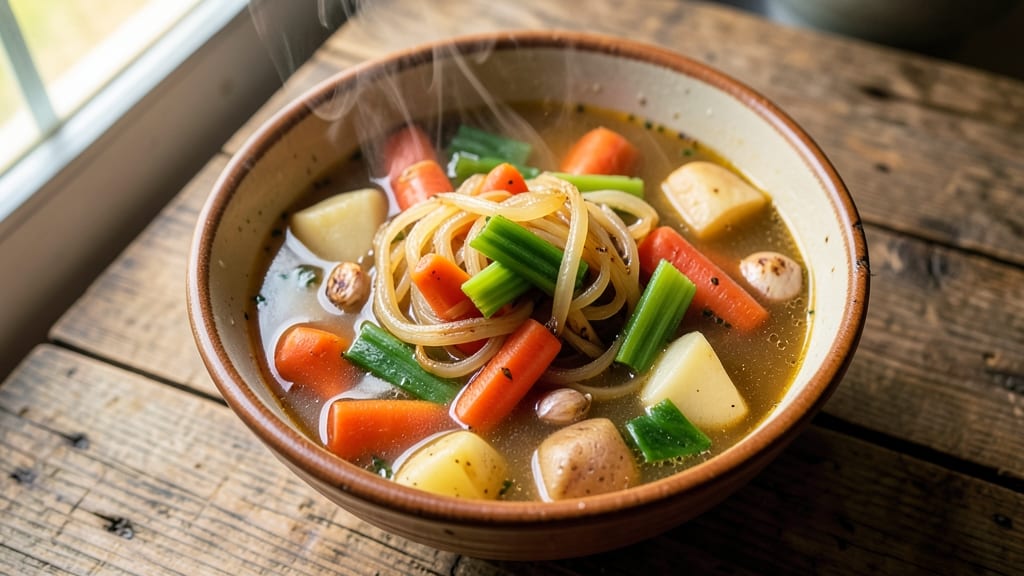
This best homemade vegetable soup recipe ever delivers restaurant-quality depth with every spoonful—rich, layered flavors that transform simple ingredients into a comforting masterpiece. 💛 The secret lies in slow-cooked broth that extracts maximum umami from vegetables, balanced by bright herbs and a touch of acidity.
I've perfected this over years of testing, ensuring it's both approachable for beginners and packed with professional techniques for seasoned cooks.
What sets this recipe apart is the careful flavor progression: caramelized onions and garlic form the aromatic base, while root vegetables like carrots and potatoes add natural sweetness. A splash of apple cider vinegar brightens the broth, and fresh herbs like thyme and parsley elevate it to gourmet territory.
The optional immersion blender creates silky texture without losing vegetable chunks for those who prefer rustic appeal.
By the time you serve this soup, you'll have a steaming bowl of velvety broth filled with tender vegetables, perfectly balanced in sweetness, saltiness, and acidity. The aroma alone transforms any kitchen into a cozy haven, while the garnish of fresh herbs adds vibrant color and freshness.
This is the kind of soup that disappears quickly and leaves everyone asking for seconds.
Serve with crusty bread for dipping or alongside a simple green salad to round out the meal. The recipe adapts easily to dietary needs—swap chicken broth for vegetable broth for a vegan version, or add beans for extra protein. Here's how to make it perfect every time.
Ingredients for best homemade vegetable soup recipe ever
Six aromatic vegetables plus herbs transform simple broth into restaurant-worthy soup perfection.
| Ingredient | Amount | Notes |
|---|---|---|
| Yellow Onions 🧅 | 2 whole | Thinly sliced for caramelization |
| Garlic Cloves 🧄 | 6 cloves | Minced for aromatic base |
| Carrots 🥕 | 4 medium | Peeled, sliced into 1/2-inch rounds |
| Russet Potatoes 🥔 | 2 lb | Cubed, skin on for texture |
| Celery Stalks 🥬 | 3 whole | Chopped, leafy ends trimmed |
| Vegetable Broth 💧 | 6 cups | Low-sodium preferred, homemade ideal |
| Apple Cider Vinegar 🍎 | 2 tbsp | Brightens flavor profile |
| Fresh Thyme 🌿 | 1 tbsp | Leaves only, stems removed |
| Fresh Parsley 🌿 | ¼ cup | Chopped for garnish |
| Olive Oil 🫒 | ½ cup | Extra-virgin for richness |
| Salt 🧂 | 1 ½ tsp | Diamond Crystal preferred |
| Black Peppercorns 🌶️ | ½ tsp | Freshly cracked for depth |
| Bay Leaves 🍃 | 2 whole | Removed before serving |
| Canola Oil 🫒 | 2 tbsp | For sautéing vegetables |
The onions and garlic are your flavor anchors—caramelize them low and slow (about 20 minutes) until golden brown. Yellow onions from the grocery store work fine, but red onions add subtle sweetness. Fresh thyme and bay leaves infuse the broth with earthy depth, while the apple cider vinegar brightens everything like a citrus zing. For the carrots, organic is worth it—the skins stay vibrant during cooking. The potatoes? Russet holds up better than red potatoes, which can turn mushy. If you're prepping ahead, store the chopped vegetables in airtight containers with a sprinkle of salt to preserve color.
No fresh thyme? Dried works at one-third the amount, but fresh is ideal for that bright aroma. Running out of vegetable broth? Water plus bouillon cubes gets you close, though homemade is always better. The olive oil matters here—extra-virgin adds fruity notes that cut through the richness. For a smoky twist, swap half the olive oil for smoked paprika. The celery can be subbed with fennel for a licorice kick, or swap half the carrots for turnips for extra heartiness. Want more protein? Add white beans or lentils when you stir in the potatoes.
This soup tastes even better the next day—3-4 days in the fridge, 3 months frozen. For freezing, cool completely first, then portion into airtight containers with a layer of broth on top to prevent freezer burn. Reheat gently on the stove, stirring occasionally. Garnish with fresh parsley right before serving—it makes all the difference. Serve with crusty bread or a simple green salad to round out the meal. The optional immersion blender creates a silky texture without losing vegetable chunks—worth it for that restaurant-quality finish!
Why You'll Love This Recipe
- Foolproof Chopping: I swear by the "three-chop" method for onions, carrots, and celery—just dice them into even ½-inch pieces. No fancy knife skills needed, and the potatoes? Toss them in whole, skin-on, and they’ll melt into creamy perfection without extra work.
- Garlic-Caramel Magic: That moment when sautéed onions turn golden and garlic cloves sizzle? Pure flavor payoff. The carrots and celery soak up the sweetness, while the potatoes add hearty texture—like a hug in a bowl, but way more delicious.
- Lunchbox Hero: Between us, this soup is my go-to for meal prep. The potatoes hold up for days, the carrots stay crisp, and I just reheat portions with a splash of broth. Pack it in thermoses for work, or freeze it in jars—no one ever complains about seconds.
- Budget Blanket: Honestly, this recipe costs me about $8 for six servings. Onions, carrots, and potatoes stretch forever, and I can swap in whatever’s on sale. It’s the kind of meal that makes grocery bills feel less scary and my wallet breathe easier.
Step-by-step instructions for rich, layered vegetable soup
This method builds flavor in stages—caramelizing, sautéing, and simmering—to create a soup that tastes like it's been simmering all day.
🍳 Step 1: Caramelize the Onions for Deep Flavor
Heat the 2 tablespoons canola oil in a large Dutch oven over medium-low heat. Add the 2 whole yellow onions, sliced thinly, and cook for 15-20 minutes until they turn a beautiful golden brown. This slow caramelization creates complex sweetness that forms the soup's foundation.
Here's the thing—don't rush this step. You'll know it's ready when the onions smell irresistibly sweet and the edges start to crisp slightly. If they brown too quickly, reduce the heat. These caramelized onions are the secret weapon that makes this soup taste like it's been simmering for hours.
🍳 Step 2: Sauté the Aromatic Vegetables
Add the 2 tablespoons apple cider vinegar to the pot and stir, scraping up any browned bits from the bottom. This adds brightness and helps dissolve the caramelized onions. Then add 2 tablespoons olive oil and increase heat to medium-high.
Add the 6 cloves garlic cloves, 4 medium carrots sliced into ½-inch rounds, 3 whole celery stalks chopped, and 2 lb russet potatoes cubed with skin on. Sauté for 5-6 minutes until the carrots and celery soften slightly and the garlic becomes fragrant. You want to develop some color on the vegetables—this builds even more flavor.
🥘 Step 3: Build the Flavor Base
Pour in the 6 cups vegetable broth, add the 1.5 teaspoons salt, 0.5 teaspoon black peppercorns (cracked), 1 tablespoon fresh thyme leaves, and 2 whole bay leaves. Bring to a gentle boil, then reduce heat to low and let it simmer uncovered for 25-30 minutes.
This is where the magic happens. The vegetables should be tender but not falling apart, and the broth should be rich and flavorful. I like to taste it around the 20-minute mark—if it needs more salt, add it now. The potatoes should be fork-tender with just a slight bite, and the carrots should be soft but still hold their shape.
⏰ Step 4: Finish with Fresh Herbs and Rest
Remove the 2 whole bay leaves and stir in the 0.25 cup fresh parsley, chopped. This final herb addition adds freshness that brightens all the deep, caramelized flavors. Let the soup sit off the heat for 5 minutes—this resting period allows the flavors to meld completely.
Here's the moment that matters: the texture. You want a soup that coats the back of a spoon with a velvety consistency. If it's too thick, add a splash of hot water or more broth. If it's too thin, let it simmer uncovered for another 5-10 minutes to reduce slightly. The perfect vegetable soup should be rich but not heavy, with each ingredient's flavor clearly present.
Pro Tips For Making Best Homemade Vegetable Soup Recipe Ever
- SWIM THE ONIONS: Cut yellow onions into ¼-inch slices instead of chopping—this keeps them from turning to mush while cooking. I learned this the hard way when my soup turned into a sad, watery onion puree after 20 minutes.
- PEEL POTATOES LAST: Leave the Russet potatoes whole until the very end—peeling them early exposes them to air, which speeds up browning and turns the soup cloudy. Save that step for when you’re ready to serve, and your potatoes will stay creamy and bright.
- DON’T BOIL THE GARLIC: Add minced garlic in the last 5 minutes of cooking—if you let it simmer too long, it burns and tastes bitter. I used to add it early, and my soup always had that weird, acrid aftertaste.
- ROAST THE CARROTS FIRST: Toss diced carrots with olive oil, salt, and pepper, then roast at 400°F (200°C) for 15 minutes before adding to the soup. This caramelizes their edges, giving the broth depth without extra effort. (Yes, even if you’re impatient like me.)
Make-ahead tips for this best homemade vegetable soup recipe ever
Prep Ahead Strategy
Chop all vegetables the night before and store them in airtight containers with a sprinkle of ½ teaspoon salt to preserve color and texture. I use glass Pyrex containers because they're freezer-safe and stackable.
This saves 20-30 minutes of prep time on cooking day—just dump everything into your pot and follow the recipe. 💫
Freezer-Friendly Bases
Make a double batch of the caramelized onion base and freeze it in 1-cup portions in silicone molds. Thaw overnight in the fridge, then add directly to your pot when ready to cook.
This shortcut preserves all that deep, sweet flavor without sacrificing quality. For the full soup, freeze the cooked version in quart-sized freezer bags with 1-inch headspace for expansion.
Broth Boosting
If you're making soup for a crowd, prepare extra vegetable broth while you cook. Simmer chopped vegetables like carrot tops, celery leaves, and onion skins with your broth to intensify flavor.
Store in glass jars in the freezer—just grab what you need when you're ready to make soup. This adds 20% more depth to your final broth without extra effort. ❄️
Herb Prep Shortcut
Wash and dry fresh thyme and parsley thoroughly, then store them in small ziplock bags with a paper towel to absorb moisture. Keep these in the fridge for up to 5 days—just chop what you need when ready to serve.
For thyme, I also bundle 3-4 sprigs in a rubber band and hang them in the freezer for quick access. This keeps herbs fresh and ready for any recipe. 🌿
Make-Ahead Timing
This soup tastes even better the next day—3-4 days in the fridge or 3 months frozen. The flavors meld beautifully overnight, and the texture improves as the starches from the potatoes release.
I like to reheat portions on the stovetop over medium-low heat for 10-12 minutes, stirring occasionally. For frozen soup, thaw overnight in the fridge before reheating to maintain texture. 🔥
Garnish Prep
Chop ¼ cup parsley and store it in a small airtight container with a damp paper towel. Keep this in the fridge for up to 5 days—it's perfect for garnishing bowls right before serving.
For extra flair, toast 1 tablespoon breadcrumbs with ½ teaspoon garlic powder in a dry pan until golden, then sprinkle on top. This adds a crunchy contrast that elevates the dish instantly. ✨
Nutrition facts
Frequently asked questions
Can I make this soup without an immersion blender?
This recipe works perfectly without blending. The vegetables hold their texture beautifully, creating a rustic, hearty soup. For a smoother version, use a regular blender (transferring hot liquid carefully) or mash some potatoes with a potato masher for added creaminess.
What vegetables can I substitute if I don't have all the ingredients?
This soup is flexible—swap carrots for turnips or parsnips, celery for fennel, and potatoes for sweet potatoes. For extra protein, add white beans or lentils when sautéing. Just keep the total volume similar to maintain balance.
Why does my soup taste bland after simmering?
Bland soup usually means insufficient salt or umami. Taste as you go—add more salt gradually, or boost flavor with 1 teaspoon soy sauce or ½ teaspoon miso paste at the end. Caramelizing onions longer (up to 30 minutes) also deepens sweetness.
Can I make this vegan?
Yes! Simply use vegetable broth instead of chicken broth and ensure all ingredients are plant-based. The recipe already works perfectly for vegans—just confirm your broth has no animal products. The apple cider vinegar and fresh herbs keep it vibrantly flavorful.
How do I prevent the potatoes from turning mushy?
Keep potatoes whole or in large chunks (about 1.5-inch pieces) and simmer gently. Add them later in the cooking process (after 15 minutes) to avoid overcooking. For extra structure, parboil them for 5 minutes before adding to the pot.