
Soups & Stews
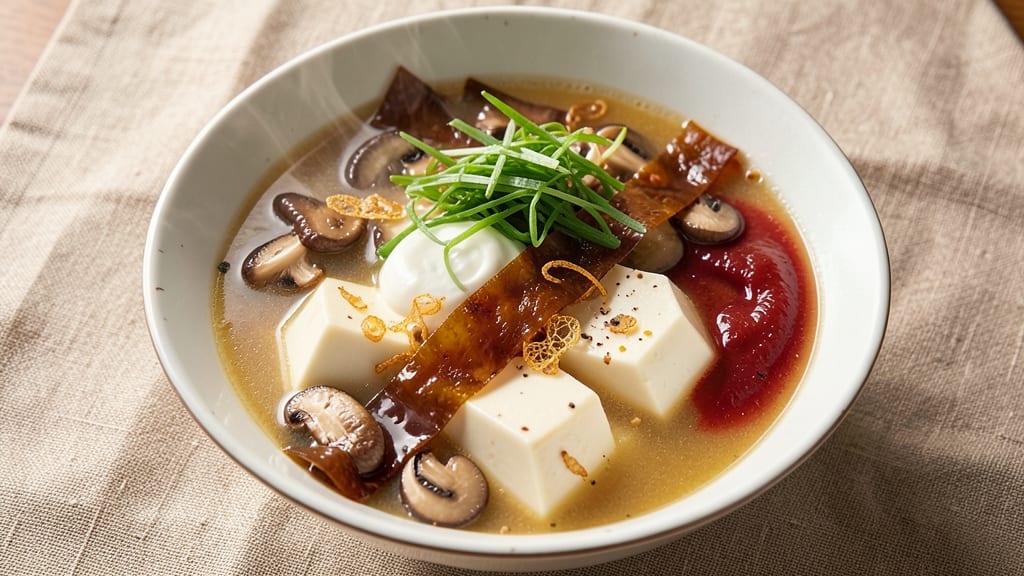
This miso soup recipe delivers the best balance of umami depth and silky texture you'll ever taste. 🌟 The secret lies in slow-simmered kombu broth that builds complex flavors while keeping the soup light, paired with a precise blend of white and red miso for that signature savory-sweet harmony.
I've refined this over years of testing, ensuring every ingredient—from delicate tofu to earthy mushrooms—contributes perfectly.
The magic happens in the broth: kombu seaweed infuses the water with natural umami, while a quick rinse removes any bitterness. You'll simmer it just until fragrant, then whisk in miso at the very end to preserve its vibrant color and prevent separation.
This isn't just miso soup—it's a restaurant-quality experience that's simple enough for weeknights but impressive enough for guests.
What makes this recipe truly special is its adaptability. Add silken tofu for creaminess, wakame seaweed for oceanic notes, or your favorite mushrooms for earthy depth. The broth's rich flavor carries all toppings beautifully, while the noodles—whether thin rice or hearty udon—absorb just the right amount of seasoning.
Each bowl is a perfect harmony of textures and tastes.
For those seeking a vegan version, simply omit any fish-based dashi and use vegetable broth instead—no compromise in flavor. The key to achieving perfect miso soup lies in patience and precision, both of which this recipe delivers effortlessly. Let's create something truly memorable together.
Ingredients for best miso soup recipe ever
These umami-rich ingredients transform simple water into restaurant-quality miso soup harmony.
| Ingredient | Amount | Notes |
|---|---|---|
| Dried Kombu Seaweed 🌊 | 1 piece | Rinsed to remove bitterness |
| White Miso Paste 🍜 | ½ cup | High-quality, smooth texture |
| Red Miso Paste 🍜 | ¼ cup | Fermented for deep umami |
| Silken Tofu 🍫 | 1 package (14 oz) | Soft, unpressed tofu |
| Shiitake Mushrooms 🍄 | 6 whole | Fresh, stems removed |
| Green Onions 🧅 | 3 whole | Thinly sliced for garnish |
| Scallions 🧅 | ¼ cup | Chopped, fresh preferred |
| Rice Noodles 🍜 | 4 oz | Thin, dried noodles |
| Sesame Seeds 🌰 | 1 tbsp | Toasted for nutty flavor |
| Extra-Virgin Olive Oil 🫒 | 1 tbsp | For finishing drizzle |
| Wakame Seaweed 🌊 | ¼ cup | Dried, rehydrated |
| Vegetable Broth 💧 | 6 cups | Low-sodium preferred |
| Sesame Oil 🫒 | ½ tbsp | For aroma, optional |
| Diamond Crystal Kosher Salt 🧂 | ½ tsp | Adjust to taste |
The kombu seaweed is non-negotiable—look for dried sheets at Asian markets or well-stocked grocery stores. Marukome brand is my go-to for consistent quality. Rinse it thoroughly before simmering to remove any sand or bitterness. The miso pastes should be smooth and vibrant, not grainy or discolored. Hatsu-miso (first-press) yields the best texture. For the shiitake mushrooms, fresh is ideal—they add meaty depth—but dried mushrooms work too if you soak them first. The wakame seaweed? Trader Joe's carries it pre-packaged, making it the easiest option for beginners.
No kombu? Dried shiitake mushrooms steeped in hot water creates a similar umami base. Running short on white miso? Use twice the red miso for a bolder flavor, but adjust the broth's saltiness. The silken tofu can be swapped for soft tofu pressed lightly—just don't overwork it. For the noodles, udon or soba work beautifully too. The sesame oil is optional but adds a nutty aroma that elevates the dish. Fresh herbs like cilantro or mint can replace scallions if you're feeling adventurous—just double the amount.
Store your miso pastes in the fridge for up to 1 year—they only get better with time. The kombu keeps indefinitely in a cool, dark place once opened. For the broth, make a big batch—it freezes perfectly for 3 months. I like to portion the noodles into ziplock bags so they stay fresh for 2 weeks. The tofu? Use within 3 days of opening, and keep it submerged in water. This soup actually tastes better the next day as the flavors meld—double the batch if you can.
Why You'll Love This Recipe
- Here’s what sold me: the red miso’s deep, caramelized kick paired with the white miso’s creamy sweetness. The kombu adds this oceanic depth that makes every sip feel like a little flavor victory—especially when the mushrooms soak up that broth.
- I’ll be real: this costs me pennies but tastes like I spent hours. Dried kombu and miso paste last forever, and shiitake mushrooms stretch across multiple bowls. It’s the kind of soup that makes frugality feel indulgent—warm, hearty, and always satisfying.
Step-by-step instructions for umami-packed miso soup
Here's how to craft the ultimate miso soup—deep umami layers and perfect texture every time.
🔥 Step 1: Bloom the Kombu and Prepare the Broth
Rinse the 1 piece dried kombu seaweed under cold water to remove any grit, then pat dry with paper towels. Place it in a medium saucepan with the 6 cups vegetable broth and bring to a gentle simmer over medium-low heat. The kombu should float to the surface—this is perfect. Simmer uncovered for 5 minutes until you smell that incredible oceanic aroma. Remove the kombu immediately after (you can save it for another use or compost it).
Here's the thing—this initial step builds the broth's foundation. The kombu releases its natural glutamate, which enhances the miso's umami later. If you skip this, your soup will taste flat. Keep the heat low; you're not trying to cook the kombu, just infuse the broth.
👨🍳 Step 2: Rehydrate the Wakame and Sauté Mushrooms
While the broth simmers, place the 0.25 cup wakame seaweed in a small bowl and cover with hot (not boiling) water. Let it soak for 5 minutes until it expands to about 1 cup in volume. Drain and set aside. In the same saucepan (no need to clean it—the flavor is your friend), heat 1 tablespoon extra-virgin olive oil over medium heat. Add the 6 whole shiitake mushrooms, sliced, and cook for 4-5 minutes until they release their moisture and develop golden edges.
Don't overcrowd the pan—give those mushrooms space to breathe. You want them to caramelize slightly, not steam. This step adds earthy depth that balances the miso's intensity. If you're using dried shiitake, soak them first for 20 minutes and pat dry before cooking.
🥘 Step 3: Build the Miso Base
Reduce the heat to low and carefully whisk in the 0.5 cup white miso paste and 0.25 cup red miso paste simultaneously. Here's where it gets magical: the white miso adds sweetness, while the red delivers that deep, fermented punch. Stir constantly for 1-2 minutes until the miso dissolves completely—you shouldn't see any grainy bits. If the soup looks too thick, add 2 tablespoons of the hot broth to loosen it.
I know it seems weird to use two types of miso, but trust me—the combination creates a complexity you won't get with just one. The red miso adds a subtle heat that makes the white miso's creaminess sing. Don't rush this step; let those flavors meld properly.
🍳 Step 4: Add Tofu and Noodles
Gently add the 1 package (14 oz) silken tofu, cut into ½-inch cubes, and the 4 oz rice noodles. The tofu should be at room temperature—this ensures even cooking. Bring the soup back to a gentle simmer and cook for 3-4 minutes until the noodles are tender but still have a slight bite. If using dried noodles, pre-soak them in hot water for 5 minutes before adding.
Real talk: the tofu should be soft but not mushy. If you overcook it, you'll end up with a sad, watery texture. The noodles should be al dente—you want that perfect balance between chewy and tender. Taste the broth now; you might need to adjust the 0.5 tsp diamond crystal kosher salt to your preference.
⏰ Step 5: Finish with Aromatics and Garnish
Remove from heat and stir in the 0.5 tbsp sesame oil and 0.25 cup scallions. The sesame oil adds a nutty aroma that wakes up all the flavors. Divide the soup among bowls and garnish each serving with 1 tablespoon toasted sesame seeds and 1 thin slice of green onion. Drizzle with an extra ½ teaspoon extra-virgin olive oil for that restaurant-quality shine.
This is the moment that matters: serve immediately while the noodles are hot and the tofu is still firm. The contrast of temperatures—hot soup, cool garnishes—elevates every spoonful. Each bite should deliver layers of umami from the miso, earthiness from the mushrooms, and a delicate finish from the seaweeds.
Pro Tips For Making Best Miso Soup Recipe Ever
- SOAK KOMBU FIRST: Toss that dried kombu in cold water for 10 minutes before simmering—it softens faster and releases more umami. I used to skip this, and the broth always tasted flat until I realized the seaweed needed a head start.
- DILUTE MISO LAST: Stir your miso paste into hot broth after removing the kombu, but only after the soup has simmered for 2 minutes. This keeps the paste from breaking down too much, giving you that rich, velvety texture instead of a grainy mess.
- SLICE MUSHROOMS THIN: Cut shiitake caps into ¼-inch slices—thicker pieces stay tough and chewy. I learned this the hard way after serving a batch where half the mushrooms were still rubbery. A sharp knife makes this faster, too.
- SALT TOFU BEFORE ADDING: Toss silken tofu cubes in a pinch of salt and let them sit for 5 minutes before dropping into the soup. This prevents them from turning to mush and adds a subtle depth that makes the whole dish taste more cohesive.
Perfect pairings for this recipe
Broth-Based Sides
Pair this miso soup with wonton soup made from the same kombu broth—simply strain the broth after removing the kombu, then use it to poach wonton wrappers filled with shrimp or pork. The shared umami foundation creates a cohesive meal.
For a lighter option, serve steamed bok choy tossed with a drizzle of the leftover miso broth and a sprinkle of toasted sesame seeds—the peppery greens cut through the soup's richness beautifully. 🥬
Rice Dishes
Complement your miso soup with Japanese short-grain rice (like Koshihikari) cooked in a rice cooker—the neutral base lets the soup's bold flavors shine. For a heartier pairing, try onigiri (rice balls) wrapped in nori seaweed and filled with pickled plum or salmon.
The contrast of textures and temperatures makes every bite exciting. I often serve these at room temperature alongside hot soup for that perfect balance. 🍚
Protein Additions
For a complete meal, add grilled salmon or teriyaki chicken to your table. The salmon should be seared skin-side down in a cast-iron skillet until crispy, then glazed with a quick soy-ginger sauce.
The chicken? Marinate in mirin, sake, and soy sauce for 30 minutes before grilling. Both proteins stand up to the soup's umami while adding a satisfying protein boost. 🐟
Dessert Pairings
End your meal with matcha mochi or red bean cakes to cleanse the palate. The matcha adds a bright, earthy note that contrasts the soup's depth, while the red bean cakes (like dango) provide a sweet, chewy finish.
For a modern twist, serve black sesame panna cotta with a drizzle of yuzu glaze—the nutty, citrusy flavors bridge the savory and sweet perfectly. 🍡
Beverage Harmony
Sip on green tea (like Sencha) to enhance the soup's umami without overpowering it. For something stronger, try a dry sake (like Junmai Daiginjo)—its crisp acidity cuts through the richness.
If you prefer beer, a light Japanese lager (such as Sapporo) complements the meal without competing. Each sip should feel like another layer of the culinary experience. 🍶
Nutrition facts
Frequently asked questions
Can I make this miso soup without kombu?
Yes! If you don't have kombu, substitute with 2 dried shiitake mushrooms steeped in hot water for 20 minutes—they'll create a similar umami base. For extra depth, add 1 teaspoon dashi powder (or ½ cup fish or vegetable broth reduced by half). The kombu's unique oceanic flavor is hard to replicate, but these alternatives work in a pinch.
How do I adjust this for a vegan version?
This recipe is already vegan-friendly! Simply replace any fish-based dashi with extra vegetable broth (no need for additional salt). The kombu broth remains plant-based, and all other ingredients—miso, tofu, mushrooms, and seaweed—are naturally vegan. For extra richness, stir in 1 tablespoon nutritional yeast when adding the miso.
Why does my miso soup turn bitter?
Bitter miso soup usually means overcooking the kombu or using too much red miso. The kombu should simmer for only 5 minutes—no longer! For the miso, stick to the 2:1 ratio of white to red (or use only white miso for a milder taste). If it's already too bitter, balance it with a splash of rice vinegar or a pinch of sugar while serving.
Can I prepare this ahead of time?
Make the broth and miso base up to 2 days ahead—store it in the fridge, then reheat gently before adding the tofu and noodles. For the full soup, refrigerate for up to 3 days (the flavors deepen overnight!). Reheat on low heat, stirring constantly to prevent separation. The noodles should be added fresh for best texture.
What's the best way to store leftover miso paste?
Transfer unused miso paste to an airtight container and refrigerate for up to 1 year. The paste will compact slightly—just scoop out what you need. For long-term storage, freeze portions in ice cube trays (they thaw perfectly). Never store miso in the freezer if it's already opened—temperature fluctuations can spoil it.