
Soups & Stews
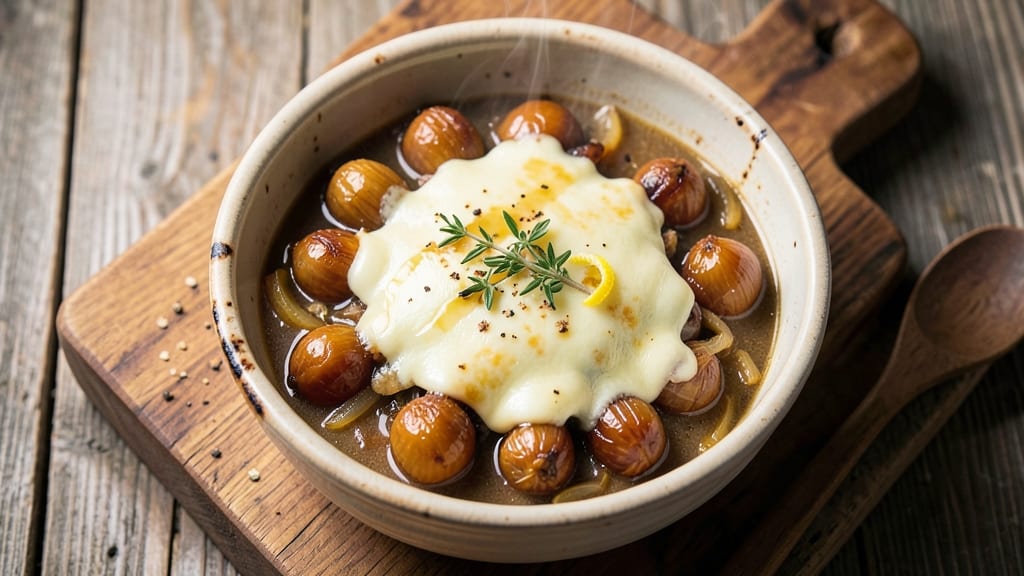
French onion soup demands the best onions—yellow onions for deep sweetness, or pearl onions for delicate caramelization. The secret lies in slow-cooking them until they melt into a velvety, golden-brown base, transforming humble ingredients into something extraordinary.
This isn’t just soup; it’s a symphony of textures and flavors where every bite delivers crispy bread, gooey cheese, and layers of caramelized onion perfection.
Choosing the right onions is critical. Yellow onions provide robust flavor and sweetness, while pearl onions caramelize more quickly, offering a tender, jam-like texture. The key technique? Sautéing them low and slow with butter and sugar until they’re deep amber, creating a foundation that builds into a rich, velouté-like broth.
This method ensures your soup has that signature depth that makes it unforgettable.
Once the onions are perfectly caramelized, the magic continues with a toasted baguette slice and a blanket of melted Gruyère cheese. The contrast between the crispy bread, creamy cheese, and silky onion broth creates a balance that’s both comforting and sophisticated.
Every spoonful delivers that perfect harmony of textures and flavors—crisp, creamy, and rich all at once.
This recipe isn’t just about following steps; it’s about mastering the art of caramelization and layering flavors. The result is a bowl of soup that feels like a hug on a cold day, with each element playing its part to create something truly special.
Ready to elevate your soup game? Let’s get started.
Ingredients for best onions for french onion soup
Pearl onions and yellow onions transform into caramelized magic—this is the secret to velvety French onion soup perfection.
| Ingredient | Amount | Notes |
|---|---|---|
| Pearl Onions 🧅 | 1 ½ lbs | Whole, peeled for even cooking |
| Yellow Onions 🧅 | 2 whole | Large, sliced for depth |
| Unsalted Butter 🧈 | ¾ cup | Cold, cut into pieces |
| Granulated Sugar 🍯 | ¼ cup | Light brown sugar preferred |
| Beef Broth 🥫 | 6 cups | Homemade or high-quality store-bought |
| Dry White Wine 🍷 | ½ cup | Sauvignon Blanc or Chardonnay |
| Fresh Thyme 🌿 | 2 sprigs | Or 1 tsp dried thyme |
| Fresh Bay Leaves 🍃 | 2 whole | For aromatic depth |
| Gruyère Cheese 🧀 | 1 ½ cups | Freshly grated, aged |
| Baguette 🍞 | 1 whole | Crusty, sliced into strips |
| Salt 🧂 | 1 tsp | Diamond Crystal preferred |
| Black Pepper 🌶️ | ½ tsp | Freshly cracked |
| Olive Oil 🫒 | 2 tbsp | For toasting baguette |
Pearl onions are the star here, but don’t skip the yellow onions—they add that deep, sweet backbone. Whole Foods or Trader Joe's sell pre-peeled pearl onions, which saves time, but if you’re feeling fancy, peel them yourself for extra tenderness. Yellow onions should be firm and dry; Spanish onions caramelize especially well. The key is patience—low heat and plenty of time to develop that golden-brown color. Gruyère is non-negotiable for that signature creamy, nutty flavor, but Comté or Emmental work in a pinch if you can’t find it. Freshly grated always wins over pre-shredded, trust me on this.
No pearl onions? Shallots or small white onions caramelize beautifully, though they’ll be slightly less tender. Running out of Gruyère? Swiss or provolone add a different but still delicious richness. The wine can be swapped for extra broth or even apple cider if you’re avoiding alcohol. Fresh thyme is ideal, but dried works at half the amount. If your baguette is stale, toast it with olive oil and a pinch of salt before topping—it’ll taste like it just came out of the oven. And for the love of soup, don’t rush the caramelization. That’s where the magic happens.
This soup tastes even better the next day—honestly, the flavors meld into something extraordinary. Store it covered in the fridge for up to 5 days, and reheat gently on the stove. The bread topping? Toast it fresh before serving—it’s the crispy contrast that makes this dish unforgettable. Freeze the broth portion (without cheese or bread) for up to 3 months if you’re planning ahead. Just thaw and reheat, then top with freshly toasted bread and cheese. Leftovers? Double the batch—it disappears faster than you can say 'velouté.'
Why You'll Love This Recipe
- No Chopping Nightmare: I’ll be real—pearl onions are a pain to peel, but this recipe lets you skip it. Just halve those little guys and toss them in whole, and they caramelize into sweet, jammy perfection without the fuss.
- Sweet-Savory Magic: That sugar-butter combo with yellow onions? It’s the secret weapon. You get this deep, almost molasses-like richness that balances the beef broth’s depth—like a hug in a bowl, but way more delicious.
- Leftovers? Yes, Please: Make a double batch and freeze the broth. Later, you’ll thank me when you’re craving soup on a cold night and just need to thaw and reheat—no extra work, just comfort.
- Budget-Friendly Luxury: Pearl onions might look fancy, but they’re cheaper than you think. A few dollars buys enough for multiple servings, and the beef broth stretches further than you’d expect. Fancy dinner for less than takeout.
Step-by-step instructions for caramelized pearl onions over melty Gruyère velout
Here's how to transform simple onions into the star of this rich, velvety French classic.
Prepare the Pearl Onions for Even Cooking
Peel the 1.5 lbs pearl onions by making a small cut at the top and slipping off the skin. I like to blanch them first—drop them into boiling water for 2 minutes, then immediately transfer to an ice bath to stop cooking. This step prevents them from cracking during caramelization.
Drain well and pat completely dry with paper towels. The onions should be bone-dry before hitting the pan—any moisture will steam them instead of caramelizing. Arrange them in a single layer on a baking sheet and let them sit at room temperature for 10 minutes while you prep the yellow onions.
Build the Caramelization Base
In a large Dutch oven, melt 0.75 cup unsalted butter over medium-low heat. Add the 2 whole yellow onions, sliced into ¼-inch rounds, and sprinkle with 0.25 cup granulated sugar. Stir gently to combine, making sure each slice gets coated with butter and sugar.
Let the onions cook undisturbed for 10 minutes—you'll see them release moisture and begin to soften. This is where the magic happens: the sugar breaks down into caramel, creating that deep, sweet foundation. Stir occasionally, but not too much—you want those onions to develop a rich brown color.
Add Pearl Onions and Develop Depth
When the yellow onions are tender and golden, add the prepared pearl onions. Stir to coat them in the buttery caramel mixture, then pour in 0.5 cup dry white wine. The alcohol will sizzle dramatically—this is normal and actually helps deglaze the pan, capturing all those flavorful browned bits.
Let the wine reduce by half (about 3-4 minutes) before adding 6 cups beef broth, 2 sprigs fresh thyme, and 2 whole fresh bay leaves. Bring to a gentle simmer, then reduce heat to low. Here's the key: let the onions cook uncovered for 45-50 minutes, stirring occasionally, until they're deeply caramelized and the liquid reduces to a thick velouté.
Toast the Baguette and Assemble
While the onions caramelize, cut the 1 whole baguette into ½-inch thick slices. Brush both sides with 2 tbsp olive oil and toast in a 400°F oven for 5-7 minutes until golden and crisp. Keep them warm while you finish the soup.
When the onions are perfectly caramelized (they should be tender with a deep golden-brown color), stir in 1 tsp salt and 0.5 tsp black pepper. Taste and adjust seasoning—you want the broth to be rich but balanced, not overwhelmingly sweet or salty.
Gratinate and Serve
Preheat your broiler to high. Ladle the onion velouté into oven-safe bowls, placing 2-3 baguette slices in each. Top generously with 1.5 cups freshly grated Gruyère cheese, spreading it evenly over the bread and broth.
Broil for 2-3 minutes until the cheese is bubbly and golden brown—watch closely to avoid burning. The cheese should melt into a luscious, stretchy blanket over the soup. Serve immediately with extra crusty baguette on the side for dipping.
Pro Tips For Making Best Onions For French Onion Soup
- CHAR ONIONS FIRST: Peel those pearl onions before cooking—yes, it’s tedious, but halved or quartered ones caramelize faster and stay intact. I used to skip this and ended up with a pot of mushy onion bits instead of sweet, jammy pockets.
- SAUTÉ LOW AND SLOW: Start with medium heat, not high—you’re not searing steak here. After 10 minutes, drop to low and let them cook for 20-25 minutes, stirring occasionally. Rushed caramelization turns bitter; patience gives you that deep, molasses-like sweetness.
- SKIP THE SALT RUSH: Hold off on adding salt until the onions are deeply caramelized—around 15 minutes in. Early salt draws out moisture, making them steam instead of brown. (Trust me, your broth will thank you later.)
- BUTTER IN STAGES: Use half the butter upfront to coat the onions, then add the rest after they’ve released their moisture. This prevents splattering and ensures every bite gets that rich, nutty finish. Cold butter? Toss it in the fridge for 10 minutes first—it melts slower and adds stability.
Essential equipment for great best onions for french onion soup
Dutch Oven Essentials
A Dutch oven is non-negotiable for French onion soup—its heavy base distributes heat evenly, creating the perfect caramelization. I swear by a Le Creuset 5.5-quart (it lasts forever), but Lodge pre-seasoned cast iron works beautifully too.
The deep sides prevent spills when adding liquid, and the tight lid keeps moisture in during the long simmer. Avoid thin, non-stick pans—they can’t handle the prolonged heat without warping. 🌡️
Heat Control Tools
Precise temperature control is everything. A digital thermometer like the Thermoworks Smoke lets you monitor your Dutch oven’s heat accurately, ensuring those onions caramelize without burning. For stovetop control, I use a heavy-bottomed stainless steel pot if I’m short on Dutch ovens—just reduce heat to medium-low and stir more frequently.
A silicon spatula (like OXO Good Grips) prevents scratching while scraping up those golden brown bits.
Caramelization Kit
Your caramelization trio should include unsalted butter (like Plugrá or Kerrygold for richness), granulated sugar (light brown preferred), and dry white wine (Sauvignon Blanc or Chardonnay). I keep a small saucepan handy to reduce the wine separately if needed—this concentrates its flavor without overpowering the onions.
A fine-mesh strainer helps remove thyme sprigs and bay leaves cleanly after simmering, leaving your velouté silky smooth.
Baking Essentials
For the gratinated cheese step, you’ll need oven-safe bowls that can handle broiler heat. I use Corelle stoneware bowls—they’re heat-resistant and distribute heat evenly. A broiler pan with a wire rack underneath catches any drips, making cleanup effortless.
Keep a small offset spatula nearby to adjust cheese placement if it starts browning unevenly. A kitchen torch (like Weck) can rescue under-browned spots in a pinch, adding that perfect golden crust. ✨
Storage Containers
For leftovers, glass Pyrex storage containers with snap-on lids preserve flavor better than plastic. I portion the soup (without cheese or bread) into 1-quart containers for easy reheating. If freezing, use quart-sized freezer bags—they’re stackable and thaw faster than rigid containers.
Label with dates (this soup tastes best within 5 days refrigerated or 3 months frozen). A microwave-safe bowl with a lid prevents splatter when reheating—just cover with a damp paper towel to retain moisture.
Nutrition facts
Frequently asked questions
Can I substitute pearl onions with regular onions in French onion soup?
While pearl onions create a delicate, jam-like texture, yellow or Spanish onions add deep sweetness and robust flavor. Use 2 large yellow onions instead of pearls, but increase caramelization time to 45-50 minutes for that signature rich base. For extra tenderness, slice them thinly and cook until deeply golden-brown. The key is patience—rushing will leave them tough.
Why does my French onion soup taste bitter instead of sweet?
Bitterness usually means the onions burned or didn't caramelize properly. Keep heat at medium-low and stir occasionally to prevent burning. For sweetness, add 1 extra tablespoon sugar during cooking or use Spanish onions, which caramelize more easily. Also, avoid over-reducing the broth—aim for a velvety consistency, not a thick paste.
How do I make French onion soup ahead of time?
Prepare the caramelized onions and broth up to 2 days ahead—store in an airtight container in the fridge. Reheat gently on the stove, then add freshly toasted bread and cheese before broiling. For freezing, portion the soup (without cheese or bread) in quart-sized containers for up to 3 months. Thaw overnight in the fridge, then finish with fresh toppings. The flavors actually improve after resting!
What's the best cheese alternative if I can't find Gruyère?
Gruyère's nutty depth is hard to replace, but Comté or Emmental work well for a similar melt. For a milder option, try Swiss cheese or provolone. Avoid pre-shredded cheese—it contains anti-caking agents that prevent proper melting. Freshly grate your substitute and use 1.5 cups for best results. The cheese should be aged at least 6 months for optimal flavor.
Can I make French onion soup vegetarian?
Yes! Replace beef broth with mushroom or vegetable broth and add 2 cups chopped mushrooms during caramelization. For extra richness, stir in 1 tablespoon soy sauce or 1 teaspoon balsamic vinegar at the end. The umami from mushrooms helps replicate the depth of beef broth. Top with vegan cheese or nutritional yeast for a plant-based version.