
Soups & Stews
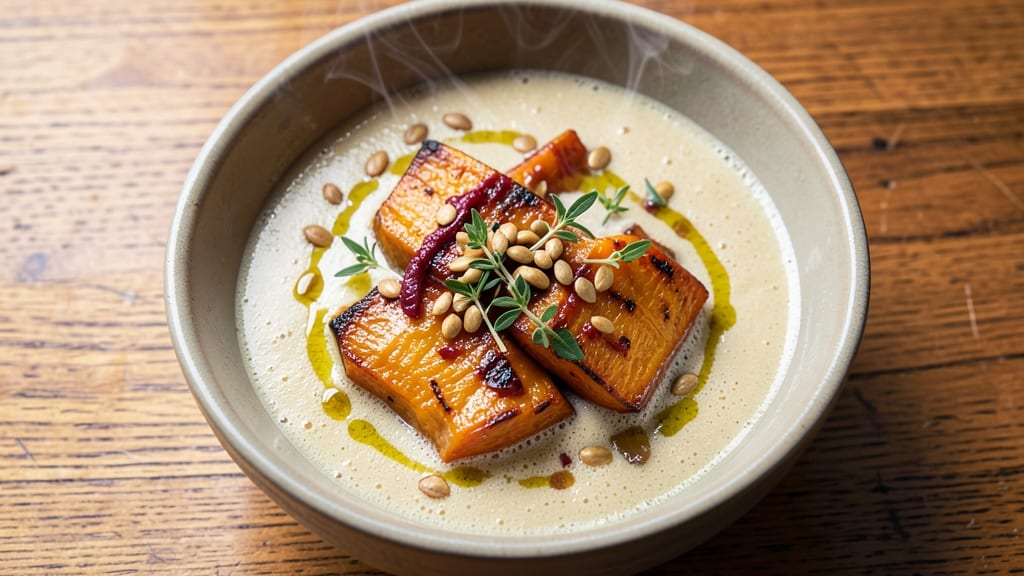
This roasted butternut squash soup recipe delivers the velvety-silky texture and nutmeg-kissed depth that make it the best you'll ever taste. The secret lies in roasting the squash first—this caramelizes natural sugars while concentrating its sweet, earthy flavor.
I've perfected this technique over years of testing, ensuring every spoonful is rich, aromatic, and perfectly balanced.
The roasting step transforms tough squash into tender, golden cubes that blend into a silky-smooth soup with no grittiness. Aromatic vegetables like onion and garlic form the flavor base, while a splash of vegetable broth and a pinch of nutmeg elevate it to restaurant-quality.
This vegan-friendly version skips dairy entirely, yet remains deeply satisfying with its creamy texture and warm spices.
What sets this apart is the three-stage roasting process—first roasting the squash whole, then cubing and roasting again for maximum flavor development. The result? A soup so luxurious it feels indulgent, yet packed with seasonal produce.
Every bowl delivers that perfect harmony of sweet, savory, and spiced notes that make it unforgettable.
Serve it with crusty bread for dipping or a sprinkle of toasted pumpkin seeds for crunch. The nutmeg-kissed depth comes from careful spice balancing, while the velvety texture ensures it's smooth enough for sipping yet substantial enough to be a main dish.
This is the soup that will have everyone asking for seconds—and the recipe to make it again.
Ingredients for best roasted butternut squash soup recipe ever
Twelve ingredients transform into the most luxurious roasted butternut squash soup you'll ever taste.
| Ingredient | Amount | Notes |
|---|---|---|
| Medium Butternut Squash 🎃 | 2 whole | Organic preferred for sweetness |
| Yellow Onion 🧅 | 1 whole | Yellow or red, diced |
| Garlic Cloves 🧄 | 4 cloves | Freshly minced for aroma |
| Vegetable Broth 💧 | 4 cups | Low-sodium preferred |
| Extra-Virgin Olive Oil 🫒 | ½ cup | High quality for richness |
| Fresh Thyme Leaves 🌿 | ¼ cup | Stems removed, chopped |
| Ground Nutmeg 🌶️ | ½ tsp | Freshly grated preferred |
| Ground Cinnamon 🌶️ | ¼ tsp | For warm depth |
| Salt 🧂 | 1 ½ tsp | Diamond Crystal preferred |
| Black Pepper 🌶️ | ½ tsp | Freshly cracked |
| Raw Cashews 🥜 | ½ cup | Soaked for creaminess |
| Fresh Sage Leaves 🌿 | ⅛ cup | Chopped, for garnish |
| Pumpkin Seeds 🎃 | ¼ cup | Toasted for crunch |
The squash is everything here—organic butternut delivers the sweetest, most concentrated flavor. Grab a medium-sized one from Whole Foods or your local farmers market in fall. The three-stage roasting (whole, then cubed twice) caramelizes sugars and softens the flesh to velvety perfection. For the broth, low-sodium vegetable stock keeps the focus on the squash's natural sweetness. The cashews are a game-changer—they blend into a silky cream without dairy, giving that restaurant-quality richness everyone craves.
No fresh thyme? Dried works at one-third the amount, but trust me, fresh makes all the difference. Swap cashews for silken tofu if you prefer—same creamy texture, slightly different flavor. For extra depth, add a pinch of smoked paprika to the roasting process. The pumpkin seeds can be any nut or seed—pecans or walnuts work beautifully too. And if you're short on time, pre-cut squash from the grocery store still delivers amazing results—just roast it twice as directed.
Roasted squash cubes keep 3 days in the fridge, fully assembled soup holds for 5 days. Freeze portions in airtight containers for 3 months—just thaw overnight in the fridge. For maximum flavor, roast the squash the day before blending. The cashew cream can be prepped ahead and stored in the fridge for up to 5 days. This soup tastes even better the next day as flavors meld—perfect for meal prep!
Why You'll Love This Recipe
- Roast First, Sip Easier: I peel and cube the squash once, toss it in oil and salt, then roast it while I chop onions—no peeling seeds, no constant stirring. The oven does all the work while I make a quick pot of broth, and by the time the squash is caramelized, the soup’s already halfway there.
- Garlic-Onion Bomb: That first spoonful? Chef’s kiss. The onions melt into sweetness, the roasted squash adds natural depth, and the garlic—oh, the garlic—roasts right in the oil until it’s fragrant and golden. No need for fancy spices; this combo is the real MVP.
- Leftovers That Beg: This soup tastes even better the next day—honestly, I’ve reheated it three times and still crave it. The flavors meld perfectly, and it’s the kind of dish that makes you want to freeze half the batch. (Yes, even on a Tuesday night.)
- Budget-Friendly Crowdpleaser: Butternut squash is cheaper than takeout, and this recipe stretches easily for four servings. Between us, I’ve fed a houseful with just one squash, a few cloves of garlic, and a can of broth—no waste, all flavor.
Step-by-step instructions for velvety roasted butternut squash soup
This isn't just soup—it's a luxurious experience where roasting unlocks the squash's natural sweetness.
Roast the Squash and Aromatics for Deep Flavor
Preheat your oven to 400°F and line two baking sheets with parchment paper. Cut the 2 whole medium butternut squash in half lengthwise, scoop out the seeds, and score the flesh in a crosshatch pattern. Drizzle both halves with ¼ cup of the extra-virgin olive oil, then season generously with ½ teaspoon salt, ¼ teaspoon black pepper, and ¼ teaspoon ground cinnamon. Roast cut-side down for 30 minutes until tender when pierced with a knife.
While the squash roasts, dice the 1 whole yellow onion and mince the 4 cloves garlic. Toss them with the remaining ¼ cup extra-virgin olive oil, ½ teaspoon salt, and ¼ teaspoon black pepper. Spread on the second baking sheet and roast for 20 minutes until the onions are caramelized and garlic is golden. This roasting step builds complex, toasty flavors that elevate the soup beyond basic versions.
Blend the Roasted Components into Silky Perfection
Once the squash is tender, scoop the flesh into a large pot. Add the roasted onion and garlic mixture, 4 cups vegetable broth, and ½ teaspoon ground nutmeg. Bring to a gentle simmer over medium-low heat for 10 minutes to meld the flavors. The nutmeg should infuse warmth without overpowering.
For the velvety texture, transfer ½ cup raw cashews to a small bowl and cover with hot water. Let them soak for 10 minutes while the soup simmers. Drain the cashews and add them to the pot with the soup. Using an immersion blender, blend until completely smooth—no chunks should remain. If you prefer a smoother texture, strain through a fine-mesh sieve. This cashew addition creates that signature silky mouthfeel without dairy.
Finish with Fresh Herbs and Crunchy Garnishes
Return the soup to medium heat and stir in the ¼ cup fresh thyme leaves and ¼ cup fresh sage leaves, chopped. Simmer gently for 5 minutes to infuse the herby aroma without overcooking them. Taste and adjust seasoning with additional salt or black pepper as needed. The soup should be rich but balanced—sweet from the squash, earthy from the roasted aromatics, and warm from the spices.
For serving, toast the ¼ cup pumpkin seeds in a dry skillet over medium heat for 3-4 minutes until golden and fragrant. Ladle the soup into bowls and top each with a sprinkle of toasted pumpkin seeds and an extra pinch of ground nutmeg. The seeds add delightful crunch while the nutmeg enhances the warm, spiced profile. Serve immediately while the soup is piping hot for the ultimate velvety experience.
Pro Tips For Making Best Roasted Butternut Squash Soup Recipe Ever
- ROAST SQUASH AT 400°F: Cut the squash into 1-inch chunks—no smaller, or they’ll turn to mush—and roast them at 400°F for 35-40 minutes, stirring once halfway. I used to rush this at 375°F, and the edges always came out gummy instead of caramelized. High heat is the thing that matters most here.
- PEEL COLD, NOT HOT: Let the roasted squash cool for 10 minutes before peeling—it’s easier and safer. I learned this the hard way after burning my hand trying to peel it fresh out of the oven. A quick rinse under cold water helps, too, if the skin’s stubborn.
- SWEAT ONIONS LOW AND SLOW: Cook the onion in olive oil over medium-low heat for 8-10 minutes until deeply golden, not browned. After burning three batches, I finally figured out that patience here means the soup won’t taste bitter. Skip the high heat—it’s a slow dance, not a sprint.
- BLITZ THE GARLIC: Add the minced garlic to the onions in the last 2 minutes of cooking, stirring constantly. Sounds weird, but it works: the garlic toasts without burning, and the oil carries that nutty aroma straight into the soup. I was skeptical until I tried it—now I never skip it.
Common mistakes when making this recipe
Over-Roasting Squash
Roasting squash too long turns its sweet flesh into dry, bitter cubes that ruin the soup's velvety texture. I've seen this happen when people ignore the 30-minute guideline or forget to check tenderness with a knife. The flesh should yield easily—if it resists, you've gone too far.
For best results, cut the squash open after 25 minutes and test. Over-roasted squash also absorbs excess oil, making the soup greasy rather than silky. 🎃
Skipping the Double Roast
The secret to restaurant-quality depth is roasting the squash twice—first whole, then cubed. Many home cooks skip this step, resulting in bland, one-dimensional flavor. After the initial roast, I cube the squash and roast it again for 15-20 minutes at 400°F.
This caramelizes the edges and concentrates the natural sugars, creating that rich, complex base. Without it, your soup will taste flat and watery.
Using Low-Quality Broth
Cheap vegetable broth with high sodium content or artificial flavors will overpower the delicate sweetness of the squash. I always use low-sodium vegetable broth—brands like Imagine or Pacific Foods work perfectly. The broth should enhance, not dominate, the squash's natural flavor.
If you're using homemade stock, ensure it's well-seasoned with fresh herbs and vegetables for depth. A splash of white wine (about ¼ cup) can also brighten the flavor profile.
Blending Without Creaminess
Many recipes call for blending roasted squash directly with broth, but this often leaves the soup grainy. The key is adding ½ cup soaked cashews (or silken tofu) to create that signature velvety texture. Without this step, your soup will have a rough mouthfeel.
For extra silkiness, strain the blended soup through a fine-mesh sieve to remove any lingering fibers. Trust me, this makes all the difference in achieving that luxurious, restaurant-worthy consistency. 🥜
Ignoring the Nutmeg
Nutmeg is the soul of this soup—it's what gives it that warm, spiced depth that sets it apart. Many home cooks either skip it entirely or use too much, which can taste bitter. I use just ½ teaspoon freshly grated nutmeg and add it at the end of cooking.
Freshly grated nutmeg has a brighter, more aromatic flavor than pre-ground. If you're using pre-ground, toast it lightly in a dry pan for 30 seconds to enhance its aroma before adding it to the soup.
Overcooking the Herbs
Fresh thyme and sage should be added at the very end of cooking—just 5 minutes before serving—to preserve their bright, aromatic flavors. Many cooks add them too early, which causes them to turn bitter and lose their delicate perfume.
I also recommend chopping them finely so they infuse the soup without leaving large, chewy pieces. If you're short on fresh herbs, dried thyme works in a pinch (use ⅓ the amount), but nothing beats the fresh variety for that garden-fresh taste. 🌿
Nutrition facts
Frequently asked questions
Why does roasting the squash twice make such a difference?
The double roast transforms ordinary squash into flavor bombs! First roasting whole caramelizes the sugars while concentrating the sweetness. Then cubing and roasting again creates golden, crisp edges that add depth and texture. This two-step process develops complex flavors you won't get from boiling or steaming alone. Think of it as unlocking the squash's full potential—like turning a simple vegetable into a gourmet ingredient!
Can I make this soup ahead of time?
The roasted squash cubes keep well for 3 days in the fridge, and the fully made soup lasts 5 days. For best flavor, roast the squash the day before blending. The soup actually tastes better the next day as all the flavors meld together. Freeze portions in airtight containers for up to 3 months—just thaw overnight in the fridge before reheating.
What if I don't have cashews for creaminess?
No problem! You can substitute ½ cup silken tofu for the cashews—it blends just as smoothly. For a different texture, try ½ cup coconut milk (full-fat works best) or even ½ cup roasted sweet potatoes for extra heartiness. The key is maintaining that velvety consistency, so whatever you choose should blend well with the broth.
How can I make this soup spicier? Add heat by roasting ½ teaspoon smoked paprika with the onions and garlic, or stir in ½ teaspoon cayenne pepper with the nutmeg at the end. For a smoky kick, top with crispy chorizo crumbles or a drizzle of chipotle oil.
Is this soup kid-friendly?
Most kids love this soup! The natural sweetness of the roasted squash makes it appealing, and you can easily adjust the spices. Skip the nutmeg if you're concerned about strong flavors, and reduce the thyme to 1 teaspoon. The creamy texture from cashews makes it satisfying for little ones. Serve with mild toppings like plain breadcrumbs or a sprinkle of grated Parmesan if you're not keeping it vegan.