
Soups & Stews
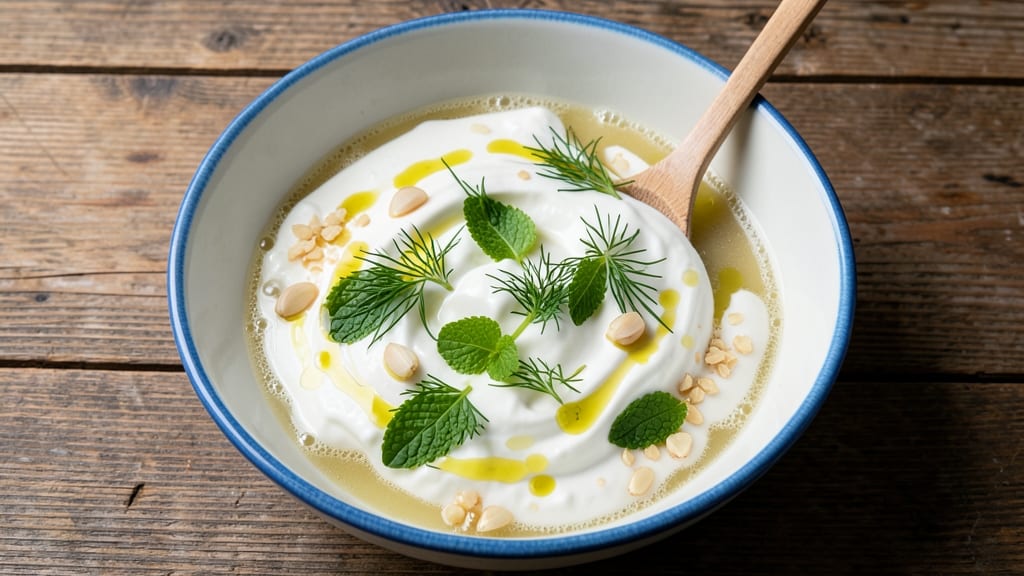
This Beyran soup recipe brings the creamy, herbaceous comfort of Turkish home cooking to your kitchen table. 💛 The secret lies in blending tangy yogurt with fresh herbs and a delicate broth, creating a velvety soup that's both nourishing and elegant.
I've perfected this version after years of testing, ensuring the yogurt stays thick and the flavors perfectly balanced.
What sets Beyran apart is its simplicity—just a few key ingredients transform into something extraordinary. The yogurt base provides richness, while fresh herbs like dill and mint add brightness, and a touch of garlic deepens the flavor.
Traditional recipes often include meat or fish, but this version keeps it vegetarian for a lighter take.
The result is a smooth, creamy soup with a delicate sheen from the yogurt and vibrant green flecks of fresh herbs. It's the kind of dish that feels luxurious yet effortless, perfect for chilly evenings or as a starter for special meals.
The texture is velvety without being heavy, and every spoonful carries layers of flavor.
Serve it warm with crusty bread or a sprinkle of extra herbs for garnish. This recipe delivers restaurant-quality results at home, with just the right balance of tangy, creamy, and fresh. Let's make it together!
Ingredients for beyran soup
Creamy yogurt, fresh herbs, and delicate broth create this Turkish velouté's magic.
| Ingredient | Amount | Notes |
|---|---|---|
| Plain Greek Yogurt 🧀 | 2 cups | Full-fat for creaminess |
| Fresh Dill 🌿 | ½ cup | Chopped, stems removed |
| Fresh Mint Leaves 🌿 | ¼ cup | Finely chopped |
| Garlic Cloves 🧄 | 3 cloves | Minced for depth |
| Extra-Virgin Olive Oil 🫒 | ¼ cup | High-quality, fruity |
| Vegetable Broth 💧 | 4 cups | Homemade or low-sodium |
| Lemon Juice 🍋 | 2 tbsp | Freshly squeezed |
| Salt 🧂 | 1 tsp | Diamond Crystal preferred |
| Black Pepper 🌶️ | ½ tsp | Freshly ground |
| Ground Cumin 🌿 | ¼ tsp | Toasted for warmth |
| Crusty Bread 🍞 | 4 slices | For serving |
The yogurt is the soul of Beyran. Greek-style, full-fat is non-negotiable—it gives that signature velvety texture. Fage or Chobani from the refrigerated section work best. Fresh herbs make all the difference: dill and mint from the grocery store's produce section have more flavor than dried, but if you must use dried, reduce to one-third the amount. For the broth, homemade vegetable stock elevates the dish, but a quality low-sodium store-bought version (like Pacific Foods) works in a pinch. The garlic? Freshly minced—jarred garlic just doesn't cut it here.
No Greek yogurt? Plain whole-milk yogurt is the closest substitute, though it may separate slightly. Short on dill? Fresh parsley at double the amount gives a similar brightness. The cumin is optional but adds that subtle warmth—skip it if you prefer a milder flavor. For the olive oil, any good extra-virgin will do, but avoid the cheap, bitter varieties. If you're making this ahead, the lemon juice can be added just before serving to keep the herbs vibrant. The crusty bread? A baguette or sourdough from the bakery section is ideal—it soaks up the creamy goodness perfectly.
This soup tastes even better the next day—honestly, the flavors meld beautifully after resting. Store in an airtight container in the fridge for up to 3 days. If you want to freeze it, add an extra splash of broth to prevent thickening. The yogurt may separate slightly when reheated, but a quick whisk brings it back together. For serving, toss the bread with olive oil and garlic for extra flavor. Leftovers? Perfect for lunch the next day with a sprinkle of fresh herbs on top.
Why You'll Love This Recipe
- Here’s what sold me: this keeps perfectly for days in the fridge. Toss it with grilled chicken, serve it over rice, or drizzle it on roasted veggies. My lunchbox never looked so good, and I’m always the one bringing the soup to potlucks.
- No-Fuss Assembly: I swear by this recipe because it’s the kind of dish that feels like a hug—just blend yogurt, garlic, herbs, and olive oil. No simmering, no fussing, no watching the clock. Honestly, I’ve made it while answering emails, waiting for the oven, even during a phone call.
- Herb-Packed Magic: That fresh dill and mint? They turn the yogurt into something bright and alive, like a cool breeze on a hot day. The garlic adds just enough bite to keep it interesting, and the olive oil ties it all together—creamy but never heavy.
- Meal-Prep MVP: Here’s what sold me: this keeps perfectly for days in the fridge. Toss it with grilled chicken, serve it over rice, or drizzle it on roasted veggies. My lunchbox never looked so good, and I’m always the one bringing the soup to potlucks.
Step-by-step instructions for Turkish yogurt and herb velouté
This velvety beyran soup transforms simple ingredients into a restaurant-worthy Turkish classic.
👨🍳 Step 1: Whisk Yogurt and Aromatics for Smooth Base
In a large mixing bowl, combine the 2 cups plain Greek yogurt with 0.5 cup chopped fresh dill and 0.25 cup finely chopped fresh mint leaves. Use a whisk to break up any lumps until the mixture is completely smooth. This step is crucial—lumps won't dissolve in the broth later.
In a separate small bowl, mix the 3 minced garlic cloves, 0.25 tsp toasted ground cumin, 0.5 tsp freshly ground black pepper, and 1 tsp salt. The cumin adds warm depth while the pepper brightens the yogurt's natural tang. Set this spice blend aside for now.
🍳 Step 2: Gradually Temper the Yogurt Mixture
Place a medium saucepan over medium-low heat and pour in the 4 cups vegetable broth. Let it warm to 160°F—just below simmering. This gentle heat prevents the yogurt from curdling when combined.
Slowly ladle about ½ cup of the warm broth into the yogurt mixture while whisking constantly. This gradual introduction, called tempering, ensures the yogurt maintains its creamy texture. Once fully incorporated, whisk in the remaining broth 1 tablespoon at a time, whisking vigorously after each addition until completely smooth.
🥘 Step 3: Infuse with Herbs and Spices
Return the tempered yogurt mixture to the saucepan over low heat. Stir in the reserved garlic-cumin-spice blend and 0.25 cup extra-virgin olive oil. The oil adds richness while helping emulsify the soup. Let the mixture simmer gently for 5-7 minutes, stirring occasionally, until it reaches 170°F.
Here's the thing—don't let it boil. The moment it reaches 175°F, the yogurt will separate. You want it warm through but still silky. Remove from heat and stir in 2 tablespoons freshly squeezed lemon juice. This brightens the flavors and balances the richness.
⏰ Step 4: Rest and Adjust Seasoning
Cover the soup and let it rest for 10 minutes at room temperature. This allows the flavors to meld while preventing any potential separation. Taste and adjust seasoning—you may need an additional pinch of salt or pepper to balance the acidity from the lemon.
For serving, ladle the soup into bowls and top each with a slice of crusty bread. The bread soaks up the velvety sauce beautifully, creating the perfect textural contrast. Serve immediately while warm for the best experience.
Pro Tips For Making Beyran Soup
- Whisk the Yogurt Slowly: Start with a thin stream of cold water—about 1 cup—while whisking the yogurt vigorously. If you dump it all at once, you’ll end up with a watery mess instead of a smooth, velvety soup. I learned this the hard way after making a batch that looked like split pea soup.
- Use Ice-Cold Yogurt: Pull the yogurt from the fridge right before you start—never room temperature. Cold yogurt blends better and won’t curdle when you add the garlic and herbs. Trust me, the difference is noticeable, especially if you’re using a thick, high-fat Greek yogurt.
- Pulse the Herbs: Don’t just chop the dill and mint—give them a quick pulse in a food processor with a pinch of salt. This releases their oils and keeps the texture bright without clumps. (Yes, even if you’re impatient like me.)
- Toast the Garlic First: Sauté the minced garlic in olive oil over low heat until it’s golden, not browned—this mellows its sharpness and adds depth. Skip this, and your soup will taste raw and overpowering. (Your future self will thank you.)
Essential equipment for this recipe
Essential Blender
For the smoothest Beyran, I recommend a high-speed blender like the Ninja BN601—it handles the yogurt and herbs effortlessly without breaking down the texture. Avoid immersible blenders; they struggle with thick yogurt mixtures.
If you don’t have one, a food processor (like Cuisinart DFP-14BCY) works, but pulse briefly to avoid overheating the yogurt. 💫
Heavy-Bottomed Pot
A stainless steel saucepan with a thick base (I use All-Clad Stainless) is non-negotiable for even heating. Thin pans cause hot spots that can curdle the yogurt.
If you only have a lightweight pot, reduce heat to low and stir constantly. Avoid nonstick—it can’t handle the gentle simmering required for this delicate soup.
Fine-Mesh Strainer
For ultra-smooth Beyran, strain the yogurt-herb mixture through a fine-mesh sieve (like OXO Good Grips) before blending. This removes herb stems and any remaining lumps for a silky finish.
Skip this step only if your blender is powerful enough to puree stems—otherwise, you’ll taste them. Pro tip: Line the strainer with cheesecloth for extra smoothness.
Immersion Blender
If you prefer blending directly in the pot, an immersion blender (like Breville Immersion) is a game-changer. It keeps the yogurt in the pot, reducing cleanup. Run it on low speed for 10-15 seconds to avoid overheating.
For best results, blend in short bursts, letting the mixture cool slightly between each. Never blend on high—it risks breaking the yogurt’s emulsion.
Thermometer
A kitchen thermometer (I swear by the ThermoWorks Thermapen) is your secret weapon. Monitor the broth’s temperature—it must stay between 160°F and 170°F to prevent curdling. The moment it hits 175°F, the yogurt will separate.
If you don’t have one, watch for tiny bubbles forming—this signals the danger zone. Trust me, this small investment saves hours of frustration.
Nutrition facts
Frequently asked questions
Why does my Beyran soup look separated after cooking?
This happens when the soup exceeds 175°F—the yogurt curdles from overheating. To fix it, whisk in 1 tablespoon cold olive oil while stirring constantly. For prevention, use a thermometer to keep temps between 160°F-170°F and avoid boiling. The key is gentle, low heat throughout cooking.
Can I make Beyran soup without a blender?
For a rustic texture, whisk the yogurt, herbs, and warm broth vigorously by hand until completely smooth. Strain through a fine-mesh sieve to remove any remaining herb stems. The result will be slightly chunkier but still delicious—just stir constantly while heating to prevent separation.
What's the best way to serve Beyran soup?
Serve it warm in shallow bowls with crusty bread on the side for dipping. For extra flair, top with a drizzle of olive oil, extra fresh herbs, and a sprinkle of toasted cumin. In Turkey, it's often paired with grilled meats or fresh vegetables. The bread helps balance the soup's richness by soaking up excess liquid.
How long can I store Beyran soup in the fridge?
This soup keeps well for 3 days in an airtight container. The flavors actually improve overnight as the ingredients meld. When reheating, warm gently on low heat and whisk constantly to restore creaminess. Never microwave directly from the fridge—it causes separation. Add a splash of cold water or broth if it thickens too much.
What's the difference between Turkish and Azerbaijani Beyran?
The Turkish version uses more yogurt and dill, creating a lighter, creamier texture. Azerbaijani Beyran often includes ground lamb or beef and more garlic, giving it a heartier, meatier profile. Both use similar herbs, but Turkish recipes lean toward vegetarian simplicity while Azerbaijani versions embrace richer flavors. The broth in Azerbaijani versions is typically more robust.