Soups & Stews
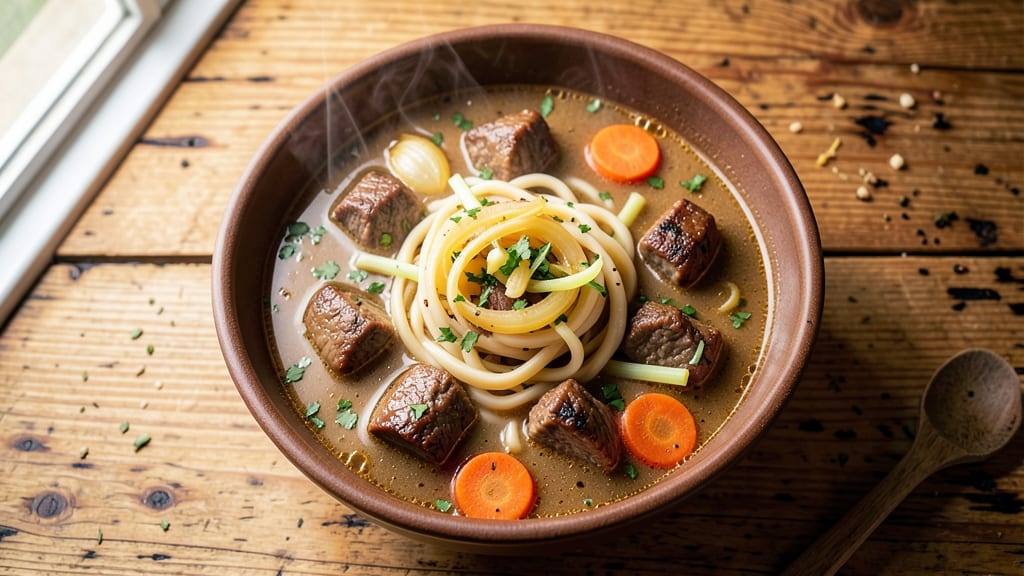
This Cracker Barrel beef noodle soup recipe delivers the same restaurant-quality comfort you crave at home—rich, hearty, and packed with tender beef and caramelized onions. The secret lies in slow-simmering the broth until deeply flavorful, while the beef becomes fork-tender and the egg noodles absorb every savory note.
I've perfected this version after countless batches, ensuring each spoonful delivers that signature Cracker Barrel warmth.
The foundation starts with quality beef broth and chuck roast, simmered low and slow until the meat practically falls apart. Caramelizing onions for 20 minutes creates that deep, sweet base that defines the soup's character, while aromatic vegetables add layers of flavor without overpowering.
This isn't just soup—it's a full meal in a bowl, designed to warm you from the inside out.
By the time you're done, you'll have a steaming pot of soup with perfectly tender beef chunks, al dente egg noodles, and a broth so rich it coats every spoonful.
The aroma alone will have everyone gathering around the table, while the first bite delivers that comforting balance of savory, sweet, and umami. This is the kind of soup that disappears quickly—prepare to make it again.
Perfect for chilly evenings or when you need a comforting meal that feels like a hug in a bowl. The recipe scales easily for crowds, and leftovers reheat beautifully, making it ideal for meal prep. Let's create this restaurant-quality soup at home.
Ingredients for cracker barrel beef noodle soup
These 15 ingredients create the same hearty, comforting soup you love at Cracker Barrel.
| Ingredient | Amount | Notes |
|---|---|---|
| Chuck Roast 🥩 | 2 ½ lb | Cut into 1-inch cubes |
| Yellow Onions 🧅 | 3 whole | Sliced thin for caramelizing |
| Carrots 🥕 | 4 whole | Peeled, cut into 1-inch pieces |
| Celery Stalks 🌿 | 4 whole | Cut into 1-inch pieces |
| Garlic Cloves 🧄 | 6 cloves | Minced for depth of flavor |
| Beef Broth 💧 | 6 cups | Low-sodium preferred |
| Egg Noodles 🍜 | 12 oz | Medium or wide egg noodles |
| Tomato Paste 🍅 | ½ cup | Squeeze tube works great |
| Bay Leaves 🌿 | 2 whole | Remove before serving |
| Dried Thyme 🌿 | 1 tbsp | Or 1 tbsp fresh thyme |
| Salt 🧂 | 1 ½ tsp | Adjust to taste |
| Black Pepper 🌶️ | 1 tsp | Freshly ground preferred |
| Olive Oil 🫒 | 2 tbsp | For caramelizing onions |
| Worcestershire Sauce 🍶 | 1 tbsp | Adds umami depth |
| Parsley 🌿 | ¼ cup | Chopped for garnish |
The chuck roast is non-negotiable—it's what gives this soup that signature fork-tender texture. Costco has the best prices for a whole roast, but any grocery store carries pre-cubed chuck. Look for pieces with good marbling, as that's where the flavor hides. Yellow onions are key for caramelizing; Vidalia if you want extra sweetness, but regular yellows work fine. The carrots and celery should be fresh—no rubbery stalks here. I always grab the organic bunch at Trader Joe's because they're pre-cut and ready to go (saving me time).
No Worcestershire sauce? Soy sauce or liquid aminos in the same amount works, though it'll have a slightly different profile. Short on beef broth? Water plus 2 beef bouillon cubes gets you close, but you'll lose some depth. Fresh thyme is ideal, but dried works at one-third the amount—just remember it's more concentrated. The tomato paste can be the squeeze tube kind from Trader Joe's; it's perfect for this recipe because you only need a little. For the noodles, egg noodles are a must—they soak up that rich broth beautifully. If you can't find them, fettuccine or pappardelle are decent substitutes, though they won't be quite the same.
This soup tastes even better the next day, so make a big batch. Store leftovers in the fridge for up to 5 days or freeze for 3 months. I like to portion it into containers for easy lunches—just reheat with a splash of water or broth. The broth reduces as it cools, so if it seems too thick when reheating, add a little water. For serving, I always sprinkle fresh parsley on top—it adds a pop of color and freshness that makes the whole bowl look restaurant-worthy.
Why You'll Love This Recipe
- Slow-Cooker Magic: I swear by the chuck roast—it turns fork-tender after hours of simmering, while I’m free to read or binge something. Just chop the onions, carrots, and celery once, dump everything in, and let the slow cooker do the work. No babysitting required.
- Garlic Bomb Depth: That first bite? The roast melts like butter, but the real star is the garlic—minced fresh and caramelized just enough to make your kitchen smell like a cozy diner. The celery and carrots soften into sweet, savory threads that pull the whole thing together.
- Weeknight & Leftovers: Between us, this is my go-to when I’m too tired to plan. The flavors only get better the next day, so I double the batch and freeze half—perfect for lazy Mondays or when unexpected company drops by. (Yes, even on a Tuesday night.)
- Budget Beef Power: Chuck roast is the unsung hero of affordable meals—it’s cheaper than steak but just as satisfying. A single roast stretches across three meals, and the veggies (onions, carrots, celery) add bulk without breaking the bank. My wallet and my family thank me every time.
Step-by-step instructions for slow-simmered beef noodle soup
Here's how to recreate that comforting Cracker Barrel flavor at home—rich, caramelized, and perfectly balanced.
Sear the Chuck Roast for Deep Flavor
Pat the 2.5 lb chuck roast dry with paper towels and cut it into 1-inch cubes. Heat 2 tablespoons olive oil in a large Dutch oven over medium-high heat. Working in batches, add the beef cubes and sear for 3-4 minutes per side until they develop a deep brown crust. This step creates the foundational flavor for your soup—don't rush it.
As you sear, you'll notice the meat releases juices that caramelize in the pan. These browned bits, called fond, are packed with flavor. Once all the beef is browned, transfer it to a plate and set aside. You'll add it back later when the vegetables are ready.
Caramelize the Onions and Vegetables
In the same Dutch oven, reduce the heat to medium and add 3 whole sliced yellow onions. Cook them for 8-10 minutes, stirring occasionally, until they turn a beautiful golden brown. This slow caramelization adds natural sweetness that balances the richness of the beef.
Add the 4 whole peeled carrots cut into 1-inch pieces and the 4 whole celery stalks cut into 1-inch pieces. Stir to coat them in the caramelized onions and cook for another 5 minutes until the vegetables begin to soften. The onions should be deep amber—this is your signal they're properly caramelized.
Build the Flavor Base with Aromatics
Add the 6 minced garlic cloves and cook for 30 seconds until fragrant. Stir in the 0.5 cup tomato paste, 1 tablespoon dried thyme, 1.5 teaspoons salt, and 1 teaspoon black pepper. Cook for 1 minute to toast the spices and deepen their flavors.
Pour in the 6 cups beef broth and bring the mixture to a gentle simmer. Add the 2 whole bay leaves and the seared beef cubes. Partially cover the Dutch oven and let it simmer for 1 hour 15 minutes. This long simmering time ensures the beef becomes fork-tender and the flavors meld together perfectly.
Finish with Umami Depth and Noodles
After the beef has simmered, stir in the 1 tablespoon Worcestershire sauce. This adds a savory depth that's characteristic of Cracker Barrel's signature flavor. Cook for another 5 minutes to let the sauce absorb into the broth.
Add the 12 oz egg noodles and cook for 8-10 minutes or until they're al dente. The noodles should have a slight bite to them—this ensures they hold up well in the rich broth. Taste the soup and adjust the seasoning if needed. Remove the 2 bay leaves before serving.
Serve Warm with Fresh Garnish
Ladle the soup into bowls and garnish each serving with 0.25 cup chopped parsley. The bright green color contrasts beautifully with the deep red broth and adds a fresh finish. Serve immediately while the noodles are still warm and the flavors are at their peak.
This soup tastes even better the next day as the flavors continue to develop. Store any leftovers in the refrigerator for up to 3 days or freeze for up to 3 months. The slow-simmered beef and caramelized onions make every spoonful comforting and full of flavor.
Pro Tips For Making Cracker Barrel Beef Noodle Soup
- Sear the Chuck Roast Hard: I learned this the hard way—skipping the sear means flavorless broth. Pat the roast very dry, then hit it with high heat in a heavy pot until it’s deep brown on all sides. That crust locks in juices and builds the rich, meaty base the soup needs. (Yes, even if you’re impatient like me.)
- Cut Carrots in Chunks: Thin slices turn to mush. For Cracker Barrel-style texture, cut carrots into ½-inch chunks—they’ll soften just enough to be tender but still hold shape. Pro move: Peel them first, or the skins will make the broth look cloudy.
- Don’t Rush the Simmer: After browning the meat and veggies, add broth and lower the heat to a gentle simmer. Too much boiling = stringy beef and bitter flavors. Let it bubble softly for at least 2 hours (3 if using a cheap cut)—patience here makes the difference between "meh" and "wow."
- Use a Splashed Garlic Trick: Instead of mincing garlic into the pot (where it burns), peel 4-5 cloves, smash them flat, and add them whole to the simmering broth 10 minutes before serving. Strain them out—this keeps the flavor without the bitter aftertaste. (Your future self will thank you.)
Storing and reheating this dish
Refrigerator Storage
Let your beef noodle soup cool to room temperature for no more than 2 hours before transferring to airtight containers. I use glass Pyrex containers with snap-on lids—they distribute heat evenly and prevent condensation.
Store in the fridge at 40°F or below for up to 5 days, though I've found the flavors actually deepen overnight. The broth thickens slightly as it cools, so add a splash of water when reheating if needed. 💛
Freezer Prep Tips
For longer storage, portion soup into quart-sized freezer bags—they're stackable and thaw faster than containers. Leave 1 inch of headspace since liquids expand when frozen. Press out excess air to prevent freezer burn, and label with the date.
This soup freezes beautifully for up to 3 months, with minimal texture changes when reheated properly. 🥶
Stovetop Reheating
My preferred method is stovetop reheating—it preserves the tender beef and al dente noodles best. Transfer soup to a pot and heat over medium-low heat for 10-12 minutes, stirring occasionally.
If the broth seems too thick, add ¼ cup water or beef broth to restore consistency. Taste and adjust seasoning—soup often needs a pinch more salt after reheating. 🔥
Microwave Method
For quick reheating, use the microwave on 50% power in 1-minute intervals, stirring between each interval. Cover with a microwave-safe lid or damp paper towel to retain moisture. Heat until reaching 165°F internal temperature, then let sit for 1 minute before serving.
This method works best for single servings and takes about 3-4 minutes total. ⚡
Oven Reheating
Preheat oven to 350°F and transfer soup to an oven-safe dish. Cover tightly with foil and heat for 20-25 minutes, stirring halfway through. This gentle method is perfect for reheating large batches while keeping the beef tender.
I use this when preparing soup for a crowd—it maintains the rich texture better than microwave methods. 🍲
Garnish Refresh
After reheating, always finish with fresh parsley and a drizzle of olive oil to restore that restaurant-quality presentation. The parsley brightens the flavors and makes the soup look as good as it tastes.
For extra richness, I sometimes add a sprinkle of grated Parmesan—it adds a nice umami contrast to the beefy broth. 🌿
Nutrition facts
Frequently asked questions
Can I substitute chuck roast with another beef cut?
You can use brisket or short ribs as alternatives, but chuck roast is ideal because it stays tender when slow-cooked. If using brisket, cut it against the grain for easier chewing. Short ribs will add more flavor but may be slightly chewier—simmer them 1 hour longer to ensure tenderness.
How do I make this soup vegetarian?
Replace the beef with mushrooms (like cremini or portobello) and use vegetable broth instead. Add 1 cup cooked lentils or crumbled tempeh for protein, and boost umami with 1 tablespoon soy sauce and ½ teaspoon smoked paprika. The caramelized onions and thyme will still shine!
Why does my beef noodle soup taste bland?
Blandness usually means the broth needs more depth. Try adding 1 teaspoon beef bouillon powder or ½ cup tomato paste to intensify flavor. If the beef is tough, it didn't simmer long enough—aim for 2 hours for ultra-tender results. A splash of Worcestershire sauce or balsamic vinegar can also elevate the taste.
Can I make this soup in an Instant Pot?
Yes! Sear the beef first, then add all ingredients except noodles. Cook on high pressure for 25 minutes, then quick-release. Add noodles and cook for 5 minutes on sauté mode. The pressure cooker cuts time but may make the broth slightly thinner—reduce it on the stovetop if needed.
What's the best way to serve this soup?
Garnish with fresh parsley and a drizzle of olive oil for restaurant flair. Serve with crusty bread or oyster crackers for dipping. For extra heartiness, top with shredded cheddar or sour cream. Pair with a simple green salad to balance the richness.