
Soups & Stews
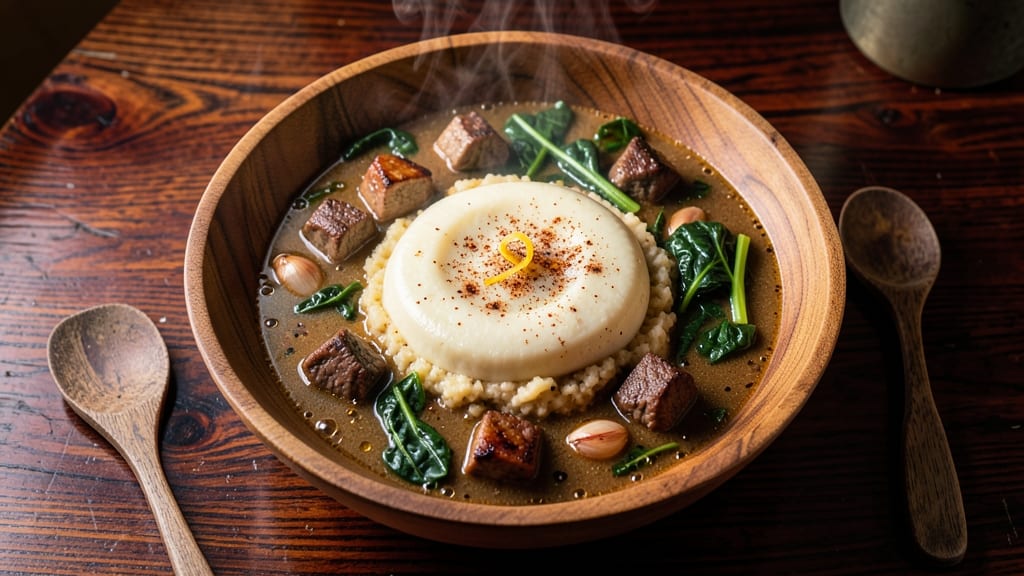
This African fufu and soup recipe brings West African comfort food to your kitchen with its signature hand-torn dough and richly spiced stew.
The fufu's unique texture—soft, stretchy, and satisfying—comes from pounding boiled cassava or yam into a smooth dough, while the accompanying soup delivers layers of smoky, savory flavors from slow-cooked meat and leafy greens.
What makes this dish special is its cultural significance: a staple for celebrations and family gatherings, where every bite tells a story.
The key to perfect fufu lies in the pounding technique—using your hands or a mortar and pestle to achieve that signature stretchy consistency without gluten. Meanwhile, the soup builds depth through slow simmering, where spices like ginger, garlic, and chili meld with tender meat and vegetables.
This recipe balances tradition with practicality, offering modern substitutions while staying true to the dish's heart. The result? A meal that's as nourishing as it is flavorful.
By the time you're done, you'll have a steaming bowl of fufu that transforms into a smooth, elastic dough with just a dip in warm water, paired with a soup that's rich, aromatic, and full of hearty ingredients.
The combination of textures—creamy fufu against the robust broth—makes this more than just a meal; it's an experience. Whether you're cooking for a special occasion or a weeknight dinner, this recipe delivers authenticity and satisfaction.
Serve with a side of spicy pepper sauce or fresh vegetables to round out the meal. The leftovers keep well for a day or two, making this an ideal recipe for meal prep. Let's get started on creating this beloved African classic in your own kitchen.
Ingredients for african fufu soup
Sixteen ingredients transform into West Africa's beloved fufu and spiced stew masterpiece.
| Ingredient | Amount | Notes |
|---|---|---|
| Cassava Tubers 🍠 | 2 lb | Large, peeled, boiled until tender |
| Yam Tubers 🍠 | 1 lb | Substitute for cassava if preferred |
| Beef Chuck Roast 🥩 | 2 lb | Cut into 1-inch cubes for even cooking |
| Leafy Green Vegetables 🌿 | 1 lb | Spinach or bitter melon preferred |
| Onions 🧅 | 2 whole | Yellow or red, chopped |
| Garlic Cloves 🧄 | 8 cloves | Minced for aromatic base |
| Fresh Ginger Root 🌿 | 2 tbsp | Grated, for zesty kick |
| Red Bell Peppers 🌶️ | 2 whole | Chopped, for color and crunch |
| Dried Chili Peppers 🔥 | 2 pieces | For heat, adjust to taste |
| Tomato Paste 🍅 | ½ cup | High-quality for rich flavor |
| Vegetable Oil 🫒 | ½ cup | For frying and sautéing |
| Salt 🧂 | 2 tsp | Kosher or sea salt preferred |
| Black Pepper 🌶️ | 1 tsp | Freshly ground for best flavor |
| Ground Cumin 🌿 | 1 tsp | Toasted for deeper aroma |
| Ground Nutmeg 🌿 | ½ tsp | For warm, earthy notes |
The cassava and yam are the heart of this dish. Look for firm, unblemished tubers at specialty stores or African markets—African & Caribbean Foods carries excellent quality. If you can't find fresh cassava, pre-boiled cassava flakes from international aisles work in a pinch. For the beef, chuck roast gives the best flavor and texture when slow-cooked. Trim any excess fat to avoid greasy soup. Leafy greens like spinach or bitter melon are traditional, but kale or collards work well too if you're in a hurry. The key to great fufu is the pounding technique—use a mortar and pestle or food processor for that signature stretchy texture.
No cassava? Sweet potatoes or plantains can substitute, but the texture will differ slightly. For the meat, chicken thighs or smoked sausage add great flavor if beef isn't available. Fresh ginger and garlic are non-negotiable—they build the soup's aromatic foundation. Pre-minced garlic works, but fresh is always better. The dried chili peppers can be swapped for red pepper flakes at half the amount. For tomato paste, San Marzano is ideal if you want the best flavor, but any high-quality brand will do. The spices—cumin and nutmeg—should be toasted lightly in a dry pan before adding to the soup for maximum flavor. If you're short on time, ground spices work fine but toasted ones elevate the dish.
Fresh cassava and yam keep for 3-5 days in the fridge once peeled, but it's best to use them immediately. The cooked fufu dough can be stored in an airtight container for 2-3 days, though it's best made fresh. The soup reheats beautifully—simmer gently to avoid breaking the meat. Portion the soup into containers and freeze for up to 3 months. For meal prep, make a double batch of fufu dough and freeze half. When ready to serve, simply dip in warm water to soften. The combination of textures—creamy fufu against the robust broth—is what makes this dish truly special.
Why You'll Love This Recipe
- I swear by this trick: just boil cassava and yam together, then pound them into that perfect stretchy fufu. No fancy equipment—just a mortar and pestle (or even a rolling pin in a pinch). The starchy mash is forgiving—overcook it a little? Still works. Undercook it? Still works. It’s the kind of dish where mistakes disappear into the soup.
- Here’s what sold me: fufu reheats like a dream (just steam it or microwave with a damp towel), and the soup only gets better the next day. I’ve turned Sunday’s leftovers into Monday’s lunch with zero effort—just warm, serve, and eat. Plus, the beef stretches further than you’d think, so it’s my budget-friendly secret weapon for feeding a houseful.
Step-by-step instructions for African fufu and soup
Master the art of hand-torn fufu and rich West African stew with this authentic method.
Prepare the Meat and Aromatics
Cut the 2 lb beef chuck roast into 1-inch cubes for even cooking. In a large pot, heat 0.5 cup vegetable oil over medium-high heat until shimmering. Add the beef cubes and sear for 4-5 minutes, stirring occasionally, until they develop a deep brown crust. This caramelization builds rich flavor for the stew.
Remove the beef and set aside. In the same pot, add 2 whole chopped onions and cook for 5 minutes until softened. Add 8 cloves minced garlic, 2 tbsp grated fresh ginger root, and 2 whole chopped red bell peppers. Sauté for 3 minutes until fragrant, stirring constantly to prevent burning. This aromatic base forms the foundation of your soup's complex flavor profile.
Build the Spiced Tomato Base
Lower the heat to medium and stir in 0.5 cup tomato paste, spreading it evenly across the bottom of the pot. Cook for 2 minutes until it darkens slightly. Add 2 pieces dried chili peppers, 1 tsp ground cumin, 0.5 tsp ground nutmeg, 2 tsp salt, and 1 tsp black pepper. Stir well to distribute the spices evenly throughout the mixture.
Pour in 4 cups water (enough to cover the beef) and bring to a gentle boil. Return the beef to the pot, reduce heat to low, and simmer uncovered for 1 hour 30 minutes. You'll know it's ready when the meat is fork-tender and falls apart easily. This slow cooking process infuses the beef with the aromatic spices, creating a deeply flavorful broth.
Finish the Soup with Vegetables
After the beef has cooked, stir in 1 lb chopped leafy green vegetables (spinach or bitter melon). Simmer for an additional 10-15 minutes until the greens are tender but still vibrant. The vegetables should retain some texture to balance the rich stew. Taste and adjust seasoning if needed, adding more salt or pepper as necessary.
Keep the soup warm over low heat while you prepare the fufu. The soup should be thick enough to coat the back of a spoon but still have a spoonful of broth remaining when you serve. This consistency ensures the fufu absorbs the flavorful liquid without becoming soggy.
Make the Traditional Fufu
Peel and boil the 2 lb cassava tubers and 1 lb yam tubers separately in salted water until completely tender (20-25 minutes for cassava, 15-20 minutes for yams). Drain well and let cool slightly. The tubers should be soft enough to mash easily with your hands.
Place the cooked tubers on a clean surface and begin kneading them with your hands, gradually adding small amounts of the soup broth to create a smooth, elastic dough. Work quickly and continuously for 5-7 minutes until the mixture becomes stretchy and forms a ball. The fufu should be firm enough to hold its shape when torn but still pliable. This hand-torn texture is essential for authentic fufu.
Serve Together
Tear the fufu into golf-ball-sized pieces by hand and serve immediately alongside the hot soup. The contrast between the smooth, stretchy fufu and the hearty, spiced stew creates a satisfying dining experience. Each bite should deliver tender beef, aromatic vegetables, and the rich, earthy flavor of the cassava and yam base.
For best results, serve the fufu and soup together while both are hot. The fufu will soften slightly as it absorbs the soup's flavorful broth, creating a harmonious blend of textures and tastes that defines this classic West African dish.
Pro Tips For Making African Fufu Soup
- Boil Tubers Until Fork-Tender: I learned this the hard way—undercooked cassava and yam turn fufu into a gummy mess. Simmer them in salted water until they pierce easily with a fork (about 20-25 minutes for cassava, 15-20 for yam), then drain immediately. Overcooking dries them out; undercooking makes the dough fight you later.
- Brown Beef Chuck Slowly: Skip the quick sear—this cut needs patience. Sear the beef chuck in batches over medium-low heat (not high) for 8-10 minutes per side until deeply browned. The slow start prevents a burnt exterior while locking in flavor for the long simmer ahead. Yes, it’ll take longer, but the soup will taste like it simmered all day.
- Pound Fufu Fresh, Not Dry: If your dough cracks or crumbles when shaping, you waited too long. Work with the tubers immediately after boiling while they’re still warm and slightly sticky. Use a wooden pestle or clean hands to pound against a grooved wooden board—this keeps the texture smooth and elastic. Let it rest 2 minutes between poundings, or you’ll end up with a gluey disaster.
- Sauté Onions Until Golden: Don’t rush the onion base—caramelized onions build the soup’s depth. Cook them in 2 tablespoons of oil over medium heat for 10-12 minutes until they’re deep golden, not just translucent. Add a pinch of salt halfway through to draw out moisture, then stir in the leafy greens just before the beef returns to the pot. This step makes all the difference in flavor.
Make-ahead tips for this dish
Fufu Dough Prep
Make the fufu dough 1 day ahead and store it in an airtight container at room temperature. The flavors meld beautifully overnight, and the texture becomes even more elastic. When ready to serve, simply dip the dough in warm water for 5-10 seconds to soften before tearing.
This prep step saves you 20 minutes of work on serving day! 💪
Soup Make-Ahead
Cook the soup 2 days in advance and refrigerate in airtight containers. The flavors deepen as it sits, and reheating is a breeze. Simmer gently on the stovetop for 10-15 minutes (covered) until heated through.
Avoid microwaving—the meat can dry out. For extra richness, add 1 cup beef broth while reheating. ❄️
Freezer-Friendly
Freeze the soup for up to 3 months in quart-sized freezer bags. Thaw overnight in the fridge, then reheat as directed. For the fufu dough, portion into golf-ball-sized balls, wrap individually in plastic, and freeze.
When ready to serve, thaw in warm water for 1-2 minutes—no need to defrost fully! This makes weeknight dinners effortless. ⏰
Double Batch
Double the fufu dough recipe and freeze half. Store the other half in the fridge for up to 3 days. When reheating, dip frozen fufu balls in warm water for 15-20 seconds to soften.
The soup can also be doubled and frozen in 2 separate containers for easy portioning. Perfect for feeding a crowd or meal prep! 🍽️
Reheating Tips
For best texture, reheat the soup low and slow—never boil. Cover the pot and simmer for 10 minutes, then add the fufu dough (pre-dipped in warm water) to the pot.
Let it sit for 2-3 minutes to absorb the flavors. If the soup seems thick after reheating, add ½ cup water or broth to restore consistency. 💡
Serving Strategy
Plan to serve fufu and soup within 1 hour of reheating for optimal texture. Keep the fufu covered with a damp towel to prevent drying. For a restaurant-style presentation, serve in shallow bowls with the fufu torn into golf-ball-sized pieces on top.
Garnish with fresh cilantro or chili flakes for a pop of color. 🌟
Nutrition facts
Frequently asked questions
Can I make fufu without a mortar and pestle?
While traditional methods use a mortar and pestle, you can achieve the same texture with a food processor or even by hand. For a food processor, pulse the cooked cassava/yam in batches with 1-2 tablespoons of warm water until smooth. If doing it by hand, knead vigorously for 5-7 minutes until stretchy. The key is adding small amounts of liquid gradually to create that signature elastic consistency.
What's the best way to store leftover fufu?
Store leftover fufu dough in an airtight container at room temperature for 2-3 days. To reheat, dip pieces in warm water for 10-15 seconds before serving. For longer storage, wrap portions in plastic and freeze for up to 3 months. When ready to serve, thaw in warm water for 1-2 minutes—no need to fully defrost! The texture remains excellent when properly stored.
Can I substitute chicken for the beef in the soup?
Yes, chicken works beautifully! Use 2 lbs boneless, skinless chicken thighs instead of beef. Cut them into 1-inch pieces and follow the same searing and simmering instructions. Chicken cooks faster than beef, so reduce the simmering time to 45-60 minutes instead of 1.5 hours. The soup will still be rich and flavorful with this protein swap.
Why does my fufu turn out too dry or crumbly?
Dry or crumbly fufu usually means too little liquid was added during kneading. Gradually incorporate 1-2 tablespoons of warm water or soup broth at a time while kneading—this creates the stretchy texture. Also, ensure your cassava/yam is fully cooked and tender before pounding. If the dough still feels dry, dip it in warm water for 5-10 seconds before serving to restore moisture.
What are some common variations of African fufu?
African fufu varies by region! In Ghana, it's often made with plantains and cassava, while Nigerian versions may include yam and cocoyam. Some recipes use cornmeal or wheat flour for a lighter texture. For soup pairings, try peanut soup (groundnut soup) or egusi soup (melon seed soup) instead of the beef stew. Each variation keeps the hand-torn tradition while adapting to local ingredients.