
Soups & Stews
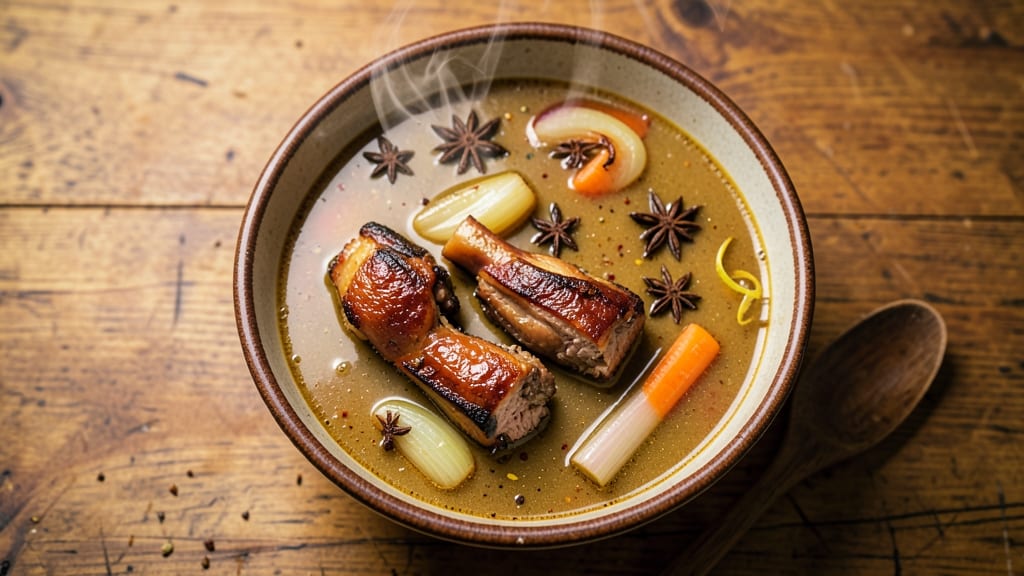
This Alley Restaurant oxtail soup recipe delivers the deep, velvety richness that makes it a culinary benchmark—slow-braised oxtail, collagen-rich broth, and aromatic spices that transform humble ingredients into something extraordinary.
The key lies in patience: letting the oxtail tenderize over hours while building layers of umami through careful caramelization and reduction. I've recreated this iconic dish step by step, ensuring every spoonful carries that signature restaurant-quality depth.
The process begins with searing the oxtail to develop a deep mahogany crust, then simmering it low and slow until the meat falls apart. Three hours of gentle cooking transforms tough connective tissue into melt-in-your-mouth tenderness, while the bones release their marrow into a rich, velvety broth.
Traditional techniques like deglazing the pan and skimming fat ensure maximum flavor concentration, creating a soup that's both comforting and sophisticated.
What sets this recipe apart is the balance of textures—silky broth, tender oxtail, and delicate vegetables—all harmonized by a blend of star anise, cinnamon, and black pepper.
The result is a bowl that's equally at home on a weeknight table or a special occasion menu, with restaurant-inspired presentation that makes it feel like a true culinary achievement.
The beauty of this recipe is its versatility: serve it with crusty bread for soaking up every drop, or pair it with steamed jasmine rice for a complete meal.
The leftovers only improve as the flavors deepen, making it perfect for meal prep or entertaining. Here's how to recreate this iconic dish in your own kitchen.
Ingredients for alley restaurant oxtail soup
Sixteen ingredients transform into a restaurant-quality oxtail soup with deep umami and velvety texture.
| Ingredient | Amount | Notes |
|---|---|---|
| Oxtail 🦬 | 3 lb | Freshly trimmed, bone-in |
| Yellow Onions 🧅 | 2 whole | Peeled, halved lengthwise |
| Carrots 🥕 | 4 whole | Medium size, peeled |
| Celery Stalks 🌿 | 4 whole | Trimmed, cut into 2-inch pieces |
| Garlic Cloves 🧄 | 6 cloves | Peeled, lightly crushed |
| Star Anise Pods 🌟 | 2 whole | Lightly crushed |
| Cinnamon Sticks 🌿 | 2 whole | 2-inch pieces |
| Black Peppercorns 🌶️ | 1 tbsp | Crushed, not ground |
| Bay Leaves 🍃 | 2 whole | Dried, standard size |
| Tomato Paste 🍅 | ½ cup | High-quality, unsweetened |
| Dry White Wine 🍷 | 1 cup | Bold, dry variety |
| Beef Bone Broth 💧 | 8 cups | Homemade or high-quality store-bought |
| Olive Oil 🫒 | ½ cup | Extra-virgin for richness |
| Salt 🧂 | 1 ½ tsp | Diamond Crystal preferred |
| Flour 🌾 | ¼ cup | All-purpose, for dredging |
The oxtail is the foundation—look for cuts with good marbling and minimal connective tissue at specialty butchers or high-end grocery stores like Whole Foods or Eataly. Freshly trimmed oxtail ensures maximum flavor extraction during the slow braise. Star anise and cinnamon are essential for that signature Alley Restaurant depth—Penzeys Spices carries high-quality whole spices perfect for this dish. The bone broth should be rich and collagen-heavy; if making your own, use beef bones simmered for at least 12 hours. For convenience, Kettle & Fire or Imagine brands offer excellent store-bought options with robust flavor profiles.
No star anise? One cinnamon stick plus 1/2 tsp ground allspice approximates the flavor, though it won't be identical. Substitute dry white wine with 1 cup beef broth plus 1 tbsp apple cider vinegar for acidity. The tomato paste can be omitted entirely if you prefer a cleaner broth, but it adds a subtle sweetness that complements the umami. For the flour dredge, cornstarch works equally well if you're avoiding gluten. The carrots and celery can be swapped for turnips or parsnips for a slightly earthier profile, though they'll require longer cooking time. Fresh herbs like thyme or parsley can be added at the end for brightness, but traditional recipes rely on the aromatic spices for depth.
This soup develops deeper flavor with time—reheat gently on the stove with a splash of water or broth to restore consistency. Store in airtight containers for up to 5 days in the refrigerator, though the oxtail will continue tenderizing. Freezes beautifully for up to 3 months; portion into individual containers for easy reheating. The broth can be strained and used as a base for other dishes, while the oxtail works perfectly in tacos, salads, or over rice. For presentation, garnish with fresh parsley and a drizzle of high-quality olive oil to elevate the restaurant-quality feel.
Why You'll Love This Recipe
- One-Pot Magic: I swear by this—just toss oxtail, onions, carrots, and celery into a pot, add water, and let it simmer. No chopping like a fine-diner, no fancy techniques. The oxtail practically melts into rich, velvety goodness while you sip your coffee.
- Deep Umami Bomb: That first spoonful? Chef’s kiss. The oxtail’s natural collagen turns the broth into liquid gold, and the garlic-clove caramelization at the bottom? Pure flavor payoff. It’s the kind of soup that makes you slow down and savor every bite.
- Weeknight to Party Hero: Same recipe, different vibes—serve it with crusty bread for a lazy Tuesday or pair it with steamed jasmine rice for a weekend feast. Honestly, I’ve even brought it to potlucks, and no one’s ever asked for seconds without me noticing.
- Budget-Friendly Luxury: Oxtail stretches like crazy, turning a few dollars into a full bowl of hearty satisfaction. Leftovers? Even better—reheat them the next day, and they taste just as rich. My wallet and my taste buds thank me every time.
Step-by-step instructions for alley restaurant oxtail soup
Transform tough oxtail into melt-in-your-mouth richness through slow braising and aromatic layering.
Sear the Oxtail for Deep Flavor Foundation
Pat the 3 lb oxtail completely dry with paper towels—this ensures maximum browning. Heat 0.5 cup olive oil in a heavy Dutch oven over medium-high heat until shimmering. Working in batches, sear the oxtail pieces for 3-4 minutes per side until deeply golden brown with caramelized edges. The key here is patience: don't crowd the pan or the oil temperature will drop, preventing proper browning.
As you sear, you'll notice the oxtail releases collagen-rich juices that create a fragrant, sticky fond at the bottom of the pot. This golden crust will form the flavor base for your soup. Once all pieces are seared to a rich mahogany color, transfer them to a plate and set aside temporarily. The seared oxtail will continue cooking later, but this initial step is non-negotiable for developing that signature umami depth.
Build the Aromatic Base with Vegetables and Spices
In the same Dutch oven (no need to wipe it clean—those browned bits are pure flavor), reduce heat to medium and add 2 whole yellow onions, 4 whole carrots, and 4 whole celery stalks. Cook for 8-10 minutes, stirring occasionally, until the vegetables soften and begin to caramelize. The onions should turn translucent while the carrots and celery develop a golden hue—this sweetness will balance the rich oxtail flavors.
Add 6 cloves garlic cloves, 2 whole star anise pods, 2 whole cinnamon sticks, 1 tbsp crushed black peppercorns, and 2 whole bay leaves. Stir for 1 minute until fragrant—you should smell warm spices and garlic permeating the kitchen. Here's where the magic happens: these spices infuse the oil with their essential oils, creating complex layers of flavor that will develop throughout the braising process. If you're using fresh spices, lightly crushing them releases more aroma and flavor.
Deglaze and Develop the Sauce
Pour in 1 cup dry white wine, scraping up all the browned bits from the bottom of the pot with a wooden spoon. This deglazing step captures all the concentrated flavors you've built so far. Let the wine simmer for 3-4 minutes until reduced by half, until it develops a syrupy consistency. The alcohol will cook off, leaving behind just the wine's fruity, acidic notes that will brighten the rich oxtail flavors.
Stir in 0.5 cup tomato paste and cook for 2 minutes until it darkens slightly. This creates a smooth, velvety base that helps emulsify the soup later. The tomato paste adds subtle sweetness and depth without overpowering the oxtail's natural richness. At this stage, you should have a thick, glossy paste coating the bottom of the pot—this is the foundation upon which your soup will build.
Braise the Oxtail with Bone Broth
Return the seared oxtail to the pot along with 8 cups beef bone broth. The broth should come about ¾ of the way up the oxtail pieces. Season with 1.5 tsp salt, then bring to a gentle simmer. Here's the critical part: once simmering, reduce heat to low and cover partially with a lid, leaving a 1-inch gap for steam to escape. This slow braising process is what transforms tough oxtail into tender, fork-tender meat.
Simmer for 2.5 to 3 hours, maintaining a gentle simmer throughout. You'll notice the oxtail releases more collagen and fat as it cooks, creating a naturally emulsified, velvety soup. The oxtail is done when it's fork-tender—you should be able to pierce it easily with a fork and have it pull apart with minimal resistance. The soup should have reduced slightly, intensifying its flavors. If it's too thin, you can remove the lid and simmer uncovered for the last 15 minutes to thicken it naturally.
Finish and Serve with Perfect Texture
Remove the oxtail pieces and strain the broth through a fine-mesh sieve into a clean pot. Discard the vegetables and spices. Return the oxtail to the broth and simmer for an additional 10 minutes to reabsorb some of the flavors. Here's a pro tip: if you want an extra-smooth soup, press the oxtail through a food mill or strain it again through a fine-mesh sieve, discarding the meat. For a more rustic texture, leave the oxtail in chunks.
Adjust seasoning with additional salt if needed—remember, the oxtail has been braising in its own juices, so it should be rich and flavorful without needing much. Ladle the soup into bowls and garnish with additional cracked black pepper and a sprinkle of fresh herbs if desired. Serve immediately with crusty bread to soak up every last drop of that luxurious, umami-rich broth. The perfect bowl of oxtail soup should be velvety, deeply flavorful, and so satisfying that each spoonful feels like a hug for your taste buds.
Pro Tips For Making Alley Restaurant Oxtail Soup
- CRISP THE OXTAL FIRST: I learned this the hard way—skipping the sear means flavor gets lost in the broth. Pat the oxtail dry, then hit it with high heat in batches until deep brown. The Maillard reaction here isn’t just for looks—it’s what makes that rich, caramelized depth in alley-style soups.
- CUT ONIONS IN HALVES: Whole onions burn before they soften, turning the broth bitter. Slice them in half vertically first, then peel—this keeps them intact while still cooking faster. (Yes, even if it looks less fancy than dice.)
- DON’T RUSH THE SIMMER: Low and slow is the rule, but too low and it turns to mush. Aim for a gentle bubble—just enough to keep the broth moving without violent rolling. After 2 hours, check the celery and carrots: they should be tender but not falling apart.
- USE GARLIC BUTTER FOR FINISH: Save the best garlic for the end. Melt 2 tablespoons butter, add 3 minced cloves, and swirl until fragrant—then toss it in with the oxtail just before serving. It’s the difference between "homemade" and "restaurant-worthy" in one step.
Essential equipment for great alley restaurant oxtail soup
Dutch Oven Essentials
A heavy-duty Dutch oven is non-negotiable for this recipe—I use a Le Creuset 6-quart for its even heat distribution and durability. The deep sides prevent spills during the long simmer, and the tight-fitting lid helps retain moisture while allowing steam to escape for proper reduction.
If you don't own one, a Lodge cast iron Dutch oven is an excellent budget alternative that develops a natural nonstick patina over time. 🔥
Precision Thermometer
Invest in a meat thermometer to monitor the broth's temperature—aim for a gentle simmer between 185-195°F. I recommend the Thermoworks Smoke for its accuracy and durability. This ensures the oxtail cooks evenly without boiling, which can make the meat tough.
The thermometer also helps you avoid the dreaded "soup too thin" scenario by tracking reduction progress.
Wooden Spoon & Slotted Spoon
A wooden spoon is essential for deglazing and stirring without scratching your Dutch oven's surface. I prefer a long-handled version to avoid burns during the long simmer. For removing oxtail pieces, a slotted spoon with a wide head makes the process cleaner.
Both tools are available in the OXO Good Grips line for comfortable handling during extended cooking sessions.
Fine-Mesh Sieve
For that signature restaurant-style smoothness, a fine-mesh sieve (like the OXO Good Grips) is crucial for straining the broth. This removes vegetables and spices while keeping the collagen-rich fat that gives the soup its velvety texture.
If you prefer a chunkier texture, skip this step—but trust me, the smooth version tastes like you've spent hours in a professional kitchen. 💫
Food Mill (Optional)
For an ultra-luxurious texture, a food mill (like the OXO Stainless Steel) transforms oxtail into a silky puree while keeping some meaty chunks. This tool is especially useful if you want that restaurant-quality mouthfeel without hours of straining.
If you don't own one, a handheld immersion blender works in a pinch for partial blending.
Spice Grinder
Freshly crushed black peppercorns and lightly toasted star anise make all the difference. I use a spice grinder (like the Spiceworks) to control the coarseness—too fine and the flavors disperse; too coarse and they won't infuse properly.
Toasting whole spices in a dry pan for 30 seconds before adding them intensifies their aroma, giving your soup that professional depth.
Nutrition facts
Frequently asked questions
Why does this oxtail soup need such a long cooking time?
The 3-hour simmer is essential to break down the tough connective tissue in oxtail, transforming it into tender, melt-in-your-mouth meat. This slow process also allows the bones to release collagen, creating that signature velvety broth. Rushing it will leave the oxtail chewy rather than fork-tender.
Can I substitute oxtail with beef short ribs?
Yes, but the texture will differ. Short ribs have less connective tissue, so they'll cook faster (2 hours) and stay slightly firmer. For best results, use 2 lbs bone-in short ribs and add 1 extra cup bone broth to maintain consistency. The flavor profile will be similar but less gelatinous.
What's the secret to getting that restaurant-quality smooth broth?
Strain the broth through a fine-mesh sieve after removing the oxtail, then press any remaining solids with a spoon. For extra silkiness, press the strained broth through a cheesecloth or use a food mill. The key is removing all vegetables and spices while keeping the collagen-rich fat that creates that velvety texture.
How do I know when the oxtail is fully cooked?
The oxtail is done when it's fork-tender—you should be able to pierce it easily with a fork and have it pull apart with minimal resistance. The broth should also have reduced slightly, creating a thicker, more concentrated flavor. If you're unsure, check the internal temperature: it should reach 195°F at its thickest part.
Can I make this soup in an Instant Pot?
Yes, but with adjustments. Sear the oxtail first, then cook on high pressure for 60 minutes with all ingredients except wine (add it after pressure release). For smoother texture, strain and blend the broth separately. The Instant Pot version will be faster but may lack the depth of flavor from traditional braising.